
bout de papier, Vol. 5, No. 1 (1987) — Spring 1987 // Printemps 1987, pp. 25–30
Mot d’introduction
« L’indifférence aux affaires étrangères est l’une des infirmités permanentes des démocrates », écrivait vers 1978 Maurice Druon de l’Académie Française. La configuration internationale qui se redessinait au lendemain du choc pétrolier a pourtant vu la création de la Commission Trilatérale en 1973 sous l’impulsion de David Rockefeller. Le but visé était de former un groupe de discussion et de réflexion qui réunirait des personnalités éminentes de l’Europe occidentale, de l’Amérique du Nord et du Japon en vue d’encourager la compréhension, la concertation et la coopération entre ces trois régions sur des problèmes communs. Les démocraties se dotaient ainsi d’un forum leur permettant d’aborder les nouvelles données de la scène mondiale qui se transformait à une allure accélérée, rendant inappropriés les vieux schémas d’analyse. Le caractère informel, non-gouvernemental, de la Commission trilatérale consent des réflexions, des échanges d’idées qui ne peuvent cependant trouver leur pleine réalisation et leur valeur que dans l’action, dans des politiques.
Plusieurs membres de la très élitiste organisation seront invités à faire part de certaines administrations, certains gouvernements, ou inversement, d’expersonnalités publiques seront invitées à siéger sur la Commission. Ce sera le cas par exemple du Président Carter et plusieurs de ses collaborateurs qui étaient membres de la Trilatérale. D’où une croyance à un gouvernement parallèle, un pouvoir occulte, qui relève davantage d’une perception erronnée des rouages de la Commission et d’une notion colportée par une certaine presse.
Les entrevues qui suivent avec Mitchell Sharp et Jean-Luc Pépin, deux hommes publics canadiens qui ont une connaissance directe de la Commission trilatérale se proposent d’éclaircir certaines questions et contribueront, nous l’espérons, à rétablir les faits.
bout de papier: The Trilateral Commission is a non-governmental policy oriented discussion group composed of distinguished citizens etc. drawn from a variety of backgrounds. Its purpose is to encourage mutual understanding and closer cooperation among Japan, Europe, and North America. What has prompted its creation?
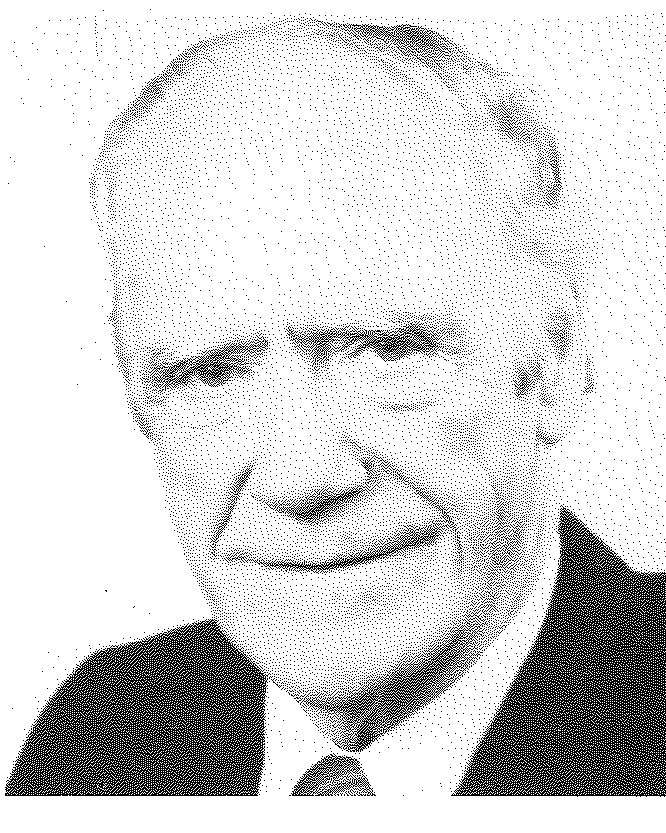
Sharp: It was the circumstances that arose in the early 1970s when there were several very serious problems in relations amongst the industrialized countries. It was a time when people were very concerned that there might be major disruption in relationships, particularly on the economic side. The Trilateral Commission has always concentrated on economic matters, but in the time that I was a member political questions, questions of security, and political relations have emerged as a necessary part of the studies of The Trilateral Commission.
bout de papier: There is a similar organization created by the Rothschild family called the Bilderberg.
Sharp: Bilderberg has been in existence much longer than The Trilateral Commission. I think I attended one Bilderberg session and was invited to others that I could not attend. One of the big differences between Bilderberg and The Trilateral is that people who attend the Bilderberg Conference are very often members of governments. The Trilateral Commission does not accept as a member any person who is actively engaged in government on the policy side. This is a private organization and the intention is to have discussions on the private level, not at the government level. It is meant in a sense to supplement the efforts of governments to maintain good relations.
bout de papier: How are members chosen?
Sharp: The members are selected on a very informal basis. I can only speak with authority about the Canadian side. I was asked, for example, to become the Head of the Canadian Group and the Deputy Chairman for North America after I left the Cabinet. I do not think Jean-Luc Pepin, my predecessor, was ever the Deputy Chairman for North America, but he was effectively the Head of the Canadian Group until he accepted a government appointment. I have forgotten exactly what position he took at that time, but he made himself ineligible by accepting a position with the Government of Canada. My selection, for example, came about simply as a result of a discussion amongst the Canadian members of The Trilateral Commission who existed then. They said, “It looks as if Mitchell Sharp would be a logical person to head our Group, he was a former minister in the government, SSEA, he would be an ideal person now as a private citizen to be a member.” At that time I was a Member of Parliament. There is no reason why a Member of Parliament should not be a member of The Trilateral Commission. The prohibition is only against members of government who are engaged in policy decisions. When I became Chairman, I decided we should change the membership, as there had been no change in the Canadian Group since it had been formed. The group who remained got together and tried to think of people who would give us a representation from business, academic life and, if possible, a trade union. Those were the three categories that we had in mind, apart from members of Parliament. We have always had on The Trilateral Commission two Members of the House of Commons representing the Liberal and the Progressive Conservative parties. For example, Raymond Garneau is a member now. We had John Fraser as a representative of the Progressive Conservatives. When he left the Cabinet he came back to The Trilateral Commission, but now, of course, he is the Speaker and cannot be a member of The Trilateral Commission. We have also had Senators — Michael Kirby and Duff Roblin are now members.
bout de papier: Why is it exclusively reserved for industrialized countries and why are Third World countries more or less excluded from these consultations?
Sharp: From time to time there have been discussions about the enlargement of The Trilateral Commission to include countries other than those in Western Europe, North America and Japan. We have difficulty, for example, in excluding Australia which can be counted as a Western industrialized country. We have also had questions raised about the exclusion of Third World countries. The conclusion we have come to is that we either adhere to the present structure — that is a Trilateral basis, or we turn the Commission into a miniature United Nations. We think we can be more useful if we limit our membership to the Trilateral areas.
bout de papier: How does The Trilateral Commission function?
Sharp: When I became Deputy Chairman for North America, annual meetings of The Trilateral Commission were held every nine months. For financial reasons we have had to limit our annual meetings to once a year. We hold those meetings in the Trilateral area, moving around the three areas annually.
One year the annual meeting would be held
26 bout de papier Vol. in the United States, the next year in Japan, the next year in Europe and so on going around a circle.
bout de papier: Never Canada?
Sharp: Yes, one meeting had been held in Canada, and I hope that it will be possible to have another one. However, we have to recognize that the demands which arise from the organization of a Trilateral Commission meeting are very large and we would have to have the support of the Canadian Government, particularly its financial support in order to put such a meeting on our schedule. Moreover, most of the members of The Trilateral Commission would prefer to have the North American meeting either in Washington or in some other very big centre of the United States. Naturally, the interest of The Trilateral Commission is greater with respect to activities in the United States than in Canada.
bout de papier: As former Deputy Chairman for North America, what did your duties include exactly?
Sharp: I am told that it was the European idea that the Deputy Chairman for North America should be a Canadian. Europeans in particular wanted to make it clear that North America was not synonymous with the United States of America, and they wanted to give Canada representation at the top of the Commission. When meetings of the Chairmen of The Trilateral Commission are held, and they are held quite frequently, the Deputy Chairmen are included. There is one area that recently has not had a Vice- Chairman and that has been the Japanese. I am not quite sure of the reason for that but certainly in Europe and North America there has always been a Deputy Chairman. In Europe, since there are many countries involved, the Chairman and the Deputy Chairman came from different countries. The head of the European section of The Trilateral Commission is a Frenchman, and the Deputy Chairman is an Italian. Both are distinguished former diplomats. The meetings revolve around two processes. The main one is the preparation of studies and papers which are written by distinguished authors from each area. Reports of task force papers have three authors, a European, a North American, and a Japanese. One is the principal author. Those papers are prepared and are discussed at annual meetings of The Trilateral Commission. They are distributed in draft form at that time, including distribution to the press. After the meetings are over the authors have an opportunity of reconsidering their papers in the light of the discussion. However, the papers themselves are the responsibility of the authors and not of The Trilateral Commission. There are three features at the annual meetings. First, there is a discussion of the conditions that prevail in the host area, led by distinguished people like members of the government, journalists, and academics. They present their version of developments in the area of the host country. That is an unalterable feature of each annual meeting. Second, there is a discussion of task force reports. In addition, a subject is selected on which a paper is not prepared, but three persons are asked from each of the areas to lead the discussion on that subject.
Since there are over three hundred members of The Trilateral Commission and attendance at meetings will range from 150 to 200, the organization of the discussions becomes very important. It is impossible for everyone to have an opportunity to speak. In the Canadian Group there might be as many as ten attending. The Group decides whether Canada wants to have an input on particular subjects, and who should speak for the Canadian Group. That person speaks in his own capacity. Occasionally, we have a Canadian paper prepared and distributed which sets out what might be termed the collective views of the members on some particular subject.
While the papers are prepared by a group of Trilateral authors, they very often deal with subjects of much wider scope than the Trilateral countries themselves. We have recognized in recent years how important the relationship is between The Trilateral Commission countries and the Third World Some of the best papers on relations between the Third World and the Trilateral world have been presented at the meetings of The Trilateral Commission. At this coming meeting, for example, in San Francisco, there will be a paper on Third World debt. While The Trilateral Commission only comprises the countries that are industrialized, our discussion goes far beyond that. It includes world problems because we do recognize that the Trilateral countries are very much bound up with what develops in the Third World and elsewhere. The Trilateral Commission has organized trips to China, and would like to have a meeting in the Soviet Union.
The Trilateral Commission has a reputa-, tion for being extremely influential, a reputation that has been used to criticize it as being an organization with undue influence on the decisions of governments. President Carter and a large number of his cabinet had been members of The Trilateral Commission, and a myth arose that somehow The Trilateral Commission had been instrumental in getting its membership into the government of the United States. In fact, it works the other way. The Trilateral Commission is very careful in the selection of its members, and is only interested in getting influential people, people who know a lot and could make a contribution to the discussion. It is quite natural that, from time to time, governments should come to the same conclusion and ask the same people to serve. For example, the present Foreign Minister of Japan is a very distinguished former member of The Trilateral Commission. The Vice-President of the United States, Mr. Bush, was also a member. The Trilateral Commission asked them to serve for the same reasons as government asked them to serve – they are competent and knowledgeable people.
A myth arose that somehow The Trilateral Commission had been instrumental in getting the government of the United States.
bout de papier: But in a certain way, policies developed by governments may reflect views of some members of the government that have participated in The Trilateral Commission. For example, China.
Sharp: Yes, if The Trilateral Commission had not existed, those people would still have served the government. I think President Carter’s case is a very interesting one. President Carter was Governor of Georgia. What The Trilateral Commission gave him was the opportunity of meeting people he would otherwise never have met, so that his membership widened his horizons.
You ask whether The Trilateral Commission has had an effect upon the policies of China. It is interesting that just before the opening of the Chinese economy to competition, members of The Trilateral Commission had gone to China and had had some discussions, including members of the government. My impression is, however, that it was more coincidental than influential. Nevertheless, I should have thought that the leaders in China today are acquainted with what is going on around the world, and The Trilateral Commission is an extremely knowledgeable group. Its papers are amongst the best produced in the world today. This is not surprising because we get the foremost authorities in the world to write them. They write them without any interference from The Trilateral Commission.
bout de papier: The papers are of extremely good quality. What impresses me is the foresight and the impact these discussions have. For example, at Tokyo there were dicussions about the American economy and the need to reduce the budget and the need for Japan to open up its market. Some of these recommendations are taking effect in Japan, for example, where the Japanese are opening their economy.
Sharp: One of the greatest accomplishments of The Trilateral Commission was to give the Japanese a feeling of equality. This was the first international organization that put the Japanese on an equal footing with the North Americans and the Europeans. Other organizations, like the Atlantic Assembly, invited Japan to join as a sort of a favour. Bilderberg was that kind of organization, but The Trilateral Commission was the first to give Japan equality of status. At the beginning of their membership of The Trilateral Commission the Japanese said very little, and what they said they put down in writing in order to avoid making mistakes. Nowadays, the Japanese participate in the discussion and take up (I calculated at one annual meeting) a third of the time, which I thought was quite appropriate. This is a great change. I think it is one of the great accomplishments of The Trilateral Commission.
One of greatest accomplishments of The Trilateral Commission was to give the Japanese a feeling of equality.
The influence of The Trilateral Commission lies in the quality of the papers and our discussions. I look at the Canadian Group. Apart from leading businessmen, some of them are former ministers like myself. Others, like Duff Roblin, former Premier of Manitoba, and Michael Kirby, who played a prominent part when he was in the Prime Minister’s Office, are the kind of people that we try to get in The Trilateral Commission. It is bound, in that sense, to have an influence but it is not an influence driven by the self-interest of the corporations that are represented. The allegation that is sometimes made is that this is an instrument of the international corporations. I have never seen any evidence of that. I do see evidence of the influence of some very good minds at work. Have a look at the membership of the American side, including Kissinger, Vance, and Brzezinski. These are people whose views cannot be ignored.
bout de papier: Some of Zbigniew Brzezinski’s findings are more or less similar to what has been said at The Trilateral Commission. He mentioned in a book the necessity for Trilateral cooperation. I have the impression that much of his intellectual talk has been reflected in the common denominator of what has been said at the Trilateral discussions.
Sharp: Not always. Zbig Brzezinski spoke in Madrid at our meetings and gave an extremely powerful and interesting presentation, but it was not one that reflected everyone’s views. I think we all had some reservations about what he was saying, but Zbig Brzezinski has a powerful intellect and is bound to have an effect. We can say the same thing about Henry Kissinger. We might disagree with him, but we cannot ignore him. Kissinger has, I am sure, intluenced the thinking of many people including myselt We cannot come in contact with a man like that without being influenced by him. There is a great difference between saying that and saying he determines the policy of The Trilateral Commission, which is not so.
bout de papier: What is it that the Japanese do, in reaction to the pressures they get from The Trilateral Commission and elsewhere, to open up their markets and be more flexible?
Sharp: You could also ask the same question as to how far The Trilateral Commission and its reports have influenced the thinking of the United States government, because there has been a constant pressure through these reports upon the United States to follow policies that are as much in favor of freer trade as possible. It has not prevented the emergence of very strong protectionist sentiments in the United States or in Europe. I am sure that if you looked at all the reports recently published by The Trilateral Commission on agricultural policy, particularly the last one, you would find an indictment of the Common Agricultural Policy of the EEC, in so far as it affects trade in grains and so on, to the detriment of Canada and other producers. I do not really think that it could be said that The Trilateral Commission has particularly selected Japan. It has, however, reflected the views of most people of the world that it would be a great assistance to the prosperity of the Trilateral countries and of the world generally if Japan were to open up its markets. There is resistance to that in Japan just as there is resistance to the recommendations relating to United States grain policy or European economic policy generally.
One of the reasons that The Trilateral Commission was formed was because of the friction between Europe and Japan and the United States and Japan. Japan has been at the centre of the problem of promoting good relations amongst the industrialized countries of the world. It is natural that there would have been a good deal of concentration on that country.
bout de papier: At the last Trilateral Commission in Madrid last May there was condemnation of Reaganism. What is The Trilateral Commission’s view in relation to security in East/West relations in comparison to the American attitude in those matters, especially after the Reykjavik Summit?
Sharp: The Trilateral Commission as such has no policy. Certainly its members would object if an attempt were made to lay down any policy, particularly in security matters. I think it is true to say, however, that the membership of The Trilateral Commission in the United States, particularly, and to some extent in Europe, has had reservations about foreign policy during the Reagan presidency. After all, The Trilateral Commission does not include any members of the United States government. It includes those who had been members of the United States government who are now on the outside, so you get the views of those who are on the outside rather than those who are on the inside. This gives an impression of being critical. You get that sort of bias, although great care is taken to give the members of governments an opportunity of coming before The Trilateral Commission and speaking. We always ensure that at our meetings we do have spokesmen for governments. I recall introducing the Secretary of State for External Affairs of Canada to The Trilateral Commission when the meeting was held in North America, and at the next meeting in San Francisco I expect that the Secretary of State for External Affairs of Canada will be one of the speakers.
bout de papier: Do you think one day you will have Russian participants, informal or not?
Sharp: I would not be surprised if a representative of the Soviet Union were asked at some time to speak. I do not expect that the Soviet Union will be asked to join The Trilateral Commission. It would be quite in keeping with the tradition of The Trilateral Commission to ask an official of the Soviet Government to address the Commission, but these kinds of questions have to be approached very carefully. We did have a Chinese come and speak to us and that was appropriate for a meeting in Japan, and perhaps at the next meeting in Europe, relations will have improved to the point that it would be possible to have more direct contacts between the Commission and the Soviet Union. Over the last few years, we have come back time and again to the question: should we organize a visit by the Commission to the Soviet Union, but one thing after another happened, including Afghanistan.
bout de papier: Do you think the Soviet Union perceives The Trilateral Commission as being a group of capitalist corporations? Sharp: Yes, except that it is very difficult to put down as great capitalists some of the members of The Trilateral Commission. For example, on the United States side the heads of the great trade unions of the United States are members of The Trilateral Commission and they take a prominent part in the discussions. We have never in Canada been able to persuade the CLC to join with us in having a representative. We have had the former head of the organization of government employees as a member, but we were never able to persuade the CLC that they should join their American counterparts and participate. We would like very much to have them.
bout de papier: Who decides on which subjects will be discussed?
Sharp: This is the function of the Chairmen and Deputy Chairmen who meet from time to time. They have before them, prepared by the secretariat of the organization, a list of possible subjects. These are discussed and a selection made. As soon as the decision is made as to what subjects would seem to be the most appropriate to have on the program, then the secretariat begins to look for authors.
bout de papier: Something to do with the current events?
Sharp: Yes, that is right. Take the paper that was prepared on agriculture. It was quite clear to us at the time it was selected that this was going to be one of the big issues, and so it has turned out.
bout de papier: One very interesting report T have seen is Democracy Must Work written by Brzezinski, David Owen, and Mr. Okita. I remember having read years ago the Crisis of Democracy which was slightly different in its approach. The first one was saying democracy has the roots of its own destruction, and we should be more strict. The recent one was very concerned about the dangers and the threat to the vitality of democracy. First of all we have social problems, there is a baby boom that we did not think about, there is technological change, unemployment, and it is the end of the welfare state. The report suggested that people learn more tehnical skills, that they forget about the welfare state and that they think about their own pensions. What is your projection for the future as things are developing?
Sharp: My own view is that it was a very timely paper. It cannot be denied that these are the problems with which democracy is now grappling. When I look back on my own experience at the time that I entered politics in 1962, the situation was very different. The general state of finances, for example, in the world generally was balanced budgets. We had a balanced budget, the Americans had a balanced budget, the European countries had a balanced budget and so did Japan. We were extending social security. We had a feeling that there ought to be a security net which would prevent people from falling into the poverty of the pre-war years and of the depression. Everything was optimistic in the sense that we had shown that we could recover from the war. There was a steady expansion in output throughout the world. It was the period of the greatest prosperity in the history of the world. Everything seemed possible.
Now the whole situation is changed. Nearly all countries are struggling with budgetary deficits. Social security programs are being questioned, the population is growing older, all these problems which do produce an altogether different situation from that which existed when I entered politics. When I think about the problems that lie ahead, I ask how are we going to handle the evolution of the social structure — the fact that women are going to become part of the working force in a way that I did not contemplate when I first entered politics, what is going to be done to help to look after the children resulting from that sort of change, what are we going to do about the mounting costs of medical care for old people? All of these problems have been forecast in this paper.
bout de papier: Have there been any useful solutions brought up at these meetings? Sharp: I think the solution to these things have to be subject to experiment. I do not think there are any specific answers. We just have to adapt ourselves to the changed circumstances. We have never encountered anything like this in the history of democracy. It is, in a sense, a kind of a crisis of democracy. We see it in our own society: how governments have to try to deal with problems and at the same time try to get their fiscal affairs in order.
bout de papier: By concentrating on East/West relations, trade and security, etc. is The Trilateral Commission not forgetting or neglecting those forces in some areas of the world, not necessarily the Third World, which are out of the control of the super powers, or is it being addressed at those meetings?
Sharp: We have had very good discussions of the Middle East with very distinguished participants. As I recall, Garret FitzGerald who until recently was Prime Minister of Ireland, led a task force on the Middle East problems. I do not think The Trilateral Commission has neglected those problems. We spend most of our time talking about world problems rather than the relations amongst the industrialized countries because it is clear we are affected by those kind of events. The Trilateral Commission originally concentrated its efforts on economic questions. It was only when security questions became so important that we began to include them. Even disarmament comes up now for discussion because it obviously has such wide economic implications. When you look at the problems that affect the world today, the expenditure on armaments is one of the major obstacles to improvement in the standard of living of peoples of the world. Not only is it expenditure by the super powers, but expenditure on defence by countries that have very low standards of living. I can recall when I was the Foreign Minister, people coming to me saying: you ought to stop spending money on defence and devote the savings to help the countries of the Third World. I said very well then, perhaps we ought to have a new rule that we give help only to countries that do not spend on defence. That usually ended the discussion. Expenditures on armaments is not a problem that exists only in East/West relations.
bout de papier: In relation to the discussions you have had, are you optimistic about what is going to happen in the next twenty years?
Sharp: In the Trilateral Commission there does not seem to be much fear of a war between the Soviet Union and the United States – between East and West in that sense. But there has been continuing concern about the possibility of conflicts arising elsewhere and spreading. On the trade side of international relations, there have been two parallel and somewhat conflicting developments. First, there has been over the whole of the post-war period a gradual freeing of commerce. The GATT has been very effective in reducing barriers to trade, resulting in dramatic changes in the structure of the world economy. Before the war, countries were vying with one another to put on tariffs, etc. Since the end of the Second World War most of these barriers have been removed. What is also evident, however, and this is at the root of the problem that we are facing, is a tendency to manage trade. All governments are increasingly interested in managing trade. There is a tendency for governments to say ’yes’ we have got to remove barriers to trade, but we must not allow trade to disrupt our economy. We can see evidence everywhere, even in relations between Canada and the United States, of governments trying to manage the trade — in softwood lumber, in automobiles, textiles and steel. We are passing through an extremely difficult period and I do not think you can characterize it by saying it is a period when trade is being liberalized. It is in a sense being liberalized, but it is also being managed to an extent that we have never before seen. We no longer depend upon tariffs and things like that. We now have understandings and quotas and such like.
bout de papier: What about Canada/U.S. Relations? You spoke on this subject in 1984. Sharp: The Trilateral Commission has not devoted much effort or time to relations between Canada and the United States. You mention the meeting in 1984 at which I gave a speech on this matter. That was one of the few occasions when Canadian/American relations have been prominent in the discussions. Canada is sometimes ignored in these discussions because North America often become synonymous with the United States of America. When I was leading the Canadian Group, I pointed out that Canadian interests and points of view had not been given sufficient attention.
bout de papier: Is it because we are not taken seriously?
Sharp: No, it is that we are not as influential as we would like to be. It is much more important to know what the United States thinks than what Canada thinks. From time to time I have had to intervene and remind the members of the Commission that North America includes Canada. For example, there has not been up until now any discussion of the trade negotiations that are now going on between Canada and the United States. I expect that at the forthcoming meeting in San Francisco there probably will be some interventions by Canadians if that subject is not raised elsewhere. Perhaps I ought also to say that while The Trilateral Commission is not primarily concerned with matters that concern Canada, except in the most general sense, it is absolutely essential that Canada be represented in The Trilateral Commission. From time to time there had been a feeling amongst the Canadian members of The Trilateral Commission that the Commission should come to an end, having fulfilled its purpose. That view was held at one time some years ago by a majority of the Canadian Group. It was decided by the membership at large that The Trilateral Commission mandate should be renewed for another three years, however, the Canadians were anxious to be there because we cannot afford to be absent. pour combien de temps avez-vous été membre de la Commission trilatérale, et comment avez-vous été amené a y adherer? Pépin : Quand? En 1972. Je me le rappelle tres facilement, car c’était tout de suite après ma défaite électorale dans Drummond- Athabaska! J’étais libre, politiquement parlant. On suggéra mon nom pour représenter le Canada a la Commission. L’initiative vint soit de monsieur Ed Ritchie, du Ministère des Affaires extérieures, ou de monsieur John Holmes, de l’Institut canadien des Affaires internationales ou des deux! Monsieur Smith, ex-négociateur des États- Unis pour Salt-I, qui avait été chargé par David Rockefeller de structurer la Commission m’approcha. Je contribuai au choix des autres membres canadiens. J’y suis resté jusqu’en 1975, alors que je devenais président de la Commission anti-inflation. Voilà pour la chronologie!
bout de papier: Lorsque vous y avez adhéré, quelle était votre perception du rôle de la Comission trilatérale? À ce jour, quel impact, quelle valeur celle-ci a-t-elle d’après vous?
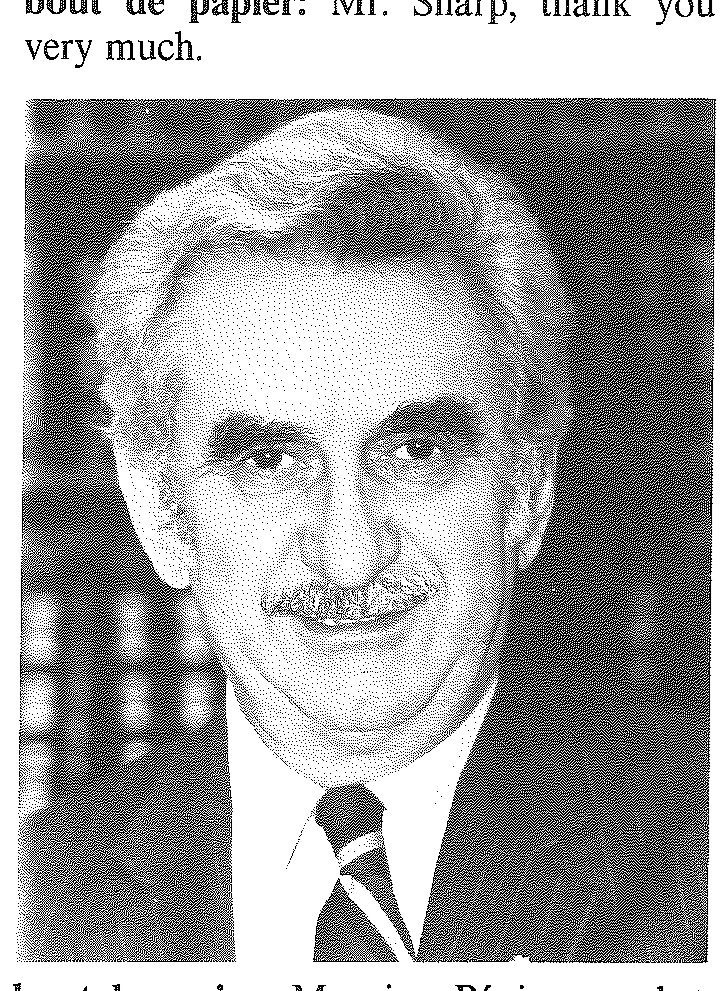
Pépin : Il me semblait alors, il me semble encore, que la Commission poursuivait essentiellement trois buts :
a) Elle voulait surtout établir des relations entre hommes politiques par-delà les gouvernements. Les relations intergouvernementales officielles sont trop assujetties, on en convient facilement, aux intérêts « nationaux » immédiats, souvent assez égoïstes. Des objectifs plus larges, plus généreux, à plus long terme doivent être recherchés. La Commission allait grouper des leaders non gouvernementaux, les amener à se connaître, à étudier ensemble des moyens de contribuer à la solution des problèmes des trois régions du monde en cause et à se faire les propagandistes de ces moyens.
b) Il me semblait aussi, je ne me rappelle pas l’avoir entendu dire si clairement, que la Commission devait faciliter l’entrée des Japonais dans le circuit des communications internationales privées (c’est-à-dire non-gouvernementales) dont ils étaient encore relativement isolés pour des raisons d’histoire, de culture et de langue. Il s’agissait de les aider à circuler plus facilement dans ce milieu en leur offrant un cadre informel qui leur permit de se démarquer à l’occasion de la position de leur gouvernement ou de l’expliquer s’ils la partageaient.
c) Indirectement, la Commission était aussi une entreprise d’emmagasinage de matière grise! Le personnel politique vient et part au hasard des événements…et des élections. Comment faire meilleur usage de l’expérience acquise? La Commission voulait donner un exemple de la façon d’y arriver. J’ai, pour ma part, qualifié la Commission de «gouvernement en exil » en ce sens que souvent ceux et celles qui avaient été battus aux plus récentes élections venaient y remplacer ceux et celles qui avaient été élus, les premiers ne refusant pas d’ailleurs de revenir en scène plus tard. J’en ai été! La Commission contribuait à les garder en forme! Les Américains en ont profité. Le président Carter, qui voulait « renouveler le personnel politique » de son pays, ne trouva rien de mieux que de recruter deux douzaines d’anciens membres démocrates de la Commission trilatérale lesquels furent remplacés m’a-t-on assuré par des Républicains. Les Japonais savaient déjà
30 bout de papier Vol. eux utiliser leurs vétérans. Voyez comment leurs fameuses maisons de commerce (shoshas) recyclent les ex-ambassadeurs, les admettent dans leurs conseils, les chargeant de missions commerciales dans les pays où ils étaient autrefois accrédités.
La Commission a fort convenablement réussi sous chacun de ces trois titres, me semble-t-il. Voilà pour le bilan!
bout de papier : D’après vous, quel intérêt recherchait exactement son fondateur, monsieur Rockefeller? On a parlé souvent de « concertation entre élites transnationales », mais encore…?
Pépin : Composer l’intérêt public et l’intérêt privé, pas nécessairement, ni exclusivement le sien et celui de sa banque. « La concertation entre élites transnationales », comme vous dites, en était déjà par ses propres moyens. Il a senti le besoin d’institutionnaliser une pratique restreinte. Il a fait preuve d’intelligence et de générosité; un rôle en or pour une personne riche!
bout de papier: Les compte-rendus des sessions annuelles de la Commission paraissent préoccupés d’une part, du déficit américain et d’autre part de l’impératif pour le monde occidental d’une plus grande ouverture du Japon et de ses marchés. Comment arrête-t-on les sujets de préoccupation? Pépin : D’une façon très normale, en faisant écho aux problèmes que connaît le monde à tel ou tel moment. Le commerce international en était un et dans des termes pas complètement différents de ceux d’aujourd’hui.
La plus grande ouverture du Japon n’est pas arrivée. Le Japon accumule encore du surplus à la balance commerciale, avec les Etats-Unis, avec l’Europe, avec le Canada même. Il continue à annoncer des « libérations », pour l’an prochain. Sij’additionne toutes les réductions de tarifs annoncées depuis 20 ans, j’en suis rendu à moins 38%! Cette situation est très dangereuse.
Jean-Luc Pépin aime à exprimer son «obsession » pour l’utilisation de ce qu’il nomme les « restes», ces hommes publics retirés de la vie politique, et du monde des affaires, des « jeunes vieillards » à la retraite, qui peuvent encore jouer un rôle important en partageant leur expérience :
«Je connais certains ex-ambassadeurs très valables qui ont été relégués aux oubliettes alors que leur savoir aurait pu être un atout précieux pour nos firmes ou nos universités ».
Les universités, elles devraient sauter sur ces gens qui représentent une source d’information et d’expérience unique, des « modèles » différents de la normale, à offrir aux étudiants.
Cela se fait exceptionnellement.
« Ne pensez pas que je parle d’un problème personnel. Je trouve beaucoup pour m’occuper à l’Université d’Ottawa et à l’Institut de recherches politiques. Le problème auquel je fais allusion est largement social et économique. Il s’agit de l’utilisation optimale de nos ressources humaines dans une conjonction de vieillissement démographique; il s’agit de productivité de concurrence internationale, de prospérité collective canadienne ».
Les membres canadiens de la Commission trilatérale
La Commission compte parmi ses membres des personnalités bien connues comme Zbigniew Brzezinski, ex-conseiller du Président Carter pour les Affaires de sécurité nationale, Henry Kissinger, Giovanni Agnelli, PDG de Fiat, Raymond Barre, David Owen pour n’en citer que quelques uns.
Voici, par contre, la liste des Canadiens qui en étaient membres au 15 mars 1986 :
Michel Bélanger, PDG de la Banque Nationale du Canada
Gail C.A. Cook, Vice-président Exécutif, Bennecon Ltd., Toronto
David M. Culver, PDG, Alcan Aluminum Ltd.
Peter C. Dobell, Directeur, Centre parlementaire pour les Affaires étrangères et
le Commerce extérieur
Claude A. Edwards, ancien président de la Commission de la Fonction publique
Raymond Garneau, député, ancien ministre des Finances du Québec
Robert Gratton, PDG, Montreal Trust
Michael J.L. Kirby, Sénateur
James A. McGrath, député, ancien Ministre des Pêcheries
Lowell Murray, Sénateur
G.A. Van Wielingen, PDG, Sulpetro Limited
J.H. Warren, Conseiller en Commerce, auprès du Gouvernement du Québec
View the original scanned pages / Voir les pages numérisées →
Originally published in / Publié à l’origine dans bout de papier, Vol. 5, No. 1 (1987) — Spring 1987 // Printemps 1987, pp. 25–30. Read the rest of this issue / Lire le reste de ce numéro →



