
bout de papier, Vol. 3, No. 3 (1985) — Fall 1985 // Automne 1985, pp. 7–10
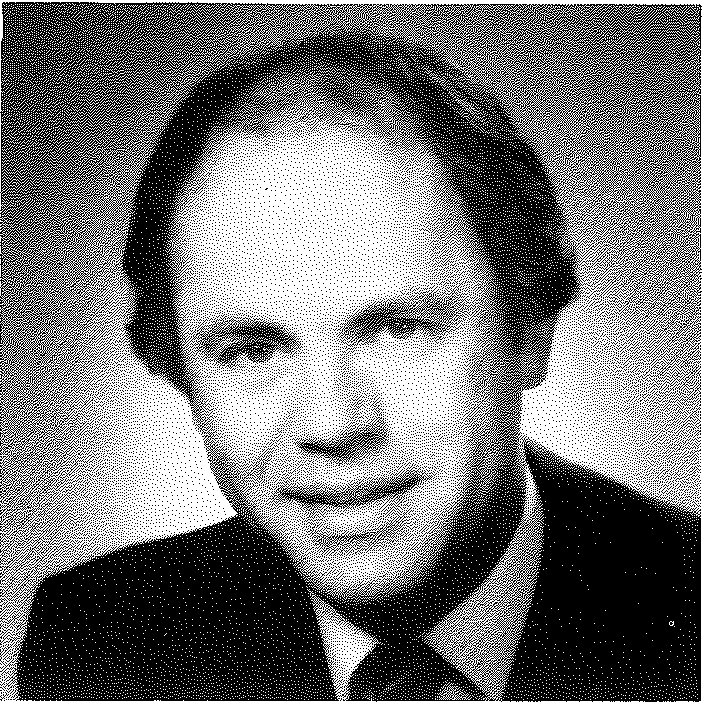
Thomas d’Aquino is an Ottawa-based lawyer whose consulting firm, Intercounsel Ltd., is primarily oriented to international business. The Business Council on National Issues (BCNI) was originally one of Intercounsel’s clients between its formation in 1977 and 1981, when Mr. d’Aquino became the Council’s President and Chief Executive Officer.
The BCNI is the only organization of its kind in Canada, bringing together the Chief Executive Officers of 150 major companies. The Council conducts task forces on specific issues, issuing reports with a view to contributing to public policy.
The BCNI is an exclusive organization. According to Mr. d’Aquino, members are invited to join on the basis of their personal merit, not the fact that they are the incumbent Chief Executive Officer of a particular company.
The following interview took place at Intercounsel’s offices in Ottawa, which also serve as the secretariat for the BCNI.
bout de papier: What are the principal objectives of the Business Council on National Issues?
D’AQUINO: The principal objective of the Council is to make a contribution, to utilize the expertise, the experience, the talent and the resources of individual chief executive officers and their companies in order to make a sound and effective contribution to the evolution of national public policies in Canada. The public policy areas that have been priorities of the Council, since I became President, are economic areas which include microeconomic policy, fiscal policy, monetary policy, international trade and industrial policy, energy policy, and competition policy. Policies dealing with labour markets and labour relations is the first major area. The second major area is the whole area of social policy, in its broadest sense, and that has involved us in areas such as pension reform.
For example, a detailed examination of the MacDonald Royal Commission recommendations dealing with guaranteed annual incomes has involved us in issues of unemployment insurance and other social programs, including education. The third major area is government organization and we have made a leading contribution to parliamentary reform, constitutional reform, senate reform, including work that has never been made public, such as major studies which are given to both the Prime Minister and the Leader of the Opposition on how the central machinery of government might be restructured. The fourth area is foreign policy and defence.
bout de papier: What areas of foreign policy is your organization involved in?
D’AQUINO: Of the four areas I have mentioned to you, many have important international dimensions. For example, all the work that we do for our task force on national finance involves very close examination of what is happening to the United States economy, and the economies of the OECD. Secondly, the task force on international trade deals exclusively with multilateral and bilateral trade problems. The idea of a trade enhancement agreement was born in this organization in early 1984, which is a long time ago, when you consider where we are now on that issue. If I may be immodest for a moment, I invented the term trade enhancement when I tried to come up with a term that was something less than free trade but a process and a set of policies that would lead to liberalized bilateral trade. In another area on the international trade front, every year, starting last year, we produce a major document which we give to the Prime Minister in anticipation of his departure for the economic summit.
In the area of labour relations and industrial policy we are very much aware of and are watching very closely what is going on in other countries. Likewise in the area of foreign policy and defence. That has involved us in producing a study on defence policy which the Chief of the General Staff said was the most important contribution made by any private sector organization to defence policies since the Second World War. We have a very strong and healthy global outlook. We get out of the country often, and visit other countries, so we have very important international leverage.
bout de papier: One national issue that has been very hotly debated recently is SDI. Some have argued that government financial support for SDI research and development could have had considerable benefit for Canadian industry. What is your view or the Council’s view on the government’s recent decision not to finance Canadian participation in SDI research?
D’AQUINO: You may find this somewhat surprising but, as an organization, we refused to deal with the issue of SDI and refused to respond to the issue publicly. The reason we refused to do so is that we thought that SDI is a minor issue in comparison with the big issues that are facing this country, in terms of meeting its commitments to the North Atlantic Alliance, meeting its future defence needs and protecting Canadian sovereignty. We saw SDI as a side show, a red herring. Let’s face it, research into military technology affecting space has been going on for 20 years. People are looking at SDI as if it had just started yesterday. It is regrettable, in my view, that the President of the United States would have chosen to make SDI such a big issue.I think that making it such a prominent issue has given strength to the peace movements in Europe and all over the world. I think that is most unfortunate. There is no question that there would be some benefits, economic and military, to participation in SDI but our point of departure is that one should never discuss defence policy in this country on the basis of how many jobs is it going to create. The real issue is, do we have a realistic defence policy? Are we meeting our commitments? And if we are not, what are we going to do about it? As far as I am concerned, SDI is, has been, and should continue to be, a minor distraction.
bout de papier: One can infer from your description of the Council’s interests that national issues are not necessarily business issues and vice versa. Are there any specific non-business issues which have been of major concern to your organization in the past few years?
D’AQUINO: I would say that most important of those are the issues touching social policy and social policy reform. We have taken a leading role in the country in arguing for the selectivity of social programs because we believe that, given the size of our soaring deficit, there are just not enough resources around to meet everyone’s needs. Four or five years ago we embarked on a program of advocacy saying, let us give financial and economic assistance to people who need it. Let us take it away from those who do not. How you do that, whether it is through a draw back or literally removing any payments at all to upper income groups, is really not terribly important. The whole issue of pension reform and social retirement income is a critical issue, given that we are spending almost 50 billion dollars of taxpayers money a year on social programs. It is critical that we get it right, that we get not only more value for money. If we give better value for money, it will be a more socially progressive type of system.
The second major area is government organization. No business organization in Canada and very few private sector organizations have devoted as much time to the whole issue of reform of government institutions as we have. We have produced a major study on parliamentary reform which had a significant impact on the Clark government. If you look at the recommendations of the McGrath Committee, or at the general set of recommendations in favour now on parliamentary reform and go back to our original study in 1979, you will see that there is a high degree of simiarlity. Likewise our contribution to constitutional reform. Most people in this country yawn at the idea of constitutional reform. We felt that it was terribly important, because what is more fundamental to a country than its constitution? Likewise the issue of senate reform and, more recently, the whole idea of reform of crown corporations and the ways and means of making the central machinery of government more accountable and more effective. Another extremely important non-economiac area, and the final one is, of course, the whole area of foreign policy and defence. We have purposely kept away from doing a tremendous amount of what I would call the economics of defence. We rocused mainlv on detalled analusis of our defence commitments. What should our defence commitments be and are we meeting them? We are continuing to do work in that area and we will shortly be tabling a response to the paper of the Secretary of State for External Affairs on competitiveness and security where we will also deal with foreign policy issues not directly related to defence issues.
bout de papier: I would think that perhaps the aspect of foreign policy most important to your constituency would be foreign trade and our economic relations. Now the Neilson Task Force, as you no doubt know, is looking closely at the matter of subsidies and services to business and, within that context, the services given to businesses abroad. In your view, what are the strengths and weaknesses of support for business by the Canadian government in export markets?
D’AQUINO: I have done a great deal of international travel, and I have found our offices abroad enormously helpful. The only complaint that I have is that I believe that they have been too limited in the resources available to them. They have also had to serve too many goals at the same time. It is very difficult for a crackerjack trade officer to have to do some serious analysis of trade movements, of business competition and, at the same time, look after five visiting delegations from his home country. Now, I am not for a moment suggesting that one of those things is much less important than the other, but I do not think that the resources that we have applied have been adequate.
There is a second point, and this very much struck me when I recently visited Hong Kong and I had an opportunity to see the degree of fire power that the Hong Kong Trade Development Council has at its disposal. Here is an organization that is fully computerized, that has about 96,000 members, that has tapped into markets all over the world, that has as many as 50 people updating data and information on various markets and buyers around the world and even the specific names of number two’s and three’s in some of the departments and the shops that are buying from them. When I saw the speed and degree of accuracy with which tiny little Hong Kong was able to do this, I said to myself, why isn’t Canada doing something like this, given that 30 per cent of our GNP goes to export? To say that Canada is large and has provinces, a federal government, and territory 4,000 miles long, while Hong Kong is only a small place, I think is gilding the lily. We have Northern Telecom in this country, advanced electronic capabilities in this country, and there is absolutely no reason why the very good people that we have in the trade service should not have more fire power behind them in order for us to better service the requirements of business abroad.
bout de papier: Given that the business community, and your Council in particular, has a role to play in contributing to the formulation of Canadian foreign policy, I can see where contradictions might develop in what the business community may perceive to be in its interests, such as lucrative foreign investment opportunities in the third world, versus Canadian foreign policy with wider implications, such as trade sanctions against South Africa. Do you ever find yourself caught in the middle of issues such as this?
D’AQUINO: To date, we have had no serious conflicting goods and demands within the organization. The reason why that has not arisen in the case of South Africa is that we have not dealt with the South African situation. And we have not dealt with the South African situation not because we are afraid of it but, quite frankly, because our plate is full of so much work and so many issues that we have to be extremely selective about what we address. We have not gone out of our way, given the fact that the South African situation has exploded, to say we must now address that issue. Insofar as trade with the Third World is concerned, I think there is a strong concensus among the business leaders in Canada. First of all, the issue of Third World debt is a very serious problem, and we have got to deal with that in a very rational and cool way. I think the attitude of the major charterted banks that are key members of our organization is to a large extent reflected by the other chief executive officers in the organization. That is, we have a basic interest in ensuring that the economies of the Third World remain buoyant, that they are able to, albeit much more slowly, meet their debt requirements, and that they have the benefit of liberalized trade. When we make the case for liberalized trade, it is not just because we say it is good for Canadian industries. We also argue that it is good for the Third World and good for everybody. I cannot think of any instances, going right back to 1981, when I became President, where foreign policy issues have resulted in serious internal conflicts in the Council.
bout de papier: Would you describe the Council as a lobby group?
D’AQUINO: It is often referred to as a lobby group, or a blue chip lobby group or a big business lobby group. It depends on how one defines lobby. In the broadest sense of the word, the Archibishop of Canterbury, the President of the Canadian Labour Congress, the Ambassador of the United States, just like the President of the BCNI, are all lobbyists for one cause or another. what we mean by that is, do we have a mission to take our ideas and to actively seek to influence governments and public opinion with our own ideas? Yes, in that respect we are lobbyists. But, if what is meant by the word lobbyist is the narrow sense of the word, then we are not. We have a specific narrow set of concerns which we feel we have to defend. In that respect we are really not a lobby group at all for the very simple reason that, as you pointed out, we are an organization that says that there are national issues that have nothing to do with business issues. Consequently, the positions that we have taken on parliamentary reform, on social reform, on foreign policy and defence, and some of the positions that we have taken in the whole area of industrial relations, have very little to do with what Imperial Oil or the Royal Bank or the CPR would like to see. What we attempt to do is to rise above the day-to-day concerns of individual companies and try to deal with what we believe is best for the country as a whole. Sometimes that happens to be good for business. Not always.
bout de papier: As you have pointed out, the CNI has been described as a blue chip lobby. National issues are not ony a concern to big business but also to small and medium-sized businesses. Is small and medium-sized business in any way represented in your Council?
D’AQUINO: The membership of the Business Council is primarily and ultimately made up of very major enterprises. To give you an idea, the 155 companies that make up the Business Council represent about $660 billion in assets, which produce about $240-250 billion in sales every year and those companies employ about 1.5 million Canadians. Considering that there are about two million business people in Canada, and considering that the 155 members who make up the council represnt over 65 per cent of Canadian business, you get an idea that most of those firms have to be very large and rather dominant.
bout de papier: Are there any particular current policies which you think are directly attributable to the Council’s lobbying or task force studies?
D’AQUINO: That is always a very difficult question to answer, but let me mention a few areas where I think that we have been successful in influencing the public agenda. I believe that the general commitment in the latter days of the former goverment, and in the current government, to the idea of a small government and a more effective government, to the idea of more effective social programs, to a determination that we have to do something about our national debt, our exploding deficits and the general economic philosophy surrounding that, going right back to the six and five program, is indicative that our organization has been influential and has been listened to.
I should be quick to say that one of the most important things for us has been homework. We are pathologically concerned about homework. We have access to some of the best brains in the country and we use them. We make sure that what we say is carefully thought out in advance of saying it. We are very conscious of the fact that in years gone by, before the BCNI existed, business often had the reputation of shooting from the hip, of being too selfcentered and not really concerned about the big issues. Another area where I think we have had some influence in shaping the public agenda, both in government and in the public, is Canada’s need to bolster its defence capabilities. Another area which continues to have considerable currency is the need to reform government, to achieve a more accountable government, a more effective set of parliamentary institutions than the ones we have. I think we have played a leading role in shaping the trade policy agenda. I mentioned to you earlier that we came up with the idea of a trade enhancement agreement. We first talked about it in the autumn of 1983 and we published our trade enhancement agreement in early 1984. A concentrated enhancement now has a pretty high degree of currency. Another area where I think we have had some impact is the whole area of pensions. We have devoted a considerable amount of time and effort to try and develop a coherent pension policy for Canada and, if one looks at the pension policy which is on the books right now, and looks back at some of the things we have recommended, there is a high degree of coincidence.
Finally, we have spent a great deal of time on competition policy reform. The last bill that the former government introduced, which died on the order table, again had a high degree of coincidence with most of our recommendations. Likewise, the final combines bill that will be tabled in the coming weeks will probably reflect a lot of our recommendations. I know that I may not sound terribly modest in saying this, but we can take some satisfaction in knowing that we have been listened to.
bout de papier: Do you find that the Conservative government has developed a different philosophy towards business over the past year?
D’AQUINO: If one looks at the composition of the membership of Parliament among the governing party, and one sees how many of those people are business people, one would have to conclude that philosophically the Progressive Conservative government is more at ease with business. I think thạt the Minister of Finance has the confidence of the business community, and has a doctrine and philosophy that the business community generally, and the BCNI specifically, is comfortable with.! think the Prime Minister has demonstrated through being easily accessible and through frequent contact that he has a good working relationship with the business community. All in all, I would say that under the present government the relationship between business and government is an easier one. But these are very early days. I am not at all convinced that the relationship between business and government, even under a Progressive Conservative government, will always be rosy or that it will be easy. I can see occasions in the coming months where we will disagree, and I think it is terribly important for business and government to understand that, simply because there is a Progressive Conservative government in power, does not at all mean that somehow, someway, business must always agree with the government. That will certainly not be our policy.
bout de papier: Where do you foresee areas of conflict or disagreement?
D’AQUINO: I see many areas of healthy differences of opinion. We would like to see more done in terms of meeting Canada’s commitments to the North Atlantic Alliance. Again, the direction is right, but has the government gone far enough? The answer is no. We would like to see the government do more about getting its fiscal house in order. Again, the direction is right, but we would like to see them do more. To those who say, is there not a contradiction in suggesting more spending on defence and still getting our fiscal house in order? The answer is no. Because if the government accepts our position on dealing with a variety of other expenditure programs, including economic and social programs, that would result in a reordering of economic priorities that would enable us to spend money more wisely, more frugally, and to put money in areas which are now simply being starved because there is not enough money, so we are being told.
bout de papier: Such as defence?
D’AQUINO: I have mentioned defence for one. There are conceivably, if we move into a free trade or free trade relationship with the United States, possibly substantial sums of money which may be required for transition purposes, adjustment policies, retraining policies. Again, how are you going to do that effectively if you are up against the wall and see that trend line going up instead of going down?
We are not against the idea of spending more money. What we are in a favour of is reordering our economic priorities so that we spend money more effectively without, at the same time, raising our deficit.
bout de papier: You have recently gone on quite an extensive tour of Asia. You referred briefly to your visit to Hong Kong. Was this your first trip to that part of the world?
D’AQUINO: It was my first visit to south east Asia.
bout de papier: Did your trip through Asia leave you with any impressions which you think are of value to your members?
D’AQUINO: Well, like everyone who goes to that part of the world, I was enormously impressed by the economies of Hong Kong, Malaysia, Thailand and Singapore. One sees in that part of the world a tremendous burst of creativity, aided and abetted by a very strong commitment to excellence and to hard work. I see that part of the world, combined with Taiwan, Japan and China, as posing an enormous challenge to the rest of the industrialized world. I am not enormously optimistic that given the kind of policies that we have in Western Europe and North America that we are going to be able to meet that challenge with success, particularly when China fully awakens. If the policies of the present leadership in China continue, and you add the potential of China to what is going on on the periphery of China, I see the industrialized West being in a position of constant erosion. I see these so-called new industrial societies, as some people call them, growing at a tremendous rate now without many problems, and already becoming collectively a very important economic force. I see this being done largely at the expense of the industrialized West. It is true that, as they grow and become more potent, they will create opportunities for the West, and I do not belittle the fact that there will be benefits there, but I see these export-driven societies achieving a great deal much more quickly than many Western countries.
bout de papier: Mr. d’Aquino, thank you very much.
View the original scanned pages →
Originally published in bout de papier, Vol. 3, No. 3 (1985) — Fall 1985 // Automne 1985, pp. 7–10. Read the rest of this issue →



