
bout de papier, Vol. 3, No. 1 (1985) — March 1985 // Mars 1985, pp. 23–26
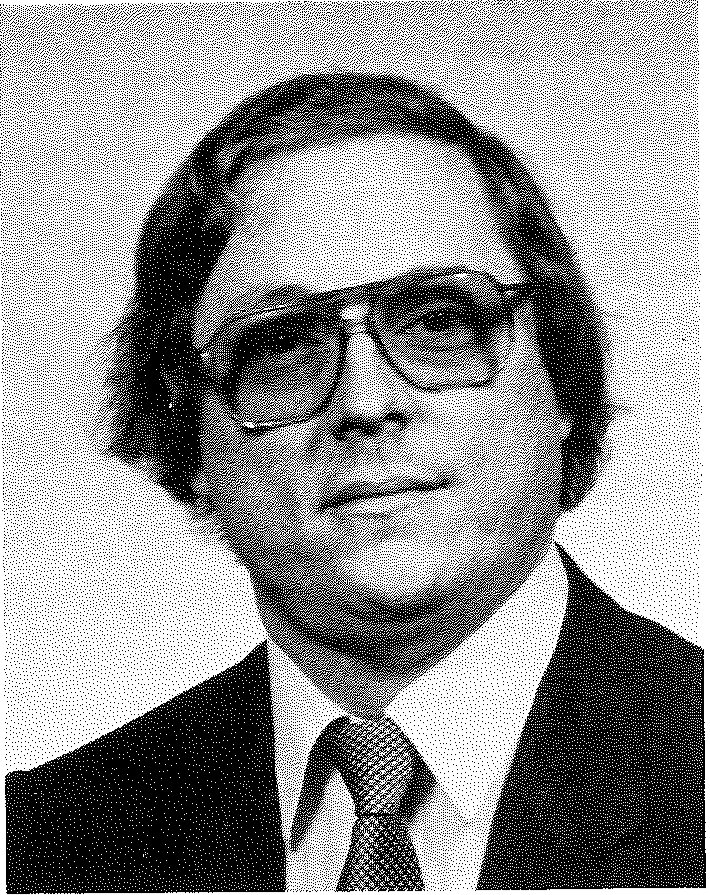
The relationship between diplomat and journalist has always been marked by a certain ambivalence: while their method and manner of investigation can be quite different their pursuit for information and their subsequent dispatches can be quite similar. Last November the controversy was sparked over the degree of media access to the diplomat following the imposition of guidelines by first the SSEA and subsequently the Prime Minister. bout de papier spoke with two journalists who have covered the activities of this Department from both Ottawa and abroad. Jeffrey Simpson is currently Columnist for the Globe and Mail. le was the Globe’s correspondent in London. Peter Calamai is National Correspondent for Southam News. He was Southam Correspondent in Nairobi and London. Southam has correspondents in London, Tokyo and Washington. The Globe has correspondents in London, Washington, Mexico City, Peking, Tokyo, London and Harare.
bout de papier: What is the appropriate relationship between journalist and diplomat as seen by one who has reported from both home and abroad?
SIMPSON: Both abroad and in Canada, conscientious diplomats and serious journalists are often very much the same kind of animal, because their job is to analyze and to observe and the best journalists, and the best diplomats, therefore, have that very much in common. Certainly, when I was overseas and sat down with conscientious diplomats who were observing the scene in a certain country, we had interesting exchanges. They have different sources and information than the journalist does. Sometimes they are better and sometimes they are not as good, but they are both observers, at least in the field and they have that much in common. I have always found it pretty easy to swim with diplomats. I think diplomats, like all public servants, are afraid that they are personally going to get burned and so it is necessary that a certain amount of trust and understanding build up between the diplomat and the journalist. I have always been prepared to play the trade-off of candor for anonymity. It’s not a very popular notion inside my own paper, but I just recognize that no amount of preaching by the Globe and Mail or any other newspaper is going to change the essence of diplomacy, which is confidential exchange of information.
CALAMAI: The relationship between journalist and diplomat differs depending on whether they are abroad or at home. Journalists abroad usually cover a wider turf and they regularly go to countries where Canada has no permanent representation. A classic example would be Rhodesia in the days before independence — before the real independence as opposed to UDI. Journalists went there regularly. Canadian diplomats were permitted to enter the country only in exceptional circumstances such as retrieving Canadian corpses. It was quite logical for diplomats resident in Africa to seek from journalists passing through information about Rhodesia. There wasn’t anything that was private or confidential but a diplomat could take the information and make more use of it than the journalist could. This is the basis of our relationship: we could trade information. I’m giving you some information — you should give me some information. In most cases it is to the advantage of both parties. It’s a special relationship that has to be built on mutual respect and trust. The trust has to be earned. There is no easy way about that and it has to be earned both ways. There are some diplomats that you can’t in the end trust, to tell you the truth, and certainly there are some diplomats, not necessarily just Canadian diplomats, you can’t trust to be factual. They want to push their point of view. The same applies equally to journalists. Unfortunately respect for journalists, and their function, amongst Canadian External Affairs officers is low; lower than that of the foreign services of other countries. By and large the media are put in the category of guys who are going to make trouble. One way or another foreign service officers feel it is going to be troublesome, and even if what they report is entirely 100 per cent factual, it’s going to be troublesome because somebody back in Ottawa is going to read it; a desk officer is going to read it; an aide in the minister’s office is going to read it; or a member of the opposition is going to read it; and questions are going to be asked. There are going to be telegrams, messages. It is going to make more work for me and even if it does not make any trouble for me I’m going to have nothing but grief out of this. However, what they are really saying is we do not want this information out in the public. We like closely held information. The information exists between us and the field and our desk officers back there and maybe the minister had to be told a few things and a parliamentary committee might actually find out but we sure as hell do not want this all out in the open market place and being discussed, whether it is locomotives being supplied to Tanzania or wheat being shipped to Zimbabwe when it has a surplus of wheat, or 18 people turning up in Bridgetown for a conference in February. It can be a relationship that is of mutual benefit, that requires respect and trust on both sides. Most journalists respect diplomats, most diplomats do not respect journalists. Many diplomats will have no particular reason not to respect individual journalists. They will say “well I once got burned by a kid who was a cub reporter who came out to report a speech I gave to the UN club in Winnipeg”. They should remember the major chains don’t send inexperienced junior reporters to posts that cost the organization $200,000 a year to maintain.
The relationship can also be too close. I think that when the Secretary of State for External Affairs investigates the famine in Ethiopia by going to a hotel room in Addis Ababa, to view video tapes taken by the CBC, this is perhaps not the sort of relationship that I have in mind between diplomats, foreign service officers, the head of the foreign service, the minister and the press. I think the minister should get his ass out on the field and actually see for himself and not leach onto the press like that.

bout de papier: On candor and anonymity, under the new guidelines when you are in Canada, you speak on the record From the public servants point of view, this is perhaps more difficult. From a journalist’s perspective, does this make your job easier?
SIMPSON: It makes it much more difficult because, by definition in External Affairs, people are studying what’s going on in other countries or what’s going on in certain dossiers that involve other countries. We can’t have our diplomats speaking frankly about what’s going on in some other country. But in order for the public to be informed it’s necessary for journalists to talk about it. It is necessary therefore for them to have different sources of information including diplomats. The rules, as they are constituted, are probably more restrictive for the External Affairs Department because of the nature of the work that it does than for any other department.
I’ve never had, with the exception of one situation which took place in Egypt, any foreign service person refuse to see me or refuse to talk to me. Not one. And some of them overseas I consider to be my friends and we had a good personal and professional relationship. Obviously, some diplomats are better informed than others and some more open than others but as for being willing to talk even to a limited extent, I never found any difficulty. I found on the contrary, at least in the field, that generally speaking the view of the foreign service officers was that the Canadian media wasn’t paying enough attention to their particular neck of the woods, which is invariably correct. And that therefore, whenever a journalist appeared in that country or expressed some interest in the area that they were working – they were surprised and rather happy.
CALAMAI: It depends on how much that it is actually followed in practice. My experience so far is that some members of the Department insist on speaking on the record because that is what the guideline says and some members in the Department, especially those with whom you may have had prior long term dealings, still give background briefings even though the guideline says they can’t. If everyone insisted on speaking on the record, it would make the job more difficult.
bout de papier: Reflecting on when you were in London as well as here, dealing with the foreign office in London and then the Department of External Affairs here, are they comparatively equal in terms of access of information?
SIMPSON: Very difficult question to answer because it is like comparing an apple with an orange. As a foreign correspondent by definition, you have much less access to a foreign public service than you do to your own. A fairer comparison would be my access to the British Foreign Office vis-a-vis a foreign correspondent’s access here. the impression, notwithstanding all that, that the External Affairs Department is more open than the Foreign Office because the Foreign Office is very tight. One has to be a journalist for a long time in the UK before one develops contacts in the Foreign Office, which is certainly practically impossible for a foreign correspondent.
bout de papier: Do you think the Canadian public has been well served in terms of foreign coverage by Canadians?
SIMPSON: Of course not. That’s been an old problem in Canadian journalism. Our foreign coverage is very very restricted and that’s why people who want to be well informed on foreign affairs have to read publications from other countries, as well as such as are available in Canada. They have to read the American press, the British press and the French press and other press.
We are trying to make some progress in the Globe and Mail. We have increased our bureaus in the last four years by adding people in Latin America and Africa and another person in Washington. By the time this goes to print, we will have an office in the Tokyo bureau, and the paper is looking seriously at Moscow for the end of this year. The long-term plan is to open one foreign bureau a year for the next three or four years so that by the latter period of the 1980s we will have 10 foreign bureaus as opposed to the six that we have at the present time. We’re making progress at the Globe. I can’t speak for other papers but there is a marginal amount of progress being made there. The Toronto Star has just opened a bureau in Tokyo and Richard Gwynn, having left his Ottawa position, is going to London in the fall to write a new national affairs column from London. So some progress is being made as editors and publishers wake up to the fact which I think is demonstrable, that Canadians if presented with foreign news that is well written, and that is interesting and that tries where possible without stretching the story to present the significance of what is happening for Canada, readers will read it.
CALAMAI: If you want an answer to the question are you well served, you have to make a comparison. Lets look at the pragmatic difficulties. If you are in Sweden, you can’t use material from other sources because it’s in English. You have to have material in Swedish. On top of that, Swedish concerns, while having a lot of similarities with Norwegian and Finnish concerns, don’t have similarities with anybody else’s concerns. Canadian concerns have a lot of mutual points that match with American — not entirely of course, but they have a lot of points where they overlap. The American material is written in English and is readily available and it is dumped into Canada at almost no cost to the subscribers in Canada so it is very easy for Canadian newspapers to get first class, high quality foreign coverage from the New York Times, Lost Angeles Post, Washington Post at very little cost. That coverage, unfortunately, includes an American world view. Sometimes implicitly, sometimes explicitly but it is always there. What is important to the editors in Washington and New York is not what is important to the people in Winnipeg. But it is a lot cheaper to get than things that are important to people in Winnipeg. For major issues, like nuclear disarmament, in fact the American coverage is pretty well bang on the mark in many instances. However, having said all that, there are major reasons why Canadian publishers are not willing to spend millions of dollars running a foreign news service, and we spend millions of dollars running a news service. No, Canadian readers are not well served by foreign coverage written in the Canadian press because too much of the world is uncovered. There is no staff correspondent in the Soviet Union. I would never volunteer to be the staff correspondent in Vienna, covering the Soviet block. The problem of being a correspondent in the Soviet Union is that you don’t have the same sort of free reign a report has here in investigating and dealing with the government, so you end up writing a lot of life style pieces, and it gets rather boring for anyone who is a senior correspondent. The answer to your question is: Canadians are not well served but there is a reason for it – the reason is that foreign coverage is expensive and there is no demonstrated appetite for it.
Surveys are done that show people want more foreign news in the paper. Look at the questionnaires and you will see it says ’Do you want to see more about foreign news in the paper?’ Yes. Do you want to see more of this-that-the other thing? Yes. Would you like the paper to be eight miles long and delivered to your front door by a pachyderm every day. NO! Those questions don’t tell you anything. What tells you something is what do people complain about when you leave it out of a newspaper. People complain about the comics, the food ads, crossword puzzle – that’s what people complain about. Very few complain about the lack of foreign coverage or the fact that some story isn’t covered. You do not have a terribly sophisticated readership. This then gets you into the terrible circular chicken and egg problem – how can we have a sophisticated readership if there is not anything in the paper to help them get educated about it. I always say, the newspaper’s job is not to make up for the gaps in the Canadian educational system. The fact that we have no formal civics courses in most of our secondary education and such a high concentrated and narrowminded postsecondary education, means you are producing a generation of people who want everything pre-digested for them, who read only magazines about computers – they don’t want to know what’s happening in the rest of the world. If all the people who say they are concerned about having more and better Canadian foreign coverage could actually show that their concern is not limited just to the members of the United Nations association and can get a bit of a write-in campaign going then this could show that it is important to people who advertise in the paper — then the papers would spend the money. There is a direct correlation between those two things. We add areas of coverage and delete areas of coverage on reader interest which then goes directly to advertiser interest. Advertisers are interested if you have interested readers. There is not a lot of evidence that anyone reads a paper in Canada or doesn’t read a paper in Canada because of its level, or not level, of foreign coverage. We know
– we do more of it than anyone else does. Altogether we have the largest number of staff correspondents posted outside of Canada than any newspaper group in Canada. Certainly more than Canadian Press does and only recently has the Globe and Mail matched us in total numbers of bureaus opened elsewhere. It is a service that we offer and many of our papers print the full text without any real indication that readers would miss it if we did not run it. It’s done out of the old fashioned liberalitarian notion that you have a free market place of ideas — you make as many of those ideas as you can available and intelligent discussion results. I say old fashioned because the press, by and large, are moving to a new model, a new theory about their role which is more of a social responsibility role, particularly in areas of monopoly newspapers. It does not necessarily include chess notes, review of symphony orchestras. There is less of this type of coverage. As well there is less foreign coverage in Canadian papers than there used to be. Final point, when people say there is not enough foreign coverage in Canadian papers they make one fundamental mistake. Canadian papers have more foreign coverage than other papers do. They certainly have more foreign coverage than British, American, Scandinavian, French, and German papers because we have more American coverage than any of those. Everyone forgets that. We cover the United States better and more extensively than any other national press does because it is more important to us than any other national press. All of that is foreign coverage. We don’t cover it as well as we should, we should have more people there. We certainly print more information about the United States written by Canadian correspondents and more information on the United States written by American correspondents — more foreign coverage than the British print about it or anybody else prints about it. Our percentage of foreign coverage is very high.
bout de papier: Since the passage of the Clark guidelines on dealing with the press, have you noticed any change when you are dealing specifically with External Affairs?
SIMPSON: It was always known by the people who, at least in the Prime Minister’s office inspired the guideliness, that the – if I may be presumptious and say the better journalists in town — were always going to get around the guidelines. The guidelines were laid somewhat artificially and uneasily upon an existing network of personal and professional contacts that predated the guidelines. It was much more extensive than anything the guidelines could cope with. They, therefore, are not going to seriously inhibit journalists who have been around for a while from dealing with the people who they dealt with before. I haven’t found anybody over in the External Affairs Department with whom I dealt to be more reticent than before. The guidelines cut in when you are dealing with a public servant whom you don’t know or who doesn’t know you or of you. When you are dealing with two complete strangers, then I think the guidelines would apply. I haven’t found them to be difficult for my purposes.
Intelligent people in the External Affairs Department recognize the measures have the effect of limiting their ability to explain or limit the ability of people who wish to explain, such as journalists, what is going on in the world or what is going on in Canadian foreign policy. These measures are therefore counterproductive in terms of the long-term aim of the Department, and the Canadian foreign policy which is to make it more comprehensible and accessible to ordinary Canadians. I think over the course of time the fact that they are counterproductive, and the fact that they are artificial will cause them to become more and more irrelevant. They will be acknowledged more in the breach and they will be there like some icon to which one pays sort of ritualistic obeisance but which one ignores in the practice all the time, because they are, artificial and counterproductive.
CALAMAI: The few times I have dealt with officials at External Affairs I dealt with officials whom I know. By and large there have been no differences. I have an ongoing adversarial relationship with the access to information office in External Affairs and immediately after the guidelines were announced I went to see my regular sparring partner in the access to information office and he was the first foreign service officer in External Affairs and so far the only foreign service officer in External Affairs to allude directly to the guidelines — to in fact say our conversations now, of course, will be all on the record. No one else has ever done that. Obviously there is a difference in interpretation.
bout de papier: In the United States, professional journalists can often make the exchange to become press spokesman for diplomacy. Marvin Kalb is an example. At External Affairs we have not, with some exceptions – the official spokesman at the Embassy in Washington — adopted this practice. Do you think that this is a healthy situation? Would you encourage journalists to work in a foreign office for awhile?
SIMPSON: I would never encourage a serious journalist to become a press officer.
Without casting any aspersions on the people in question, I don’t think that the job of being a press officer is a very satisfying one, because by definition the press officers don’t know a lot of what goes on, and they have to seek the answers elsewhere. The line has been established by the minister or the government or the department – regardless whether the press officer believes in the line or not – whether the line makes any sense or not — whether it stands up to scrutiny or not. I wouldn’t recommend any serious journalist trading their independence or integrity, as an independent observer, to be the spokesperson for views which he or she might not find personally very attractive. It is one thing for a member of the department to tow the party line. It’s another matter to have to do it on a daily basis in public. So I wouldn’t encourage anybody ever to do that.
I suppose it is a fairly significant job and people who have been given that job in the External Affairs Department have gone on in some cases, to very good careers and it’s considered to be a reasonably important position in the Department.
CALAMAI: The Prime Minister’s spokesman has often been a former professional journalist. The Foreign Office uses the same procedure that Canada does or, more accurately, Canada has adopted the same procedure as the Foreign Office does which is to cycle career foreign service officers through various public information posts. The United States often uses professional journalists in the role of chief spokesman for the Secretary of State.
I would think that what you want in Canada is even more of a two-way street. There is an exchange program that exists now for officers in External Affairs where they can go on secondment to other departments or to industry. Then you have academics coming into the Department of External Affairs for a while. I am only aware of one case where you have a former foreign service officer who writes regularly in the media, at the Ottawa Citizen, George Grande. You have people in the media who are very well respected and who have all sorts of informal links with the Department. John Gellner (Toronto Star), who writes on defence policy and publishes a journal on the subject, obviously has a lot of ongoing relationships.
I think it would be a healthy thing for the Department to have one of its foreign service officers serve on an editorial board of a Canadian newspaper. Not as a reporter
– that would put him in a terrible position
– but he could serve on an editorial board because its anonymous (you don’t know who has done what) and he would not have to write anything, just contribute his knowledge and information. He would get a good idea of the inner workings of a large paper. Not necessarily only on a Toronto newspaper – there are other cities in Canada. Similarly if you can find a journalist who is willing to reciprocate, it would be beneficial to the journalist and, I have no doubt, it would be beneficial to the Department, to have a real professional hard-nosed journalist come in for a year, at the most 18 months, to work as an official spokesman. I would put him up in the minister’s office. That is where the cutting edge is and where you want to expose the journalist to some of the value judgements that have to be made. Again mutual trust and respect would have to be 10 on the scale of 10 for this to take place. And there would have to be the usual written commitments of confidentiality once the person left the government service. But that is standard and is possible. If you can bring in somebody from the Canadian industry why can’t you bring in somebody from a Canadian newspaper? We’re an industry. It would be a good idea. It should be done both ways and it should be a continuing process, not just a one shot effort. After you had done it for a few years you would gather all the survivors together and stick them in a room for a couple of days with some people from the Department and you would learn from the experience. There is, of course, at the end another benefit: when foreign service officer X comes back from a stint on the editorial board and when Joe Boggs goes back to his newsroom he can say: “Actually they are not quite as bad as we thought they were. A
View the original scanned pages →
Originally published in bout de papier, Vol. 3, No. 1 (1985) — March 1985 // Mars 1985, pp. 23–26. Read the rest of this issue →



