
bout de papier, Vol. 3, No. 1 (1985) — March 1985 // Mars 1985, pp. 17–18
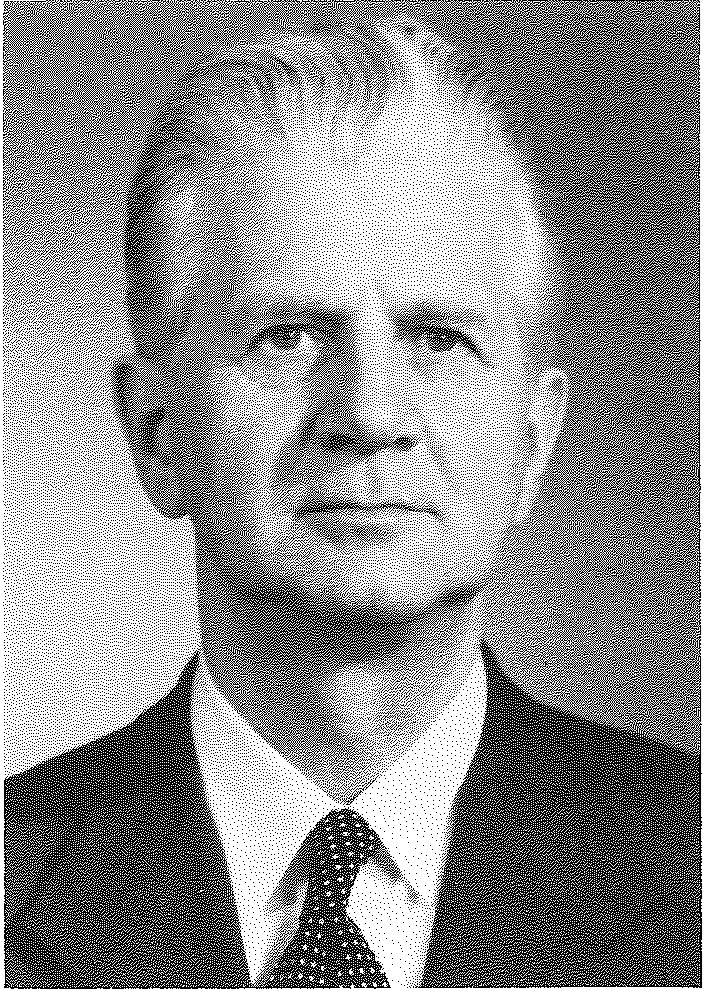
The resonant Mandarin Chinese tones in which Chester Ronning told his colourful anecdotes convinced Chinese and foreigners alike that he was a man steeped in Chinese ways. Without doubt he was uniquely qualified to make a significant contribution to Canada’s relations with China. He made a good start during his six years with the Canadian Embassy in Chungking and Nanking (1945-51) and at the Geneva Conferences on Korea and Indochina in 1954 and 1961. It is unfortunate that during the remainder of his 20 year career (1945-
65) Canada had no diplomatic relations with the People’s Republic of China. Just imagine how he would have performed if he had been Canadian Ambassador during the regime of the pragmatic Deng Xiaoping! But that was not to be. Chester Ronning died in Camrose, Alberta, on December 31, 1984, at the age of 90.
Chester Ronning was born in Fancheng, Xiangyang County, up the Han River tributary of the Yangtze in Hubei Province of Central China on December 13, 1894, the son of Norwegian-Canadian Lutheran missionaries. After education in Canada and the United States, he served as an RAF pilot in World War I. He returned to Fancheng as a Lutheran missionary teacher from 1922-
27, when civil war compelled the evacuation of missionaries from the interior. From 1928-42 he was principal of Camrose College in Alberta. During this time he served as a C.C.F. Member of the Legislative Assembly for Camrose from 1932-35. He served in the RCAF as an intelligence officer from 1942-45. He joined External Affairs as a First Secretary in 1945 and was soon sent out to the Canadian Embassy in Chungking. Major General Victor Odlum, former Commander of the Second Division in England, was Canada’s first Minister (later Ambassador) to China in 1943. He was an intense man who had become caught up in Chiang K’ai-shek’s wars against the Japanese and the Chinese Communists. Ronning’s role was to support General Odlum, but also to try to introduce an element of balance into Odlum’s reports. This required the exercise of some subtlety as Odlum dictated in quotation marks lengthy accounts of his interviews with Chinese leaders. I recall Ronning telling me that after one interview with President Chiang K’ai-shek, in which the Generalissimo grunted from time to time to indicate that he was following Odlum’s presentation, Odlum attributed half of the discussion to the president out of courtesy ’because he had not disagreed’. Ronning also established a valuable link with the Chinese Communist delegation in Chungking, a connection which provided insight into Chinese politics and future entrée.
Civil War Grows
When the Embassy was moved down the Yangtze to Nanking after the war, Ronning found the new Ambassador, Tommy Davis, much more skeptical about the claims of the Kuomintang Government of President Chiang K’ai-shek. The civil war grew in intensity, despite the mediation efforts of U.S. envoys, including General George Marshall. In the spring of 1949 the Communist forces overran Nanking. Ambassador Davis was instructed to remain in Nanking instead of following the Kuomintang Government to Canton. Later he was called home for consultation.
Chester Ronning became Chargé d’Affaires of the Canadian Embassy, and was in charge when Mao Tse-tung proclaimed in Peking on October 1, 1949, the establishment of the People’s Republic of China. He invited foreign governments to establish diplomatic relations on the basis of equality and mutual respect. At that time, as Head of the American and Far Eastern ing Under Secrets prepare a memorandum for the Minister — and eventually for Cabinet — on the factors to be taken into account in considering recognition and the establishment of diplomatic relations. Both Ambassador Davis, on his return to Canada, and Ronning in Nanking, strongly advocated early recognition. In early November, 1949, Cabinet approved in principle an External Affairs memorandum recommending recognition and the establishment of diplomatic relations with the People’s Republic of China. But Cabinet left the question of the timing of recognition undecided.
Ronning continued to press for action, reporting on the steps taken by the Scandinavian countries. Cabinet then decided to defer a decision until after Lester Pearson returned in February, 1950, from the first meeting of Commonwealth Foreign Ministers in Colombo, Ceylon, in early January, 1950. At that meeting, which I attended, there was a lively discussion of recognition because Britain, India, Pakistan and Ceylon had recognized, while Canada, Australia, New Zealand and South Africa had not.
When Mr. Pearson returned to Ottawa in February other arguments for further delay were adduced. – problems encountered by British and Indian diplomats in Peking, and the seizure of U.S. Consular properties in China. Despite these restraining factors. Ronning urged that he be authorized to travel to Peking to negotiate on recognition and the establishment of diplomatic relations. Two telegrams of instructions authorizing him to go to Peking to initiate discussions were prepared in my division and were awaiting approval in the Minister’s office when war broke out in Korea June 25, 1950, postponing further consideration of recognition.
Recalled by War
Because of the Korean conflict in which the Canadian 25th Brigade, as part of the Commonwealth Division of the United Nations Command, faced Chinese forces across the 38th parallel, Ronning’s position in Nanking became more and more difficult. By that time I had been posted to Tokyo as Head of the Canadian Liaison Mission in Japan. Ronning was recalled to Ottawa in the spring of 1951. He stayed with us in Tokyo en route home, expressing special distress over the stringent body search by Chinese Communist border guards before he was allowed to cross the border to Hong Kong.
After serving for a short time as Head of the Far Eastern Division in Ottawa, Ronning was appointed Ambassador to Norway and Iceland, an especially attractive assignment because of his Norwegian ancestry. During this time he was also appointed a member of the Canadian Delegation to the Geneva Conference on Korea and Indochina in 1954. His remarkable command of Chinese and personal acquaintance with Chinese premier Chou En-lai and others provided contacts unmatched in any other Western delegation. It is alleged that Ronning’s reputation created the confidence that decided Chinese support for Canada as the Western member of the International Commissions for Supervision and Control in Vietnam, Cambodia and Laos. Ronning also secured the release from Chinese custody of Squadron Leader Andy Mac- Kenzie, who had been shot down over North Korea while serving as an F-86 exchange pilot with the USAF.
In 1957 Ronning was appointed High Commissioner to India, following Escott Reid. As the External Affairs adviser and speech writer for the Honorable William J. Browne, Minister of State without portfolio from Newfoundland in the Diefenbaker government, I visited Delhi with Mr. Browne following a November, 1957, Colombo Plan Conference in Saigon. I was struck by the relaxed and easy raport Ronning had with Indian Cabinet Ministers. While High Commissioner to India he joined the Canadian Delegation to the Geneva Conference of 1961 on Laos, where he again helped to build bridges to the Chinese Delegation.
Ronning was extended beyond the usual retirement age of 65 because of his late entry at age 51 in 1945 and Mr. Pearson’s view that he could render valuable service in India until age 70, December 13, 1964.
After retiring to Camrose, Alberta, in 1965, Ronning was called out of retirement in 1966 to go to Hanoi and Saigon to explore the possibility of a negotiated settlement in Vietnam. This came to naught because of the stiff position of North Vietnam and the decision of President Lyndon Johnson to greatly increase U.S. military intervention.
My assignments in Ottawa from May, to November, 1950, made me Ronning’s first point of political contact in External Affairs. As he was 22 years older than I was I called him “Da Ge” or elder brother, while he called me “Xiao Tian Bao” or little heavenly dumpling, referring to my rotundity. Because of our common interest in China I maintained both an official and personal correspondence with him throughout his career. He was a man endowed with outstanding linguistic talents. He had a warm and engaging personality. He was a strong believer in social justice, marked by his term as a C.C.F. legislator in Alberta from 1932-35, but also his support for the egalitarian programs of the Chinese Communists.
If I differed with him on our interpretation of developments in China, it was over the emphasis to be given to the peasant revolution. Eighty per cent of Chinese are peasants and the Communist Party based itself on these peasants and tried to use their desire for improved opportunity as the underpinning of their claim to rule. My impression was that as part of egalitarian movement, Ronning was prepared to explain and condone Mao Tze-tung’s Cultural Revolution, which really lasted from 1966-76. Ronning’s sympathy for the Chinese peasants came naturally from his upbringing and teaching in Fancheng and from the idealization of life in the northwest stronghold of Yanan, as expounded by the propanganda of the Communist Delegation in Chungking. Because my father was a professor of Ancient Chinese History and Archaeology at Cheeloo University, Jinan, Shandong Province, I was exposed to the role of the intellectuals, including those of the long blue gown who had advanced from peasant families, all of whom had molded Chinese civilization over the centuries. Intellectuals were disparaged during the Cultural Revolution. Deng Yiaoping has reinlisted their services in China’s modernization, including the sending of over 30,000 abroad for study. Although I did not discuss this development with Ronning, I feel confident that he would have supported this trend.
One Last Journey
In the autumn of 1983 Ronning made a final sentimental journey to China with members of his family. He was warmly received in the Great Hall of the People in Peking by Wang Bingnan, President of the Chinese People’s Association for Friendship with Foreign Countries, who had known Ronning in Chungking days. In addition to Peking, Ronning visited the famous Buddhist cave temples at Dunhuang and the western end of the Great Wall, both in western Gansu Province. Then he went to visit his old home in Francheng. His daughter, Audrey Topping, wife of Seymour Topping, the Managing Editor of the New York Times, worte a moving account of this pilgrimage which appeared in the Montreal Gazette on March 3, 1984.
All who serve in the Department of External Affairs can look up to Chester Ronning as an example of an officer who used his family upbringing, his remarkable knowledge of a difficult foreign language, his patience and good humour, for the benefit of Canada’s relations with foreign countries, especially China.
View the original scanned pages →
Originally published in bout de papier, Vol. 3, No. 1 (1985) — March 1985 // Mars 1985, pp. 17–18. Read the rest of this issue →



