
bout de papier, Vol. 10, No. 3 (1993) — Summer 1993 // Été 1993, pp. 12–15
Story and photos by Laurel Pardy
The urge to go where no one has gone before is strong in us all. Short of descending into the ocean depths or ascending some geologic peak there are few places left on earth that meet that criterion. Anyhow, to go where only a few have gone before is enough for most of us.
The southeastern coast of Costa Rica might qualify for that description. Reached only by fairweather roads through the banana plantations where Chiquita and Dole originate, by boat or coastal footpath, the Manzanillo-Gandoca Biological Reserve is protected by its isolation and inaccessibility.
At the moment, those are the only things protecting it. The status of being a “Reserve” is a meagre defence against developers, lumberers, poachers of wild fauna and flora, the immediate needs of a growing local population for land and the desire of bananeros to encourage every member of the ECC to consume daily the long yellow potassium-rich fruit.
The invisible agrochemical footprint of banana production is on my mind as I step down into the mud and wave at the barefoot children playing in the green-scummed drainage stream.
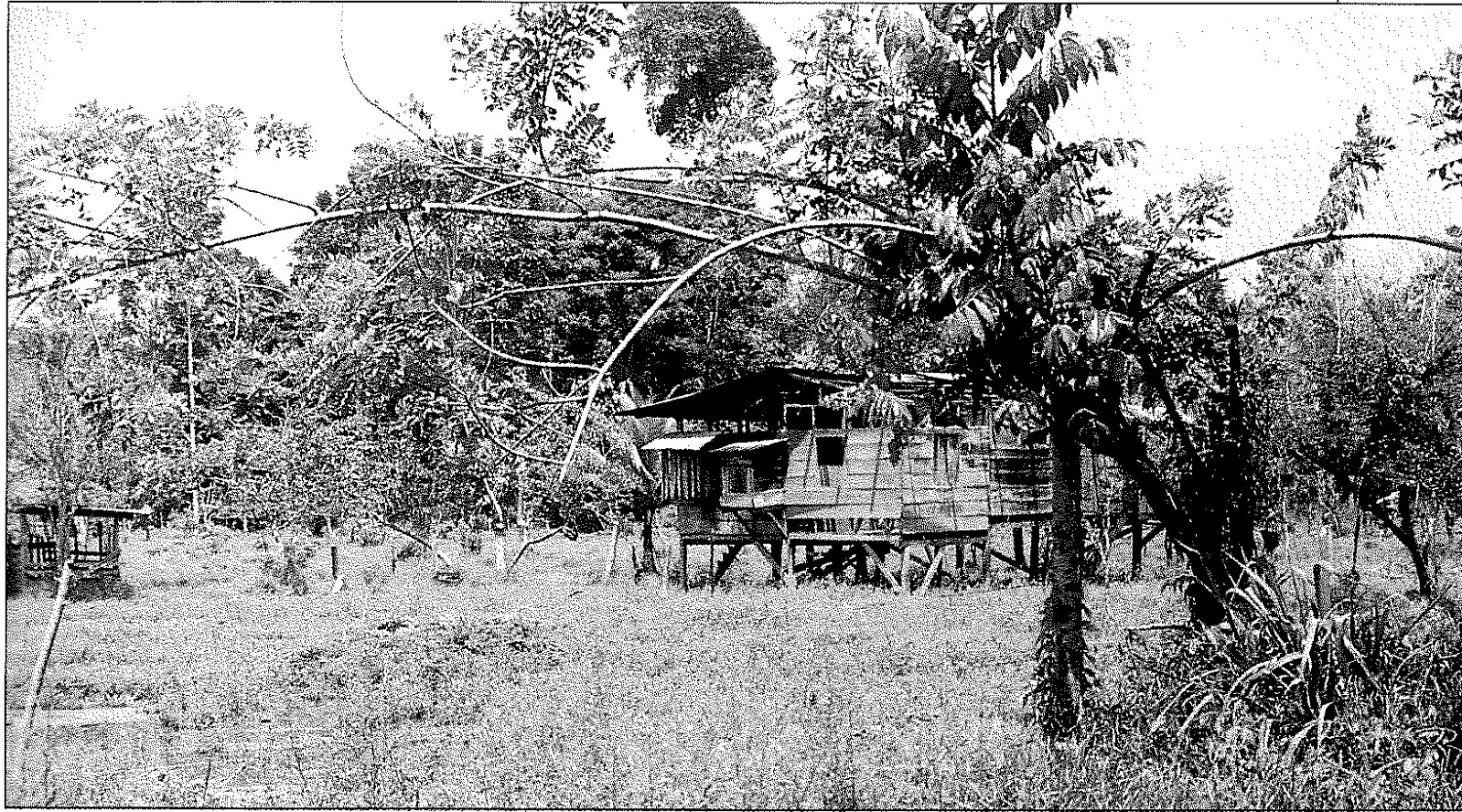
For an hour we had been fishtailing in black gumbo through thousands of hectares of banana plants with their load of green bananas covered in the blue plastic bags that keep insects and the hairy tarantulas at bay. Beyond the plantations, lie the coastal village of Gandoca and the Reserve. With a final slide and swoop the track ends abruptly in front of a cleared field with a weathered hut, safely raised on four legs above the water-logged earth.
“¡Hupe la casa! Buenos días, señora. Por favor, diganos ¿donde estamos?”. “Where are we?”, I shout to the woman hanging clothes to dry on the barbed wire fence of her garden patch. Her children clutch her colourful skirts in shy excitement at the appearance of strangers.
“Aquí esta Gandoca, señores.” This is Gandoca.
She has to be kidding. This is nowhere. It could not possibly be our destination.
The map had shown neat little black squares representing houses, a tiny cross for a church and a flag for a school. Where were they? There had been no little pigs, or coconuts, or wavy swamp lines on the map.
The guidebook had described a ranger station at the entrance to the reserve, a pleasant little village with a school, possible guides, fishermen who could be persuaded to take us along the coast and an unofficial hostelry where one could sleep sheltered for the night.
There are a number
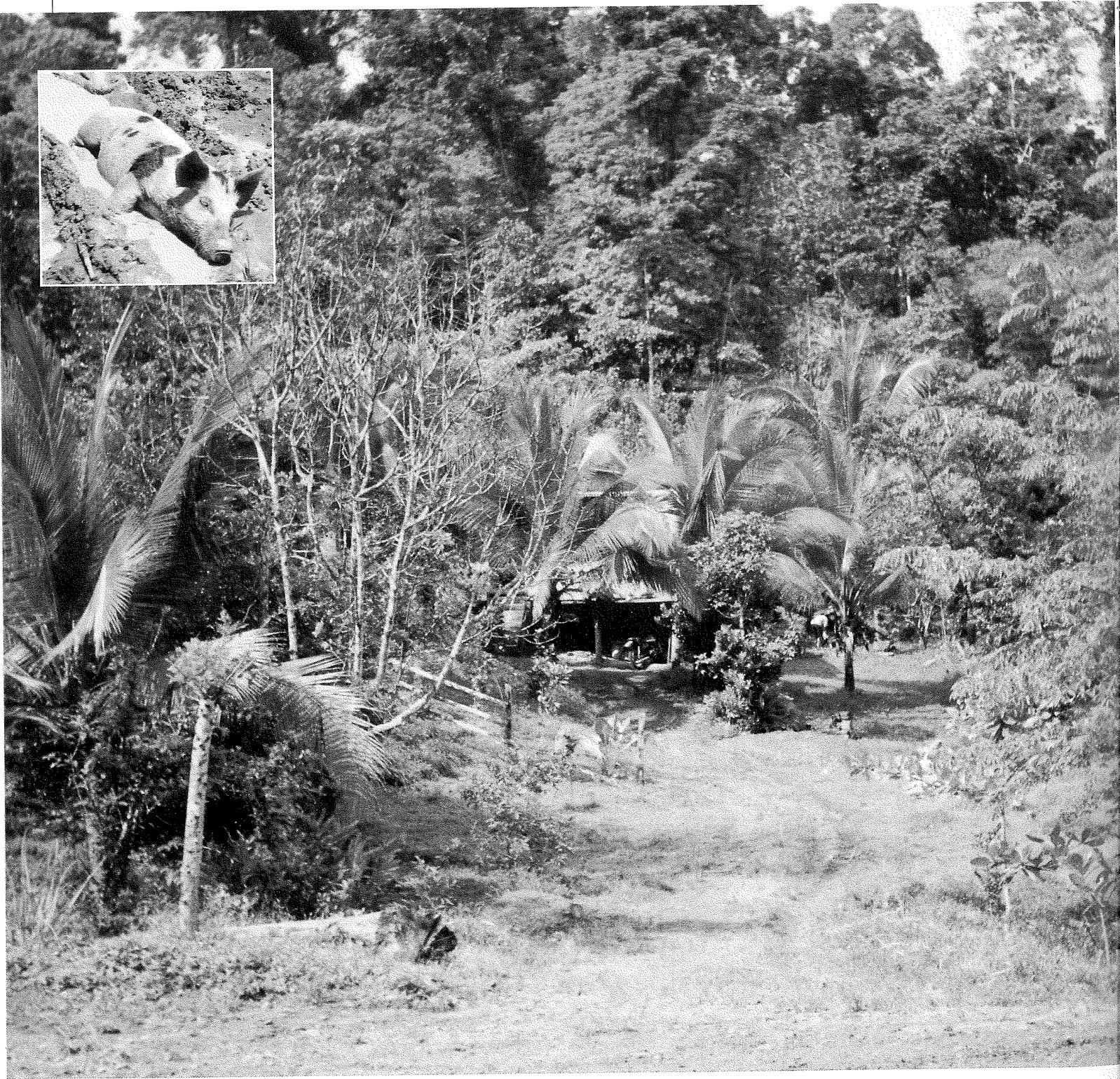
We look around. Two mud tracks intersecting the middle of coastal jungle and banana groves, three huts on stilts and a roving band of hungry porkers, grunting at the wheels of our Montero were not what we had expected. The wheels of our Montero were our immediate concern as they were hub-cap deep in marshmallow mud and inching toward the deep roadside ditch. People complain about winter driving in Canada, but many times I have been thankful for the enforced practice with slippery conditions when faced with off-road tracks in the tropics. Rain and mud and river fords and potholes and sugar sand yield to the experienced hand and foot of wily winter drivers.
A few anxious moments later, safely parked with two wheels on a grassy hummock, we look around. Despair turns to elation upon discovering that we are only a kilometre from the beach and the reserve entrance is just around the corner. The peace and quiet gradually penetrate the adrenalin fog and we make ready for the trek to the beach. Sun hats, high gum boots and water bottles for everyone. One camera and a pair of binoculars between us will suffice, it is too hot for more.
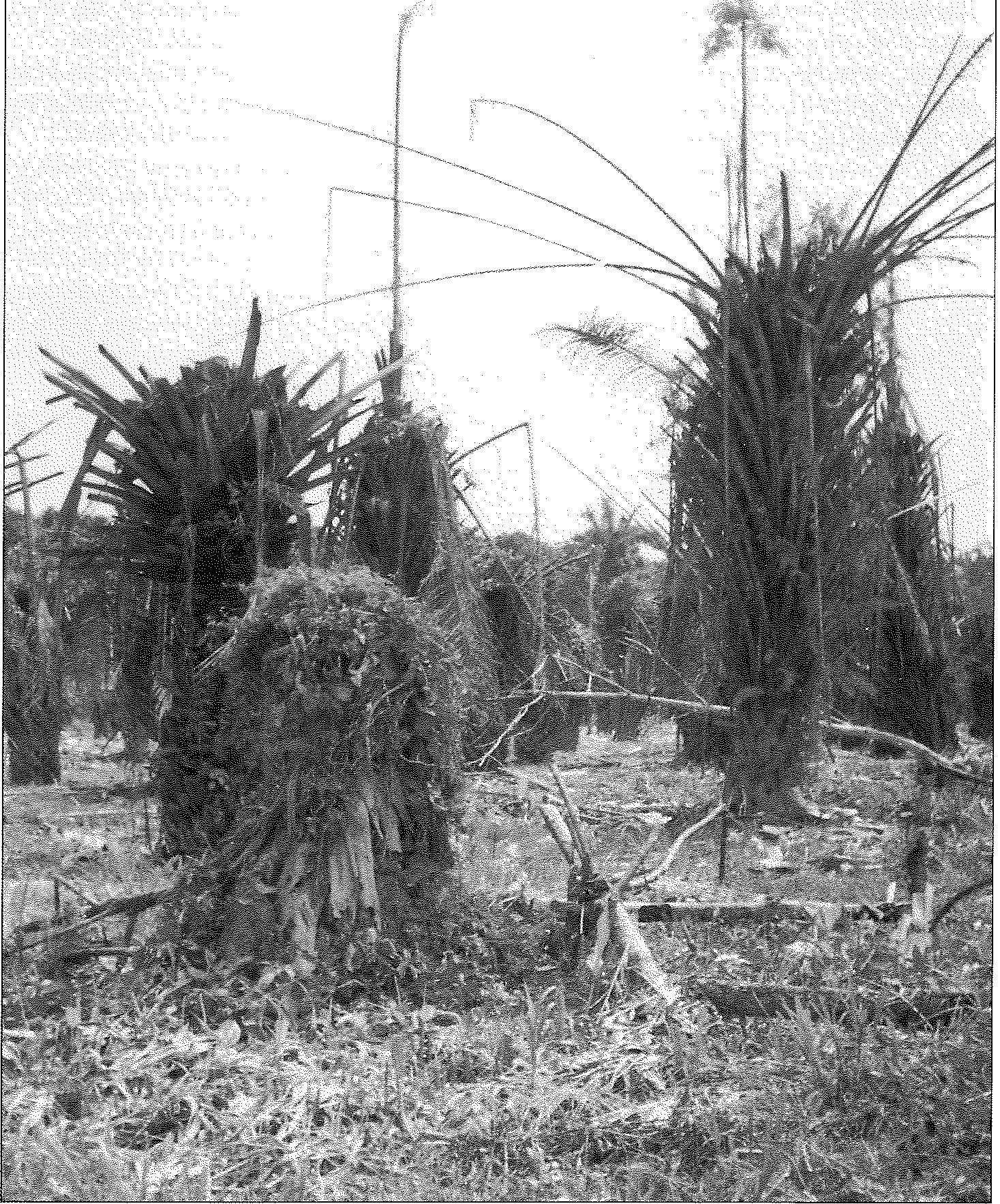
The entrance to the Gandoca-Manzanillo Biological Reserve is marked by a few wooden fence posts, a small carved sign and an empty hut. The trail would have been driveable in the dry season but now it is impassable, even for horses, because of the mud.
How do the people keep their homes clean, or dry their laundry? Where do they shop? They need rice and beans, coffee and sugar. How do the children get to school? Only for the first few years can they attend the local school, a freshly painted hut on stilts in the middle of a cleared quarter acre. Turquoise seems a popular colour. There are a number of turquoise doors and window frames, but the school, being more important, is all turquoise.
Bright turquoise does not stand out here, where blood-red and scarlet heliconias grow in ranks several metres tall along the forest edge. Jewel-like colours punctuate the jungle greens from every nook and cranny. One would assume that emerald green and crimson birds would be easy to spot, but a shy Slaty-tailed Trogon sitting quietly on a branch is nearly invisible until it flies.
“Look at the purple flowers on that tree,” someone calls out.
“That’s not the tree, it’s a vine growing on the tree.”
“Idiot, it’s an orchid growing in the tree.”
It’s hard to tell where one plant starts and another begins. This time it is a vine, an escaped species of morning glory which thrives around domestic clearings. At home, it is the vine of summer swings and front porches and Sunday dinner with Grandfather; here it is a weed.
Small yellow and black and orange and iridescent birds dart about the bushes. Blue and yellow and orange and black and red butterflies flirt with the flowers. They look too fragile to be so energetic in this wet heat. In any event, we are more intent on rescuing our gum boots from the sucking mud and drawing air into our heaving lungs. For a year, we have been living in the Central Valley at an altitude of 1500 metres and are unaccustomed to the torrid sea level temperatures and suffocating humidity.
This land has been inhabited by bands of indigena, the original people, for centuries. There are clearings for huts, small gardens, stands of coconut and banana, and pastures for a few horses and cattle but still the jungle presses in. The indigena traditions emphasize harmony with nature and the preservation of balance between human and environmental need. This is why we have come, to see how it was before it disappears under a wave of development opportunists and ecotourists. We ourselves, are the forerunners of the very thing we deplore.
Suddenly, the land rises slightly and the trail opens onto the beach. It stretches away to the north and south for several kilometres, the sand pure black and powder fine, a reminder of Costa Rica’s volcanic history. The slope is steep and the surf smashes and recedes, building and destroying transient sculptures of sand and driftwood and surging foam. It is wild, untamed and beautiful.
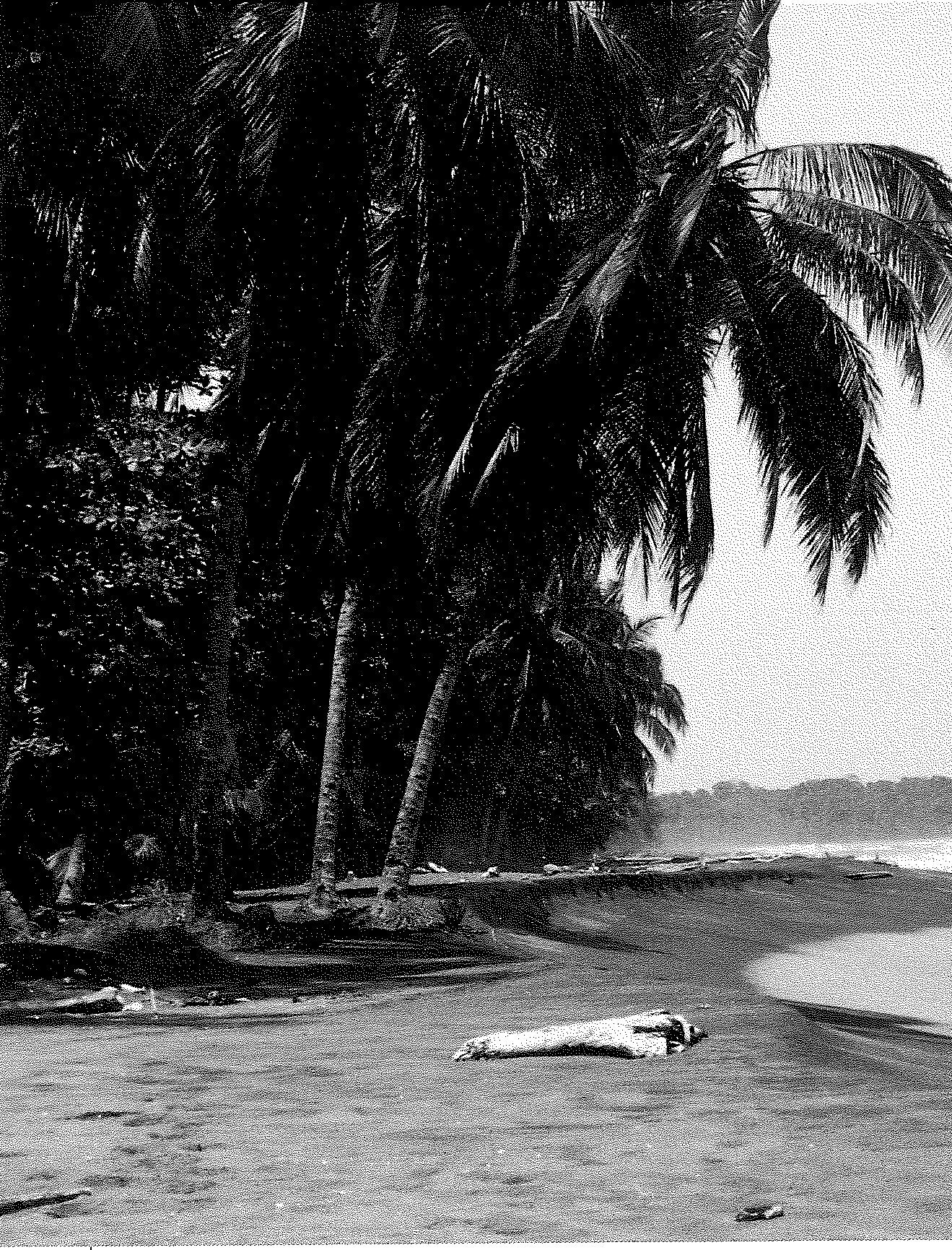
To the north, our left, stretches a long slow curve of beach fringed by coconut palms bending submissively in the wind. At first, it seems that the place is empty, but there are small houses in the trees, and gradually the signs of domesticity become obvious. There are clothes drying on fences, fishnets draped over upturned boats resting on the jetsam above the high tide mark, a few dogs sleeping in the shade and children playing on the stoops.
Our objective for the excursion lies to the south, the Gandoca Lagoon. It is a brackish mangrove-edged swamp, cut off from the sea by a ridge thrown up by the waves. During very high tides, the sea rolls over the sand bar maintaining water levels and creating a protected, warm water haven for its resident populations. The Atlantic tarpon comes here to breed, a rhythm which the sport fishermen have thankfully ignored. There are caimans and seabirds and snakes, oysters and crabs, red mangrove and sea grape; but we have come to see a rarer creature — the West Indian manatee.
The manatee is an ancient creature with small populations here and there around the world, in East Africa and northern Australia, Florida and South America. Referred to unflatteringly as the “seacow”, it is also portrayed in legend as the siren of the seas whose seductive song can lure ships onto the rocks and sailors to their watery deaths. Unfortunately, the manatee looks more like a cow with flippers and a stubby rudder. They are gentle vegetarians whose aim in life is to raise their young in peace while browsing contentedly among the sea grasses.
A few men and young boys walk past in small groups or alone. They smile and throw amused glances at the crazy gringos. The water in our bottles is hot and stale, but we need it for the trek along the beach. In response to our request, one of the men scales a palm and cuts down a few young coconuts. He lops off one side with an efficient blow of his machete. The liquid inside is sweet, slightly bitter and tastes of coconut. It dribbles down our chins as we gulp it down. It is delicious. The flesh of the immature coconut is sweet and gelatinous, easy to digest in the steaming heat. We eat it by scooping it out with a clean stick.
In this form it is called a pipa and the coconut is thrown away after the liquid has been drunk. The beaches are littered with them. These husks become home to an assortment of beach life, mainly crabs waiting out the sunshine hours between tides.
Heat waves shimmer in the noonday sun. The sand is too hot to touch and the surf too strong to walk in, besides the beach is too steep. We toil along the high tide mark, just out of reach of the snatching surf, slipping and staggering in the soft sand.
The sand barrier is firmer and we shade our eyes against the glare as we search for our objective. The lagoon is glassy under the layer of hot air. Shorebirds dart in and out of the surf; fishing eagles and kingfishers glide among the mangroves trees; a lone fish skitters over the surface of the water to elude a feeding predator. There appear to be no snakes or caiman in the vicinity so we turn our attention to the ocean.
Nothing. Waves and more waves. Lunch is calling. Have we come this far to be foiled?
“Look. There. In the wave.”
There are a thousand waves for goodness sake!
I see it. Brown, stubby, like a fat cigar rolling in the surf. Its back glides smoothly in a curving roll up and out of the water and down again. It is riding a roller. The tide is not at full flood yet, so perhaps it is waiting to get into the lagoon for a feed. It may be tired of the grassy seabed and anticipating a change of menu. Whatever it is doing, it does not do it again. That is the only sighting we have. The ten second reward for six hours of gruelling effort.
It is enough.
The trip back to our campsite is relaxed and filled with hums of contentment. Tonight we will talk about what we have seen and done. For now, it is enough that we did it.
View the original scanned pages →
Originally published in bout de papier, Vol. 10, No. 3 (1993) — Summer 1993 // Été 1993, pp. 12–15. Read the rest of this issue →



