bout de papier, Vol. 11, No. 2 (1994) — Summer 1994 // Été 1994, pp. 34–35
In late 1993, two months before armed rebels of the Zapatista National
Liberation Army thrust the remote Mexican state of Chiapas into the world’s headlines, I paid a five-day visit to the area to see a number of Canada Fund projects in operation.
My first stop was the Bishop’s Palace in San Cristóbal de las Casas where Don Samuel Ruiz concluded our talk about the problems facing the indigenous people of Chiapas by directing me to a run-down government building on the edge of town: “Just in case you think you have all the answers,” he said, “go and talk a while to the expulsados, the expelled ones.”
In the courtyard and cloisters of the city’s Indigenous Institute were encamped some 400 or more Tzotzil Indians from the community of San Juan Chamula. Their story was a strange one, difficult to believe in the twentieth century even in these benighted parts.
Twenty-five years ago, missionaries from North American evangelical churches had begun to spread through Guatemala and Southeastern Mexico. In the Chamula Indians they found what seemed to be a people in dire need of salvation. For, many years before, the Chamulas had forcibly ejected their Catholic parish priest and, while maintaining their reverence for a 34 bout de papier Vol. pantheon of Catholic saints, had reintroduced pagan rites that many had thought long forgotten. They removed the pews from the old stone church, spread pine needles on its floor and arranged the saints around the edge of the church, each in his or her curtained case. Each was assigned the role of specific Mayan deities and, if they failed to produce the goods — for example a satisfactory maize harvest -they would be turned to the wall or have their curtains closed. Sacred stones were unearthed from their hiding places and given places of honour.
The evangelicals made major inroads into Chamula, but the old rites survive. Today, if you pay two pesos at the town hall and hand over your camera, you can enter the church and step into a disturbing, even menacing twilight world of smoke and ritual mutterings in tzotzil. If you visit Chamula on one of its many feast days, which borrow from both the Maya and the Christian calendars, you should beware: the costumes, the dancing and the music are quaint but the pox (local firewater) flows freely and foreign faces are not always welcome.
Pox (pronounced posh) in fact plays a critical part in the Chamula culture. It is produced in copious quantities for fiestas and is accepted by the local authorities in lieu of taxes and fines. But the converts to the new evangelical religions do not drink. Nor will they buy flowers, candles and soft drinks for the monthly fiestas — all lucrative monopolies in the control of a handful of village caciques or strongmen. Following the arrival of the evangelical missionaries, tensions in the community grew and San Juan Chamula split, ostensibly along religious lines but really because the converts to evangelical religions threatened the prosperity of the caciques.
The caciques responded brutally to the evangelicals. In twenty years, over 20,000 evangelicals have been forcibly expelled from San Juan Chamula. Some have been killed, many beaten, their houses burned. The pretext was always that they would not conform to the traditional ways of the Chamulas and that they therefore no longer deserved a place in the community.
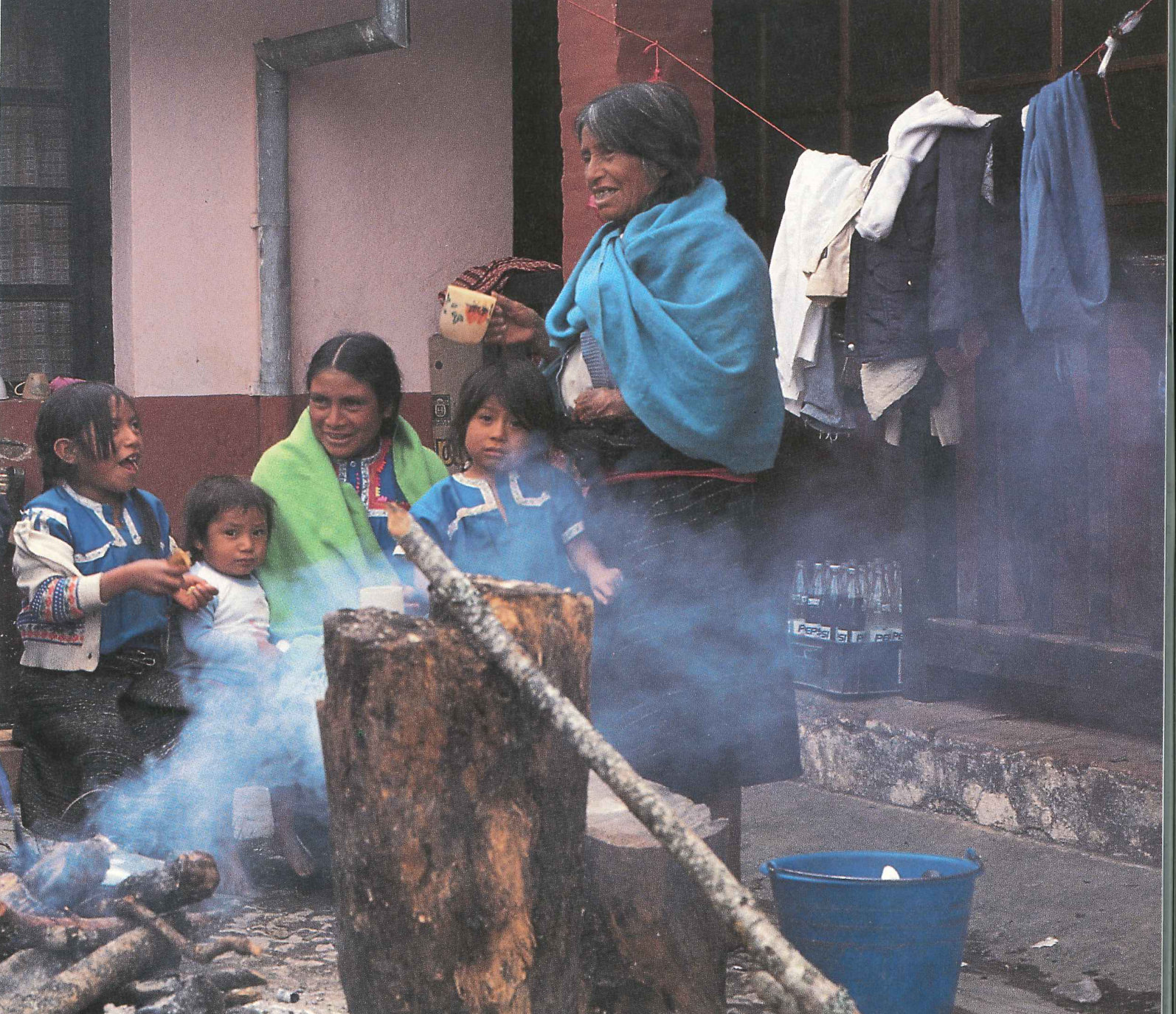
Whole colonies of such expulsados now live in shanty towns around San Cristóbal, with names like New Palestine or Bethany. Then in July 1993 the latest wave of victims, numbering over 400, decided that enough was enough. They staged a sit-in at the city’s Indigenous Institute, and there they remain. Two babies have died while they have been there. At first, no doctor would attend to them. They depend for food upon the charity of fellow evangelicals in town and, in large part, upon the Catholic diocese of San Cristóbal. Their demands are simple. The law be enforced and that they be allowed to return to their traditional homes in San Juan Chamula.
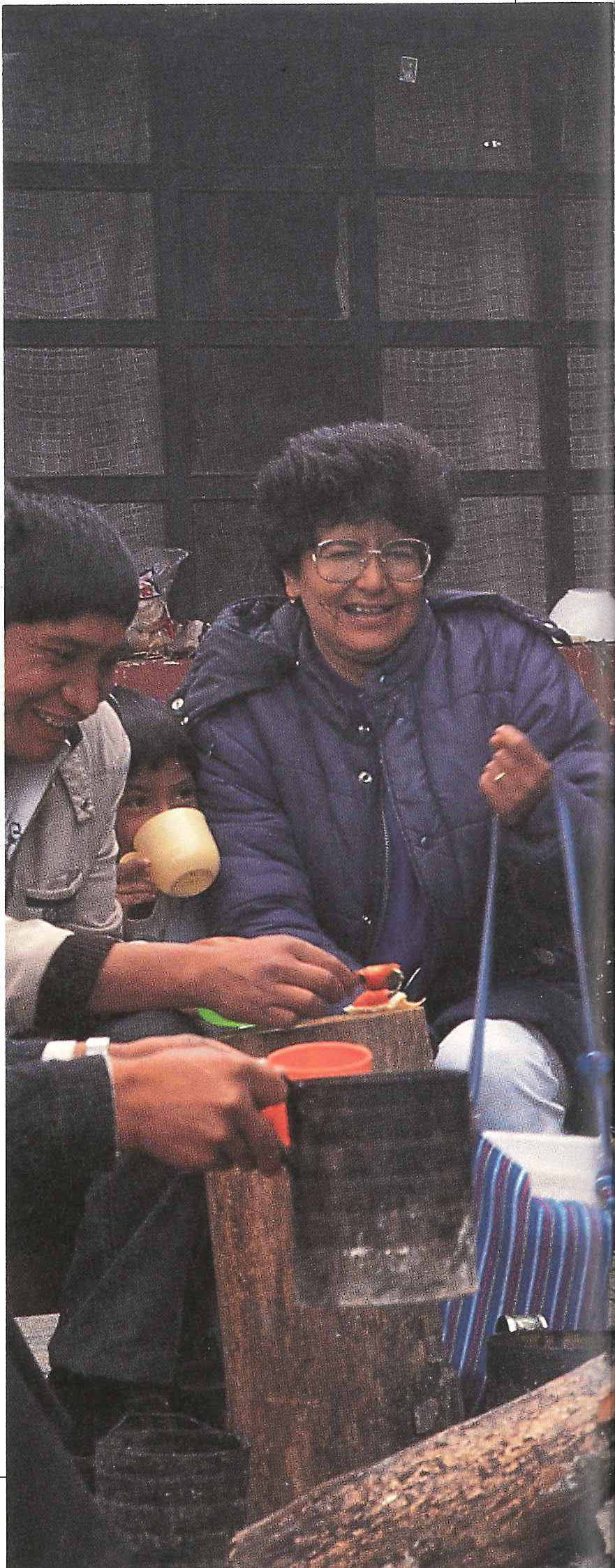
After my first visit to the expulsados, the Canadian Embassy made a small emergency donation to them, in the form of blankets and tarpaulins. I went back in January 1994, at the time of the Chiapas crisis, to see how they were doing. The tarpaulins were in place, cauldrons of maize bubbling over an open fire, but the expulsados now numbered 580. They were quite oblivious to the tanks rumbling through the cobbled streets of San Cristóbal and the camouflaged helicopters clattering overhead. “We are a peaceful people,” one of their leaders said to me. “All we want is justice.”
View the original scanned pages →
Originally published in bout de papier, Vol. 11, No. 2 (1994) — Summer 1994 // Été 1994, pp. 34–35. Read the rest of this issue →