bout de papier, Vol. 11, No. 2 (1994) — Summer 1994 // Été 1994, pp. 16–18
Monday, November 20. Vaclav Havel announces the creation of the Civic Forum. Two hundred thousand people take to the streets. It is the end for the hard-line regime in Czechoslovakia.
There was an air of expectancy that first morning of the revolution in the Havel’s apartment. Of course no one there, among the few of us present, could predict what would happen later that day. It was Monday morning, November 20, 1989. I was sitting in a chair in front of the desk at which Vaclav Havel would soon announce the creation of Civic Forum. This was to be an umbrella opposition group in communist-ruled Czechoslovakia. Its surprising strength would bring the regime to its knees.
Civic Forum was created in reaction to the brutal police attack at a peaceful demonstration a few days before. The demonstration had been intended to mark International Students Day on Friday, November 17. By Monday morning, the sheer violence of the attack on the students was becoming clear. There were countless critical injuries and there was a rumour of at least one death. Public outrage, spreading across the country, suddenly crystallized.
It had been a long road. Over twenty years since the Warsaw Pact invasion of Czechoslovakia and the crushing of Dubcek’s Prague Spring. And over ten years since Havel, the so-called dissident playwright, had founded Charter 77 with a few other defenders of human rights. Havel had spent five of those years in prison. Now it was a year and a half since the first sizeable demonstrations against the regime. That was in the summer of 1988, the summer my family and I arrived in this hardline communist state.
At that time, Havel and the ragged band of Charter signatories were a controversial lot for both their countrymen and for the diplomatic community. Many in both camps wondered what possible impact this small group of dissidents could possibly have on a totalitarian state. Within days of our arrival, Havel had responded in an opposition journal, arguing that he could theoretically imagine a situation where a series of events might turn Charter 77 into a definable and visible movement with a large following. The point was that the Charter’s strength derived from the truth it articulated. The mirror’s existence far exceeded the number of people holding it.
Now, as I waited in the Havel’s apartment, we were on the verge of that transformation. Thousands, even hundreds of thousands of people, would rush forward to hold a mirror so all would see the regime for what it was, without equivocation. This had come about because the need to live in truth experienced by a growing number of people was converted into the courage to do so. Havel had earlier articulated the commitment that inspired a revolution. “I base my actions on a fairly simple human philosophy: namely, that I have to say what I think. I have to speak the truth. I have to fight for the things I know to be right.” The brutality unleashed by the regime on the students of Prague clarified the mind of an entire nation along the same lines.
So there we were, a gaggle of journalists and a couple of diplomats in the Havel’s apartment on that fateful Monday. A desk had been pulled into a corner of the room where Vaclav Havel would sit. I had been there regularly since I had arrived in Prague in the summer of 1988. Pierre Guimond, a colleague from the Embassy, was sitting beside me. Vaclay came through the door. The Swedish Ambassador followed him. Havel announced that he would not go to Sweden to receive the Olaf Palme Award, which had just been awarded to him, even if he was given a passport by the regime. He felt he had to stay in Czechoslovakia at this time of difficulty. The Swedish Ambassador hinted that his Foreign Minister might come to Prague to present the award.
Vaclav Havel announced the formation of Civic Forum. The cameras of foreign journalists clicked, microphones were thrust forward, there were TV cameras from American networks. The whole atmosphere was one of tension and hurry, and I half expected the police to come in and break up the meeting. Havel laughed lightly, saying it was his first press conference. He knew better than most that anything like this before would already have been broken up. There was the air of expectation now, that something was happening, that things had broken loose, a vertigo almost. General Secretary Jakes was still in power, and anything was possible on the side of the regime, including more violence and mass arrests.
Havel talked about Civic Forum’s declaration, the need for political change and the need to find out who was responsible for Friday night’s brutality. Universities had been closed down by students’ strike committees and many were occupied by the students, and sheets proclaiming the strike were draped out of upper floor windows.
The photographers shot and whirred, and the journalists wrote. They had just come from the Berlin Wall and expected more of the same in Czechoslovakia. Certainly there was something in the air, hope tinged with foreboding. Yet this was the regime that had applauded the Chinese “solution” of last June (the Tiananmen Massacre).
As I sat listening to Vaclav, I didn’t know what the regime or the Czech and Slovak people would do. The pattern of the past had not been encouraging. Very small groups of people had risked showing their displeasure with the regime, and had paid an inordinately high price for it. All Czechs and Slovaks grumbled, of course, and there was a constant stream of jokes about the uneducated, boorish leadership. Violence and intimidation had worked in the past, and the beating dealt out on Friday night was no doubt intended as a lesson.
In January, 1989, I had sent a telegram arguing that the story of that year would be the decline, perhaps precipitous, of the regime’s public authority. This conviction had come on the heels of the week of demonstrations in January 1989 marking the 20th anniversary of Jan Palach’s suicide. I had argued that the fall of the regime would come as the result of some miscalculation, an over-reaction to dissent. Perhaps that was what had occurred on Friday night. Perhaps a corner had been turned after all. Only the reaction of the people would tell.
Still, as Havel joked that this was his first press conference, I knew he half expected, as I did, that the police would intervene sooner or later, that he would be arrested again as so many times in the past. Yet he was cheerful and determined, flying without instruments in a storm.
I could not help but think of the last year, about being present at his trial in February 1988, and before that, when I first met him. It was a very long road to me, but only the last chapter to him. It had already been more than a year of tremendous highs and lows, of enthusiasm and disillusionment.
Havel grasped immediately, sooner than any of us, the importance of Civic Forum.
For the first time, all of the opposition groups would be brought together under one umbrella. Even more important, a number of groups from the “grey zone”, a zone between the regime and the opposition, would also join. This included representatives of the Forecasting Institute of the Academy of Sciences, actors, singers, musicians, members of the coopted Socialist and People’s parties, scientists, and so on. The declaration proclaiming the creation of Civic Forum contained recognizable Charter 77 language about individual freedoms. There were also specific demands for an enquiry into the police violence on November 17.
Rita Klimova was sitting beside Havel interpreting. She had been brought up in Brooklyn as a child by Czech parents before returning to Czechoslovakia. It was wonderful to hear Havel’s very precise and highly charged pronouncements being rendered in a Brooklyn accent. Rita would become Havel’s Ambassador to the USA two months later. Also present was Michael Zantovsky, who had gone to school at McGill University. He would become the President’s spokesman, and then succeed Rita in Washington as Ambassador. Ivan Havel and his wife Dasa, a Slovak, stood behind Havel, barely able to contain their excitement. Havel himself wore no tie or suit jacket, simply an open white shirt with the sleeves rolled up. The business of opposition was about to start in earnest.
The Civic Forum Declaration was printed in the newspaper of one of the coopted parties under the regime, the Socialist Party. This was Svobodno Slovo, or Free Speech. For the first time in forty years, the title of the newspaper meant something. It hit the streets of Prague on Monday morning. The effect was to be explosive.
When Havel’s press conference ended, I waved goodbye and went out into the street. All over town university buildings were draped with banners proclaiming the strike. The buildings were barricaded and students were occupying them, often sitting defiantly in the windows a few floors up. It brought back to me the excitement of the 1960’s and the feeling that sometimes one had to do the right thing regardless of the consequences. I was given a copy of the student demands, surprised momentarily to see that it was a computer print-out. They were establishing strike committees at the universities and high schools across the country. They had resources and organizational talent, two important ingredients that the opposition groups did not always possess.
I went back to the Embassy and wrote my report on Havel’s initiative and on what was happening in the streets. I had earlier arranged to meet some journalists at the Hotel Jalta just before the scheduled 4 p.m. demonstration. The Jalta was located just about half way up Wenceslas Square. The journalists had rented a room at the hotel four floors up, with a balcony facing the square. I arrived early, a half hour before the time, in case the police chose to close the square off, as they had done in the past.
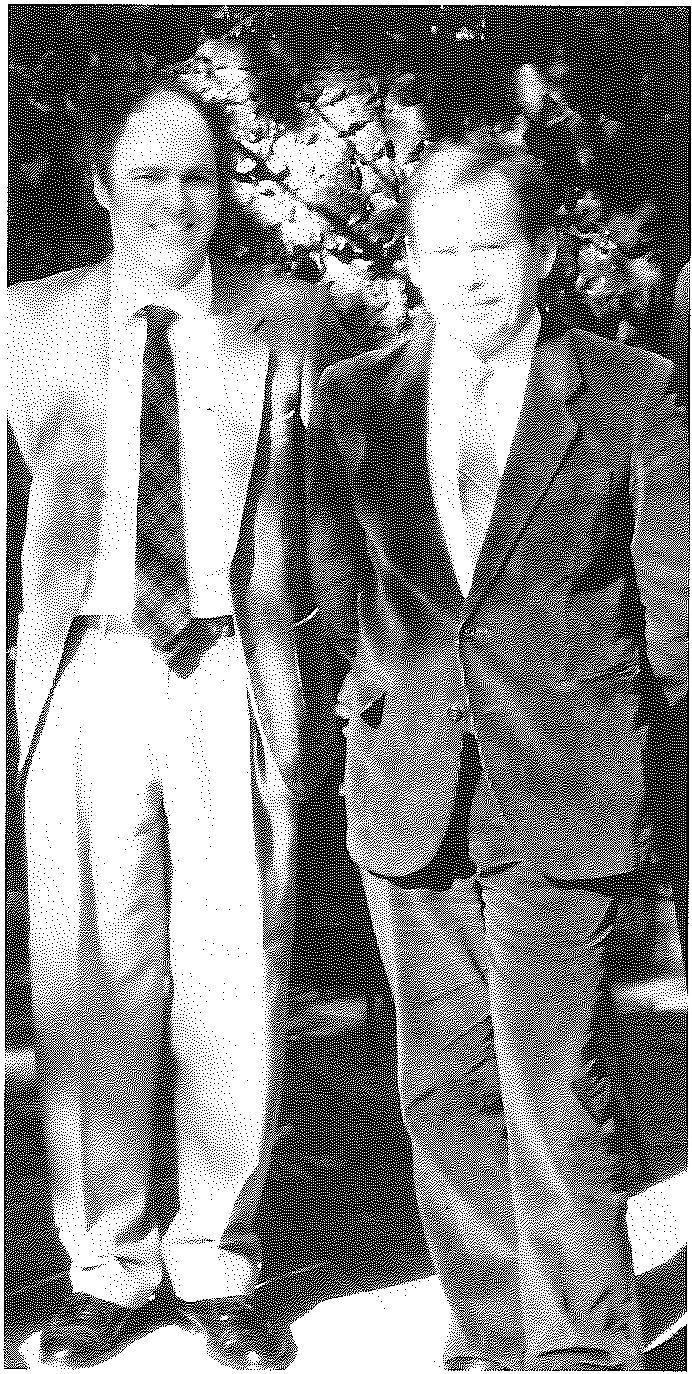
By 4 p.m. there were already more than 10,000 or so people, more than I had ever seen at any previous demonstration in the square. The atmosphere was electric as dusk fell and turned to twilight. People kept streaming into the square. There were thousands of students, but there were thousands of ordinary men and women too. From my view from the balcony, they swarmed in from all sides, noisy and shouting and carrying Czechoslovak flags. This was no meek gathering of the morally pure. That had been typical of the almost Gandhi-inspired demonstrations of the past. This was a surging crowd that had a life of its own and was looking for action.
Some portable loud speakers had been set up at the foot of the statue of King Wenceslas. The voices were almost impossible to understand because they echoed off the buildings. It didn’t matter at all to the crowd. The huge square filled up. There was a dense moving mass of people the whole length of the square, half a kilometre long The sound of a crowd of 200,000 people is both moving and frightening. It is pure power, the power of the general will made manifest and irresistible, both spiritually and materially. The roar from this mass deafened the handful of us on the balcony.
The light became twilight and the lights in the square glowed softly. The crowd throbbed and moved like the sea, chants starting in one corner and moving down the square like a wave, breaking and echoing off the buildings. I stood there with the journalists, hardly able to believe my eyes. Or to contain my excitement. I was seeing this through the lens of a year and a half of repression and brutality. I told them, “Well, that’s it. It’s all over.” The regime was finished. I knew that the resentment against the regime, against communism, was so deep, that once the door was opened the whole nation would rush through. The elaborate construction of lies, backed up by fear, would collapse. Living the lie for fear of falling into the abyss was the essence of the regime. The people in the square below were not afraid any more.
Those who were not afraid any more would show others and then no one would be afraid of the communist bullies any more. Those fearless people in the opposition had tried to show the way during their years in the wilderness. Now, in that crowd below, I saw the whole process multiplied and condensed. It would not be stopped, short of massive force. I did not believe that force was an option for the communists, not after what had happened only weeks before in East Germany. Gorbachev had clearly signalled that the days when Warsaw Pact armies were used for internal policing were over. This was not to say that the regime’s leadership might not have wanted to use force. They simply realized at one point that week that without the help of the Soviet troops stationed in Czechoslovakia, they could not be sure of crushing a revolution.
“It’s all over.” It was quoted by the journalists from the New York Times, the Washington Post, the Globe and Mail and the Toronto Star. What I meant was that the 18 bout de papier Vol. repression would stop. Innocent people would be released from jail. Innocent people would have their rightful jobs back. The children of these people would be able to go to school like any normal child.
In that huge jubilant crowd there were students and people from all walks of life and all ages. Many held candles as a symbol and memory of the Friday night massacre. As the minutes went by and people began realizing what was happening, the crowd began to feel its strength. Slogans were chanted that must have been heard all down the square. They cried “Down with” followed by the names of various regime figures, including the General Secretary of the Communist Party, Milan Jakes. The statue of King Wenceslas, sitting nobly on his horse, was covered with Czechoslovak flags and signs that called for free elections and pluralism. As the night wore on, the crowd took out their keys and began shaking them, making a loud cacophony. Unable to hear clearly what had been said in Czech to inspire this odd gesture, I asked one of the Czechs what this was all about. He said, “They are tolling the death of communism.”
Although people tried to speak to the large crowd through the improvised loud speakers, this didn’t work well. The crowd had its own life, the slogans rising and falling, or drifting down the length of the square and disappearing in a far corner. Then someone shouted, “To the Castle.” This was where the office of communist president Husak was located. It was also the closest thing to a traditional, if geographical location of Czech sovereignty. The entire crowd poured out through the bottom of the square into several streets, but mostly onto Narodni street in the direction of the Vltava river.
I recognized several people in the crowd as I marched with them. There was a lady to whom I said hello that was an underground Catholic activist. She had ten children at home and she was carrying a candle. I found myself in a crowd that moved onto Charles Bridge as others moved onto other bridges up and down the river below the Castle. Armed personnel carriers moved onto the bridge from the other side. They had large metal screens mounted on the front to push back the crowd. They came half way across the bridges and stopped, dimly lit in the darkness by the soft lights on the bridge. Confronting the small tanks on a 14th century bridge was eerie to say the least.
The armed personnel carriers blocked the crowd. We were packed onto the bridge like sardines. Looking behind, all I could see was a river of people that stretched back through the streets into town. The armed personnel carriers had six wheels and there was a turret mounted with a large gun and a couple of machine guns. There were shouts from the crowd to sit down and we all sat down. The idea was to wait out the confrontation. This tactic had not always worked well in the past. It had been used on Friday night, when the police attacked the crowd after waiting for two hours. We were sitting ducks on the bridge, and I swore at myself for getting into such a situation. But then there were other shouts, some close to me, that called out for a return to Wenceslas Square, or to the Old Town Square. The looks of the agitators close to me told me that these were StB (secret police) agents that had infiltrated the crowd.
As the night wore on, the crowd took out their keys and began shaking them, making
The result was confusion. Some sat. Others stood up and turned, wanting to The StB strategy of divide, if not conquer, worked, but for the last time. A part of the crowd headed in the direction of the Old Town Square, while the rest headed for Wenceslas Square.
Groups of protesters roamed about, mostly young people, relishing their freedom, calling for the end to communism and carrying Czechoslovak flags draped over their shoulders. In the Old Town Square, a crowd of perhaps 50,000 to 100,000 gathered. Some had climbed the statue of Jan Hus. They were cheering and shouting slogans. The statue was covered in home-made banners, using bed sheets, that demanded free elections. Jan Hus would have been proud. Other young people were dancing Czech folk dances in the middle of this huge crowd that filled the square like a sea. It seemed that no one was particularly disappointed that we had not made it to the Castle. We all knew that a corner had been turned. Nothing would be the same again
View the original scanned pages →
Originally published in bout de papier, Vol. 11, No. 2 (1994) — Summer 1994 // Été 1994, pp. 16–18. Read the rest of this issue →