
bout de papier, Vol. 11, No. 2 (1994) — Summer 1994 // Été 1994, pp. 12–15
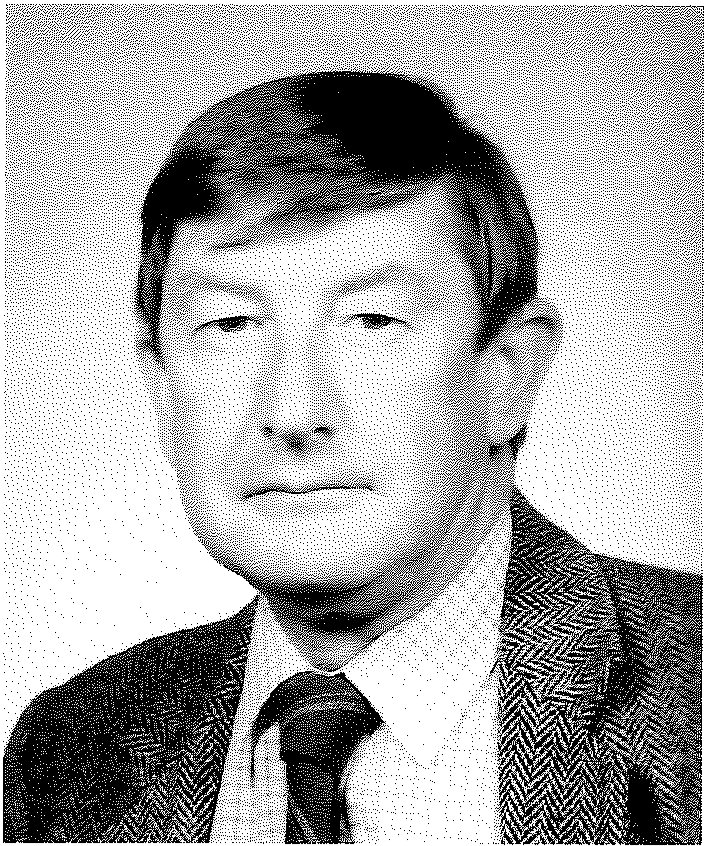
Ben Tierney has one of those rare occupations in Canada — a foreign correspondent for Canadian newspapers. Before he retired to a cottage in Scotland, Neil Reeder and Michael Welsh caught up with him in Hong Kong and were able to turn the tables on one of Canada’s most respected journalists. He gives his views on his profession, his time in Asia, Canadian trade, foreign and immigration policy as well as his perception of Foreign Affairs.
bout: You’re about to end your stint as the unofficial “Dean” of Canada’s journalists in Asia. What were some of the highs and lows of your time here?
BT: It’s been seven, almost eight years. Let me speak first about India. When I came to Asia, it was a country of such despair, so much poverty, and agonizingly going through one upheaval after another. But in the last few years it has been throwing off that old post-war socialism and joining the rest of the world economically. And all the while, it has maintained the democracy it’s had since independence. It’s been a very tumultuous brand of democracy, but India’s experience has shown that big, cumbersome, hard-to-manage third world countries can have democracy. Not a perfect democracy, but one that works. India to me is a big under-reported story, particularly if you compare it to China.
bout: Why is that?
BT: China is in some respect the obverse side of India. China is charging into economic reform whereas India is tiptoeing. China is not prepared to take the political steps that India took way back in 1946-47 to set democracy in place. As (Canadian) Ambassador Bild said, “China is rushing headlong into economic reform with no clear plan for political reform, even though that is an inevitable outcome of economic change.” I’m very pessimistic about China. I know a lot of businessmen will disagree with me. They still see the possibility of selling a billion widgets. I see a very, very big bang coming to China.
bout: The conventional view is that China does not want to repeat the mistakes of the Soviet Union by promoting political reform before economic reform.
BT: I think the Chinese have not only learned from the Soviet experience; they have been panicked by it. As for that particular comparison, I don’t think it’s a question of “first we do political reform and then we do economic reform.” I think they go in tandem. Economic reforms mean colour TV and VCRs and that means contact with the outside world. And contact with the outside world leads to demands for everything the outside world has, including democracy and civil rights.
bout: Some analysts suggest that before June 4th, 1989, the world looked at China through rose-tinted glasses, blind to its faults. Since then, the world is using a microscope; now the world expects too much of China.
BT: There’s something to be said for that. After June 4th, everybody jumped on the “Let’s punish, China” bandwagon, which was not realistic. Others said “Let’s not get into something that we’ re only going to have to change a couple of years down the road” which has in fact happened. I don’t think the world is being very tough on China at all. The world is handling China with kid gloves. I think that when we talk about human rights, we cannot allow people to say “it’s an internal matter.” Human rights are a global concern.
bout: How far can the international community go in insisting on observance of human rights?
BT: I recognize you can carry pressures and standards to impractical levels to the point where they become counter-productive, such as the American debate about renewing China’s Most Favoured Nation (MFN) privileges. But I think that the pressure has to be on China all the time. There’s a marvellous opportunity coming up with the Olympic games in the year 2000. China wants them, for its own reasons, and I think that the world has the right to say “Well, you’re going to have to show us that China’s the kind of place where we want to hold the Olympic Games.” One thing that will be key: China must let in journalists regardless of their political views or writings in the past.
bout: Have we touched a nerve here?
BT: I was one of the few journalists not allowed to go to Beijing to cover the Asian Games. The Olympic Committee should know that the Chinese prevented journalists from covering the Games because of what they had written before on completely different subjects. The Committee should demand that those conditions not be in place if China gets the Olympic Games.
bout: A little closer to home, any thoughts on Hong Kong?
BT: That, in a way, is the saddest story I’ve covered in the last eight years. When I came here in mid-1985, Hong Kong was on a high. London and Beijing had just signed the Joint Declaration and everybody was talking about legislatures that would be composed through elections, a high degree of autonomy, and an executive that would be answerable to the legislature. Now, eight years later, China is taking an axe to those commitments and the British are going along with China to a large degree.
bout: What about the democratic crusade launched by the new Governor, Chris Patten?
BT: Too little, too late. The British still seem to be in full retreat. Hong Kong seems destined to be handed over to one of the world’s most repressive regimes without realizing any of the protections that were promised in the Joint Declaration. China has even re-interpreted those commitments or simply ignored them altogether.
bout: The Hang Seng is the most robust stock market in Asia. Investment is pouring in. Economically, the world still seems to have great confidence in Hong Kong. Are things really as bad as you suggest?
BT: I think they are. China is trying to do to Hong Kong exactly what it is doing within its own territory. It wants economic development here, but it is trying to squeeze the political life out of Hong Kong. There are people in the business community here who take a non-confrontational stance with China. This just encourages Beijing. They have not shown the slightest attempt to say to the Chinese: “Look, trying to stifle political development here is not a good strategy for the long run.”
bout: The business community says a “go-along” approach is best for Hong Kong and, after all, business is what makes Hong Kong tick.
BT: I remember when I was very junior and I came to Ottawa. The bilingualism and biculturalism debate was going on and I recall being sent to the Hill to cover a public hearing. Several business groups were telling the Commons Committee that we could not possibly have a bilingual country. It would just cost too much. I remember coming back to our office very excited to write up the story. I interrupted Charlie Lynch, while he was doing his column, to tell him the business community had said bilingualism was impossible. Charlie looked up from his typewriter and said, “Businessmen are stupid, didn’t you know that?” never had democracy. now?
BT: Hong Kong hasn’t had formal democracy, but it has all the benefits and protections through the link back to London. Hong Kong has virtually every civil right there is — but the business community seems ready to trade that away for the right to keep making money. Not only their rights, but the rights of everybody else. You’re going to have a place where you will not be able to send your kids to school without telling them to watch what they say in front of their teachers, and for what? The right to continue making money! Charlie was right. “Businessmen, they’re stupid.”
bout: There are so many more positive stories in Asia.
BT: Yes, Asia has made enormous strides in the last eight years. South Korea was a military dictatorship less than a decade ago. It has been a tumultuous birthing, but South Korea is a democracy now — flawed, but a democracy. Taiwan has emerged as a democracy, flawed again. Thailand was a corrupt military dictatorship. It’s had its ups and downs, but the signs are very encouraging. There are obviously some black spots like Burma (Myanmar) and China, which is a very big black spot, but I’m encouraged by what’s happening in Asia. The econo-mic side is emphasized a lot, but Asia is emerging politically as well as economically. And I think the white hats are winning.
bout: How do you think Canada has done in Asia?
BI: We have improved, but we have had a lot of improving to do. When I came to Hong Kong eight years ago, it was not unusual to find a businessman here on a PEMD grant and somehow he would have managed to wangle his wife onto the trip. And the chief objective in his 3.4 days here was to get up to Sam’s on Nathan Road and get a couple of suits made. Canadian businessmen have progressed from there. More are coming out, spending a longer time here, and thinking seriously about business. Asia is penetrating their consciousness, not nearly as much or as fast as it should be, but it is improving.
bout: What is your prescription?
BT: Canadian industry should come out here on a task force basis. I don’t mean a day here, a day there. What I mean is to have the Canadian “widget” industry send a task force out here to see what they can do, and not just in terms of selling widgets. Sure, we need more of that, but we also have to see how to make Canadian widgets better. We can use some of the expertise they’ve got here. We may have to look at re-structuring our industries: getting out of the blue-collar work in order to save white-collar staff, like design, marketing, and research and development. Some businessmen realize that but there is still too many coming out here to see five countries in four days and learning nothing.
bout: Do you think we have the right balance and priorities with our immigration policy?
BT: First of all, I have a fundamental objection to the Investor Program-putting a price tag on a visa to Canada. We say it costs $125,000. Sorry, we’ve raised the price. I am glad it is not depreciating — $250,000 minimum now for a visa. I don’t think money should come into it at all. I’m not saying business skills should not be considered. To put it into a format where someone can just shovel a quarter of a million dollars into Canada for some scheme that has not been properly thought out and isn’t being properly supervised is wrong! It’s already given Canada a black eye in this part of the world and will continue to do so. The Investor Program should be dismantled forthwith.
The Entrepreneur Program is just as bad because it cannot be monitored properly. I’ve asked Immigration how we know how many jobs were created by entrepreneurial immigrants. Their answer is “We asked the businessman and he said, “Oh, I have created 10 jobs.” Immigration adds up all the 10s and comes up with these totally unbelievable figures. Total rubbish!
We should just look at immigrants on an independent basis. Of course, we’ll always have family class and refugees. That’s the nature of Canada. But let’s look at all other immigrants as independents. Let’s look at them as people who will do well in Canada, will help Canada, will help themselves. Independent, young, bright, honest, hardworking people.
bout: The government has put a lot of emphasis on relations with Asia. What do you think it has produced?
BT: A lot of our activities seem simply based on excuses for Canadian government officials to get out of their offices. They come through this part of the world the same way the whistle-stopping businessman used to. You always get people hurrying through. One senior group we had here were almost breathless when they arrived and they were still panting when they left sixteen hours later for the next stop on the itinerary. They scarcely had time to hear what they were being told.
bout: What’s the solution?
BT: We could apply the same kind of task force thinking to bureaucrats. How many times have we seen the official or the businessman or the journalist who has come out to Asia and he is so enthusiastic while we are showing him around. We think we finally have someone who is paying attention. But two weeks after they’re back in Canada, we’re getting no response. They go away and they forget. We have to do something more sustained and thought-out, and that’s not what we are doing now.
bout: What was the best and worst of your assignments in Asia?
BT: The most horrible thing was when I was in Manila covering the return of that wretched woman, Imelda. A big huge typhoon hit Leyte. Another Canadian journalist and I jumped on a plane to Tacloban. I got there and interviewed relief officials. It was late at night. I phoned Southam News in Ottawa and they got it in the early morning paper. But that was just the first brush with the story. We jumped in the car and drove four or five hours through incredible roads to Ormoc where the typhoon hit. There was an awful stench from bodies all over the place. I spent two to three hours interviewing people. All the phones were down so we had to get back to Tacloban. We got in the car and drove back through the night until morning. We got to the long distance office just in time to make the final edition the next day. But one of our major newspapers, the Vancouver Sun didn’t use it.
It is so dismaying when things like that happen. I had the real story with real people involved. I’m not having fun when I’m walking around knee-deep in mud interviewing people who have just lost half of their family and you’re working there in the stench of death. You like to think that if you go through hell the guy at the other end of the phone will say well, “Maybe I could skip coffee long enough and get this story in the paper.” Working with people who don’t seem to give a damn: that’s been my most frustrating experience.
bout: What has been your best experience?
BT: Possibly travelling across India. I throw more tantrums per hour than anybody else. It can be a very frustrating place, but it can be so utterly rewarding too. I can remember driving through country roads looking for a particular village and thinking, “Mahatma Gandhi is going to be over the next hill.” India is still a movie set. You have to have very little imagination not to be able to write a good story out of India because all the colour and drama is coming at you. India is my love-hate relationship. Visa to Canada.
bout: What about the cooperation you get from Canadian missions around Asia?
BT: It varies. Of course I’m part of the variable. Some missions are less receptive than others. But they are changing all the time. You have a bad experience, but the next time you go there’s a new Ambassador or political officer who is less terrified of the press and more willing to share his thoughts.
I can truthfully say that there has only been one embassy in Asia with which I have had problems. We had a little quarrel early on when they thought I shouldn’t have written something. I thought they had a bad case of “clientitus.” They seemed more interested in not offending the host government than in reporting about what was going on.
By and large the Canadians in Asia have been quite good. They’ve gone from just helpful to being really quite super. I’ve made a lot of friends in the diplomatic corps here. Places like India, you really need help, particularly on your first, second or third trip. I’ve been to India many times now and I begin to fancy I know what I’m doing. But there were a lot of people early on who took the time to explain what was going on. I would have to give the Canadians a B+, maybe even an A-.
bout: What is the secret to working successfully with the Canadian media overseas?
BT: I think there must be a school somewhere, outside Arnprior, where they take Canadian diplomats, shut them in a room and turn on big speakers that blare at them: “Reporters are dangerous.” A lot of diplomats are absolutely terrified of journalists, but it’s not just diplomats. It applies to other departments in Ottawa.
bout: You know why that’s the case.
BT: Many diplomats do not think it’s part of the function to tell the Canadian public what’s going on through the media. Others recognize it is part of their job but they are so careful. All you get out of them is the sky is blue. They’re wasting everybody’s time. But thankfully you’ve got a lot of people in the Canadian diplomatic service who have experience with journalists. They know you can get burned but, they accept that Canadian journalists are just trying to tell people what’s going on. If given information, not half but all of it, they will do a good job of informing the Canadian people.
bout: There’s the fear that the real objective is to embarrass the politicians and the public service.
BT: I understand where they’re coming from. I did spend a lot of time in Ottawa and I know there’s not an awful lot of upside to talking to a reporter and there’s a lot of downside. You do not get a pat on the head from a Minister for saying the right thing to a journalist, but you always get something else when you say the wrong thing. So I realize that it’s not an easy thing to bring diplomats and journalists together.
bout: What changes have you seen in Canadian coverage of Asia?
BI: There are a few more journalists here but still not nearly enough. Southam, Toronto Star, Financial Post, Globe and Mail, CBC, and CTV are all trying to cover this huge area with one journalist each. Like Canadian diplomats, we’re thin on the ground-even thinner. I don’t think our managers are doing a good job keeping us so light on the ground in Asia.
bout: What is the attitude to foreign news among editors?
BT: We need a more mature and informed approach to foreign news. When I was based in Paris, I found that if I wrote a story about French heavy industry, it didn’t get in the paper. But if I wrote about German heavy industry or about the German military, it got in. From France, they only wanted stories about wine and can-can dancers — German can-can dancers just got nowhere. Editors and readers have preconceived notions about what the countries and the stories are. Editors are looking for colour instead of facts and that can be frustrating.
We should be giving the readers more credit. Too often editors and journalists have decided that our readers aren’t interested, so they are not interested. We have to recognize that we’re not just selling sausages, or shoes or, in our case, papers and ads. We have a responsibility to inform our readers about the local community, the country and the world. bout: Newspaper publishers have got to meet a bottom line.
BT: Sure, and until recently they’ve been doing that quite well. My point is, “we are not an ordinary product.” I also think we are a bit mechanical. We go in everyday, we do the job, and the paper comes out, and we’re happy. Sometimes I think we do not do enough examining. Was it a really good paper today? Was it a good paper over the last month, the last years? A little bit of Chinese self-criticism might be worthwhile.
Still, putting out a daily newspaper is no easy job. A lot of people have to do a lot of things in a hell of a hurry. As they say, “it is history in a hurry and mistakes get made.” My old friend, Art Evens of the Calgary Herald, once told me “If newspapers were ammunition factories, we would have all been blown to ratshit a long time ago.”
View the original scanned pages →
Originally published in bout de papier, Vol. 11, No. 2 (1994) — Summer 1994 // Été 1994, pp. 12–15. Read the rest of this issue →



