
bout de papier, Vol. 11, No. 4 / Vol. 12, No. 1 (1995) — Spring 1995 // Printemps 1995, pp. 78–83
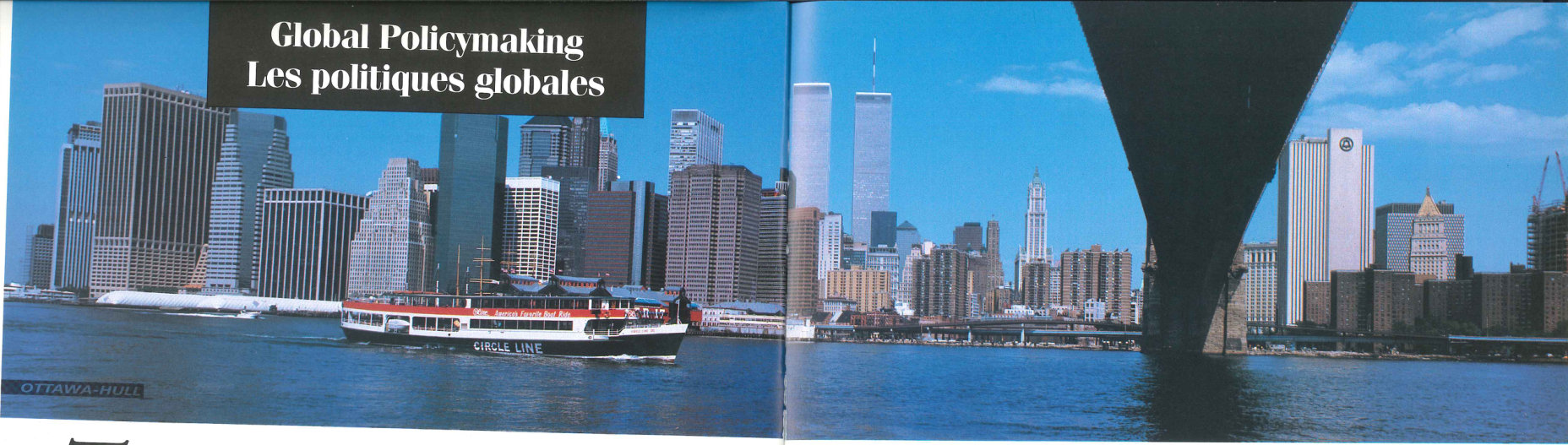
On the Road to Halifax
The Policy Staff, the Trade and Economic Policy Branch and the Political and International Security Affairs Branch take the lead across a wide breadth to global political, security, economic and trade issues facing Canada.
The Policy Chief stares at the large yellow canvas speckled with red and blue spots which covers part of one of his walls in his office. He sits, not at his desk, but at the oval table in the middle of the office. The Policy Office is the central think tank within the department on foreign policy. The Policy Staff anticipates and provides foreign policy advice on trends and issues that shape the 8 bout de papier Government’s international political, economic and trade priorities. It manages the department’s participation in Cabinet meetings, it ensures parliamentary liaison, it produces the annual Foreign Policy Framework and it writes major policy speeches for the Minister and the Prime Minister. The Policy Staff also co-ordinates Canadian participation in the G-7 Summits.
June 2 unfolds…
••. There is a meeting to discuss the preparation of major speeches for the Prime Minister and the Ministers. “We need to devise a system of producing policy speeches which read better than Part III of the Government Estimates.”
•.. On entame le compte à rebours final des préparatifs du prochain sommet du G-7. Le sous-ministre est le “Sherpa” canadien, appellation des plus pittoresque dont on affuble les représentants personnels de chacun des chefs d’état participant au sommet du G-7.
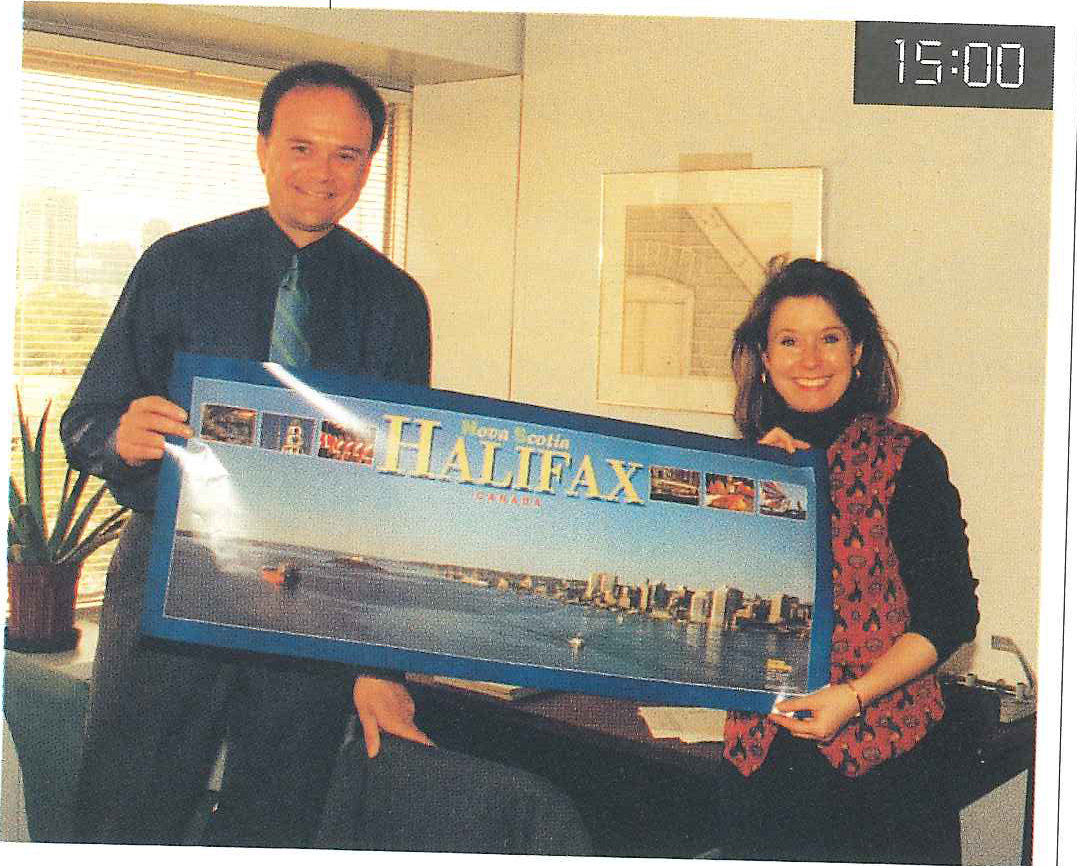
… “Everything is in hand. The international trading system, unemployment and Ukraine will be the Prime Minister’s priorities at G-7 Naples Summit. The call for briefing notes has gone out to at least twenty divisions for updates on different issues. That should make a lot of happy divisions in the department! And the Mounties are planning a security advance trip to Naples.” Minister’s Office to discuss the planning ••• There is a briefing with the Prime for the Halifax Summit in 1995. A fact finding mission to Halifax has returned. The RCMP and National Defence join a later briefing on the security arrangements. ••• On procède au lancement du « Sommaire et analyse des nouvelles du sommet », publication qui donnera les mises a jour des positions du G-7 jusqu’à la tenue de la rencontre de Naples.
OECD: A Four Letter Word
•.. La revue parlementaire de la politique étrangère canadienne siège à Ottawa cette semaine. Le rapport pour les participants d’aujourd’ hui est en préparation.
16:00 OECD: A Four Letter Word
The Acting ADM has come back from his second meeting on the candidacy of Don Johnston for the Secretary General of the OECD. He thinks to himself that the various strategies and their implications have as many possibilities as a Rubic Cube. There is no consensus on a common European candidate amongst the Europeans. The choice is also tied up with the choice of a new head for the European Commission, the new World Trade Organization and the new Secretary General of NATO. Canadian priorities on the international economic and trade policy agenda are:
• international economic relations (the G-7, OECD, EBRD, APEC).
• trade negotiations (GATT, new World Trade Organization)
• import and export controls.
• economic relations with developing countries (aid, international financial institutions such as World Bank)
• environment
• energy and nuclear affairs
June 2 unfolds…
••• Le gouvernement du Canada a proposé la candidature de Donald Johnston, ancien ministre fédéral, à la tête de l’OCDE, instance qui constitue le principal forum économique des pays industrialisés du globe. Avec un secrétaire général canadien, le Canada jouira d’un outil privilégié pour diriger cette organisation au cours des prochaines années.
… “Yes, everything is in hand for the OECD Ministerial meeting. The briefing book is going to print. The speeches have been approved for the Ministers Ouellet, MacLaren and Axworthy. We will stress how the OECD should focus more on unemployment in a changing world, much in line with the Red Book and how the OECD should open up to new members like Mexico, Korea, and countries of Central and Eastern Europe.”
… Un groupe de travail regroupant le gouvernement, la communauté d’affaires et les groupes environmentaux se réunit à Regina sur les actions à prendre par le Canada dans le cadre du plan d’action national découlant des engagements pris lors de la convention sur les changements climatiques. … There is a meeting with the Europe Branch on the funding for the program of assistance to Central and Eastern Europe.
•.. An irate company calls to complain why the government will not issue them an export permit for some technology export to China.
••• Charles Caccia, Chairman of the House of Commons Standing Committee on the Environment, will attend on the signing ceremony for the Second Protocol on Sulphur Dioxide Emissions. The agreement will commit Canada to reduce its emissions which cause acid rain. There is a meeting to brief him on the issues.
••• La politique canadienne sur la préservation des forêts tropicales est en voie d’élaboration. Une réunion est en cours avec le Service canadien de la forêt où on discute d’une stratégie relative à l’initiative internationale canado-malaysienne en matière forestière.
••• The Canadian Council of Ministers of the Environment is briefed in New Brunswick on the newly-created UN Commission on Sustainable Development. The Commission is setting down guidelines for the types of policies governments should be undertaking to ensure economic growth is compatible with the environment. Canada has to produce an annual national report.
••• Preparations are underway for bilateral textile and clothing negotiations with Lebanon, Bangladesh, and Russia. These discussions will determine the import figures for these countries. The Lebanese Ambassador drops by to get a preliminary feeling for the Canadian position.
••. Les producteurs canadiens d’acier sont insatisfaits des décisions américaines récentes d’imposer des limites sur les exportations canadiennes. Des pourparlers sont en cours pour tenter de définir les actions que le Canada pourrait entreprendre. •.. Les négociations sur les accords de coopération nucléaire se poursuivent avec la Chine, la Lithuanie et le Mexique. Un tel accord de coopération nucléaire est un préalable pour le Canada au transfert complet de technologie nucléaire à un autre pays.
••. A G-7 Working Group is discussing an Action Plan on Chernobyl in Rome for possible announcement at Naples. The G-7 is meeting to see what financial sums of money can be provided by the West to help accelerate the closing of Chernobyl.
Partnership for Peace
Le sous-ministre rentre à son bureau. Il est dans l’attente des plus récentes mises à jour sur la situation du maintien de la paix en Bosnie et au Rwanda. bout de papier Les priorités pour le Canada en matière d’affaires politiques et de sécurité internationales sont les suivantes:
• les relations en matière de sécurité internationale et de défense (par ex. la Conférence sur la sécurité et la coopération en Europe (CSCE), l’Organisation du Traité de l’Atlantique Nord (OTAN), le Commandement de la défense aérospatiale de l’Amérique du Nord (NORAD) et le Conseil de coopération nord-atlantique
• politique et opérations de maintien de la paix
• contrôle des armements, de désarmement, de non-prolifération et d’armes conventionelles
• terrorisme international, sécurité et protection des locaux du gouvernement canadien à l’étranger et questions des renseignements
• institutions internationales (les Nations Unies et leurs agences, le Commonwealth, la francophonie
Le 2 juin se déroule…
••. Torture, summary executions, arbitrary arrests, freedom of speech, children’s rights, women’s rights, rule of law, and democratic governance. Ottawa sends a request to all posts asking them to report on human rights and democracy in their host countries. The reports will be important in forming Canadian foreign and aid policies to these countries.
••• The Iranian Embassy calls to launch a “dialogue on human rights” ••. Les préparatifs vont bon train pour les reunions ministérielles de l’OTAN et du CCNA a Istanbul. Le CCNA regroupe tous les allies de l’OTAN et les 22 pays partenaires d’Europe centrale et de l’est. ••. At the NATO and NACC ministerial meetings, the key issue will be Russian proposals on the NATO-Russia relationship. … “Iam sorry, Senator. We do not have the final list of election monitors and observers for the elections in Mozambique. The Minister still has to take a decision on whether Canada will participate and who will go.”
••. Selon notre mission à Bucharest, « le Canada doit participer à la mission d’observation de la CSCE en Moldavie afin de s’assurer que le conflit ne déborde pas au-delà des frontières de ce pays. » ••. The CSCE is asking Canada to extend the participation of its observers on the border of Macedonia and the former Yugoslavia to see that the sanctions against the former Yugoslavia are not violated. ••. Les préparatifs se déroulent comme prévu pour la Conférence internationale de 1994 au Caire sur la population et le développement. L’avortement, le contrôle des naissances et la relation entre le développement et les questions relatives à la population sont des sujets d’intenses discussions. Un ensemble de consultations auprès des groupes d’intérêts ont cours au Canada.
… The UN is asking Canada to extend its peacekeeping activities in Rwanda. As a strong supporter for the UN in resolving conflict, Canada continues to play a leading role in providing financial and human resources to peacekeeping operations around the world.
On the Global Stage: Canada at the UN
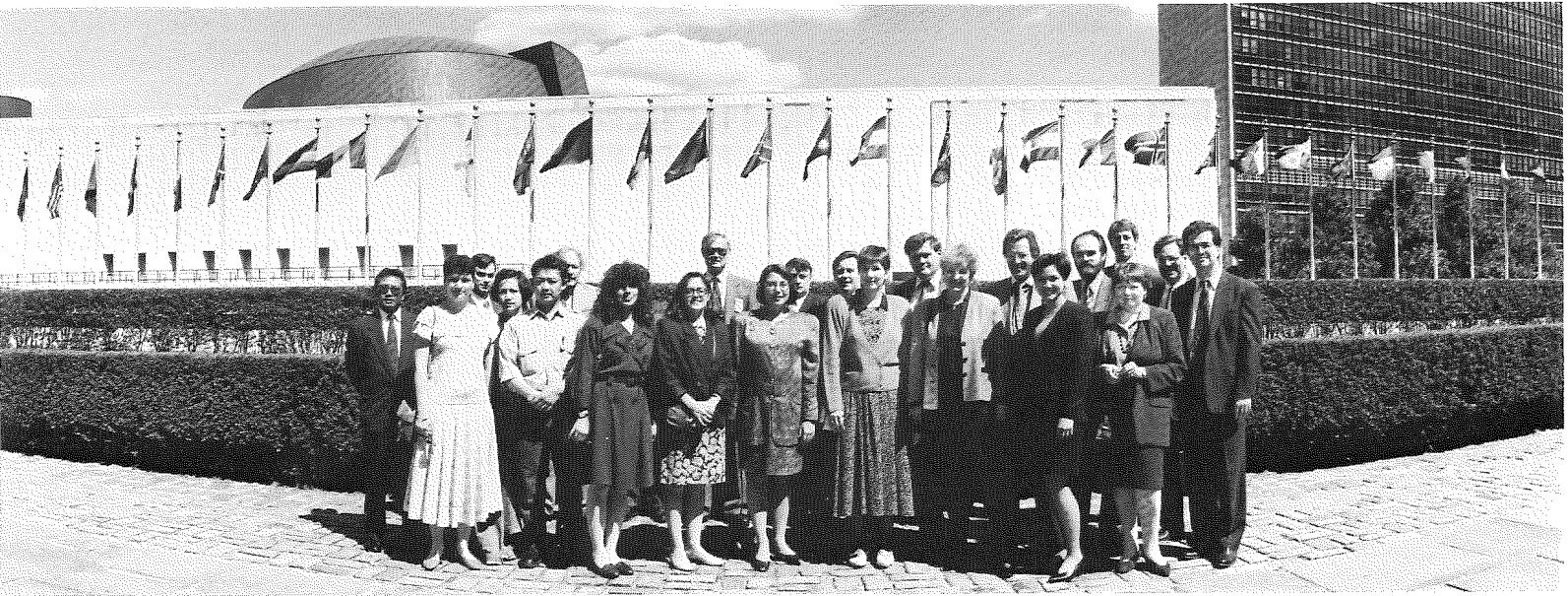
by James Trottier, Canadian Permanent Mission to the UN, New York he Canadian mission to the United Nations is Canada’s eyes, ears and voice in the largest diplomatic community in the world. The activities of the mission reflect virtually every aspect of Canada’s multilateral involvement. Much of this activity is the stuff of newspaper headlines. Massacres in Rwanda, repression in Haiti, international performance in child nutrition and human development, the protection of human rights, the global environment, and the laws of war to the law of the sea are on the agenda of the Mission.
Morning on the global stage The Canadian Ambassador to the UN is in Washington with the Assistant Deputy Minister Latin America to meet with President Aristide of Haiti. Canada is one of the five members of the “Friends of Haiti” group (consisting of Canada, France, Venezuela, Argentina and the USA), chosen by UN Secretary-General Boutros Boutros- Ghali to seek a resolution of the Haitian crisis and the return of President Aristide to power. The Ambassador flew to Washington on the evening of June I and will return to New York on June 2 at noon. Usually on Thursday, there is a staff meeting at nine o’clock with all fifteen members of the mission to discuss upcoming events. In the absence of the Ambassador, the meeting is chaired by the Deputy Permanent Representative. Today the briefing is postponed. The Deputy Permanent Representative is participating at a conference on the future of UN peacekeeping sponsored by the Royal College of Defense Studies, Cambridge University. Canada’s standing within the peacekeeping community means that invitations to such events pour into the Mission. Helping to influence public perceptions and debate in Canada and elsewhere on the management of global crises is an important facet of the Mission’s work. June 2 is one of the few days free of formal UN meetings. It is only the second week in five months when there are no formal meetings of the numerous bodies of the UN or the Security Council. This allows officers to concentrate on the work they normally leave until the evening. The work schedule reaches its extremes during the annual September to December session of the General Assembly when the workday often stretches to 14 hours or longer.
The morning is now well underway. The Secretary General’s Agenda for Development is just out. It may be the one true opportunity to reform the economic and social sector of the UN which lacks credibility, visibility and identity. The minister-counsellor (Economic and Social) takes the time to analyze it. This will be the most important task of the next year and would be a particularly opportune way to celebrate the 50th anniversary of the UN in 1995.
A statement on human rights in Rwanda is being drafted. The first secretary (Human Rights) will deliver it a few days later at a meeting called to endorse the results of an emergency session of the UN Commission on Human Rights. Canada requested this extraordinary session as part of an international response to the massacres underway in Rwanda. The Rwanda emergency is the first test for the new High Commissioner for Human Rights. The creation of this new position, designed to serve as a focal point for human rights in the UN system, had been a long-time Canadian goal.
Like the Ambassador, the first secretary (Security Council-Americas) has a day focussed on Haiti. The “Friends of Haiti” group is scheduled to meet at senior officials level on June 3. The group has imposed tough new sanctions and will discuss further steps. Representatives of the “Friends” are to meet twice on June 2 with the Secretary General’s Special Representative for Haiti to prepare an agenda and work on a final communique for the meeting at senior level. The Canadian representative agrees on the basics of the final communique to be finalized by the senior officials on June 3.
• The development counsellor prepares for the executive board meetings of the UN Development Program/UN Food Program in Geneva. He has a final telephone conversation with Ottawa to firm up the Canadian position.
The legal adviser is involved in on-going negotiations over the remaining issues related to the deep seabed mining provisions of the 1982 UN Convention on the 82 bout de papier
Drafting a NATO Ministers’ Statement
by R. P. Kirby, North Atlantic Treaty Organization
The preparations for the regular NATO Spring Ministerial Meeting and the seventh North Atlantic Cooperation Council (NACC) Foreign Ministers’ meeting in Istanbul on June 9-10 dominates our work June 2. NACC includes all the NATO Allies and the twenty two Central and Eastern European partner countries. I am on leave of absence from Foreign Affairs in Ottawa on contract to the NATO International Staff. I am responsible for preparing the agenda, the political-security issues that are the main business and the drafting the Ministerial statement for the Istanbul meetings.
The most difficult issue is to finalise a draft Ministerial statement. I had prepared an original draft. Senior political advisors from all the member states had made amendments. The Partnership for Peace, former Yugoslavia, Russian troop withdrawal from Estonia, the conflict over Nagorno-Karabakh, the recent extension of association status in the Western European Union to nine Central and Eastern European states and the CFE Treaty are all unresolved issues. A new drafting session goes through late into the night on June 1.
On June 2, we brief the Deputy Secretary General. The briefing focuses on the NATO Ministerial meeting. There are a number of issues, in particular how to handle recent Russian proposals on the NATO-Russia relationship.
The briefing does not cover the more difficult issue of how to bridge the disagreements over the draft Ministerial statement.
On June 3 the Ambassadors meet to finalize preparations. They send the draft NACC statement back to a dratting group. on June 3 but without success. There are On the eve of the Ministers’ meeting and i the Ministerial meeting, there is still no ment. Consequently, at the afternoon sessior reaching compromises. The statement is iss Based on the NATO communique in Istan and Russian Foreign Minister Kozyrev sigr Document on June 22. All the work of June have therefore not gone to waste.
Law of the Sea. Work on harmonizing the text of the agreement in all six official UN languages takes place in a meeting open to all members of the UN. Negotiation of outstanding issues occurs in a limited group, called the “boat paper” group after the logo that appeared on the first draft agreement that it produced.
The recent visit to the U.N. of South Africa’s Vice-President Mbeki on the occasion of the lifting of the arms embargo against South Africa is covered in a report by the second secretary (Political). He also works on an analytical report on the role of the non-aligned movement at the U.N. The counsellor (U.N. Budget) attempts to make sense of the mass of budgetary documentation on the U.N.
. The group meets for the rest of the day re further drafting sessions in Istanbul. I in parallel with the morning session of 10 consensus on portions of the state-on, Ministers debate for four hours before ssued on Friday evening, June 10. anbul, NATO’s Deputy Secretary General gn the Partnership for Peace Framework le 2 and other days before the Ministerial
Wearing his other hat of mission press officer, the first secretary (Security Council) attends the daily briefing by the Secretary- General’s spokesperson in the press theatre down the hall from the Security Council. The spokesperson focusses today on Rwanda and Bosnia while also commenting on Yemen, Lebanon and North Korea. On returning to his office, he receives calls from journalists wanting to speak with the Ambassador on deployment of Canadian troops to Rwanda. The New York Times also calls with a question on Haiti.
Afternoon of Deliberations All formal U.N. meetings adjourn at one o’clock in the afternoon. Much business is conducted, contacts established and information exchanged at the many lunches held each day in the numerous restaurants around the U.N.
Lunches are a pot pourri of nationalities, issues and friends: a lunch with the Finnish on the Agenda for Development; a lunch with the Mexicans and Spanish who are members of “friends of “ groups for El Salvador and Guatemala; lunch on international coordination to combat HIV/AIDS with Dutch and Australian colleagues; lunch with the Irish, Australians, Americans, Germans and British to discuss a common strategy to follow up the results of the World Conference on Human Rights. The American advises that the US plans to insert language concerning human rights in a parallel resolution on Rwanda at the Security Council.
Time slips into the mid-afternoon. The latest developments on a draft Security Council sanctions resolution against North Korea for alleged violations of its obligations under the Non-Proliferation Treaty and the International Atomic Energy Safeguards Agreement are moving quickly. The second secretary (Political) pursues this and also keeps an eye on the Rwandan crisis. He phones the UN Secretariat and Security Council colleagues and relays information to Ottawa. He liaises closely with the Deputy Military Adviser.
The representatives of the “Friends of Haiti” group meet again to discuss the final draft of a communique for the June 3 meeting on Haiti.
The first secretary (Political) drafts a statement on the rights of women which he will deliver to a group of non-governmental organizations next week. It is now four in the afternoon. Telephone calls from Ottawa on UN operations, from the UN on Canadian policy and from other missions seeking views on a variety of issues bombard him. At the request of Ottawa, he inquires at the UN budget office concerning the 1995 World Summit for Social Development in Copenhagen.
The first secretary (Security Council) works the phones, keeping in constant touch with colleagues to ensure there are no sudden unannounced Security Council meetings. Work at the U.N. involves constant liaison with the other 181 missions. Silence is unnerving in New York. Being on top of developments can become somewhat of an obsession, particularly for those covering high profile, volatile issues, who share a common concern that they (and their capitals) will be caught off guard by a sudden emergency session of the Security Council, or a fast-breaking crisis. When Security Council members meet in closed sessions, officers of non-member states such as Canada haunt the corridor outside the meeting room, often late in the evening in order to receive, in the midst of noise and cigarette smoke, a briefing from a colleague on the meeting. This is usually followed by a return to the Canadian Mission, sometimes long past midnight, to draft a report (and to check details with colleagues engaged in identical tasks at other missions) on the latest Bosnian or Haitian or Rwandan twist for policy makers in Ottawa to read first thing in the morning.
Silence is unnerving in New York. Being on top of developments can become somewhat of an obsession, …
The development counsellor deals with the proposed joint program for HIVIAIDS of six international agencies (WHO, UNDP, UNICEE, UNFPA, UNESCO and the World Bank). This will be the subject of a July meeting.
The property manager returns to her office after five hours on the streets of Manhattan ensuring the safe unloading of computer equipment. It is five o’clock. Time to think about heading home.
In the boardroom of the Canadian Mission, the legal adviser convenes a meeting of the “expanded midnight group”. a group of ten countries with important deep seabed mining interests. Four years of negotiations will finally conclude successfully on June 3. Following its passage through the UN system, the agreement will enter into force on or before November 16, the date the Convention on the Law of the Sea itself will enter into force. The agreement will facilitate accession to the Convention by industrialized states, and make the Convention truly universal.
The first secretary (Human Rights) telephones several other missions to coordinate action at the special meeting on Rwanda. He urges several African delegations to speak out at the meeting. He seeks out the latest information about the Rwanda crisis, and sends a final report to Ottawa.
Evening of Diplomacy An inescapable part of life at the Canadian Mission is the huge number of documents that are received each day (the UN is reputed to print I billion pages a year), either to be discarded immediately, filed for future consideration or, in some instances, read. The press of activities during the day, especially during the four month annual session of the General Assembly, means that the evening is often the only opportunity to review these documents. The day’s activities on Haiti culminate in an evening bilateral meeting. The Canadian Ambassador, the Canadian ADM, the French Representative and a few officers from the Canadian and French Missions meet at the Canadian mission. The Canadian Ambassador reports on her consultations with President Aristide and the two sides exchange information on expectations for the June 3 meeting.
It is now nine o’clock. After the meeting with the French, the Canadian team decides that the draft communique lacks focus; it should deliver a simple, clear and direct message to the Haitian military with an emphasis on actions we are ready to undertake. A Canadian alternative to the communique should be drafted. At eleven in the evening, the revised draft communique is completed. The last officer locks up the Mission, early by U.N. General Assembly standards, and leaves the building for his nearby residence. Thus ends another day on the global stage.
View the original scanned pages / Voir les pages numérisées →
Originally published in / Publié à l’origine dans bout de papier, Vol. 11, No. 4 / Vol. 12, No. 1 (1995) — Spring 1995 // Printemps 1995, pp. 78–83. Read the rest of this issue / Lire le reste de ce numéro →



