
bout de papier, Vol. 11, No. 4 / Vol. 12, No. 1 (1995) — Spring 1995 // Printemps 1995, pp. 57–65
On June 2, the Senior ADM, who is also the Coordinator of the NAFTA negotiations, is in Mexico for consultations with the Mexican government on the implementation of the North American Free Trade Agreement. He opens secret negotiations with the Chilean government on its possible extension of NAFTA. The Acting ADM is back from 1:30 lunch. His own day is taken up with the preparations for the agricultural negotiations with the US. The issue is typical of the ongoing management of issues with the US which is the bread and butter of the work of the Branch and an enduring priority for Canadian foreign relations. Canada’s foreign and economic priorities are:
• management Canada-US political, trade and economic relationships
• marketing of Canadian goods and services.
• transboundary environment.
• defence and security relations. bout de papier June 2 unfolds…
••• « Les Américains ne comprendront tout simplement pas ou n’accepteront aucune action au-delà de la zone des 200 milles. Vous devez absolument avoir un très bon message à l’intention des médias. » Washington s’entretient avec Ottawa d’une stratégie de communication sur la question du saumon du Pacifique.
… Washington reports, ’”US Trade Representative Mickey Kantor and US Agriculture Secretary Michael Espy will be able to meet their Canadian counterparts in Chicago at the end of the month.” A meeting is set up with Agriculture and the Privy Council Office to define the Canadian position. ••. Ottawa demande a Washington d’effectuer un suivi de la proposition de certains membres du Congrès et du Sénat visant a imposer des taxes aux raffineries étrangères. Ceci pourrait aller a l’encontre de nos fournisseurs d’essence.
… “We will have to see how we follow up with the Mexicans on the anti-dumping action in the steel trade between the two countries.” The Acting ADM phones the ADM in Mexico to debrief on his dinner the night before with the Chief Executive Officers of Stelco, Dofasco, Algoma and other members of the Canadian Steel Producers Association.
•.. Ily a un déjeuner avec le nouveau correspond-ant aux affaires canadiennes du L.A. Times: « Vous pourriez vous consacrer aux questions économiques et commerciales». •.. An interdepartmental meeting focuses on a policy document on the convergence of telecommunication and cable regimes. There is consensus on the need to beef up international considerations for the Minister’s attention.
•.. There is a meeting with the Canadian Wildlife Service to prépare Canada’s negotiating strategy to modernize the Canada- US Migratory Birds Convention. •.. « Nous devons connaître quand les Américains vont agir sur la question de la réduction des tarifs pendant les dernières négociations sur le commerce. » C’est sur cette note qu’a débuté la réunion préparatoire à la visite du 6 juin à Washington qui révise la législation américaine portant sur la mise en oeuvre de l’Uruguay Round. … The Consulate General in Boston is asked to arrange for a Group of US opinion leaders to visit Hydro-Québec facilities in James Bay.
•.. Washington, New York and Boston are given a press line on the significance of Canadian court decisions on Hydro- Québec’s plans.
•.. The bi-weekly conterence call with the Canadian provinces, the Canadian Forestry Industries, Coalition and Quebec Lumber Manufacturers Association on the softwood lumber file takes place.
… Detroit émet à l’intention d’Halifax un rapport sur une adolescente en fugue. Elle est enceinte et se trouve illégalement en sol américan. Son ami ne peut plus subvenir à ses besoins. Les autorités des programmes
Meanwhile at the Legal Branch
de bien-être social de Nouvelle-Ecosse sont informées de la situation et acceptent de prendre les mesures pour son retour dans un foyer d’accueil.
Meanwbile at the Legal Branch
Lawyers in the department 13:30 suffer from an image problem. Just gauge people’s reaction to the phrase, “The Law of the Sea”. To departmental lawyers, the expression marks the pinnacle of a long and glorious tradition of codifying international law. To most non-lawyers, however, the phrase means little, except perhaps recalling the riddle, “What do you call 500 lawyers at the bottom of the sea?” (“A good start!”). DFAIT lawyers, in particular, are a pernicious oddity, a kind of triple jeopardy. Not only must they overcome the stigma modern society attaches to lawyers in general; they belong to the public service when bureaucrat-bashing is becoming an art form. Finally, they also face derision from colleagues in the legal fraternity, many of whom do not consider practitioners of international law to be real lawyers at all. What is particularly irksome is that international lawyers are increasingly addressing issues of immediate and practical concern to Canadians. For every esoteric topic departmental lawyers must continue to monitor, such as the United Nations Convention on the Juridictional Immunities of States and Their Property, there are issues like foreign overfishing, which directly affect the lives of Canadians.
The Legal Branch focuses on a number of priorities:
• advice on Canada’s international rights and obligations.
• development and implementation of international law to advance Canadian interests in all areas of economic, environmental, security, judicial cooperation.
• domestic and international aspects of trade law.
Thursday is Tourism in Atlanta
by Laurel DeWolf, Consulate General, Atlanta T Thursday marks the end of a record week for tourism in Atlanta… Twenty five
Vancouver’s Visitor and Convention Bureau is planning a visit in the southeast to contact for those interested in planning an event in British Columbia… Preparations are in full flight for Tourism Canada’s two big events in the US Southeast: Showcase Canada for business travel and Spotlight Canada for leisure travel… American Express is helped in the planning of an incentive trip to Calgary for Stampede… The Georgia Society of Certified Public Accountants is headed to Vancouver and Whistler Resort… The Saskatchewan Minister of Economic Development is planning a visit in conjunction with the Royal Canadian Mounted Police and the Georgia Police Benevolent Association to promote exchanges…. Ramblin with Ramsey, the weekly travel show on the Sun Radio Network, will originate from Quebec July 10 and 17…. Rocky Mountaineer will send a travel writer to the Canadian Rockies.
June 2 unfolds for the lawyers…
•.. There is a meeting with the ADM. “We must get ahead of the curve. What are the legal considerations of Canada’s aggressive fisheries strategy and what will be the impact of the actions on the American negotiating strategy on the Pacific salmon?” •.. The ADM International Security calls for advice on possible nominations for the Chief Prosecutor of the proposed Wartime Tribunal for War Crimes in the former Yugoslavia.
… Sur la base de son experience en tant que participant a toutes les actions de maintien de la paix des Nations Unis, le Canada joue un rôle de premier plan dans l’élaboration d’un traité qui obligera les états a garantir la protection des « berets bleus ». … There is work on the Canadian Wheat Board’s pasta import licensing schemes. The trade law division must determine if they are consistent with Canada’s GATT and WTO obligations. This is typical of the trade law division which provides interpretations on trade treaty obligations and on dispute settlement panels … Protecting Canadian sovereignty means monitoring laws in other countries, primarily the United States. Work is focused on the use of “Buy America” preference clauses and their consistency with the US’s NAFTA, GATT and WTO obligations. … The Europe Branch has asked for an opinion on legal criteria for a new entity claiming statehood in the context of developments in Crimea-Ukraine. … The Office of Coordinator, Access to Information and Privacy Protection has fifty one active files under the Access to Information Act at various stages, ranging from Ministerial expenses, information on posts, import controls, human rights, passports, peacekeeping and participation in international organizations.
… The Office of the Coordinator for Environmental Assessment is preparing for National Environment Week. … Des négociations se déroulent avec plusieurs pays sur des traités qui permettront que des éléments de preuve obtenus à l’étranger (blanchiment d’argent, narcotiques etc) soient présentés devant les tribunaux canadiens à titre de moyens pour combattre les crimes internationaux.
Washington Never Closes
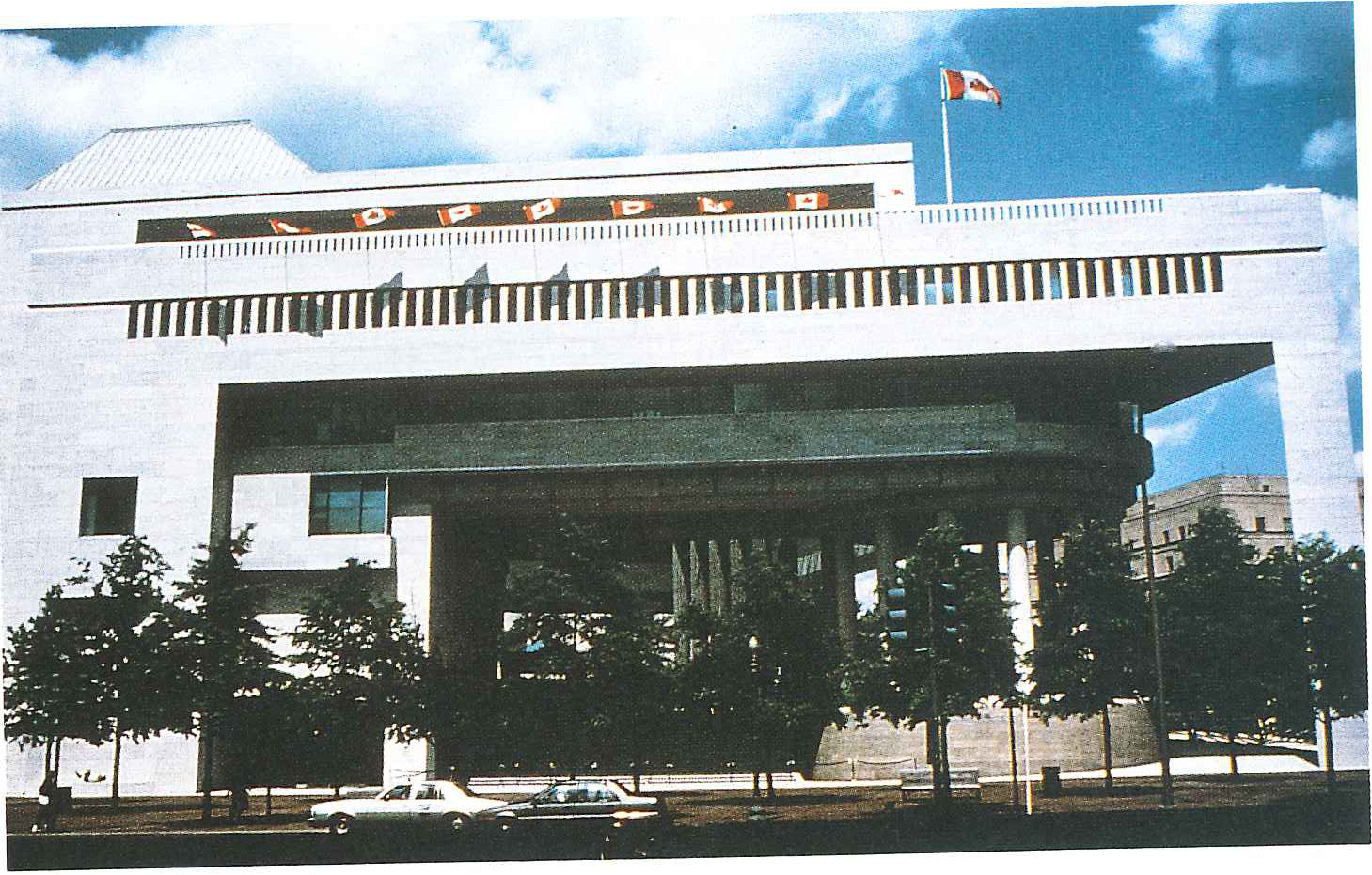
by Alexandra Bezeredi and Paul Meyer, Canadian Embassy, US
T he Canadian Embassy to the United
States in many respects is a small
Pearson Building. It is involved with all the major political and economic foreign policy issues because the Americans are our most important bilateral relationship and also because American views and positions on any internation issue carry unparallelled weight.
It is midnight. The Security Section commences the nightly security check and makes regular searches for electronic eavesdropping devices which may be aimed at or located in the Embassy.
Members of the Embassy start entering the impressive Canadian Embassy on Pennsylania Avenue between seven and eight o’clock. The mailroom staff begins the first of several delivery runs throughout the Embassy.
The first major event for the Embassy today is an important breakfast meeting at eight-thirty with Assistant Deputy Minister (Latin America), the Canadian Ambassador to the OAS and the Canadian Ambassador to the United Nations. The Canadian side is preparing for a meeting with ousted Haitian President Aristide and consultations with the UN Friends of Haiti.
Staff keep arriving. Priorities are putting the coffee on and “reading in”. The “reading in” requires going through the department’s telegraphic traffic, the US press (New York
60 bout de papier Times, Washington Post, Wall St. Journal, Los Angeles Times, Washington Times and Miami Herald are received daily), Canadian media highlights (via CP, Lifeline, Globe and Mail), Congressional proceedings (Congressional Monitor), transcripts of Administration briefings, speeches and Congressional hearings; and Administration releases. Not to mention the periodical literature, which fills the pigeon holes and is duly carried back and forth to work in hope of getting to that major piece in Foreign Affairs, or National Journal, or Washington Quarterly, which Administration official X praised and Congressman Y savaged.
At nine-thirty, the Ambassador chairs the bi-weekly Executive Committee. It brings together the heads of each section (Political; Economic; Defence Relations; Public Affairs; Administration) to discuss key developments and information on various priority issues and deal with the overall management of the Embassy. Today, the Committee focuses on:
• the state of agricultural trade discussions;
• the substance of, and U.S. reaction to, the recent New York speech of Minister MacLaren;
• developments in the Don Johnston campaign for the OECD Secretary-General;
• evolution of the U.S. position on Haiti, and the possibility of sending observers to monitor the Haiti-Dominican Republic border;
• the Naples G-7 Summit, and opportunities for a Prime Minister Chrétien- President Clinton bilateral;
• the Pacific Salmon Treaty, and the results of Fisheries Minister Tobin’s recent visit to Washington; and • developments in Bosnia, both on the ground, and at the negotiations in Geneva. The morning is now in full swing and the Canadian Embassy is enmeshed in the critical issues of importance to Canadian foreign policy.
• The Washington press is calling about the Pacific Salmon dispute. At the same time, the public affairs section is having discussions with the US Branch and with Fisheries and Oceans on a communications strategy to explain Canada’s position on Pacific salmon. It is also necessary to prepare the Americans for Fisheries Minister Brian Tobin’s imminent announcement of a Canadian response to the lack of progress in bilateral negotiations. A Canadian “fact sheet” is distributed to local media, environmental organizations, and policy makers.
The Office for Liaison with International Financial Institutions (OLIFI) in the Embassy follows commercial opportunities in the World Bank, the International Monetary Fund, the International Finance Corporation and the Inter- American Development Bank. There are visits today for B.C. Hydro, the Quebec Ministry of International Affairs, and BG Checo, an electrical equipment manufacturing and distribution company.
Trade and economic opportunities… Preparation for a series of seminars in several Canadian cities for businesses interested in U.S. government procurement policies and programs is finalized… Discussions continue among rival attorneys to sort out a problem on Canadian swine exports… There is a strategy session on ongoing trade disputes (wheat, softwood lumber) and the Uruguay Round implementing legislation… Negotiations take place on Capitol Hill with Senate Finance Committee staffers on the language in the Senate bill on the implementation of the Uruguay Round trade agreement.
Much time is spent explaining to the public that passport services are now handled in Canada and thus the Embassy no longer issues passports.
The major support sections are fully occupied … medical claims for Canada-based employees, rent increases for privately-leased accommodation, arrival and departure kits for rotational personnel … hooking up the secure fax and secure communications system. the answering of over 100 queries about Canada by the library, as well as assisting researchers on such topics as mail regulations, banking in Canada, export/import statistics, and NAFTA … another class of computer training … the new edition of the Canadian Connection, the monthly Canadian Community newsletter.
The crisis on nuclear facilities in North Korea is moving quickly. Ottawa is asking for an update on the American position. A report is produced, drawing on inputs from three officers, one who covers Asian political matters, another who has attended an intelligence briefing at the State Department, another who cover the Administration’s foreign policy.
A sixth grade class is receiving a briefing on Canada and the functions of the Embassy. This class, from a local “inner city” school, has chosen to study Canada this year. At a reception, the wife of the Ambassador donates a book on Canada to the school’s library.
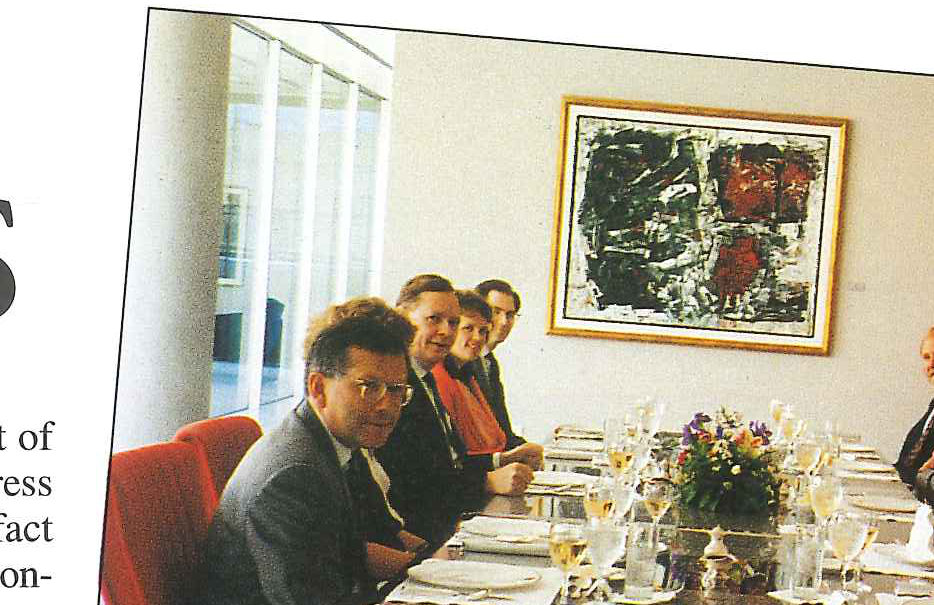
Luncheons are the preferred hospitality instrument in Washington. They are a key means of getting a full hour and a half with a selected contact rather than the thirty minutes most office calls are limited to. Today the Ambassador hosts a luncheon at the Embassy for the Deputy Assistant Secretary of State for Canadian Affairs, and her staff. She discusses changes in management of Canadian issues and the future of Canada-U.S. cooperation in NORAD.
The Embassy is is full swing in the afternoon.
Russian policy in the Caucasus and U.S. involvement in UN/CSCE conflict resolution efforts in the former Soviet Union is the main theme of a meeting with the US Coordinator for Regional Affairs of the Newly Independent States at the State Department.
The Embassy speaks to the editor of Washington Technology about an article they are writing on Canadian information technology.
A meeting is arranged with the State Department to discuss the Don Johnston campaign to the OECD and the upcoming OECD Ministerial meeting.
Trade officers head off to Richmond, Virginia to meet the Canada-Virginia Chamber of Commerce, the Mayor of Richmond, and the Chairman of the Board of the James River Corporation.
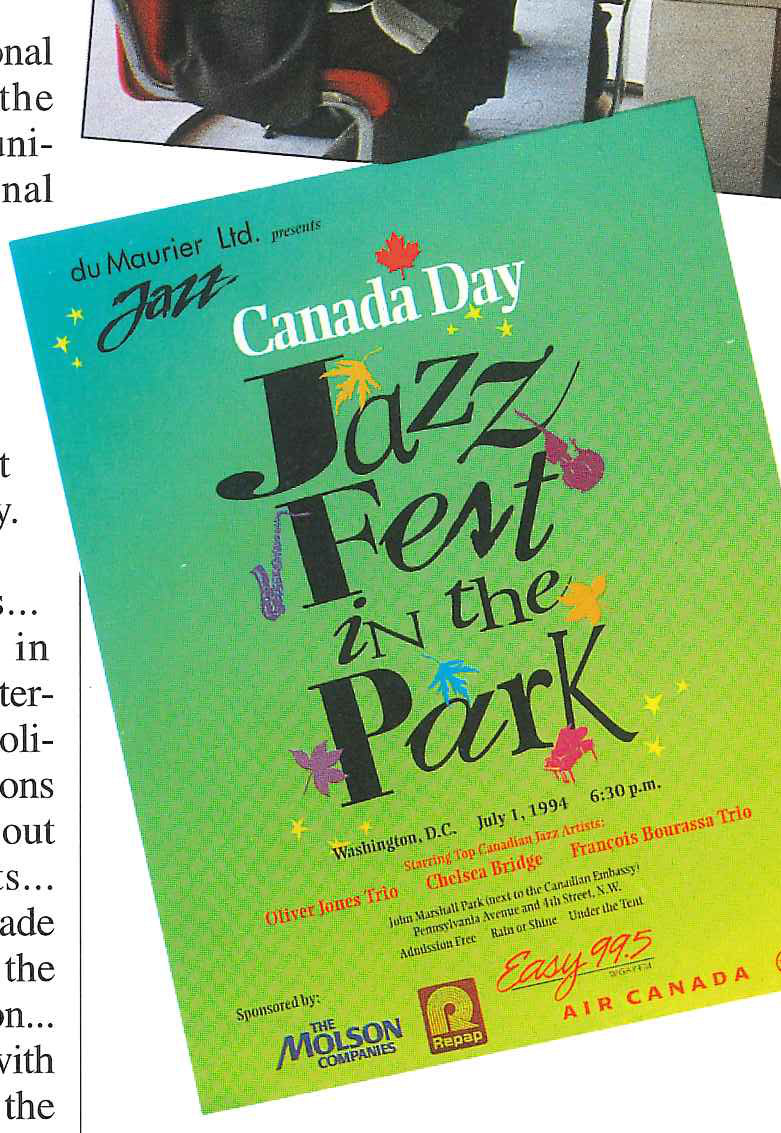
The distribution of thousands of flyers announcing the Embassy July I jazz event is organized.
The possible disposal of spent nuclear fuel in a Candu reactor is the topic of a meeting with the U.S. Department of Energy. The energy counsellor then prepares a report on Energy Minister McLellan’s Washington visit. Finally, he talks to a Quebec journalist about Canada-U.S. energy issues, in particular, hydroelectricity.
A report on the U.S. Immigration and Naturalization Service’s handling of some fraudulent passports from Latin America is sent to Ottawa.
The Embassy calls the National Cable Television Association for their position papers outlining the implications for cable TV companies of the proposed new Telecom/Information Highway legislation.
Reports on the Middle East multilateral peace talks, Asia Pacific cooperation, the political situations in Cyprus, Sudan, China, Haiti, and Russia, and the changes in the Clinton Administration’s foreign policy team are being finalized. bout de papier
A Canadian Immigration Officer in New York
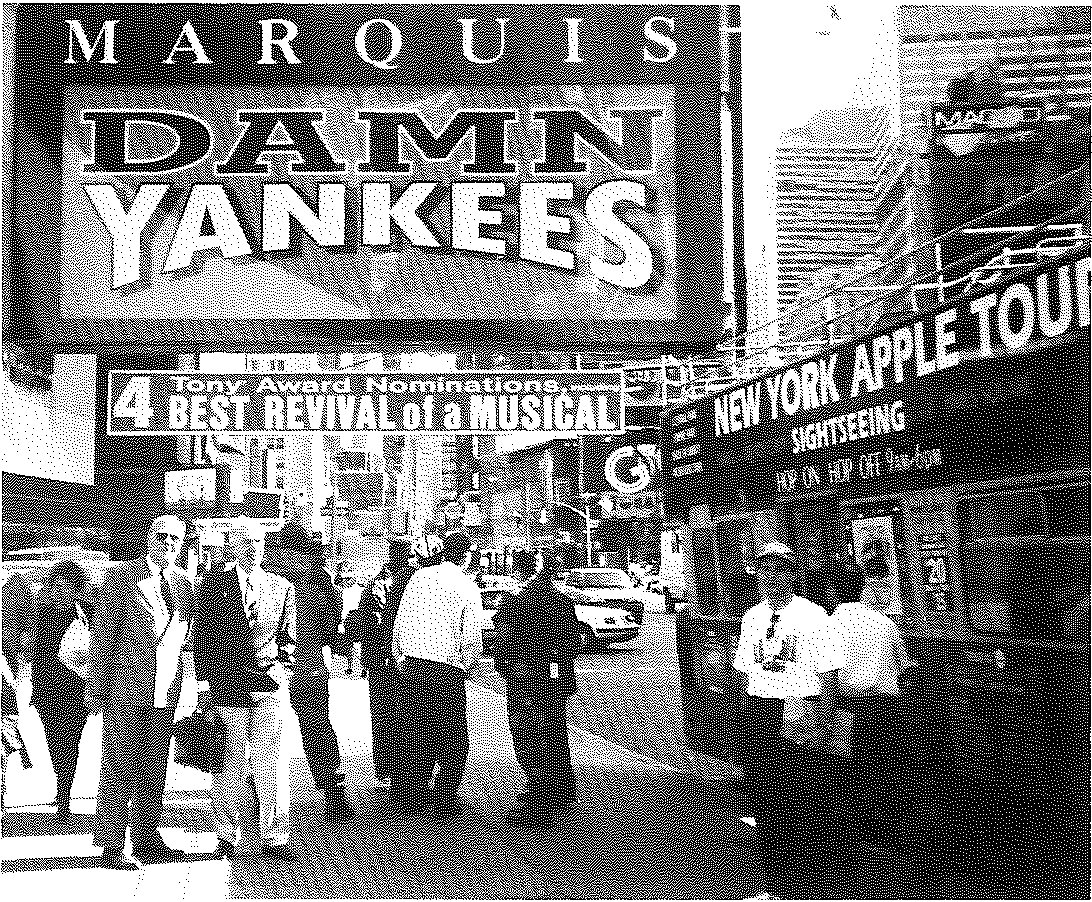
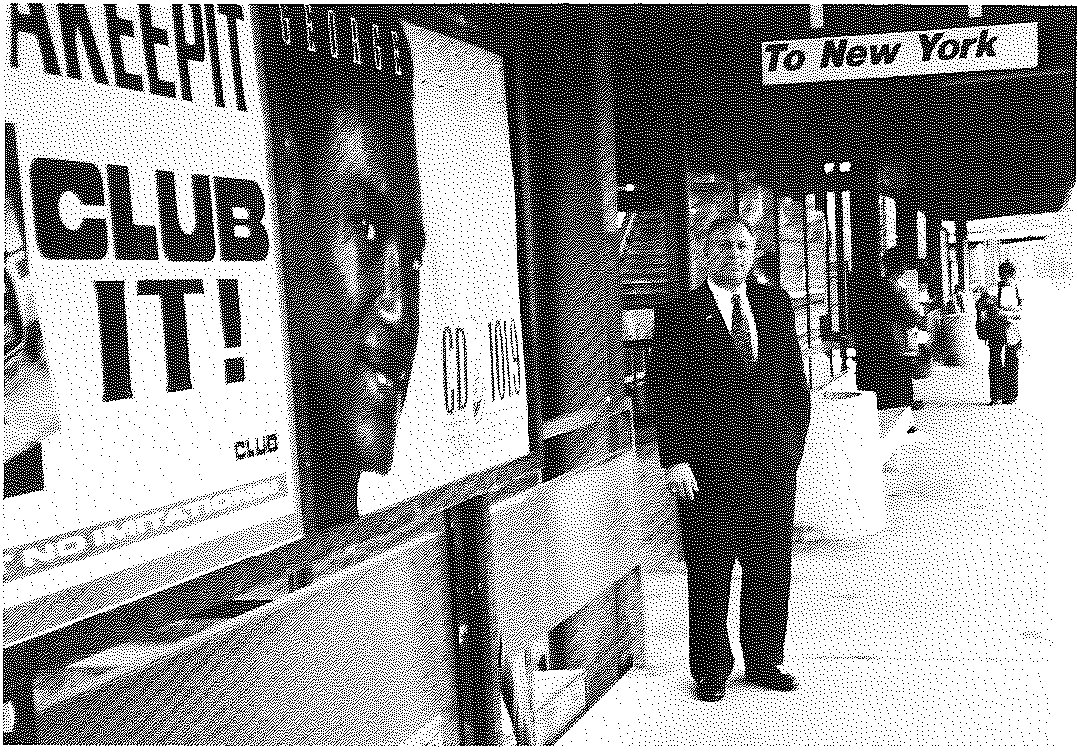
I walk two blocks to 86th and Lexington, take the subway to 5lst and Lexington, walk four crosstown blocks to Fifth and 49th passing St. Pats Cathedral, Saks Fifth Avenue, the Rockefeller Centre with its present rose garden display and the not yet open site of NBC Morning Show Live From The Street to 2151 Avenue of the Americas, my office building. I grab a cup of coffee at Au Bon Pain.
I arrive at the office at eight o’clock. It is already open. I take five minutes to glance at the paper. There is an article about smuggling the children of illegal • A high profile investor case for New Brunswick.
• A call from a Montreal law office about a refugee claimant.
• Five hours working on some 30 file attachments ranging from medical results to representations from lawyers to pending documents.
• A call to an adoption agency about expediting two cases.
• Two applicants wanting verification of their landing in Canada.,
• Phone my US immigration contact about two probable marriages of convenience who are seeking visas and set up a date to discuss Chinese smug- Jamaica to be reunited with their parents. I cut out an article for my boss, who is away in Ottawa, about California suing the Federal Government for the costs of illegal aliens.
It is a typical day.
• A strange visitor visa request on a circus owner from the Middle East and his very pregnant Russian wife. They live in Dubai. Her Canadian sister wants her to come for a visit.
The science and technology counsellor goes to the White House to confer with President Clinton’s space advisor on the new Canada-US space arrangement for the International Space Station. This new arrangement is to be announced by Industry Minister John Manley at a press conference in Ottawa on June 3.
Appointments with Les Grands Ballets Canadiens for their performance at Wolf Trap are made and an Embassy reception is organized.
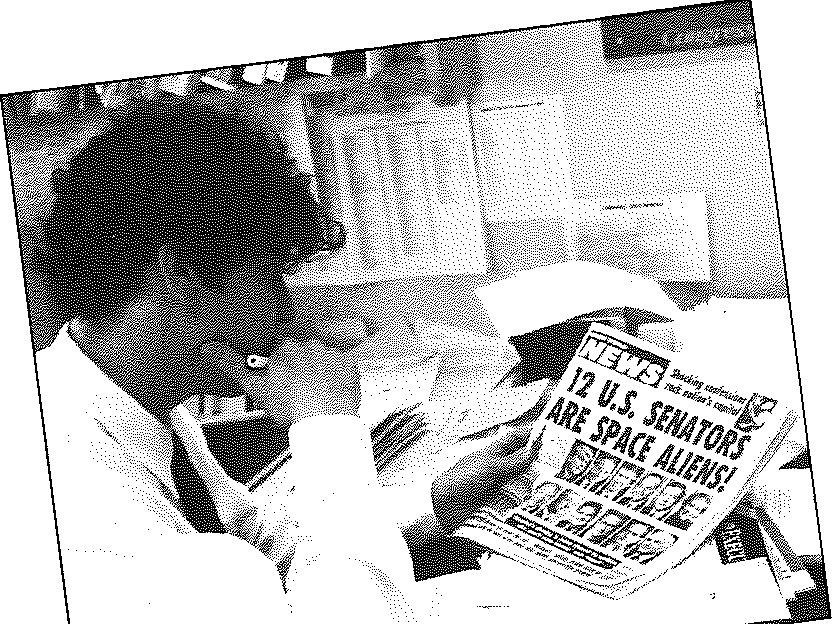
In the Congressional and Legal Affairs Section, the third secretary ponders a newspaper article with a confession by 12 US Senators that they are aliens from outer space.
The Special Events Coordinator supervises final preparations for the annual benefit for the National Kidney Foundation at the Embassy.
This is only Thursday and tomorrow, Friday means chaos in the visa section. I glance at my watch. Six thirty. – is it that time already?
It is a lovely evening and I think about walking home. Tonight is game 2 of the Stanley Cup; Vancouver has won game 1. I keep a low profile as a Canadian could get lynched for bragging on a night like this.
It is nearly six o’clock. The Ambassador has left for a reception. The Embassy building services supervisor rearranges the placement of provincial flags on the Embassy roof, where they will decorate the Armed Services Day reception to be held later that evening. The reception starts at six thirty and is hosted by Rear Admiral Summers.
As the guests are leaving around nine o’clock, the diplomatic courier is being met by the Embassy security guards at the loading dock with classified material. Three hours later, the Embassy security guards commence their rounds to check for security infractions.
Another day in the life of the Embassy which never sleeps is starting again.
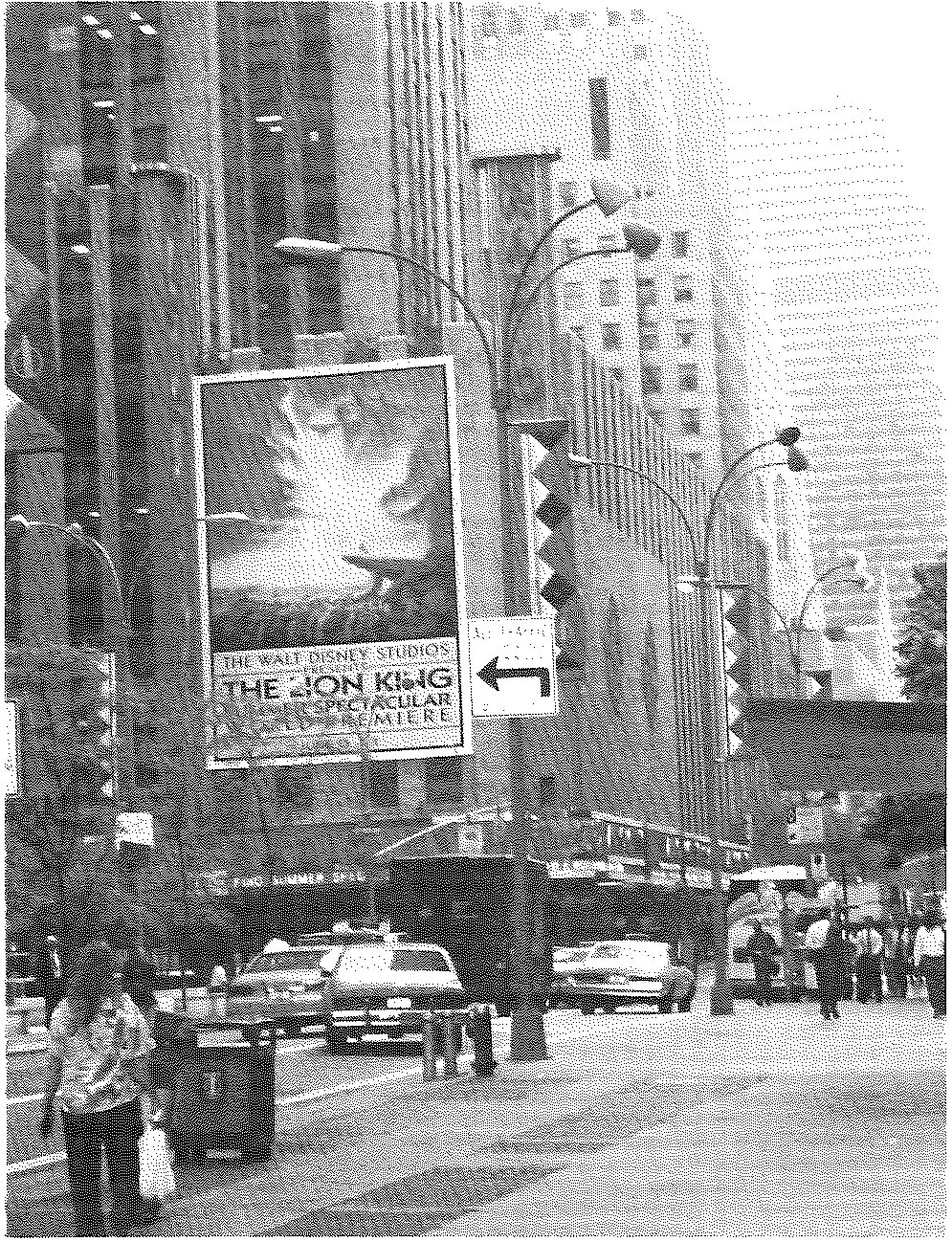
On the Sidewalks of New York
Chiefly Feasts
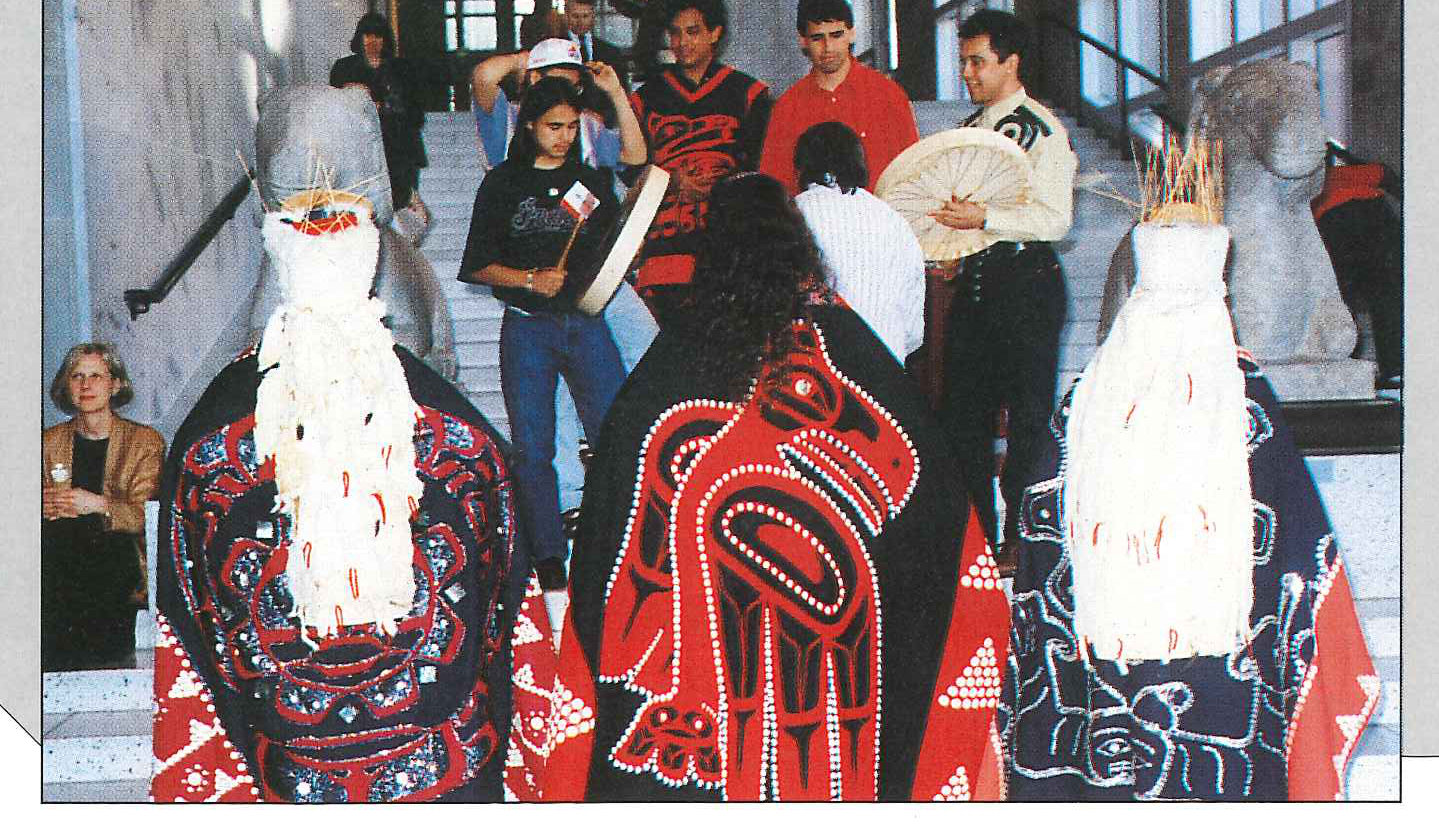
Chiefly Feasts by Robin MacNab, Canadian Consulate, Seattle he native arts of Vancouver Island made a major impact on Seattle on June 2. It was a fine example of how separate programs at the post, working together, can achieve greater results than any one program on its own. The Seattle Art Museum (SAM), a large and influential fine arts facility, was at the origin of the initiative to house the exhibit “Chiefly Feasts: the Enduring Kwakiutl Potlatch”. The American Museum of Natural History had assembled the exhibition which had already toured the National Museum of Natural History (Smithsonian) in Washington, D.C. and the Royal British Columbia Museum in Victoria.
In cooperation with the British Columbia representative in Seattle, our cultural affairs section seized this golden opportunity to arrange a vernissage with the Museum. This brought together a broad cross-section of the key political, media, tourism, trade and cultural personalities. The exhibit received intense media coverage during its opening. Several activities, including a canoe “landing” in Seattle by a group of Vancouver Island Kwakiutls, drew attention to the event.
The B.C. Trade Centre in Seattle, the B.C Ministry of Small Business, and the International Trade Centre staff in Vancouver in collaboration with our bout de papier trade section, then organized a trade mission comprised of sixteen Kwakiutl artists. This took place under the umbrella of the New Exporters to Border States (NEBS) Program which is designed to provide novice exporters with an introduction to the fundamentals of entering the U.S. market. The participation of the artisans in an exhibition of their products at the Seattle Art Museum just prior to the official Consulate General reception was particularly effective. Local buyers of art and crafts, as well as native art gallery owners who attended the trade show, were invited to stay on for the official reception. Many of the crafts and artwork displayed at the trade show were similar to items included in the “Chiefly Feasts” exhibit.
The tourism program utilized “Chiefly Feasts” to highlight native arts and culture to its travel trade and tourism media clients as yet another attraction of Vancouver Island. The opening of the exhibit also coincided with the inaugural of a new ferry service, the “Royal Victorian”, between Seattle and Victoria. The effort far exceeded all expectations. The Consulate reaffirmed its relationship with a premier arts facility and introduced key contacts to important and unique Canadian culture. We added an exciting new dimension to our efforts to promote travel to Vancouver Island. Through the imaginative use of the NEBS program, we opened up export sales for the native artisans and brought them into the exciting new world of international trade. by Jim Lovett, Canadian Consulate, Buffalo listens to a message from Consular tis seven thirty. The Consular Officer
. Operations, Ottawa. A Canadian citizen attempted suicide last night by jumping into the river at Niagara Falls. The person was rescued by a tourist just at the top of the Falls, and is presently at the Niagara Falls, NY hospital. The officer begins the process of assistance by gathering information and then contacts the Canadian.
“How are you today?”
“I am terrible! They won’t give me any clothes. All I have to wear is this stupid hospital gown — it’s downright indecent. Wouldn’t you think they would give me some clothes to put on, instead of this thing?”
“Did you bring clothing to Niagara Falls with you?”
“Yes, I did, but I locked them up — I don’t remember where, and threw the key away. I am hungry. This stuff they are feeding me isn’t fit for the garbage. I want to go home. Who’s going to pay these bills? Get me out of here now.” Reassured that the client appeared to be very much alive and well — at least, concerned about her appearance, nutrition and finances, the Consular Officer went on to assist with arrangements for her transfer to an Ontario hospital. It is twenty minutes to nine. It is the immigration officer’s first interview after a two week vacation.
“But sir, you are now forty years old! You could not have graduated from high school ten years ago, unless you were a mature student. Let’s try again, ’what year did you graduate from high school?’ “ The car salesperson from Hong Kong’s face was a study in concentration. Just as it appeared that he was reaching the answer, his face flushed, his head dropped to the desk and the man crashed to the floor.
To Live and Die in Buffalo
Building security arrive, accompanied by paramedics. Together, they attend to him and escort him out of the building. He is unable to complete the immigration interview.
Meanwhile at ten o’clock, in the Trade Department…
It was just another action-packed day which included welcoming a New Exporters to Border States (NEBS) mission (our seventh in eight weeks) from Granby, Quebec. Never mind the accident that the bus had on the way over to the office. On to the interviews… who’s next?
The fibreglass casket manufacturer, the doggie bed producer, the erotic leatherwear company, the disposable lingerie designer, or the patented stereophonic pillow distributor? Yes, we’ve seen it all and yes, they are exporting!! Not only are they thrilled with the advice and info they received, but the real bonus is the view out our window. “Look — there’s our mother country!” We aim to please.
It is eleven o’clock and the Head of Mission…
The Consul General and the political officer take advantage of guest passes to the Democratic Convention to listen to the keynote address by Governor Cuomo. It has been 28 years since the Democrats held their state convention in Buffalo. They are treated to a presentation by the Greater Buffalo Partnership which strongly emphasizes the Canada- US cross-border relationships. The astute political officer notes a significant difference in Canadian and American conventions. Here the rhetoric is delicious and the pace of networking intoxicating; characteristics regrettably not found in the hospitality rooms.
It is evening in Buffalo… The elitist image of the Foreign Service would no doubt have suffered if the Consul General had not attended a black-tie dinner that evening – fear not, he did — it was the Founder’s Day dinner at the Buffalo Club.
View the original scanned pages / Voir les pages numérisées →
Originally published in / Publié à l’origine dans bout de papier, Vol. 11, No. 4 / Vol. 12, No. 1 (1995) — Spring 1995 // Printemps 1995, pp. 57–65. Read the rest of this issue / Lire le reste de ce numéro →



