bout de papier, Vol. 11, No. 4 / Vol. 12, No. 1 (1995) — Spring 1995 // Printemps 1995, pp. 17–30
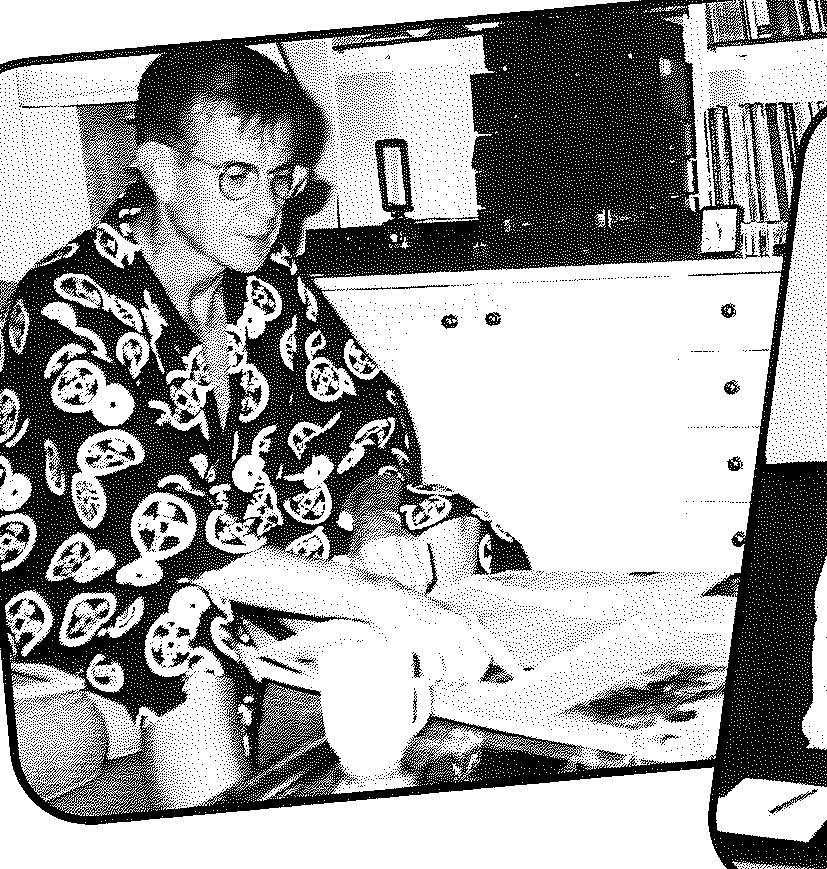
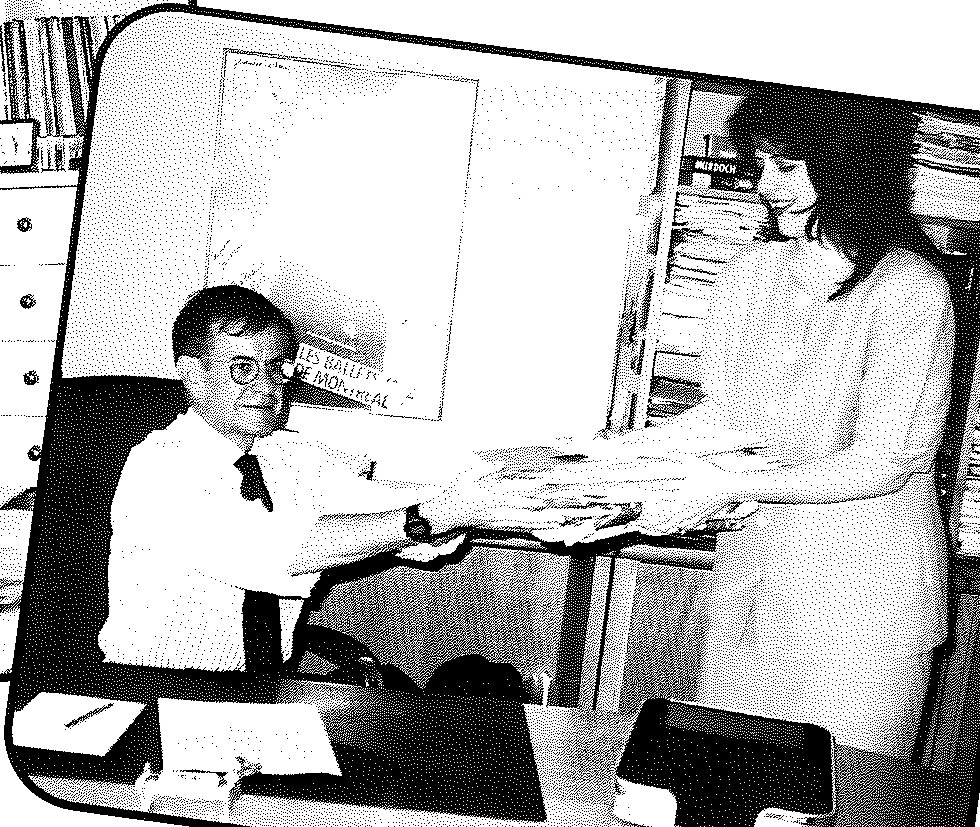
The ADM returns to his office. He stops to ask one of the officers how the trade awards went in Indonesia. No word until tomorrow. It is now about nine o’clock in the evening in most of the Asian posts. The Asian day is over.
Canada has three major priorities in foreign and trade policy in Asia-Pacific.
• the economic and investment flows in the Asia Pacific Region. In 1992, ten of Canada’s top twenty-five trading partners were from the Asia-Pacific region.
• the building of a new political and economic architecture of the Asia Pacific.
• the strengthening of our bilateral ties in key countries.
09:30 June 2 unfolds…
… The speech for Secretary of State Chan in the House of Commons on the fifth anniversary of the Tiananmen Massacre is being drafted. “Let’s see, I suppose I can reiterate what Minister Ouellet said in May about how Canada hopes to influence China through “methodical and diversified contacts based on economic partnership, sustainable development, peace and security and human rights”.
… New Delhi cables that a young Canadian prisoner awaiting trial has been transferred to the Central Jail in Faizabad, a “B-Class facility”
… “The trips of the Governor General and our Trade Minister in the spring helped and so will Minister Ouellet’s upcoming visit. It is just not that easy to sell a nuclear reactor.” The Canadian Ambassador to South Korea meets with the ADM to discuss Canada’s relations and special partnership with South Korea.
… Jakarta nous informe qu’un tremblement de terre d’une magnitude de 7,2 à l’échelle Richter a été enregistré dans la partie est de Java. On compte 5 Canadiens
18 bout de papier dans la région et on tente de prendre contact avec eux.
••. Bell Canada Enterprises gives a briefing on its strategy and investments in Asia Pacific. Atomic Energy of Canada discusses its sales efforts in Indonesia. Northern Telecom gives a briefing on its efforts in Japan.
… « Les inspecteurs de l’Agence internationale de l’énergie atomique ont été confinés dans leur chambre d’hôtel. » Notre poste en Corée du sud nous fait part du refus des nord-Coréens de permettre à une mission d’inspection internationale l’accès aux centrales nucléaires et des conséquences de cette décision sur la stabilité de la péninsule. … “More Canadian students in Asia and more Asian students hère. This Will create Great links in the future.” There is a meeting on the establishment of Canadian éducation centres in Asia. Canada has one éducation centre in Taiwan, one in Korea and another eight are expected.
… «Après Pickering, ils souhaitent maintenant aller à la baie James? » On met la touche finale au programme d’une visite indonésienne dans le secteur de l’énergie au Nouveau-Brunswick, au Québec, en Ontario, au Manitoba, en Alberta et en Colombie Britannique.
… “Iknow there’s a lot of meetings but if we want to define the direction of the architecture of the Asia Pacific, we have to be there.” Preparations are underway for the Asia Pacific Economic Commission’s (APEC) Environment Experts meeting, the APEC Human Resource Development Meeting and the Pacific Basin Conference. =.. “You have how many copies to make? I’ll be here for at least a half hour waiting for you!”
•.. The Canadian High Commissioner for Bangladesh is in Ottawa for a discussion of Canada’s overall trade, political and assistance approach.
… The leaders of the Sikh community want to discuss Canadian policy on India. •.. The Philippines government is holding a conference on the human rights situation in East Timor Conference and this is causing problems between Indonesia and the Philippines. Our Mission in Jakarta is reporting on the mounting tension. … The Canadian mission in Cambodia (one person in the Australian Embassy) reports continuing military confrontation between government forces and guerillas. The almost one hundred Canadians in the country are contacted.
… Immigration officials invite members of the Chinese Embassy to lunch to seek their help in facilitating the emigration of orphaned children who have been adopted by Canadian citizens.
… Decision are made on the renovation projects for the Delhi chancery, replacement of living quarters in Osaka and the completing of Embassy sharing arrangements with Australia in Vietnam. … INTERPOL faxes the results of an investigation that will help a Canadian detained in Vietnam on a commercial fraud case.
… “I’m in Vancouver. The Mongolian Foreign Minister arrived safety”. An officer is accompanying him across Canada. It is the first visit of the Mongolians to Canada and it will terminate with the signing of a trade agreement.
Examen final à Yokohama
••. Representatives of the Indo-Canadian community meet with Immigration officials in Vancouver to hear about new procedures in the High Commission in New Delhi that will shorthen the processing times for applicants sponsored by spouses and fiances in Canada.
10:00 Trade, Trade and More Trade
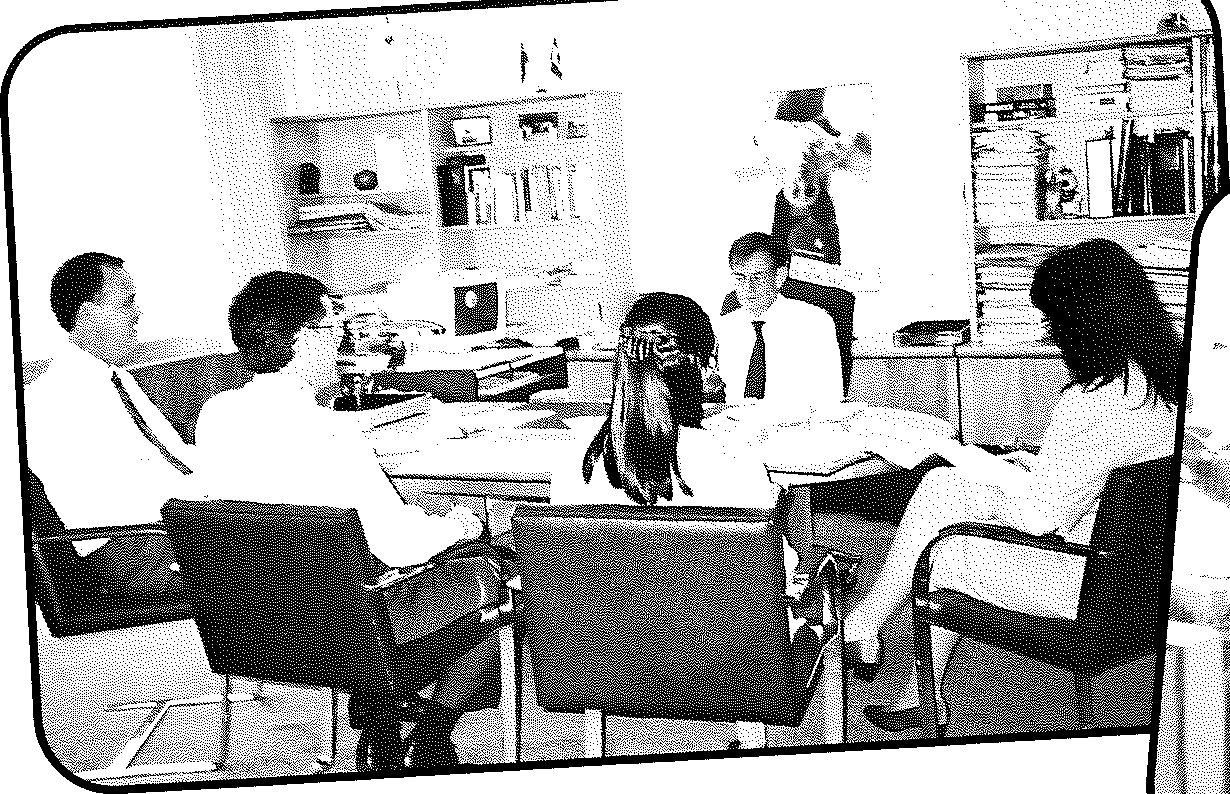
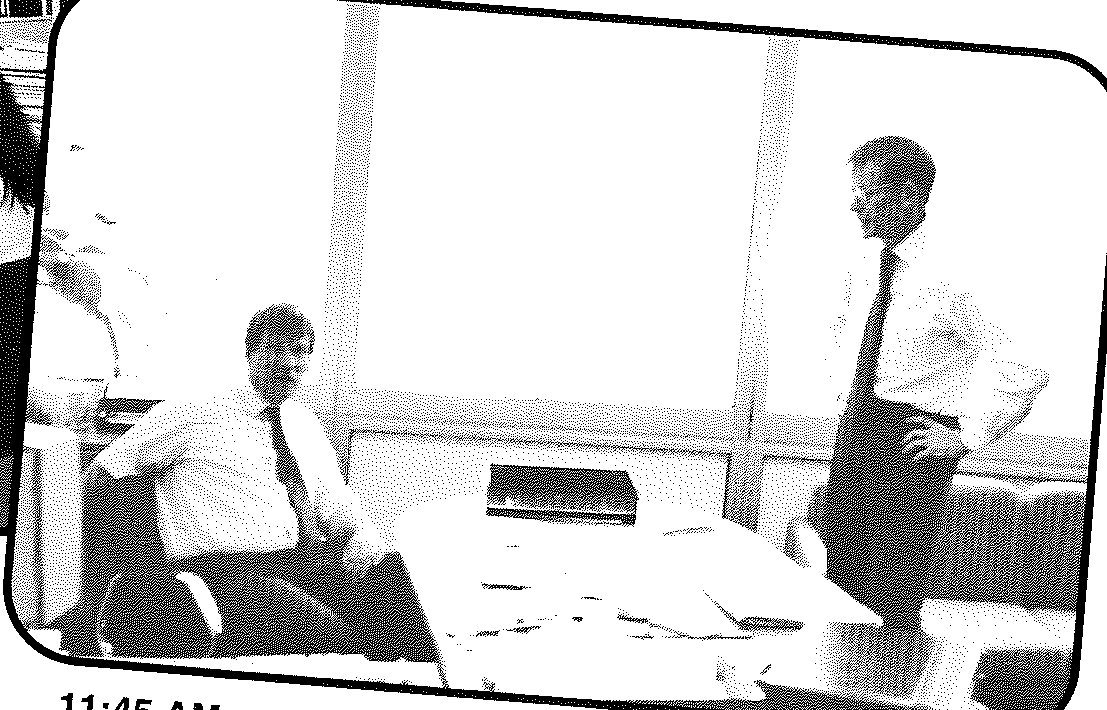
The ADM looks at his watch. It is time to head for his meeting down the hall. The International Business Development Branch is the focal point for the coordination and management of the federal government’s international business development plans and activities. Its major priorities are:
• the Trade Commissioner Service (TCS).
• the Program for Export Market Development (PEMD).
• the International Trade Business
• Canada International Trade Month, Export Vision and Canada Export Awards.
• World Information Network (WIN Exports).
June 2 unfolds…
••• « Vous pouvez me croire: l’industrie canadienne veut un guichet unique pour les programmes gouvernementaux de promotion commerciale ». Des sous-ministres adjoints fédéraux procèdent à la constitution d’un groupe de travail à haut niveau de gens d’affaires dont le mandat sera de revoir les programmes gouvernementaux en matière de promotion des échanges commerciaux internationaux. ••• The draft of the International Trade Business Plan is sent to posts and the International Trade Centres for comments. par Stéphane Jobin, Cours de langues, Yokohama
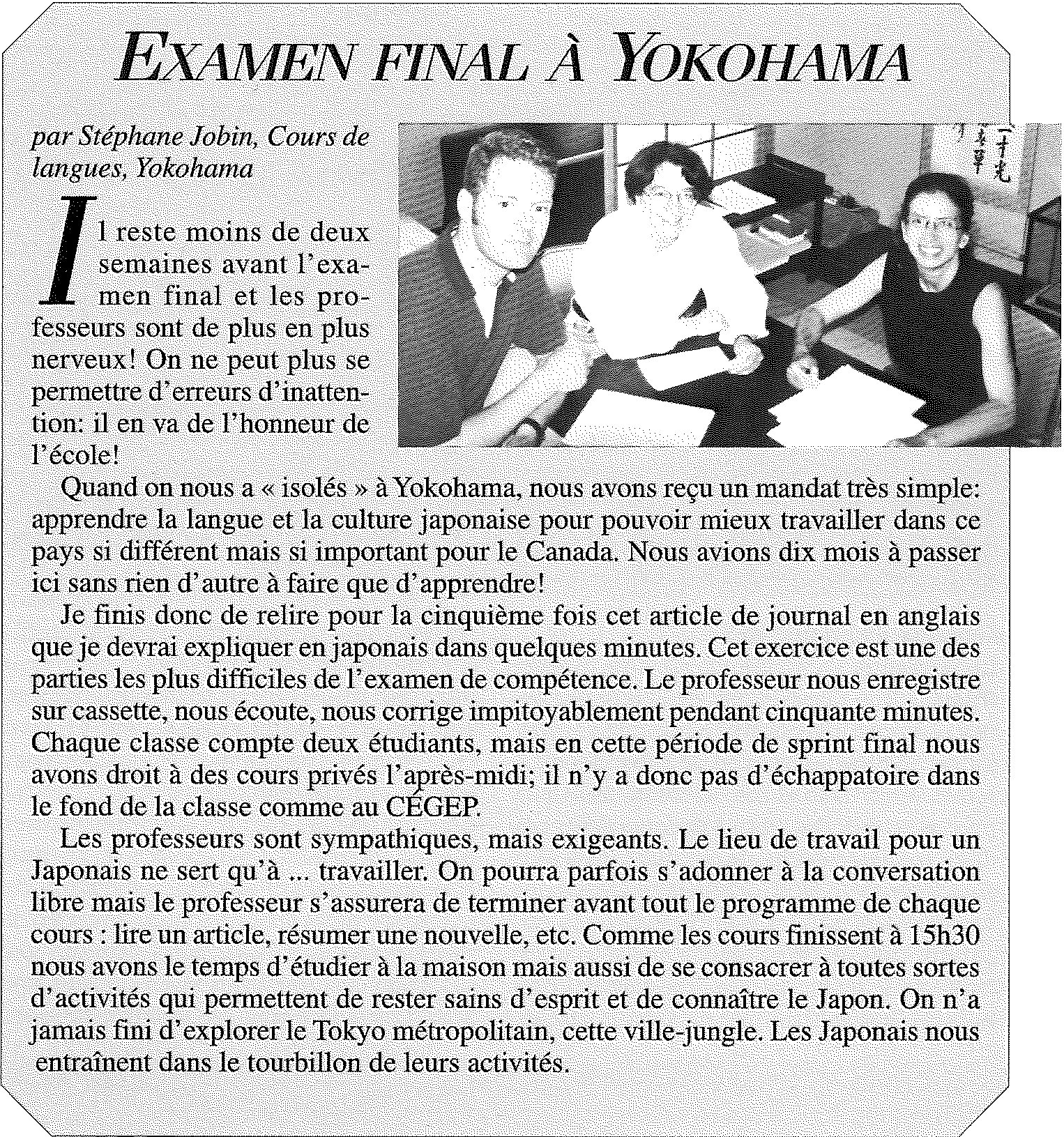
1 reste moins de deux semaines avant l’examen final et les professeurs sont de plus en plus nerveux! On ne peut plus se permettre d’erreurs d’inattention: il en va de l’honneur de l’école!
Quand on nous a « isolés » à Yokohama apprendre la langue et la culture japonai pays si différent mais si important pour li ici sans rien d’autre à faire que d’apprend Je finis donc de relire pour la cinquiè que je devrai expliquer en japonais dans q parties les plus difficiles de l’examen de a sur cassette, nous écoute, nous corrige imp Chaque classe compte deux étudiants, m avons droit à des cours privés l’après-mi le fond de la classe comme au CEGEP. Les professeurs sont sympathiques, m Japonais ne sert qu’à … travailler. On po libre mais le professeur s’assurera de tern cours : lire un article, résumer une nouvell nous avons le temps d’étudier à la maison d’activités qui permettent de rester sains jamais fini d’explorer le Tokyo métropolit entraînent dans le tourbillon de leurs acti
… “I think the privatization of the Trade Commissioner Service is a non-starter. Do you realize it is Canada’s largest commercial and economic gathering network? Last year, we received 300,000 inquiries, 47,000 Canadian busines visitors, 80,000 foreign businesses, and 6,000 investment inquiries.” •.. “’Suppose it doesn’t work?” It is the test day for the Trade Information Office’s newest product, WIN Exports for WINDOWS. It works.
•.. «Il va de soi que nous affirmerons que l’assistance canadienne devrait être plus intimement liée aux intérêts commerciaux canadiens ». L’Association des exportateurs du Canada est ici pour préparer un panel qui se tiendra lors des prochaines journées AEC-ACDI.
… There is a meeting with other government departments on how Canadian industry can win more contracts at the World Bank.
… Work is being done on a difficult financing issue on an infrastructure project in the Middle East and the impact of Algeria’s rescheduling agreement on our export financing operations in Algeria. ••. Officers are reviewing the latest proposals for PEMD assistance to companies in a specific export markets. More than 2,500 projects and 275 trade fairs and missions are approved each year. ••• « Mais comment vais-je passer a travers ces 250 propositions? ». A titre de membre du comité de selection, le sous-ministre adjoint débute l’examen des propositions en vue de l’attribution annuelle des Prix canadiens d’excellence a l’exportation.
À la veille de « Tiananmen » en Chine
par Ambassadeur Fred Bild, l’Ambassade du Canada, Chine
Les nouvelles à la radio ce matin sont consacrées presque entièrement au refus nord-coréen de coopérer en matière d’inspection nucléaire. La nervosité liée à la crise semble avoir grimpé encore d’un cran.
Le pouvoir au peuple?
La province de Shandong est fière d’avoir réussi, selon l’expression de son représentant, « à rendre le pouvoir au peuple », c’est-à-dire au plus bas niveau de l’organisation rurale. Tous les trois ans, les citoyens locaux procèdent à des élections de leurs délégués dans les assemblées de villages. Les élus sont fréquemment des villageois autres que ceux prévus par les autorités; ceci se fait par inscription directe de leurs noms sur les bulletins de vote. Une fois l’assemblée constituée, elle élit le comité du village qui lui, bout de papier à toutes fins pratiques, est l’exécutif de la communauté. En cette période de rapide croissance économique, ce genre de comité exécutif peut disposer de pouvoirs considérables, compte tenu du fait qu’en pratique c’est le comité même qui dirige les petites « entreprises municipales » qui prolifèrent maintenant partout en Chine rurale. Ces membres élus ainsi siègent aux conseils d’administration de nouvelles entreprises économiques.
Je passe ma première heure au bureau à préparer un voyage à Shandong, à l’invitation du Ministère des Affaires civiles, et plus particulièrement le Bureau responsable du développement de la démocratie de base (« grass-roots democracy »). Monsieur Zhong, qui a obtenu une partie de sa formation au Canada, est un individu hautement motivé et entièrement dévoué à sa cause. Il nous assure qu’il nous présentera des exemples moins réussis, aussi bien que des villages modèles. Nous aurons liberté complète de poser toutes les questions que nous voudrons. « Plus elles seront embarrassantes, mieux ça sera. » « Simplement par votre présence, vous nous aiderez », insiste Monsieur Zhong, « vous êtes le premier ambassadeur étranger à faire ce genre de visite. Votre intérêt sera une indication probante pour mes supérieurs que notre travail est pris au sérieux; cela pourra me valoir des ressources supplémentaires. » Je note que pour l’instant on ne parle pas d’étendre ce système d’élections aux instances supérieures, les comtés ou les provinces, là où l’influence du parti est prépondérante. Mais, notre voyage d’une semaine devrait nous donner quelques indices à ce sujet. Notre visiteur nous quitte et, au moment même où nous réfléchissons à ses propos, les nouvelles de l’extérieur nous rappellent à la réalité: le conflit inhérent qui existe en Chine entre la démocratie de base et la priorité absolue données à l’objectif de « stabilité » politique. Nous approchons du sème anniversaire des événements tragiques qui sont maintenant désignés par l’abrégé «Tiananmen ». Les journaux étrangers font état d’arrestations de dissidents, de restrictions spéciales touchant les étrangers visitant des universités à Pékin, ainsi que des annulations de dernière minute d’événements publics (expositions artistiques, concerts) dans un rayon d’un kilomètre de la place Tiananmen. De surcroît, dans un pays où les médias sont muselés étroitement, le passe-temps préféré de tous est inévitablement le trafic des ragots. La dernière rumeur qui court a trait à l’échauffourée qui serait en préparation pour le lendemain du 4 juin entre les soi-disants « Maoïstes » et les Conservateurs au sein de l’équipe gouvernante du pays, les deux camps anticipant la disparition prochaine d’un dirigeant d’un âge avancé.
Et le commerce Canada-Chine Mon prédécesseur à Pékin, Earl Drake, est en ville. Il effectue des consultations auprès du Conseil chinois sur l’environnement, groupe d’experts sino-internationaux à très haut niveau. Il est toujours agréable de confronter les perspectives d’il y a 4-5 ans avec celles d’aujourd’hui. Nous échangeons quelques idées sur les projets en cours pour la visite du Premier ministre Chrétien au mois de novembre. Earl participe à l’organisation de la réunion annuelle du Conseil Canada-Chine pour le Commerce qui coïncidera avec la visite Chrétien. Nous partons ensemble déjeuner au Ministère des Affaires étrangères. Mis à part les félicitations mutuelles pour l’état excellent de nos relations bilatérales et les préparatifs de cette grande visite, on parle beaucoup de la Corée du Nord. Notre hôte chinois, comme de coutume, conseille la patience et le dialogue soutenu. Selon lui, il reste plusieurs possibilités de compromis; en effet, les Chinois ont raison de croire que dans les semaines à venir une entente interviendra, même si elle n’est que temporaire. Vers la fin du repas, je n’ai que quelques minutes pour réitérer une demande que nous avons faite il y a plusieurs semaines pour l’ouverture d’un consulat à Guangzhou.
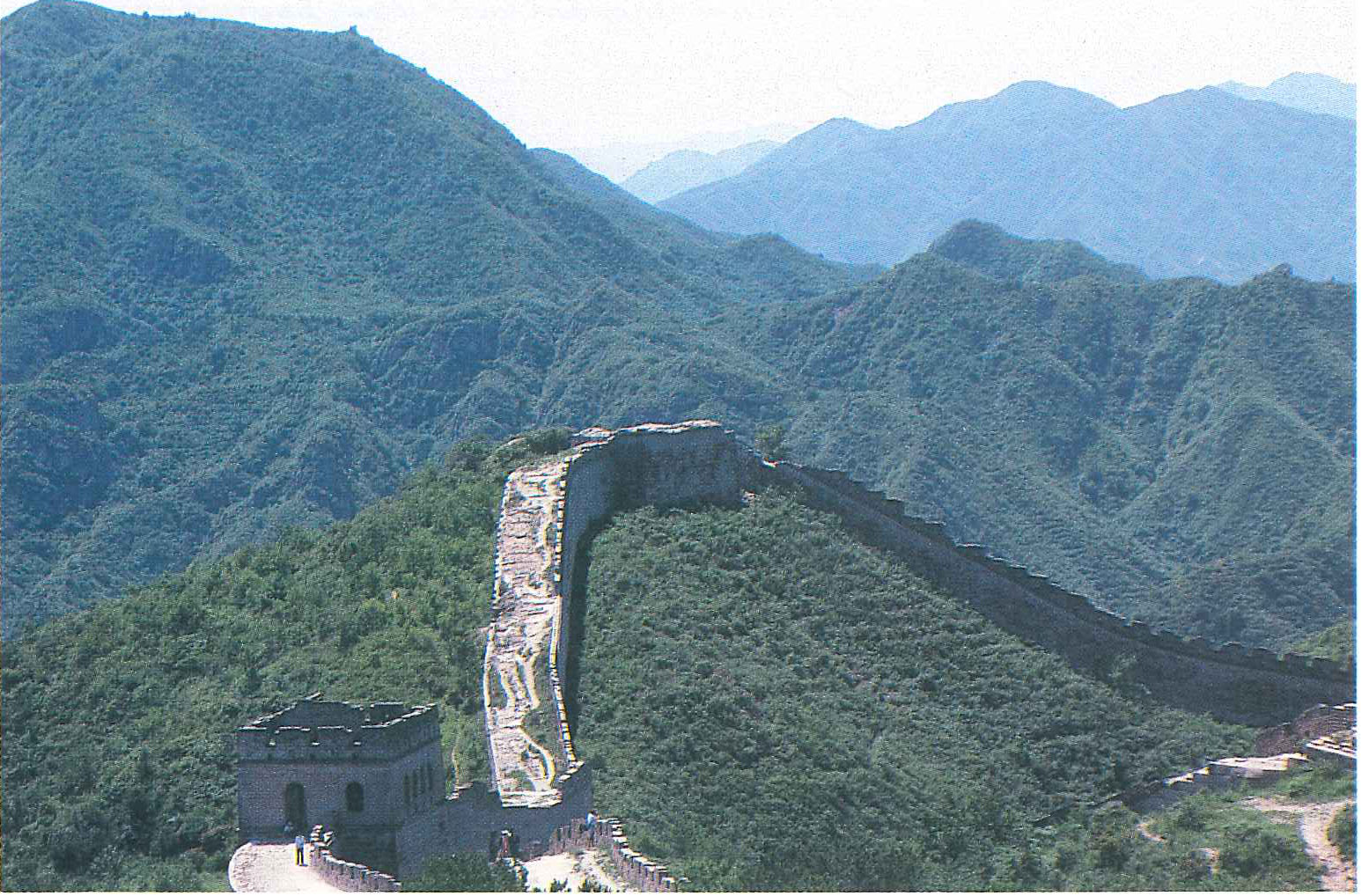
L’après-midi est consacré à des réunions avec: (a) la société MacDonald Detwiler, dont la technologie spatiale de pointe s’avère remarquablement concurrentielle sur le marché chinois; (b) des intérêts miniers canadiens qui ont de la difficulté à comprendre le cheminement de la politique aurifère chinoise qui est en pleine évolution; et (c) la Compagnie Power, dont quelques hauts dirigeants viennent de passer une nuit sur la Grande Muraille. « C’est la première fois », leur a-t-on dit, « que des étrangers peuvent ainsi séjourner sur la Muraille. » J’ai envie d’ajouter, « depuis Genghis Khan, bien sûr », mais je me contente de leur narrer une randonnée de trois jours, il y a deux ans, avec ma fille sur des parties complètement en ruines à un autre endroit de la Muraille. En fait, l’événement spectaculaire auquel ils viennent de participer a été organisé par le Ministère du Tourisme pour environ 80 personnes et comprenait un repas “barbecue’ aux chandelles, tentes, sacs de couchage et boissons à volonté servies par du personnel digne d’un hôtel cinq étoiles. En rien comparable à notre périple de trois jours où nous dûmes traîner notre propre eau et notre propre pemmican. En revanche, nous avions trouvé une solitude idyllique dans une nature des plus pures, et ce à 120 km de la capitale du pays le plus peuplé au monde! Ce qui reste de l’après-midi est consacré à des vétilles diverses: répondre à des plaintes de gens qui se sont vus refuser des visas, réacheminer des protestations sur la soi-disante pratique chinoise d’extraire à des fins médicales la bile d’une certaine espèce d’ours (un reportage à l’étranger a causé une avalanche de lettres), demander des explications sur la disparition d’un écolier canadien, préparation d’une participation canadienne à un symposium international sur la procédure criminelle, et retouche de mes notes pour une prestation à la télévision chinoise sur les réformes économiques en Chine.
Deux réceptions (… et la démocratie) À la fête nationale de l’Italie, le président de l’École normale supérieure de Pékin me propose une augmentation des échanges universitaires avec le Canada et le président de l’Université du Commerce international et de l’Économie me suggère que nous élargissions notre coopération actuelle aux champs des sciences économétriques. Parmi les étrangers, cependant, le principal sujet de discussion semble être les mesures accrues de sécurité qui se font sentir de plus en plus ces derniers jours, c’est-à-dire juste avant la date fatidique, que la plupart des hauts fonctionnaires chinois préfèrent oublier.
A la deuxième réception, celle offerte par l’Association chinoise de Droit international, je suis abordé par un membre du Comité permanent du Congrès national du peuple qui a appris que l’Ambassade se proposait d’honorer Wang Tieya, la plus grande autorité chinoise de droit international. Comme mon interlocuteur semble principalement intéressé par la liste des invités, je lui donne une idée de ceux qui y seraient conviés. Quand il me demande le nombre total des invités, je ne puis m’empêcher de me rappeler le principal sujet de conversation à la réception précédente et je lui réponds un peu geignard, « Je suppose que ça dépendra de l’endroit où l’on nous permette de tenir notre réception. » Mon interlocuteur disparaît dans la foule. Un membre du Ministère des Affaires étrangères m’accoste pour me dire à quel point le Premier ministre Bob Rae avait fait bonne impression lors de sa récente visite à Pékin; ce qui, semble-t-il, avait attiré l’attention de ses hôtes, fut l’étendue et la diversité de ses intérêts, et surtout la vigueur qu’il avait démontrée en faisant la promotion des programmes de radio, TV et film de sa province. Nous nous attardons quelque temps sur la gamme des pouvoirs provinciaux au Canada, mon collègue constatant que les chefs des provinces canadiennes semblent jouir d’une autorité bien plus considérable que dans la plupart des autres ensembles fédéraux. Il me lance une dernière question : « Et quand aurons-nous le plaisir d’accueillir le Premier ministre du Québec, la seule des grandes provinces canadiennes qui ne nous ait pas encore fait honneur à ce niveau? » « Après les élections, sans doute », lui dis-je.
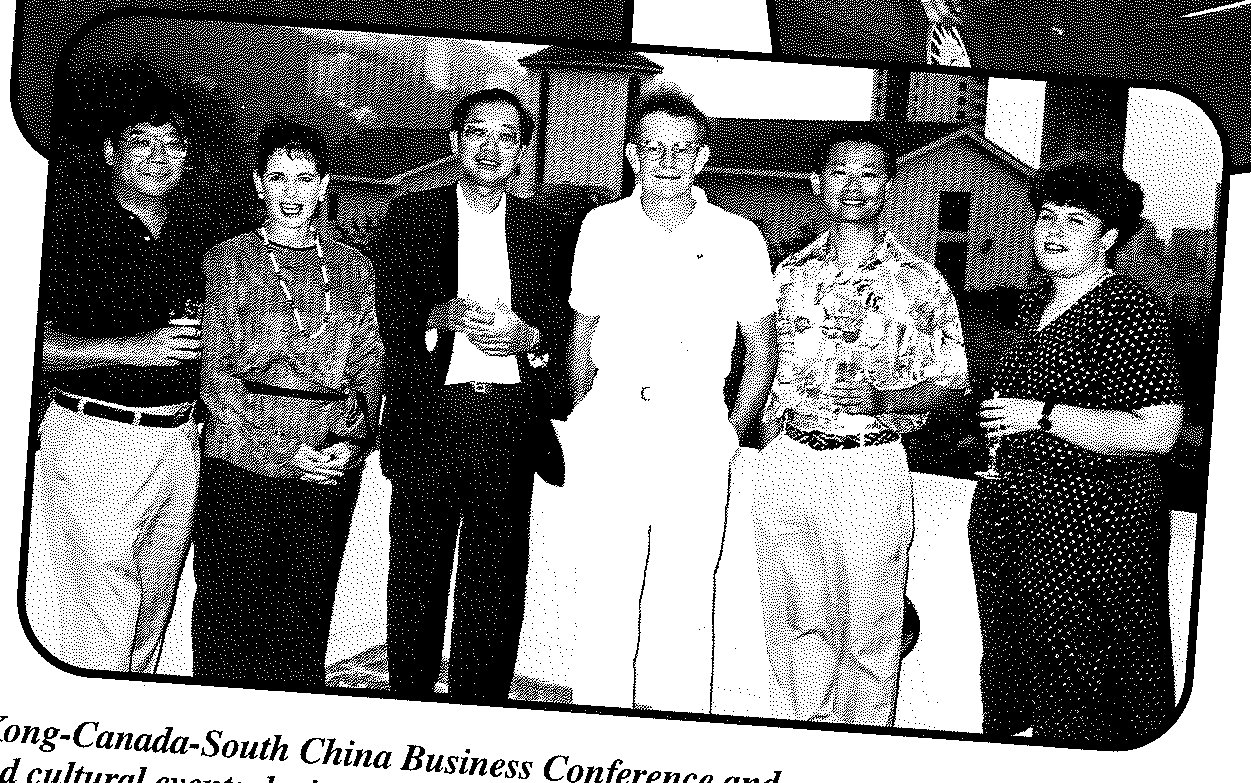
Mr. Higginbotham does Hong Kong
On the Road in Asia
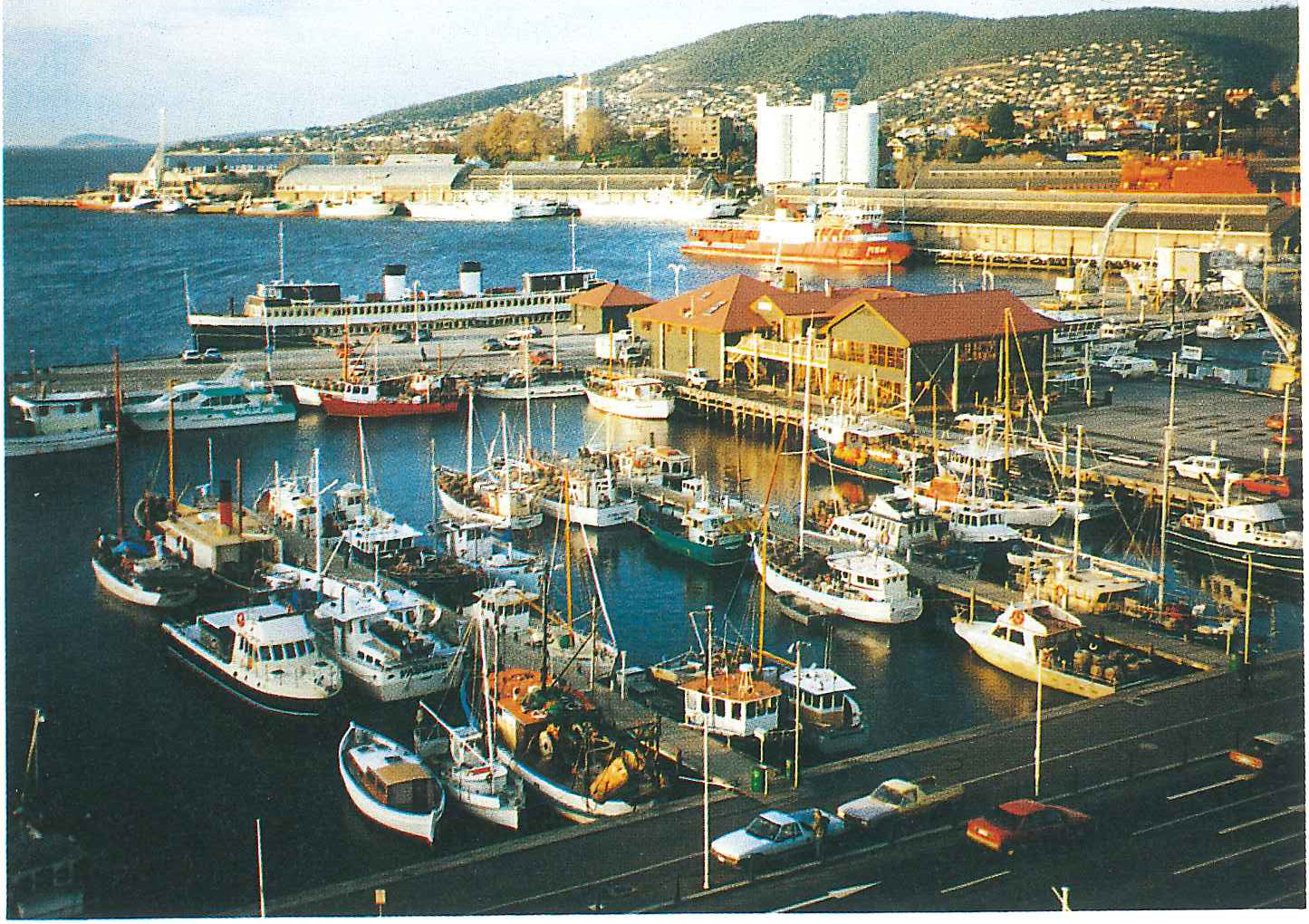
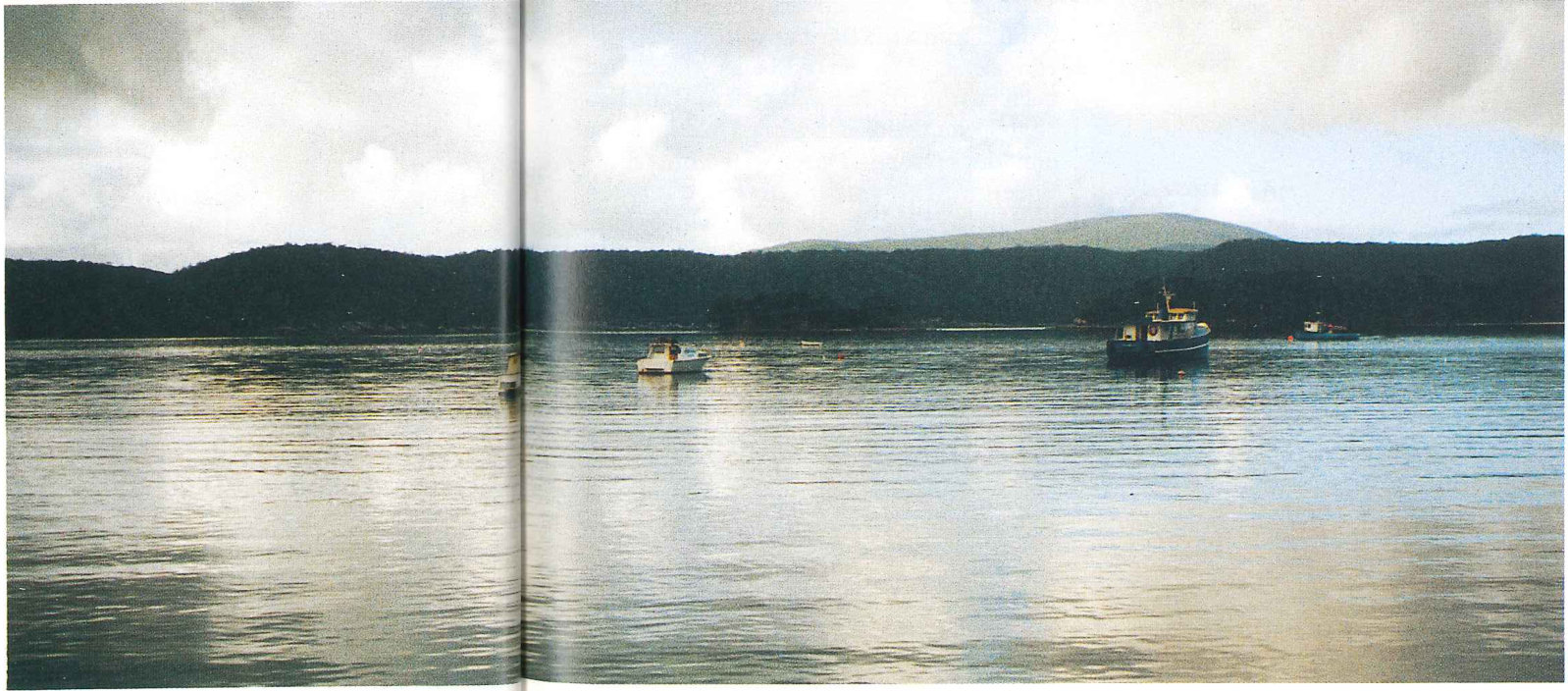
Away to Tasmania
H eads of Mission often visit the far flung parts of the region to which they are accredited. They will carry out representational duties on their own or alongside their partners. On June 2, at least four heads of mission and spouses were on the go: the High Commissioner to Australia and his wife, Michael and Linda Berry, were in Tasmania; the High Commissioner to India, John Paynter, was visiting Bhutan; the High Commissioner to Malaysia, John Bell, was in Sarawak; and Frances Delvoie, wife of the High Commissioner to Pakistan, was visiting the site of a local natural disaster.
AWAY TO TASMANIA by Linda Berry, Canadian High Commission, Australia
The Canadian High Commission in Canberra awakes to a light frost and the chatter of green and red king parrots. The High Commissioner, Michael Berry, however, awakes to the sun and blue water of Hobart. He is accompanied by his wife, Linda. She records the day.
“On the road” means that time spent on household management diminishes but the attention to wardrobe increases. In Canberra I may meet people at coffee mornings, lunches, dinners or receptions two or three times a week, sometimes more than that — in 150 days of this year I counted 80 functions. On an official visit, it is pretty well non-stop meeting with people, absorbing information and participating in exchanges. Tasmania is probably my favourite state in Australia. At the seeming end of the world one could be excused for thinking that there would not be many Canadian connections, but our day illustrates the ties we have with that small, far away “Apple Isle” Michael’s first call is on the Minister for National Parks and Heritage to discuss the possibility of erecting a small monument in Hobart to commemorate those Canadians who took part in the 1837-38 Canada rebellion. For their trouble they were transported to the Australian penal colony in what was then known as Van Dieman’s Land. In the 1970’s a small cairn was placed in Sandy Bay on the outskirts of Hobart to mark their arrival but a more central recording of their ’stay’ seems warranted.
The last time I had been in Hobart, I had spent a whole day researching the story of the exiles for an article for the Ottawa Citizen, so Michael and I had become quite caught up in this fascinating piece of Canadian-Australian history. As a result of my article, a professor in the United States was in touch with us suggesting a display would give more information about this episode.
After this Michael meets with the Tasmanian Minister of Fisheries to press the case for access to the Australian market for fresh Canadian salmon. Tasmania has a relatively young salmon farming industry, derived from Nova Scotia stock. However, on grounds of disease transmission, Canada has not been allowed to sell fresh salmon to Australia since 1975. I do not attend these first calls but spend part of the time on the phone with the household staff in Canberra. We have several dinners and lunches coming up immediately upon our return and I need to talk about the arrangements. I also take a short walk and on the spur of the moment use my phone card to call my widowed mother from the wharf of Hobart Harbour.
One of the hardest parts of living in Australia is being so far from my mother and my grown children. I know it is harder for my mother than it is for the rest of us. Frequent calls help her to feel I am not so far away. As we speak, I describe the rbour prickly with masts, the old ware-uses now restored, the skyline of Hobart th Mount Wellington looming in the backound. Straight ahead lies Antarctica. I ddenly feel very far from home, very far ›m my family, very far from my beloved tle house in Ottawa.
Michael and I head to a meeting at the liversity of Tasmania. We present a eque to the Institute of Antarctic and ruthern Ocean Studies for a project on ’anada-Australia and Maritime Cooperain: Oceans Policy in the post-UNCED a”., undertaken in collaboration with ilhousie University in Halifax, Nova otia. The local media are in attendance d put together an excellent piece for the evision news that night.
At lunch I sit with the Head of the glish Department. She wonders if I know a Canadian author who would be inter-ted in participating in the Tasmanian
On Exchange with the Kiwis
Working for someone else’s government is no picnic. Seconded to the Ministry of Foreign Affairs and Trade, I am responsible for New Zealand’s relations with Thailand, Indonesia and the Philippines with an emphasis on trade and economic relations. However, today I’m on the East Timor file. The screening here in April of John Pilger’s film, Death of a Nation: the Betrayal of East Timor brought forth a torrent of public protest over New Zealand’s alleged complacency. Fifty-one MPs, slightly more than half of the sitting members, delivered a petition to the Indonesian Embassy condemning human rights violations in East Timor and calling for self-determination. A few days later a journalist was inadvertently permitted to attend the credentials ceremony for the new Indonesian Ambassador. The Governor General referred pointedly to the “concerns of many New Zealanders” over Indonesia’s handling of Timor. This produced headlines like “Vice-Regal Tilt at Indonesia” and “Untimely Chiding Embarrasses Government”
The timing of the speech and the petition could not have been worse — it is barely a week before Prime Minister Bolger’s long awaited official visit to Jakarta. There were demonstrations. Bags of correspondence, vehemently critical and demanding action, piled in. The press pilloried the PM relentlessly. His handlers fumed at the Ministry’s inability to quell the rabble.
It all ended up on my desk. I find myself in the centre of a major damage control exercise. Not relaxing.
Writers’ Festival next March. As I had recently had a similar discussion with those planning the Canberra Word Festival, also in March, I am able to suggest Ottawa short story writer, Isabel Huggan, who had recently published her second collection, You Never Know. Isabel has now been involved in both festivals.
We wind up our official appointments at a dinner with members of the Tasmanian Tourist Board. We had originally met them in Melbourne at the ceremonies on the Polly Woodside, a renovated sailing ship from the late 1800’s, commemorating the 100th anniversary of the arrival in Melbourne of the Canadian-built ship, Marco Polo. The National Film Board filmed the evening. During dinner we discuss the possibility of filming the penal colony ruins in Port Arthur in Tasmania where some of the more “difficult” Canadian exiles spent time. Our Tasmanian sojourn demonstrates that spouses of Heads of Mission can play a very positive role for Canada if they so wish.
A Wedding in Sarawak
A WEDDING IN SARAWAK by John Bell, Canadian High Commissioner, Malaysia
On June 2 I am in Sarawak with the development counsellor of the mission. We are honoured guests in an Iban longhouse with 78 “doors”, a traditional dwelling. We are there to inaugurate a Canada Fund project for increasing the community’s income through pig raising and the introduction of new crops.
Our visit coincides with the annual Gawah harvest festival. The entire longhouse stays
A Personal Farewell to Bhutan
up all night celebrating, and I undertake the sacrificial slaughter of a pig on this auspicious occasion. An Iban wedding takes place at midnight. We are asked to bestow good luck upon the marriage by swinging a live chicken over the heads of the bride and groom, who are decked out in magnificent costumes. We also dance the traditional Iban bird dance.
A PERSONAL FAREWELL TO BHUTAN by John Paynter, Canadian High Commissioner, India
The day starts painfully early. I am to depart from Thimphu, the capital of the tiny Himalayan Kingdom of Bhutan where I had been paying my farewell visit as Canadian High Commissioner to India. I had spent the previous evening as guest of the Bhutanese Foreign Minister, the longest serving Foreign Minister in the world with twenty eight years experience.
It is now four in the morning. I am leaving the Druk Hotel to make the hour and a half drive along curving mountainous roads to Paro, the nation’s only airport, altitude 8,000 feet. The Druk aircraft (one of a fleet of two) sits in the mists of the Paro Valley two hours after its scheduled flight time. It is not equipped for instrument
Visiting Dad at the High Commission
I am visiting my family on summer vacation. I drop in to see my father, the Canadian Forces Attaché, at the Canadian High Commission in the Malaysia-
. Borneo Finance Building, a twenty-three storey skyscraper in the heart of Kuala Lumpur. I am in its cavernous black marble lobby.
The High Commission is on the seventh floor but getting an elevator in the mob takes an element of aggression. My strategy this morning is to go with the flow. I stand directly in front of the elevator doors – in Canada this is a no-no but in Malaysia it is the only hope to reach an upper floor. When they open, the sardines inside spill out on either side of me, while the people behind me physically shove me inside as they rush in. Pinned to the back wall of the elevator, I feebly call out, “Tujuh!” so a tiny Indian messenger presses seven. I stumble off, rearrange my hair and wonder how long my father can use these elevators several times a day before a stroke or coronary thrombosis sets in.
Non-Diplomacy in Taipei
by Julia Bentley, Assistant Deputy Director, Canadian Trade Office, Taiwan
T aipei? Does Canada have an Embassy in Taiwan? How can there be foreign service officers in a country with which we don’t have diplomatic relations?
Welcome to the ambiguity of “non-diplomacy”. Canada tries to achieve in Taiwan what it achieves elsewhere in the world, but without the security and familiarity of a diplomatic framework. The Canadian Trade Office in Taipei is a bustling multi-functional office with forty staff, of whom seven are foreign service officers “on loan” to the Canadian Chamber of Commerce. The phantom foreign service officers provide the services normally provided by traditional diplomats. Canada is in good company, since virtually all the other major industrialized countries, and many not so major, are represented here by equally euphemistically named offices. June 2 is a typical day for non-diplomacy. There is “non-immigration”. The visa facilitation section, headed by two phantom foreign service officers, today issues over 450 visas. In 1993, the office most of the population does not see the paragraph saying that diplomats are being supplied as usual. (This, by the way, is not true). We dig our own tubewells in our compounds and are rationing water for ourselves and our extended family of domestic staff. These same articles request people to keep an eye on their neighbours and to report any wastage of water! With the tribal vendettas that exist in this country, I fear there will be a great deal of turning-in and settling of old scores in the near future. June 2 is “D Day”. This is the day forecast when all the available water will be used up and the area dry. On June 1, Prime Minister Benazir Bhutto and the Mullahs pray for rain, my bad leg aches, and our chauffeur, Ali, declares he is sitting on hope. The omens are good for a heavy rainfall! The dawn of June 2 is beautiful, hot and sunny with not a cloud in the sky. issued 41,000 visas, making it one of the busiest Canadian offices in the world. After the Japanese, Taiwan tourists are the biggest spenders in Canada, ranking this a key market for Canadian tourism promotion.
There are “non-education exchanges” The Canadian Education Centre receives the usual number of calls. In 1993, 1507 student authorizations were issued and over 5000 Taiwan students are enrolled at Canadian institutions.
There is “non-consular”. • A Canadian pei in prison is transferred to a hospital. Visit him; he was treated and declared fine.
Most of all, there is “non-trade”. The Director of the Canadian Trade Office, the phantom Ambassador, talks with a major Canadian telecommunications manufacturer about strategies for winning a $150 million contract for a cellular phone system. It works. On July 12, Taiwan’s Directorate General of Telecommunications awards the contract to Northern Telecom. Chalk up another success. Taiwan is Canada’s eighth largest export market receiving $3 billion in our goods and services.
Hurray for non-diplomacy.
A newspaper reports that one of the water tankers had been highjacked yesterday afternoon by the police. The tanker contained water for 4,000 people. Everyone seems to accept that thirsty policemen needed the water so that they could eventually catch robbers.
I decide to visit Simly Dam and Rawal Lake to see if it is true what the newspapers have been reporting. It is. A small two foot deep puddle remains at the bottom of Simly Dam and Rawal Lake is not much better. On the return trip, I think I see clouds forming over the Margalla Hills. They must have been clouds of hope. No rain falls.
On June 3, clouds form on the hills but no rain falls. Leg continues to ache, Benazir continues to pray and Ali still sits on hope.
No Water in Simly Dam
take-off or landing. The flight back to Delhi, via Kathmandu, Nepal, gives spectacular views of the Himalayan mountains, including Mount Everest and Mount Kachenjunga.
Arriving in New Delhi is like stepping into an oven. The temperature is 46 degrees Celsius, breaking a fifty year old record. I return to the High Commission, catch up on what has happened in my absence, and prepare a speech for a World Environment Day Seminar at the Indian Forestry Research Institute. I think about the six hours of hot, dusty driving it will take to get there. I am already nostalgic for the fresh mountain coolness of Bhutan.
PAKISTAN
No WATER IN SIMLY DAM by Frances Delvoie, Canadian High Commission, Pakistan
Water for Islamabad and much of that area of Pakistan comes from Simly Dam and Rawal Lake. The normal winter rains do not fall in late 1993 and the early months of 1994. As the water dwindles and the temperatures soar to 40-45 degrees Celsius in the twin cities of Islamabad and Rawalpindi, the inhabitants are getting testy. Supplies of water are increasingly dirty and there is an outbreak of hepatitis.
The first water riot occurs on May 29. It involves about 1,000 people. One man is killed, 40 injured and a number of cars are destroyed.
According to newspaper reports even the underground water level is dropping fast. The Capital Development Authority starts digging tubewells, mostly dry holes, and starts operating 70 tanker trucks to meet the demands of a population of 2.5 million. They assure people that there would be plenty of water by July 15. By June 1, the politicians are admitting there is a problem. Advertisements and articles appear in the newspapers requesting everyone to conserve water. Luckily for us
By Bus in Fujian
By Bus in Fujian by Dominic Scott, Language training in Hong Kong, ne in the morning in Ottawa; one
I am bumping along a rough road from Zhangzhou to Xiamen in a mini-van crammed with local peasants and their farm implements. I am in China’s Fujian province, first to improve my Mandarin, and second to meet contacts who will be useful to my Taiwan posting which starts in September. It is over 35°C in the van. My seatmate’s sleeping head continually falls in my lap and his hoes and shovels take up the minimal leg room.
After several more hours of inching our way along congested country roads, we finally reach the outskirts of Xiamen, second only to Shenzhen and Canton among southern China’s economic boomtowns. The mini-van now turns itself into a city bus and stops at all public bus stops or wherever someone flags it down. This adds another hour to an 80 km journey which has already taken three. Still, at a price of $2, one can hardly demand a refund.
Once settled in my hotel, I spend the rest of my afternoon telephoning to arrange meetings. That evening, after a noodle dinner in an old Mosque run by Muslims from China’s northwest, I meet with three university professors who had all studied in Canada over the past several years. We discuss the academic linkages between their universities and Canadian institutions, economic and political ties between Canada and Fujian province, and how to strengthen bilateral relations in general.
The next morning, which is eight thirty in the evening in Ottawa, a representative from the Xiamen Foreign Affairs office escorts me to the Xiamen Planning Commission and the Xiamen Foreign Economic and Trade Commission. Both meetings are in Mandarin, and we discuss a range of issues, particularly how to develop further Canada- Fujian cooperation in economic, trade and investment matters.
I have lunch with the representative bout de papier from the Foreign Affairs Office. Prior to working for the Xiamen government, my lunch partner had been a student in Beijing during the 1989 Tiananmen riots. With the fifth anniversary of that event on June 4, he talks candidly about his participation and the need for political change in China.
The Land of the Rising Sun by Doug Bingeman, H. McNairnay, Louis Hamel, Jean-François Somcynsky, Randolph Mank — All are members of the Canadian Embassy to Japan. He Land of the Rising Sun means international economic policy…
On June 2, the Ambassador spends much of the morning preparing for an interview with Asahi Shinbun, one of Japan’s leading newspapers. The topics will be Canada-Japan economic relations and the coordination of international economic relations amongst the G-7… In the afternoon, the Ambassador works on the inaugural speech for the “Donald W. Campbell Lecture on International Trade”, an annual address just established in his honour by Wilfred Laurier University.
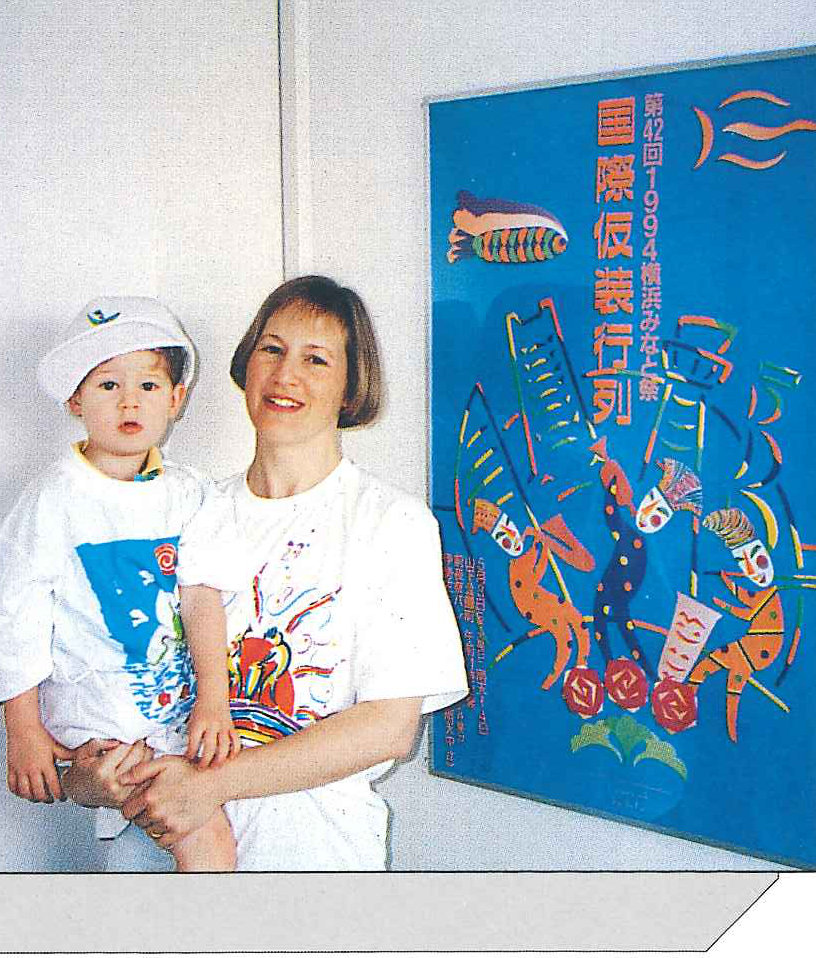
The Land of the Rising Sun means trade…. The Ambassador meets with his trade commissioners early in the morning for a strategy session on how to take advantage of new market opportunities in Japan… Today there is the grand opening of Snap-on- Tool Japan office. Snap-on Tool Canada exports thirty per cent of their Canadian-manufactured product line to Japan…Today there is a meeting with the Chairman of Canadian high-technology manufacturer Indal Corporation which has annual sales averaging $5-10 million per year to Japan. Two Canadian success stories. The Land of the Rising Sun means an unpredictable Parliament… There are the negotiations at the Japanese Parliament on the details Speaker Bunbei Hara’s official visit to Canada this summer. A sign of the times, with so much political uncertainty in Japan, the Speaker is unable to commit to the visit… In the evening, a political officer who heads the Tokyo Political Officers Club, hosts a seminar at the Embassy with Japanese Diet members. The guest speaker is called away at the last moment to deal with yet another political crisis. With forty guests already on hand, the Canadian host faces his own crisis — he is now the speaker. The Land of the Rising Sun means vigorous cultural exchanges… On June 2 there is an interview explaining the Canadian arts scene to a journalist from a popular Japanese magazine… There are the preparations for an exposition of Canadian books in Osaka… There is the final checking up on the 250 young Canadians who will be arriving next month for a cultural exchange. The Land of the Rising Sun means showing the flag… The Ambassador attends dinner with Prince and Princess Takamodo. The Prince is a graduate of Queen’s and is a keen supporter of all things Canadian…. There is the reception organized by the city of Yokohama to celebrate the 130th Anniversary of the founding of the city’s port. Many in the Embassy had lived in Yokohama for a year at the language school. The poster for the port celebration for the second year running is the design of Sue McCartney, a wife of a political officer. Tonight she will be a special guest of the Mayor.
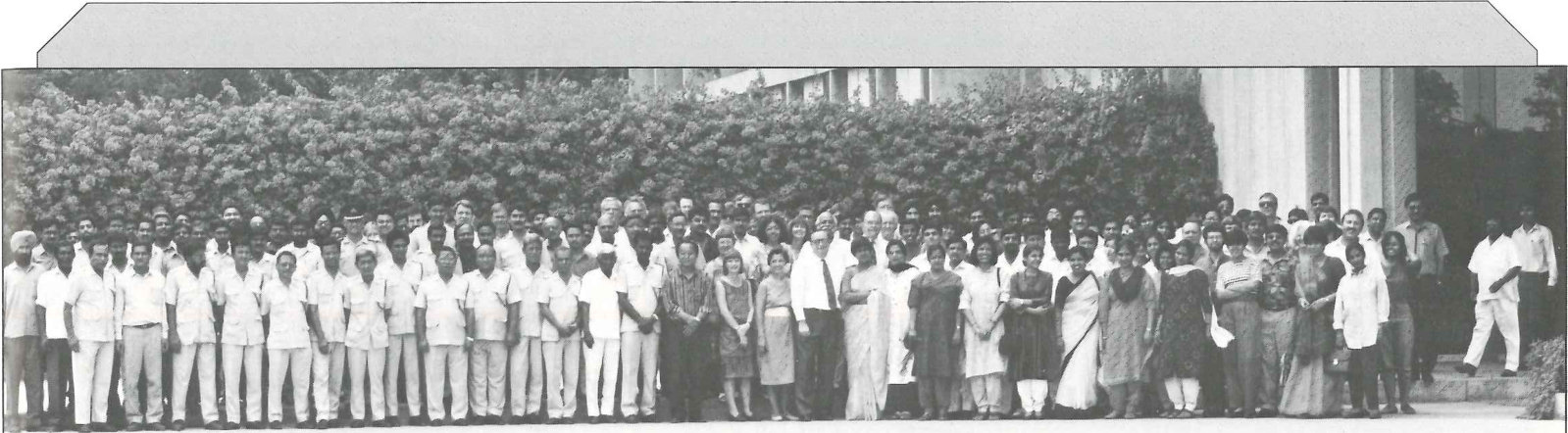
Immigration in Delhi by Audrey Oppertshauser, Immigration, India n Thursday, June 2, staff created 114 new immigration files, interviewed 62 prospective immigrants, reviewed 59 visa applications and issued 142 immigrant visas. On the visitor side, the section created visa files for 106 tourists, 7 students, 3 workers and 2 returning residents; issued 117 visas and refused 17. We received 22 representations from Ministers and MPs. A quiet day.
An Ordinary Day by Eva Bild, Canadian Embassy, China ixteen women of various nationalities constitute the Beijing
International Society. While we pack our monthly newsletter, we talk about the Commonwealth Bazaar which took place the previous Saturday in one of the large hotels. The last two days before the bazaar had been rather tense it had looked as though the whole thing would be cancelled by the Chinese security officials who decided that there should be no big gatherings before the fifth anniversary of the 4th of June, 1989.
At the very last minute we were given permission to go ahead. The bazaar was successful and we raised over $10,000. We added this to our Commonwealth Fund which we spend on small development assistance projects and relief projects in China and in needy Commonwealth countries. On the way home, I stop at the tailor. The tailor and his wife live and work in a tiny space. They have a little back room where they sleep, run the serger, store their supplies, hang up their work and let customers try things on. There is a small scrap of mirror in which one can barely see down to one’s knees. In the front room, which they share with a man who sits near the door cutting keys, is the sewing machine and a large table. They’re best at copying garments that already fit, but they can make alterations and improvise some, too. Clothes tend to smell strongly of cigarette smoke and supper.
I eat lunch alone, doing the International Herald Tribune crossword puzzle. I write thank you letters to donors of the Canadian Ball Committee. The Ball, which took place in May, raised funds for the Canada China Child Health Foundation.
That evening, the Ambassador and I attend the Italian National Day celebration. The evening is fine so most of the guests stand in the garden. It’s so very dry, some people wish it would pour. We wander about, eat tiny pieces of pizza and sip Italian wine. We walk home, it isn’t far.
In the News by Alex McNiven, Canadian Embassy, Indonesia une 2 sees Indonesia on the world news and Canada on Indonesian news.
Morning starts early in Jakarta. Most staff are up at five in the morning. Children are picked up for school at six and begin their long ninety minutes ride to school. The Embassy opens at seven thirty so that all staff can usually avoid the long traffic lines.
CNN has reported a massive earthquake 7.2 on the Richter scale that has hit the South-East coast of Java. Giant tidal waves caused by the earthquake have swept over 200 people to their death along the world famous surfing beaches which are popular with foreign tourists. The consular section receives an urgent request from the Watch Office in Ottawa. There are concerns that Canadians may have been in the area. Indeed, later in the day, the Ambassador receives a call from a Canadian Member of Parliament on behalf of a constituent whose son is travelling in Indonesia. The Embassy can report later that no Canadians were in the area hit by the tidal waves. The rest of the day passes in its usual hectic pace.
The growing diplomatic row between Indonesia and the Philippines, normally good neighbours, over a NGO-organized international conference in Manila on human rights and self-determination for East Timor is monitored by the political section. Ottawa also wants the Embassy to make two urgent demarches to the Foreign Ministry and deliver a get-well letter from Minister Ouellet to the Indonesian Foreign Minister who has recently suffered a heart attack.
The Ambassador signs an amendment to a Memorandum of Understanding for CIDA project “Environment Management Development in Indonesia” with the Indonesian Minister of Environment. The project is increased by $3.3 million and extended for another 15 months. After the signing, the development section meets with senior Indonesian environment officials to discuss planning of a new project. The finishing touches on another “downsizing” operation are completed by the administration section. Through a combination of early retirements and job reclassification, no one loses their job, much to everyone’s relief.
The visa section, maintaining our number one position world-wide for most visitor visas without an immigration officer, processes and issues more than 150 visas.
The evening arrives. The Ambassador and his wife attend the Italian National Day Reception. The development counsellor hosts an event to celebrate the successful completion of CIDA’s “Water Training Program” project which over 18 years has seen 90 Indonesians earn Masters and PhD degrees in engineering from Canadian universities and another 175 participate in professional workshops and training seminars.
The day ends with Canada in the news. All three TV channels cover the “Canada-Indonesia Business Excellence Awards” dinner and include an interview with the Ambassador. The commercial section had worked flat out for this inaugural dinner which took place the day before. Three Indonesian
View the original scanned pages / Voir les pages numérisées →
Originally published in / Publié à l’origine dans bout de papier, Vol. 11, No. 4 / Vol. 12, No. 1 (1995) — Spring 1995 // Printemps 1995, pp. 17–30. Read the rest of this issue / Lire le reste de ce numéro →