
bout de papier, Vol. 11, No. 3 (1994) — Fall 1994 // Automne 1994, pp. 26–27
Marie Stamp surveys the Class of ’94 to give us a glimpse of the profile of the Trade Commissioners of the second century.
by Marie A. Stamp
Since that interminable Saturday in October of 1992, the day we wrote the Foreign Service Exam, twenty-eight new recruits have joined the Trade Commissioner Service. One century since John Larke set sail for Australia, the latest crew to pass muster is an ambitious and worldly group, with a sophisticated perspective on the voyage ahead.
The Class of ’94 is a diverse contingent, about as fit for Noah’s ark as for the ship that conveyed our eminent predecessor. We’ve studied subjects as disparate as Aerodynamics and Religion; we speak languages as dissimilar as Hebrew and Japanese; we’ve travelled the world from Asia to Central America, and call places like St. John’s and Saskatoon “home.” How did such a group end up together as Canada’s newest Trade Commissioners? What appeals to us about the Service, and how do we perceive our future here? Who are the Trade Commissioners of the second century?
Recruitment for the trade stream of the Foreign Service begins in the same manner as for the immigration and political/ economic streams. Recruitment is conducted at the entry level, which dissuades some (but not all) of the more mature, more established members of the work force who might be considering a career change. Entry-level recruitment also opens the doors wide to the fresh-faced university graduate. Since practically anyone can apply, the first level of competition is a fierce numbers game. Well over 6,500 of us sat those same exams on that October afternoon. But in today’s job market you need more than raw marks to compete. Those twenty-eight who made it through to form the TCS Class of ’94 are challenging the traditional image of the young and inexperienced male “keener,” fresh out of Law or Engineering.
We new TCS team members are mostly between 25 and 30 years of age, with up to nine years of previous permanent employment. The traditional areas of study most common in the Foreign Service still form part of our academic background, but our eclectic interests have led us to degrees in Journalism, Computer Science, and Human Ecology. We’re a well-travelled group: more of us speak foreign languages and have foreign work experience than recruits in previous years. And many more of us are women than ever before.
Indeed, the most striking trend among today’s recruits is the number of women. Over the last ten years, the percentage of women recruits dropped to a level as low as one out of nine in 1985. Fifteen of the latest complement are female. That’s fifty-four percent.
Women in the Class of ’94 are slightly older than their male counterparts, and there are more of us in the 30-35 range. Women recruits appear to have fewer post-graduate degrees, but twice the number of years of previous permanent employment. Almost all of the members of the new corps have travelled at least to Europe, but whereas men and women have travelled further afield, women have had more experience living abroad. The MBA and degrees in Law, Commerce and International Relations are common to males and females alike.
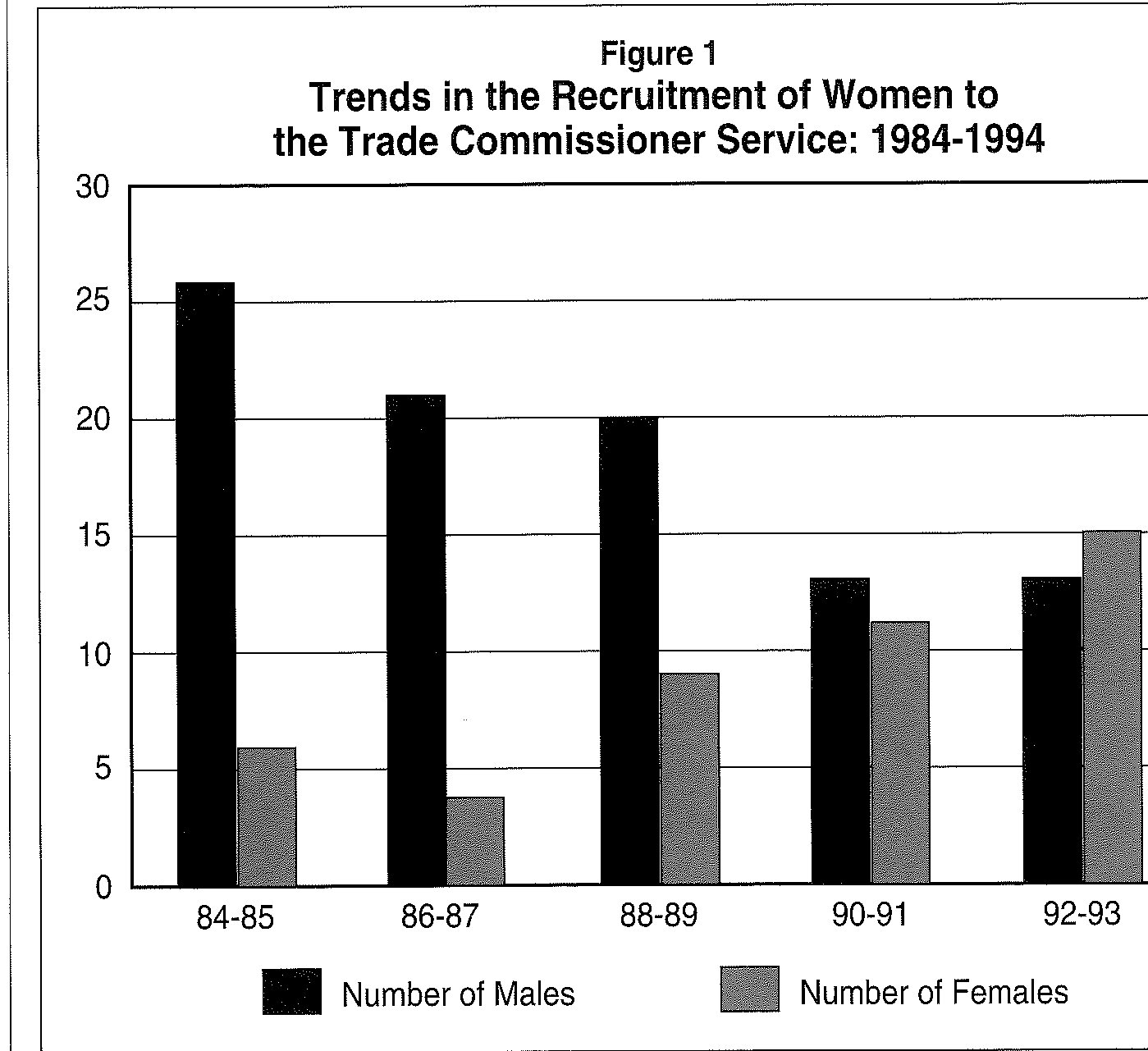
Societal changes in the last quarter century and the removal of restrictions placed on married couples in the diplomatic corps have eliminated the last formal barriers to women’s access to jobs in the Trade Commissioner Service. Women have yet to make real gains at the executive level. The ambitious females recruited at the dawn of this second century apparently still have something to prove.
So what is the appeal of the Trade Commissioner Service to these second century pioneers? The few hundred candidates who pass the initial screening are asked for their preferred stream (trade, immigration or political/economic) at the conclusion of their job interview. For those who chose the TCS, the opportunity to learn about and play a role in international trade was obviously highly appealing.
Surprisingly, awareness of the TCS as a career choice was still very low. Few of the Class of ’94 knew much about the Corps beyond its simple existence, and most of us were simply attracted to the Foreign Service.
“The delineation between the trade and political streams was not an issue for me when I applied for the job, but the trade stream was a natural choice. With my background in Computer Science and my MBA, I knew it was where I’d be most valuable.”
– Deirdre Kent
“I still consider that I joined the Foreign Service first, and TCS second … but I’m happy with my choice. Because of my background in Engineering, I saw more opportunities for my professional growth and development in the international trade stream.” — Jean-Dominique leraci
Almost no one among our group had given thought to joining this specific stream while at university. The most appealing aspect of the Foreign Service was the perceived foreign-service lifestyle: the opportunity to travel, to live abroad, to learn another language. Although the Trade Commissioner Service was little known to the new crop of recruits, most are highly satisfied with their choice.
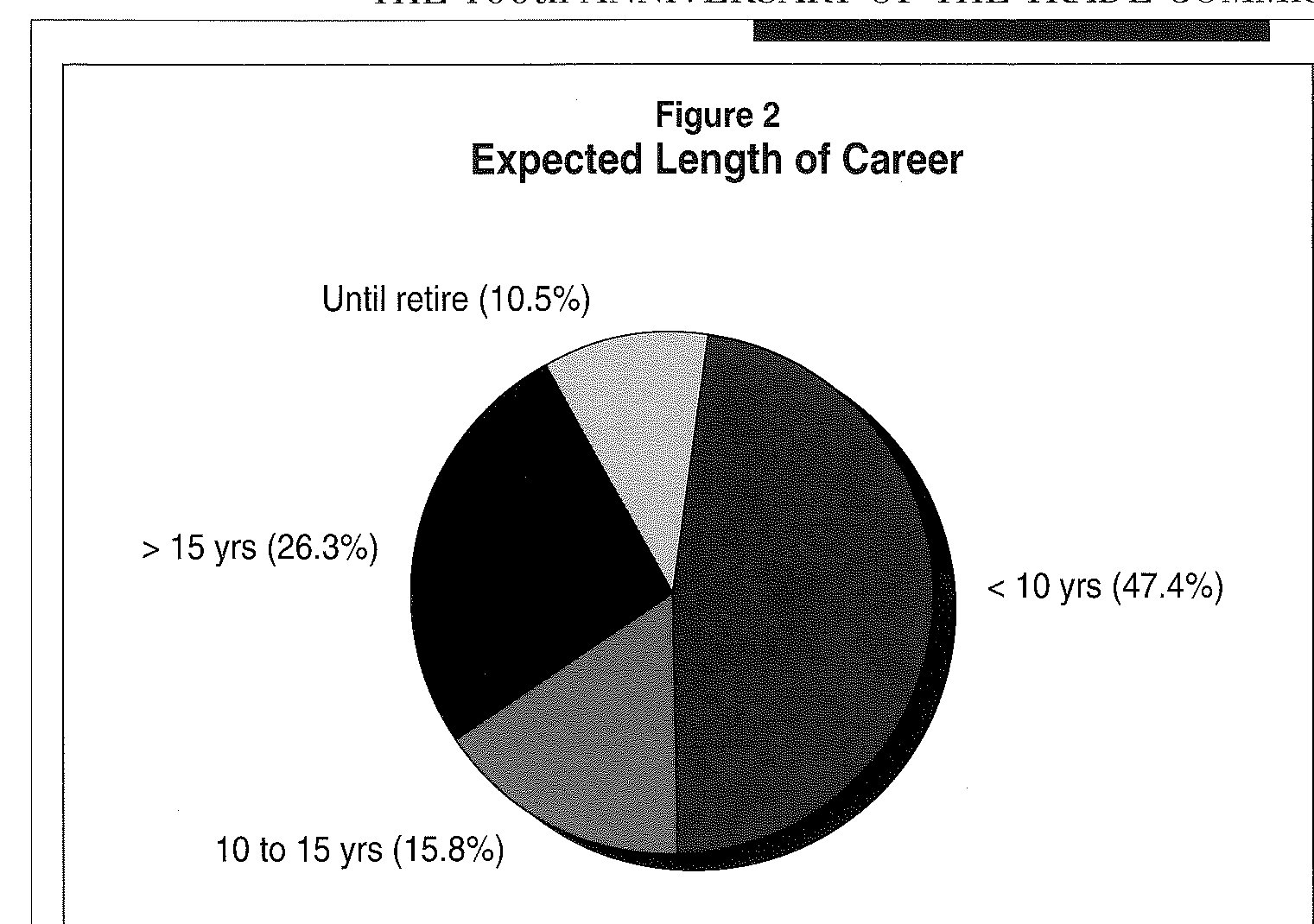
Another sign of changing times with the new Trade Commissioners is the high level of appeal we see in the “foot-in-the-door” aspect of this career. More than half of survey respondents ranked the “opportunities to move on, either through the public service or international corporations” as one of the most appealing elements of the TCS. Nearly half of us expect our careers with the Service to last less than ten years.
The prospect of foreign postings emerges as the greatest attraction keeping our Trade Commissioners hooked in the medium- to long-term. All respondents expect a minimum of two postings, but most (sixty-three percent) expect to be posted abroad three times in the next fifteen years. Is this a realistic expectation, given the ever-shrinking number of FS-1 positions at our posts? Approximately sixty percent of our personnel is now based at headquarters. This is an area of no small concern for new recruits at the entry-level salary, now at about $32,000 per annum and with annual pay increases and performance pay frozen for two years.
Most of us expect to merit promotion to the FS-2 level within six or seven years. Reform to the classification of our positions is expected to speed that process along, but many will be disappointed. bright and ambitious
The Class of ’94 is, in some ways, the “Generation X” of the Trade Commissioner Service. But we’re not daunted. We have faith in our abilities, our intelligence, and in the relevance of the work opportunity offered here. Many of us who have already begun our on-the-job training are so far highly impressed with the quality of our colleagues, of the service we offer, and are convinced of the added value of our service to the Canadian business community. With increasing globalization in the Canadian private sector, we feel the experience we gain here will have relevance beyond the boundaries of this Department. The challenge to the Trade Commissioner Service in the second century, clearly, is not how to attract bright and ambitious recruits, but how to keep them.
View the original scanned pages →
Originally published in bout de papier, Vol. 11, No. 3 (1994) — Fall 1994 // Automne 1994, pp. 26–27. Read the rest of this issue →



