
bout de papier, Vol. 11, No. 3 (1994) — Fall 1994 // Automne 1994, pp. 15–17
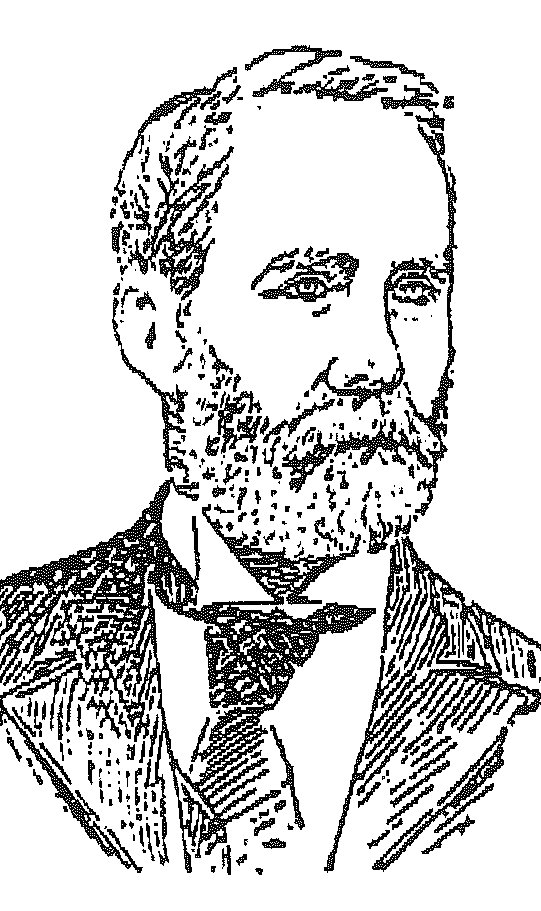
TCS: John Larke was Canada’s first professional Trade Commissioner, appointed in 1894. He set a course for the generations of the first hundred years of the Trade Commissioner Service.
’n December 1894, John Larke left Vancouver aboard the Warrimoo to begin the long sea voyage to the Australian colonies. In a sense, that journey had begun four months earlier, when the first Minister of Trade and Commerce, Senator Mackenzie Bowell, recommended that Larke “be appointed a Commercial Agent, with instructions to visit the Manufacturing and Trade centres of Canada and other such Countries as may be deemed advisable for the purpose of investigating and reporting upon the requirements of the various markets of the world with a view to more extended trade with such Countries, not only in manufactures but in the agricultural products of Canada.” Larke thus became the first full-time salaried trade representative of Canada.
Previously, local residents had been appointed on a part-time basis to promote Canada’s exports in places like the West Indies, though there were still only six part-time commercial agents by 1894. Other markets were served by Agents General (as in London) or trade missions travelling from Canada. Indeed it was such a trade mission to Australia by Bowell, in the autumn of 1893, that had prompted Larke’s appointment.
Larke’s initial territory included the states of New South Wales, Victoria, Tasmania and New Zealand. In 1903, Larke divided Australia with the newly arrived D.H. Ross, who had been sent to Melbourne, Victoria, as part of the first real expansion of the nascent service. But it was not until May 13, 1910, that a separate Trade Commissioner (the term which replaced “commercial agent” in 1907) was sent to New Zealand. As with his colleagues and successors, Larke was not recognized officially as a diplomatic or consular representative, a fact that compounded the confusion and difficulty caused by his initial title.
Whatever his title or his territory, Larke was at work from the moment he stepped off the gangplank in Sydney. On his arrival, he described his mandate to the local press as the promotion of trade between Canada and the Australian colonies, as well as the improvement of shipping services and the development of the Pacific cable to facilitate communications. As he commented, how he accomplished these tasks was left ’pretty much in my own hands’ by Bowell, by then Prime Minister of Canada.
After his appointment but before his departure, Larke had toured Canadian towns and cities to learn more about Canadian agriculture and industry. This anticipated later pre-posting tours. Not until 1905, after considerable pressure from the Canadian Manufacturers Association, was Larke invited back to Canada to reacquaint himself with Canadian firms and products. That busy tour also presaged a later phenomenon.
Within days of his arrival in Sydney, Larke was reporting to Bowell that he would be accompanying the premier of New South Wales to a meeting of the state premiers, an early manifestation of his interest and involvement in Australian confederation. Unfortunately, that gathering, as he later wrote, was so preoccupied with the political future of the colonies that it paid little attention to his own concern for improvements and subsidy for the shipping service between Canada and Australia.
Over half of Larke’s first formal report dealt with trade prospects and impediments, supplemented by words of advice for Canadian firms wanting to do business in Australia. His second report (in March 1895) covered a wide range of activities and inquiries (from cigars to pianos), as well as sales of a variety of goods, including cottons, rubber goods, spokes and carriage wheels. Perhaps more impressive was a long list of Canadian firms with whom Larke was in contact to encourage trade with Australia. Though few of his later reports have survived (a fate shared with most of the correspondence of the Department of Trade and Commerce for the years 1902 to 1910), his other early reports follow a similar pattern. Comments on the state of trade and current developments are interspersed with occasional statistics, commodity notes, suggestions of trade prospects, warnings about inhibitions to trade, discussion of transportation arrangements between Canada and Australia, reports on Canadian visitors, accounts of assistance rendered to Canadian travellers in distress (often out of his own pocket) and, perhaps inevitably, claims for expenses. Appended to these reports would be copies of letters written to Canadian firms about commercial prospects in Australia as well as correspondence with Sir Sandford Fleming and others about the Pacific cable. Larke’s efforts in the latter case helped to secure support for the project and the first messages were sent on October 31, 1902.
Not surprisingly, Larke was also enlisted in Australia for speeches and consultations about Canada, particularly the Canadian experience with federalism. This was a fascinating and productive time for a Canadian trade representative in Australia: Australian- Canadian trade increased dramatically; the Pacific cable facilitated direct communications; transportation across the Pacific improved; and the Commonwealth of Australia became the second dominion in the British Empire. While Larke was in Australia, Canada’s exports to that country increased tenfold and Canada’s imports from Australia more than doubled. By 1911, Australia was Canada’s fourth largest market, a position closely related to Larke’s other quest, the improvement in shipping services between the two countries.
Larke died in April 1910, working to promote and to defend Canadian exports to his /ERSARY OF THE TRADE COMMISSI final days, still waiting for the raise promised when he accepted his position! His final letter includes an account of his activities, a reference to his illness, a reminder about his salary and a concern about provision for return of his wife and daughter to Canada if he should die. According to one of his two sons, Larke was working until 48 hours before his death, though he had been ill for weeks. Rather poignantly, his obituary in the Sydney Morning Herald appeared side-by-side with a letter defending Canadian exporters against suggestions from a Commissioner of the British Board of Trade that they were trying to “palm off inferior goods’ on unsuspecting Australians.
In keeping with the times, Larke’s appointment had been a political one, as were all of those before the First World War. His subsequent record in public service, however, amply demonstrated that he served Canada well.
The Initial Instructions
Larke’s instructions were simple to state, if not always so easy to achieve: “I. To collect and send to the department information both on the general trading requirements in Australia and on specific trade opportunities. To report the names and addresses of firms dealing in products made in Canada.
To pass on to dealers in Australia the names of Canadian firms anxious to sell products in which they might be interested.
4. To report to the minister each month on the demand for goods that Canada could supply and on related trade matters. To answer correspondence received both from Australian firms and from Canadian suppliers dealing with commercial matters. To promote trade between Canada and Australia in every possible way while acting under instructions from the minister of trade and commerce.. 35 [From O. Mary Hill, Canada’s Salesman to the World: The Department of Trade and Commerce, 1892-1939 (McGill- Queen’s University Press, Montreal, 1977), page 64]
Milestones in History of Trade Commissioner Service
Trade Commissioner service
Act Respecting the Department of Trade and Commerce passed and given
Royal Assent
First commercial agents appointed in British colonies in the West Indies
(all permanent residents)
Act Respecting the Department of Trade and Commerce proclaimed
Mackenzie Bowell appointed as first Minister of Trade and Commerce
Trade mission to Australia
Minister of Trade and Commerce authorized to appoint full-time Commercial
Agents
John Short Larke sails to Australia as Commercial Agent
First issue of Weekly Report with trade information from commercial agents
“Trade Commissioner’ replaces ’Commercial Agent’ as term for full-time
representatives
Instruction to Canadian Trade Officials (manual) appears
’Trade Commissioner Service’ renamed ’Commercial Intelligence Service’
First recruiting of economic specialists from universities as career officers
(Norman Johnston and L. Dana Wilgress)
Appointments to Outside Service brought under Civil Service Commission
Director of Commercial Intelligence Service created
Commercial Intelligence Journal replaces Weekly Report
Classification system for trade commissioners created
James Langley transferred from Kobe to Tokyo — first trade commissioner
formally attached to a diplomatic mission
Director of Commercial Intelligence Service (L.D. Wilgress) participates
in trade negotiations for first time (Imperial Economic Conference, Ottawa)
Wilgress first Trade Commissioner to become Deputy Minister of Trade
and Commerce ’Commercial Intelligence Service’ reverts to ’Trade Commissioner Service’
Wilgress heads Canadian delegations to conferences leading to General
Agreement on Tariffs and Trade (Geneva and Havana)
Department of Trade and Commerce merges with Department of Industry
to form Department of Industry Trade and Commerce
Trade function of ITC, including Trade Commissioner Service and
International Marketing, International Trade Relations and Defence
Programmes, plus assorted other offices transferred to Department of
External Affairs (later renamed External Affairs and International Trade
Canada)
Among other changes, Department of Foreign Affairs and International
Trade replaces EAC
John Short Larke (1840-1910)
John Short Larke was born on May 28, 1840, in Lascelles, Cornwall, England When he was four years old, his family emigrated to Canada, settling in Oshawa, Canada West. Larke was educated at Oshawa Grammar School and later attended Victoria University, but his health failed and he did not obtain his degree. He worked first for the Post Office, then for the Grand Trunk Railway, before teaching school for three years.
In 1865, Larke became editor of the weekly Oshawa Vindicator and later its sole proprietor. He was also involved in a syndicate that controlled the management of the principal papers of Ontario County. After he sold his newspaper interests, he became associated with the Oshawa Stove Company, an iron foundry firm which he managed and later owned. Apparently, he was an inventive and innovative businessman, who patented a stove design which was “widely adopted” in Canada. He also took a progressive approach to employee participation in the ownership of his firm.
A lifelong Conservative, Larke was active in politics, serving at different times as chairman of the local Board of Education and Reeve of the Town Council. He was also a lay preacher who worked hard for unity in the Methodist Church and for the cause of temperance. Despite the latter commitment, he was a close frend of Sir John A. Macdonald. Larke worked in national political campaigns, once even running, unsuccessfully, for Parliament himself. In 1893, he was named “Executive Commissioner for Canada” at the World’s Columbian Exhibition held in Chicago. Among those who attended the opening of Canada’s impressive exhibition there was the Minister of Trade and Commerce. So when the time came to appoint a commercial agent to the Australian colonies, Larke was already well qualified and well known to Bowell. When he recommended Larke’s appointment to the prime minister, Bowell commented that he knew “of no man in Canada so well fitted for this position as Larke, he having a thorough knowledge of the manufacturing and other resources of the Country; and what is of equal or greater importance, he is an enthusiast on the extension of Canadian trade. He has also a happy aptitude for public speaking and could do much good in addressing Boards of Trade and other bodies.”
View the original scanned pages →
Originally published in bout de papier, Vol. 11, No. 3 (1994) — Fall 1994 // Automne 1994, pp. 15–17. Read the rest of this issue →



