bout de papier, Vol. 12, No. 2 (1995) — Summer 1995 // Été 1995, pp. 22–24
Your choice of transport: Machine-gun “technicals”, the romantic road warrior machine? C-130 Hercules? Rubber inflatable boats?
Or Russian twin-rotor helicopter? Come for the ride.
by Chris Cooter and Chris Liebich
On the eve of the final evacuation of UN peacekeeping troops from Somalia in late February this year, there was a report that the UN was driving bulldozers over its own 4-wheel drive vehicles to prevent them from falling into the hands of the militia who radically customize them, turning them into machine-gun mounted “technicals” to continue their wars.
That news came as no particular surprise. In the times we visited Somalia, we came to expect the bizarre and felt disappointed if each expedition didn’t exceed the last for the unexpected — pleasant and sometimes not-so-pleasant.
Still, the story about the UN crushing its own trucks is perhaps more than just another strange anecdote. There is something fundamental about transport in a country dominated by nomads. It is not coincidental that “technicals” are the weapon of choice here; in fact, it seems that the Somalis invented them, although who came up with the name no one seems certain. The most credible theory is that imaginative aid agencies having to account to headquarters for a line item in the form of heavily armed pick-ups, came up with this term “technical” services. There is certainly nothing technical about the firepower they pack, especially when backed up by seven or eight teenagers sitting around the mounted machine-gun — often an anti-aircraft weapon – carrying AK-47s, grenades and a couple of grenade launchers. Altogether, a technical is a nasty, and, at least to a lot of otherwise unoccupied Somali boys, a romantic “road warrior” machine.
Landing in Baidoa in August 1992 — then the epicentre of the famine situated in central Somalia — being greeted by veritable honour guard of these technicals, kicking up huge clouds of dust as they raced alongside the small aircraft bouncing down on the dirt strip. To what did we, humble Second Secretaries, owe such an exalted reception?
As it turned out, UNICEF, which had chartered the plane, had taken considerable liberties in trying to secure landing rights from the local warlord. First, UNICEF had informed him that they were sending in “Canadian diplomats”, then we became “leading Canadian diplomats’, then “very senior Canadian diplomats.” It was flattering and also intimidating to be step off the plane and be greeted by the commander of these technicals, demanding to know “Where’s the Canadian ambassador?” We’re still trying to claim acting pay.
Less benign was landing in Hargeysa in Somaliland, the north-west. This time the welcoming committee at the “airport” wanted cash not rank – privatization, Somali-style. These self-styled customs officials took great umbrage when one member of our party (actually a consultant) questioned their integrity (he point blank called them “thieves”), and invoked diplomatic immunity to avoid this airport tax. He was promptly whisked off, onlookers shaking their heads and muttering darkly about the fate suffered by a similar recalcitrant the week before. The Vienna Convention was tossed to the wind, the $15 head tax immediately anted up, and the release of our principled but foolish colleague successfully negotiated — but not before some tense moments.
Then there was landing on board a Canadian C-130 Hercules in November 1992. The flight was part of an airbridge supplying food during the first UN operation, UNOSOM I. The airstrip, known as K-50 because of its location 50 kilometres south of the centre of Mogadishu, was built by some warlord or other to bring in the local narcotic, quat, from Kenya, where it is (legally) grown on the slopes of Mount Kenya. We had just taken a very low approach over the sand dunes on the coast near the fundamentalist stronghold of Merka and were congratulating ourselves on having avoided any anti-aircraft weapons the fundamentalists might have felt like using, when we noticed the technicals starting to gather around the airstrip. Already, another Hercules, a Belgian aircraft, was parked beside the field. Unhappily for it and its crew, the plane had broken down. Not too far away were the skeletal remains of a light aircraft which had failed to survive either its landing or the reception committee.
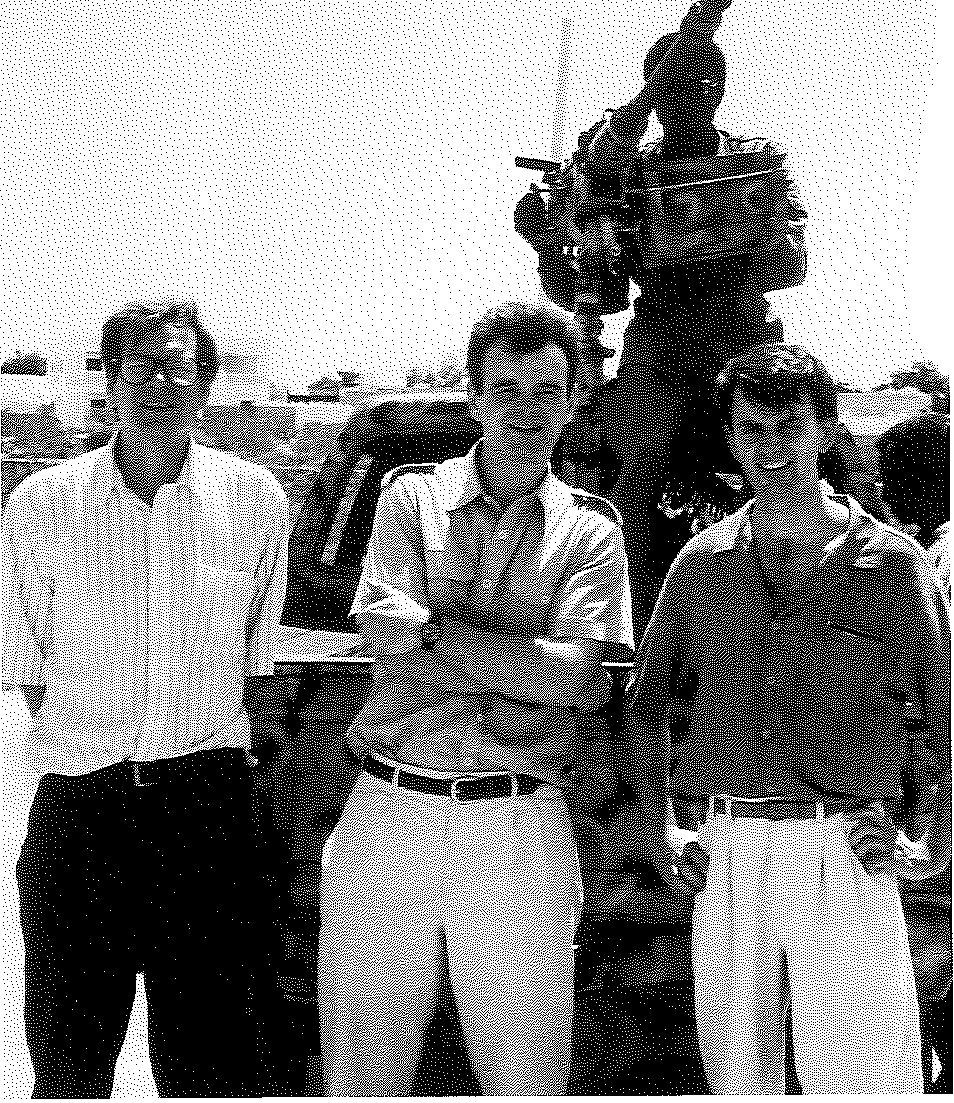
The technicals, as it turned out, were not interested in us: we were carrying only food. They were waiting for the next quat flight and, while it was still rolling in at high speed, making its landing on the field, the technicals, like huge wasps, were already chasing after it to ensure that its cargo was divided according to whatever law prevailed in the jungle that morning. At this point, we greenhorns faced a dilemma: on an airstrip in the desert where the highest cover is some 10 centimetre high thornbush, and where going near the Hercules, (whose four huge propellers were still turning so that it could make a getaway asap) was the equivalent of walking into a 170 degree hurricane, where to go to relieve the pressure of the early morning, pre-flight coffee? Just what sort of exposure provokes a 12-year old with a machine gun and an attitude anyway, we wondered?
Happily, the technicals and their crews were much too engrossed by the quat delivery and their drug-chewing to notice a gaggle of nervous diplomats in a particularly vulnerable position. The relatively orderly conduct of the Somali warriors reminded us of the intelligence of our pilots’ policy decision to deliver food and medicine as early as possible in the morning, before the quat started to loosen trigger-fingers.
On the rest of that trip, we were invariably escorted by a technical fore and aft our own truck. When they’re “your” technicals (in this case, provided through the courtesy of one of the non-governmental organizations who helped us get around), you start to take an interest in how well armed and alert-looking your guardians are. In particular, you pay close attention to the two or three guards who sit in your own vehicle. Have they put the safety on their automatic weapons you wonder as your driver careens down and on and off the rutted and debris-strewn roads (this, it turned out, was not altogether paranoid fantasizing: a Western journalist was shot, not badly fortunately, when one of her guards was caught unprepared by a sudden pothole).
The Toyota Landcruiser is the vehicle of choice for technical-builders. Luckily for the Somali militia, it is also the vehicle preferred by UN agencies and ngo’s, which gives car thieves plenty of selection (no point getting them angry, after all). Not every Landcruiser was stripped to become a technical, however. One we rode in on a marathon trip down the Chinese and Italian-built highway traversing Northeast Somalia over the hundred of miles from Galcaio to Bosaso, was left in a more or less intact state, except for the brakes, a gap we discovered when we were supposed to be slowing down at a roadblock. Luckily, the militiamen manning it were away having tea and we sailed through the rocks and bricks and metal of the barrier with only minor damage, eventually halting through inertia near the tea-house.
These ubiquitous shacks from which Somali women appear bearing huge kettles of wonderfully fragrant and sugary tea, are the Somali equivalent of McDonald’s, fast and cheap. At night, they come close to being romantic-looking, with their small kerosene lamps flickering the only light in the no-longer electrified towns. On that particular trip, we stopped at several of these to recharge our energies, also consuming snack-food — sweet and tender barbecued goat and camel meat — with the other truck drivers still confident enough to venture into the Somali night.
There were other rollicking advantages of this kind at sea and in the air. A Canadian VIP, visiting Mogadishu during the height of the American-led UNITAF operation, managed to make it from the enormous US embassy compound (a city within a city really) to HMCS Preserver, then a few kilometres offshore. He had gone on what was apparently the very last leg of an aged Sea King helicopter’s life, attaining the ship’s deck. The plebs, however, who were to accompany him to the ship, were of necessity required to use aquatic transport, in this case a RIB (rubber inflatable boat), a kind of zodiac inflatable driven by a sailor with a sadistic glint in his eye.
The water off Mogadishu was then full of two things: large vessels from the various countries helping the UNITAF operation; and almost as large, man-eating and oddly named Zambezi River sharks. The beasts had converged on Mogadishu because the Soviets had bombed out the natural barrier formed by the coral reef, combined with the very bad practice in the neighbourhood of dumping camel offal from a beachfront slaughterhouse. In addition, as part of the general looting that went on in Somalia, fishermen had taken the shark nets that once protected the beaches. Unfortunately for a number of expats posted to Mogadishu, no one had posted a “Beware of the Sharks” sign. It was this sort of reverie that went through our sun-burned head as we headed out from the port into open water.
The pilot seemed to be asking either “did we want to die” or “fly”; it was unclear over the sound of the crashing three metre waves and the scream of the over-revved engine. In any case, intentionally or not, we did seem to be flying, passing from the crest of one wave to the sickening heights of the next, until, at last, we arrived at the ship. For those landlubbers who have never scaled up a rope ladder on the sheer, dark and, from its bottom, apparently limitless side of a warship, in what probably wasn’t, but seemed like, a howling gale, it is not recommended that this be done on a full stomach. Trust in Allah comes quickly as you make that little, but so important, leap from the tiny, bobbing RIB to the here-again, gone-again rope ladder.
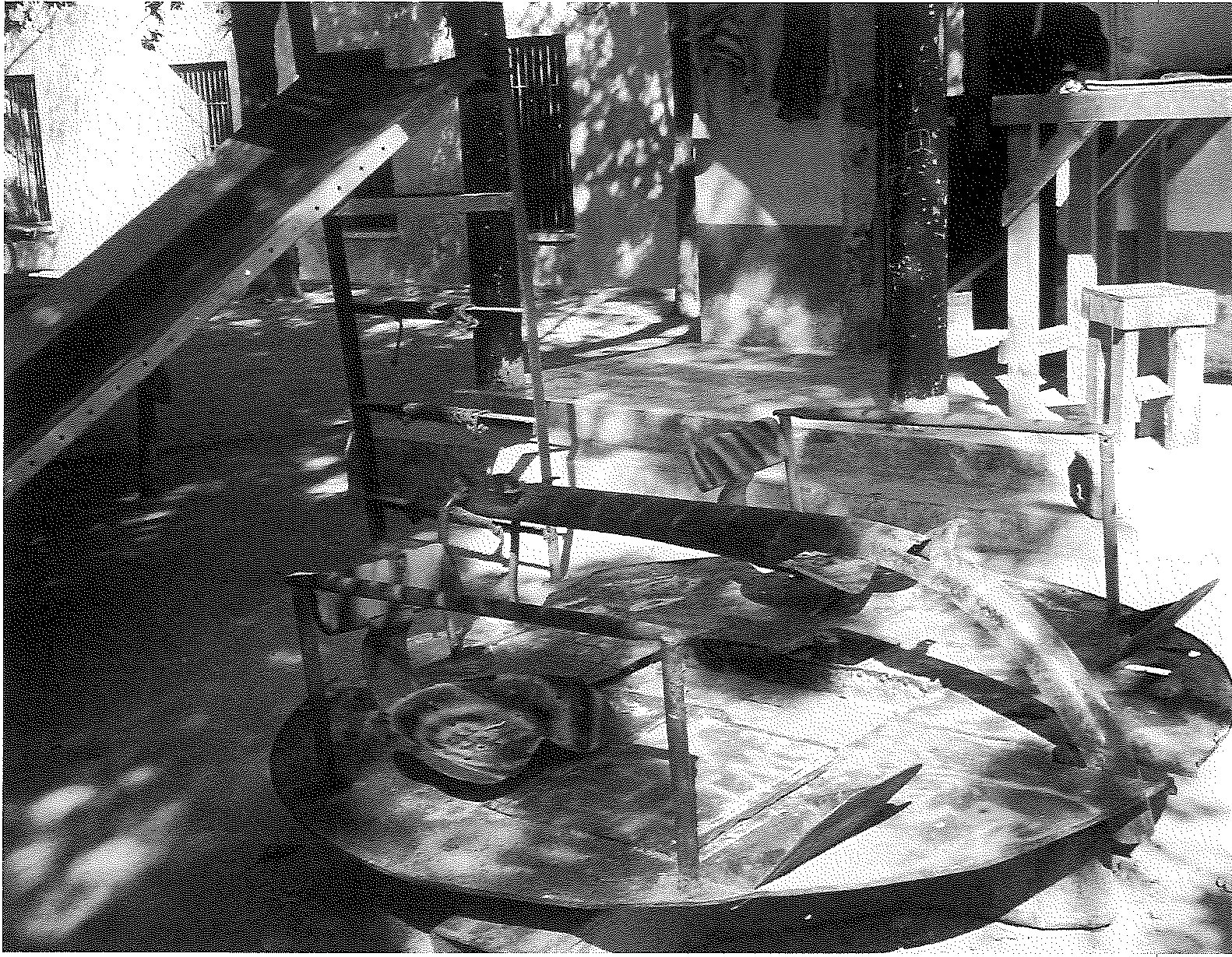
Most of the transport that was intentionally aeronautic was “brilliant” « as the Australians running the UN’s traffic control would say. It was the waiting on the ground, sometimes for days, for an available flight that was usually the complaint. A few incidents were interesting. On one small plane flying from Belet Huen to Mogadishu, we were making a pass by the sea to avoid flying directly over the capital which was then still caught up in the war between Aideed and the Americans. While admiring the seaside view of a city that still has beauty, we peered down to the coral reefs and choked: an immense black shadow, the mother of all Zambezi River sharks, was directly below and — although it’s a difficult call for nonicthyologists — seemed to be looking skyward while licking its ghastly great chops.
While trying to leave Mogadishu on one occasion, we learned that the only available flight was on a Hercules run by Southern Air Transport, the once mysterious outfit that worked for the CIA when there was a Cold War. Post-Cold War, SAT was carrying on its daredevil tradition by doing such things as flying food into mine-strewn Angola and, on this day, flying in and out of Mogadishu airport, a zone nominally under UN control but hotly contested by city warlords. This was just another job to (we tell no lie) “Bubba”, one of the pilots who led us to the airplane. Inside the Hercules, not normally the most luxurious of craft, the usual wall-attached flip-down seats had been taken out to give more room for cargo. Where should we sit, we asked. On the floor, but hold the cargo chains when taking off and landing, was the reply. Relative to conditions in Mogadishu at the time, this was still a welcome answer. Incredibly, when the engines roared into life, and we were holding onto our chains with all the strength we could muster, Bubba came back to tell us that he was sorry, we would have to get off the plane. It seemed that a couple of engines weren’t working – this wouldn’t stop the plane from leaving of course — but SAT’s insurance (INSURANCE on SAT!) wouldn’t be sufficient to let us go along in these circumstances.
The most inspired ride of all was one taken with our head of mission, Lucie Edwards, on a huge Russian twin-rotor helicopter. Taking off from Kismayo, and accompanied by a platoon of Indian infantry for safekeeping, we swung south along the coast towards a group of islands where a Canadian-funded project was underway. En route, we came across flocks of flamingoes. Over the jack-hammer loud sound of the rotors, the pilot looked at us and gestured towards the birds with his thumb. And then we flew over to join them — environmentally incorrect probably — but an incredible sight and sensation, for us as much as the flamingoes in all probability.
Whether viewed from the air, water or land, Somalia remains a vibrant yet haunting memory. Especially of the people in their many settings that our diverse forms of transport enabled us to see and meet.
View the original scanned pages →
Originally published in bout de papier, Vol. 12, No. 2 (1995) — Summer 1995 // Été 1995, pp. 22–24. Read the rest of this issue →