
bout de papier, Vol. 13, No. 1 (1996) — Spring 1996 // Printemps 1996, pp. 5–7
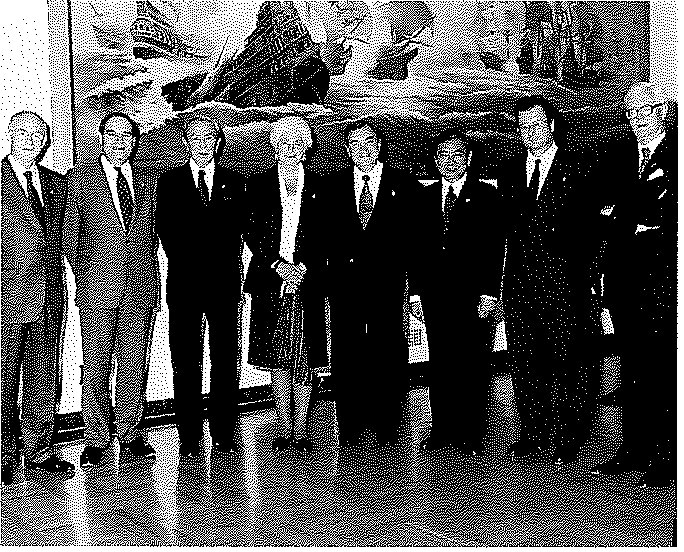
Friedrich Nietzsche had not experienced any G-7 summits in the late nineteenth century but he did more or less get it right when he wrote that “Life always gets harder towards the summit: the cold increases, responsibility increases.” Halifax in June 1995 represented the third G-7 Summit hosted by Canada, the previous events being Toronto in 1988 and Montebello in 1981. Both earlier events are seared on the subconscious of numerous members of the service: from those who toiled with the minutiae of logistical arrangements to those who wondered why they were faced with negotiating communiqué language on macroeconomic policies and preparing intervention points for our prime ministers. Halifax launched another generation of officers, logistical experts and observers into the pantheon of summitology to be drawn upon for another G-7 (if we are still seven) event in the future or to participate in what has become a thriving cottage industry: world and regional summits.
To the tired and cynical G-7 observer, Halifax appeared to be the end of a cycle: the twenty-first summit in the third cycle hosted by the last and smallest member to join the group. Hardly stirring, it appeared, as these events in recent years had featured a yawning chasm between the magnificence of the event and the substantive outputs at the end, too often reflected in a final communiqué that contained all the correct aphorisms but the sole certainty that the group would meet again next year, nothing more. The involvement of Russia, at Tokyo in 1993 when the G-7 mustered a $42 billion assistance package, and President Yeltsin’s desire at Naples the following year to become a full member of the organization — despite the fact that Russia does not yet belong or carry weight in the exclusive international financial institutions in which the G-7 does its least visible but most important coordination — provided a new interest to these observers and a signal, Schadenfreude at its best, that the G-7 was engaged in a sort of negative metamorphosis.
This was not the case. Halifax emerged as a different sort of summit: smaller, providing more time for leaders together, less formal and it eschewed the ritualistic reading of documents in favour of more spontaneous summaries of deliberations by the chair. It produced numerous pithy but substantive documents: a statement on Bosnia; a G-7 Communiqué that set out an action plan for a review of international institutions; a detailed background document on how this would be accomplished in the international financial institutions; and a Chairman’s Statement reflecting the political discussions that had included Russia. The preparatory phase was different too. Prime Minister Chrétien, fresh from his active participation in the Naples discussions on a review of international institutions, had vowed that Halifax would be a leaner, more focussed affair. His dedication to that focus and the alacrity with which he sought support from other leaders over the course of the following year, did much to set expectations for Halifax. At the bureaucratic level, we sought to have fewer and more pointed Sherpa or Personal Representatives Meetings; the Prime Minister’s Sherpa, our Deputy Minister Gordon Smith, took the unusual step of meeting his Sherpa colleagues prior to our assumption of the chair from Italy in January 1995.
In Policy Staff, a few of us had been to Naples with the Prime Minister in July of 1994 and had in fact supported the Sherpa meetings that had led to the Italian summit. The substantive material was therefore not new to us and the Naples outcomes, in addition to the expected review of international institutions, suggested remits in the areas of international trade, environment, and developing country debt for Halifax. Closure of the Chernobyl nuclear facility in Ukraine remained a vexing problem as we knew that Canada would be assuming the chair of the G-7 Nuclear Safety Working Group come January. In process terms, we also were aware of the Prime Minister’s wish to host a smaller leaders’-only meeting and of Russian wishes for a more meaningful type of participation at Halifax. On the former point, it soon became evident that coalition politics in several G-7 countries would not permit leaders to participate without their key finance and foreign ministers nearby. Our enthusiasm in preparing the substantive elements for a summit that our country would host was founded on a growing realization that Canada could use this position to influence the setting of a progressive global agenda.
We increased our divisional staff numbers slightly following that Naples summer, assigning key roles to officers in the areas of coordinating developments on the institutional review (meaning a very close cooperation with both our Economic and Trade Policy Branch, CIDA and particularly the Department of Finance), on outreach issues for the summit and on logistics for Halifax — the latter a temporary measure until the Halifax Summit Office under Len Edwards was up and running. We provided the new Sherpa, Mr. Smith, with a sharp analysis of the Naples Communiqué and a compendium of process issues to prepare him to meet his Sherpa colleagues in their capitals. The fact that he undertook these meetings even before we assumed the G-7 chair in January 1995 augured well for the subsequent preparatory process: informal personal links were established at high levels and preliminary concerns on the part of any one country were dealt with on a bilateral basis. The Winnipeg Conference on Partnership for Transformation in Ukraine, a Naples Summit initiative, took place in October 1994 and gave us our first experience on how serious Russian desires for a meaningful role at Halifax were. Plans were also set in train during the autumn for the other two G-7 ministerial meetings that would impact on Halifax: a meeting on the global information society in Brussels in February (a Naples initiative) and a Canadian-chaired meeting of environment ministers held in Hamilton in the spring.
At Naples, leaders had given a clear signal that they wished to have a more focussed and substantive agenda for Halifax and that this wish should be mirrored in a more streamlined preparatory process. The number of preparatory meetings was therefore reduced to one informal Sherpas only meeting at Rideau Gate in Ottawa in January, and two “full” meetings including Finance and Foreign Affairs Sous-sherpas as well as Political Directors (the latter with the Russians present) in Vancouver in March and at the Millcroft Inn outside Toronto in May. By sticking to this number of meetings, we streamlined the preparatory process by as much as fifty percent, an approach that was also successfully followed in determining delegation size for Halifax.
Full Russian participation on political and security issues in the preparatory process led to the coinage of the term “P-8”.
This represented an advance over Naples or what we loosely termed a “Naples Plus” approach, giving Russia full participation in the discussion of issues that touched it directly: nuclear safety, money-laundering and crime. The classic-7 issues of monetary, fiscal and trade policies, the IFI review and debt matter remained outside the purview of discussions with Russian representatives. On the other hand, part of the Naples Plus approach was to provide more time for Mr. Yeltsin to consult with his colleagues through a non-ceremonial working dinner. It was a success, with good discussion on a variety of issues, although at Halifax the Russian President commented that he found the juxtaposition of working while eating something of an alien concept. With the addition of another working luncheon the final day, following the issuance of all declaratory documents, all leaders had an opportunity for an in-depth appraisal of UN reform prospects. They also surprised everyone by calling for a summit on nuclear safety and security in Moscow in spring 1996.
Under the clear direction of the Prime Minister, the focus of the preparatory process was on the institutional review called for in the Naples Communiqué. The question of how comprehensive this review should be remained a lively point of departure through the early stages of the process. The Prime Minister had addressed the theme of IFI review in some detail at Naples and his approach centred on an appreciation that profound changes in the global economy, particularly the prevalence of large currency transactions underscored new vulnerabilities. Mr. Chrétien’s commitment to this issue, in the face of some early scepticism among some of our G-7 partners, was justified with the challenges posed by the Mexican peso crisis early in the year. The subsequent Barings Bank imbroglio underscored the extent to which currency trading had gone beyond any conceivable governmental or IFI regulation. Emphasis in the preparatory process turned to how the IMF and World Bank could develop an enhanced early warning and response system to deal with the sort of crises exemplified by Mexico.
Thus, the issue provided much work for the G-7 Finance Deputies which in turn necessitated the closest of cooperation between the Department of Finance and our department in preparing the item for the Halifax agenda. Global interest was high, with public (a Canadian parliamentary committee was struck) and non-governmental groups (the Round Table, Bretton Woods Committee) suggesting innovative ways and means to deal with problems posed by volatility in currency markets. Solutions ranged from the imposition of tax on capital transactions (the “Tobin Tax” — not an initiative of our erstwhile celebrated fisheries minister but of an American Nobel laureate in economics), to fixing currency trading bands — all operationally difficult for the global economic structure to enforce.
With the exception of the financial/economic newspapers and magazines, most media ignored the often arcane economic policy elements, but did devote the occasional article or video-byte to the projected costs of the event, why Halifax was chosen over other Canadian cities as well as to the quintessentially Canadian question: “ Why do we deserve to be in this august body of economies larger than ours ?” This “we are not worthy” question is, of course, asked only by Canadians in Canada, or by a Canadian abroad who happens to write for an international economic journal. Other G -7 members have long understood the difference between quantitative and qualitative worth; the question has simply never been put in G-7 councils since Prime Minister Trudeau participated in the Puerto Rico meeting in 1976. This low-level philosophical debate — as Canadians we must be inferior so how could we host — changed however with the leak of an unofficial working draft of the communiqué from the Milleroft Sherpa meeting in May. This document provided fodder for everyone: astounding proof yet again to some of the media that leaders do not write their own communiqués: evidence for the many interest groups that the G-7 was cowardly, as it did not plan to call for the demise of the IMF and the World Bank; and, most significantly, growing evidence to many observers that Halifax had all the makings of a substantive summit. The Financial Times noted that if many of the Millcroft proposals did in fact remain in the final document issued by leaders, then the G-7 could move ahead, confident that it still had a relevant global leadership role.
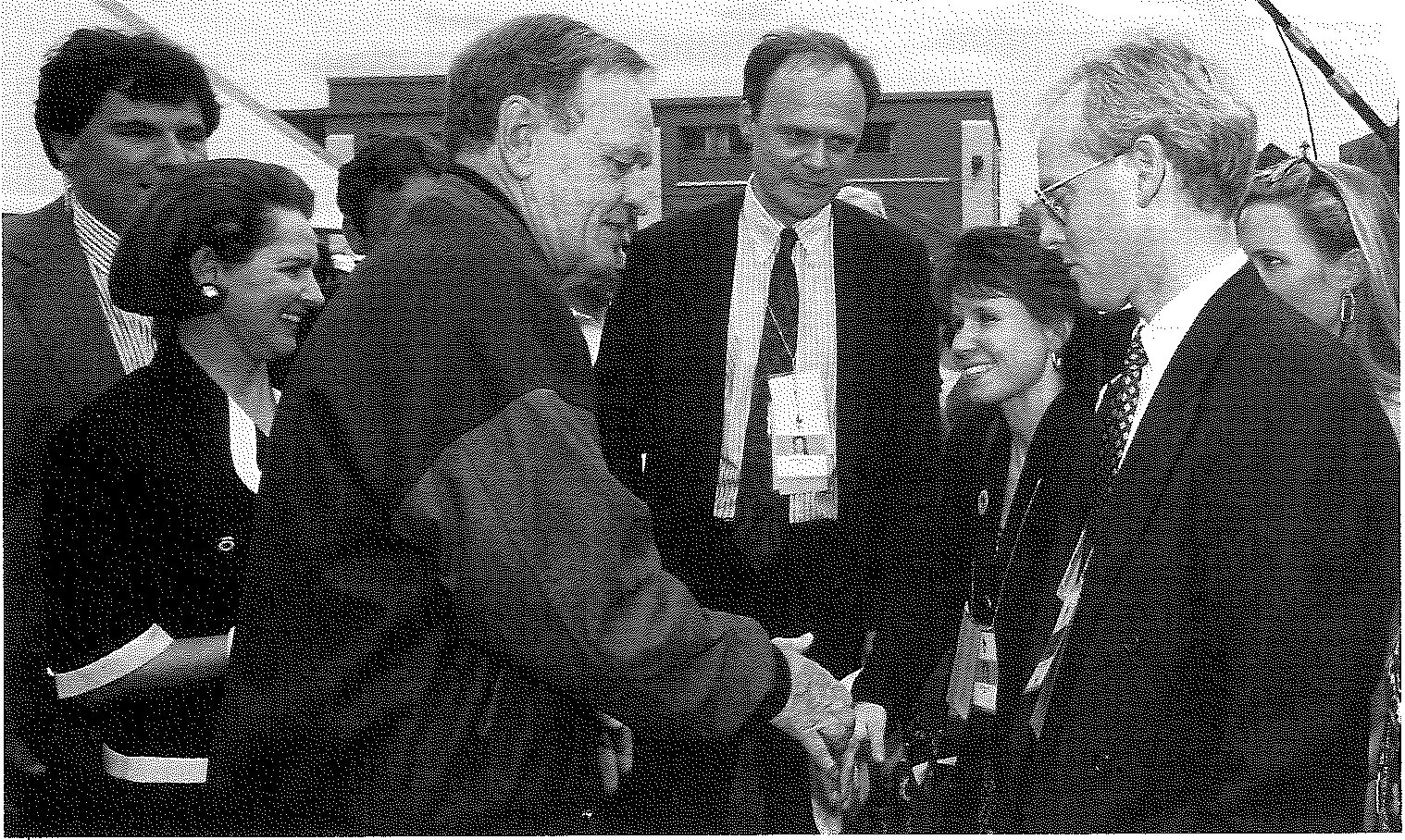
By the end of May, the media had almost exclusively focussed on issues that could “derail” the summit, postpone it or embarrass the host. This frenzy is de rigueur before a G-7 Summit, as in the past there have been numerous events that have diverted leaders’ attention at the table. In the case of Naples the year before, the death of Kim Il Sung on the eve of the summit resulted in a discussion of nuclear security on the Korean peninsula. An unprecedented run on the American dollar the day before and President Clinton’s stated position not to call for its support, set the stage for an unplanned exchange between leaders that led to the call for an institutional review. The summit chair has the responsibility to ensure the maintenance of the summit agenda but also the delicate task of responding to quickly changing circumstances. For Halifax, the Japan-USA automobile dispute was seen by many as being the item that could influence the agenda or the atmosphere among leaders, particularly in the context of any discussion on the newly born World Trade Organization. The just-resolved Canada-EU fisheries dispute, fresh in the minds of the four EU members of the G-7 and particularly the European Commission that also participates, was seen as a potential “atmospheric” problem, given the location of the summit. Neither had any impact. In our planning, we always believed that the situation in the former Yugoslavia could, as a result of current events, become the agenda distraction. In the event, leaders dispensed with the issue at their private working dinner the first evening, assessing most recent developments (President Chirac was particularly active on this issue given dangers to French peacekeepers at the time) and issuing a short statement read by Prime Minister Chrétien. The summit agenda was adhered to, the result of a combination of a positive dynamic among leaders, solid chairmanship of the meeting, and — yes
– a more streamlined and focussed preparatory process. Any major event of these proportions is not without its stresses and frustrations, particularly when the host country is attempting to make progress on the agenda and is seeking consensus. The most ubiquitous phrase during the preparatory process was “where/when/as appropriate”,, that convenient diplomatic placebo that abounds in communiqués but signifies very little. In the preparatory phase, the phrase symbolized the difference between providing specificity in the communiqué and other summit documents, thereby lending credibility to the G-7 process and the summit itself, and the very real wish that leaders retain their flexibility and not be trapped into agreeing to detailed commitments that might not be in their countries’ interests. A substantive consensus was found, as the summit documents and leaders’ statements indicated, but a desire for many “as appropriates” had to be weakened during the all-night officials communiqué drafting session at the beginning of the summit. The gentle but persistent persuasion of our Sherpa and Sous-Sherpas as well as generous measures of decaffeinated coffee unwittingly consumed by our jet-lagged guests assisted us in achieving the goal. It was on that evening that we secured agreement on the key measures to recommend to our leaders, initiatives in which Canada played a key role. They included the push on new resources and powers for the IME, an emphasis on “regulating the financial regulators”, linking aid concessionality to military spending of recipient countries, and a comprehensive international trade agenda in preparation for the Singapore ministerial meeting. Our work on nuclear safety was more of a stand-alone issue and work to seek closure of the Chernobyl facility and safeguarding others proceeds. We advocated a fair and balanced role for Russia in the preparations for Halifax and at the summit itself, the result of an open dialogue on the Halifax Summit begun with Moscow during the visit of Minister Ouellet and Mr. Smith in December 1994.
Many of us could not relax after the Halifax Summit, a fact that was not a result of adrenalin excess but of the requirements for immediate follow-up work. Ministerial meetings on employment, terrorism and crime were all set in train; another Sherpa meeting was called to plan these meetings, to discuss UN reform issues as well as prospects for the summit on nuclear safety and security in Moscow. As a host country that had engaged in pre-summit consultations at the highest of levels around the world, we also considered it proper to provide extensive debriefings through our missions abroad to the many countries whose governments had requested Canada to take their issues to the table. In addition to the results described above, the lasting legacy of the Halifax Summit could very well be the restored faith in summits that it engendered, characterized by an informal, business-like atmosphere, a streamlined preparatory process, flawless logistical execution of the event and the involvement of thousands of vocal and justifiably proud Nova Scotians.
View the original scanned pages →
Originally published in bout de papier, Vol. 13, No. 1 (1996) — Spring 1996 // Printemps 1996, pp. 5–7. Read the rest of this issue →



