
bout de papier, Vol. 13, No. 4 (1996) — Winter 1996 // Hiver 1996, pp. 11–15
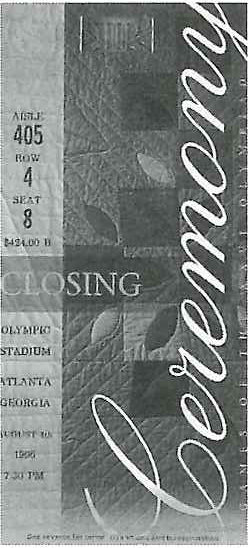
An indelible image of the Centennial Olympics occurred during the Closing Ceremony. Canadian athletes managed to sneak a giant Canadian flag onto the floor of the Olympic Stadium. That flag, large enough that 25 people had to carry it onto the field, billowed before the capacity audience and 3.5 billion viewers worldwide as athletes bade one another farewell in the Games’ final moments.
With an unprecedented 22 medals in 10 separate sports, the Canadian Team had cause for celebration. An entire nation shared in the excitement as the mammoth flag floated amidst the crowd and the Games came to a close.
For the Canadian Consulate General, Atlanta, the Summer of 1996 was not yet over. More stirring moments lay ahead with the Paralympic Games. It would be Autumn before we could reflect upon the unique experience that had been ours.
How It All Started
Looking back, it seems inconceivable that this Post entered the world of Major Games more than six years ago, when Atlanta was bidding against five other cities to host the Centennial of the Modern Olympic Games.
Vying with Atlanta for the privilege of hosting these Games were Athens, Belgrade, Manchester, Melbourne and, of course, Toronto. In September 1990, at a meeting in Tokyo, International Olympic Committee (IOC) members would choose the winning city.
That day finally came. Atlantans were assembled by the hundreds in Tokyo and by the thousands in downtown Atlanta for an early-by IOC President Juan Antonio Samaranch. At 7:25 a.m. EST, President Samaranch began the sentence, “The International Olympic Committee awards the 1996 Games to the City of….”
And Atlanta’s destiny was changed forever.
Warming Up for the Games
For a diplomatic office to have six years to discover its role in the Olympics is like a beach community’s being granted six weeks to prepare for a major hurricane. The lead time allows for boarding up windows, identifying possible calamities and rescuers, and reviewing safety procedures, but the real test comes when everyone has to ride out the storm. In the case of the Atlanta Games, officials at the Consulate General predicted this would be a very big storm, indeed
The Atlanta Committee for the Olympic Games (ACOG) had announced early in its planning process the goal of attracting a record number of countries and athletes to participate in the Centennial Games. With prime venues concentrated in the centre of the city in an imaginary circle called “the Olympic Ring”, ACOG would be funneling an unprecedented crush of humanity to Atlanta’s core. Housing, transportation and security forces would be stretched to the limit. As the last Games of the century to be held in North America, these Centennial Games were sure to elicit a strong Canadian response.
How could a regional diplomatic office begin to plan for such an event?
The Post got its first taste of a Major Games experience in 1992, when the Atlanta Braves hosted the Toronto Blue Jays in Games One and Two of the World Series. The celebrities came. The media came. From the vantage point of CNN Center in the heart of the city, Consulate General employees could watch blimps and helicopters hovering over the nearby Atlanta- Fulton County Stadium, site of the Series. Turner Broadcasting System, which owns and operates CNN Center, is also parent firm for the Atlanta Braves, so impromptu Braves pep-rallies took place in our hotel-office complex throughout.
What we quickly learned is that, in the case of a major sporting event, hard work and a sense of humor carry the day. When then-Consul General Jim Elliott was asked by a local television reporter (she was serious) “How do you get to Toronto from here?” his on-camera response was, ’Take I-75 north; and, when you get to Detroit, hang a right.” When an Atlanta color guard mistakenly carried the Canadian flag upside down into the stadium at the beginning of Game Two of the Series, we found ourselves besieged by well-meaning Atlantans, who called or wrote or dropped by the office to express their regrets!
Such experiences led us to believe the Olympics would be even more memorable, zany and exciting. The Summer of ’96 would be a magical time in the life of our Consulate. One not to be missed
But, first, we had to get ready.
Building the Team
The Consulate General was fortunate in being able to establish strong relationships with the key organizations involved in Games. The years between Atlanta’s receiving the bid and actually putting on the Games gave us time to get to know those who would help to make Canada’s participation in these Olympics a successful experience for all concerned.
Among those we turned to as we began the learning process were the Canadian Olympic Association (COA); Sport Canada in the Department of Canadian Heritage; Canadian IOC Members Carol Anne Letheren and Richard Pound and Honorary Member James Worrall; the Olympic Family and Protocol Division of ACOG; and other diplomatic posts which had previous direct involvement in the Games.
It also became clear this city would host the Paralympic Games, traditionally held one to two weeks following the Olympics’ close. Whereas the Olympics would bring an unprecedented 197 countries and 10,500 athletes to Atlanta, the Paralympics would prove to be the world’s second largest sporting event, attracting some 100 nations and 4,000 high performance athletes with a disability.
Initial contacts made in the Paralympics realm included the International Relations Department of the Atlanta Paralympic Organizing Committee (APOC); the Canadian Paralympic Committee (CPC); and Dr. Robert Steadward, the Albertan who is President of the International Paralympic Committee (IPC).
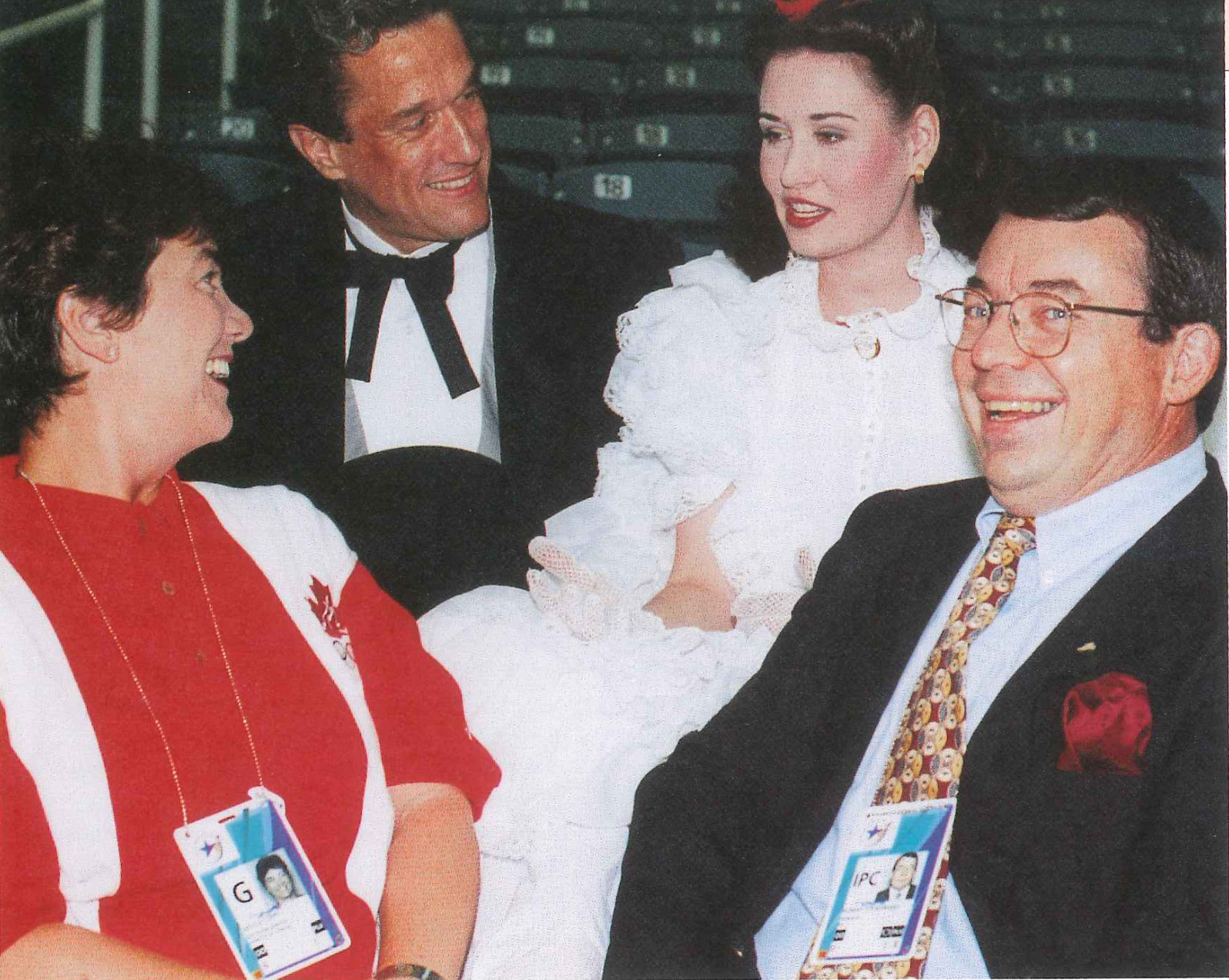
Canadians were moving to Atlanta to work with the Games. Ralph Mellanby, who had been in charge of broadcasting for the Calgary Winter Games; Claire Potvin, who had served as a Games consultant on Canadian and IOC levels; and Allan Koyanagi, formerly Ticket Manager for the Toronto Blue Jays, were among more than thirty Canadians settling in the city for the duration.
Ottawa Comes Visiting
Two years before the Olympics, we were already welcoming Games-related officials to Atlanta. We organized a committee of the various Canadian associations in town to share information.
In the context of the Association of National Olympic Committees (ANOC) meeting, December 1994, the Consulate hosted the Minister of Canadian Heritage Michel Dupuy; all three Canadian IOC members; the leadership of the COA; and officials of Québec 2002, who were poised for the finals in a hotly-contested bid for the 2002 Winter Games. ANOC Week gave us a true measure of the Olympics experience as we were introduced to the “Olympic Family.”
As the Olympics drew near, it became clear Canadian dignitaries would be paying official visits to Atlanta during the Summer of 1996. Prime Minister Jean Chrétien, Deputy Prime Minister and Minister of Canadian Heritage Sheila Copps, Canada’s Ambassador to the U.S. Raymond Chrétien and Manitoba Premier Gary Filmon were among those expected for the Opening Ceremony. Minister of Transport David Anderson and Speaker of the House Gilbert Parent would arrive some days later. Minister Copps would be returning to Atlanta for a programme to precede the opening of the Paralympic Games. Logistics, including accreditation, housing and transportation for these officials and their staff, became our primary concern.
Fortunately, the Consulate General’s location at the heart of the city helped to facilitate this. We were close to everything. ACOG headquarters was some three blocks away. The host hotel for the Games was only a few blocks further. The Canadian Olympic Association had chosen a fabulous location for its Canada Olympic House: adjacent to ACOG’s main ticket center on Peachtree Street, two blocks from the host hotel. The Olympic Stadium was a five-minute drive. Volleyball, gymnastics, basketball, fencing, handball, judo, table tennis, weightlifting, wrestling and the International Broadcast Center were literally right next door. Swimming and diving took place at the Aquatics Venue, some five minutes west on the Georgia Tech campus. Perhaps best of all, the unofficial “gathering place for the Games” ’, Centennial Olympic Park, was just across the street from our building.
And They’re Off…
The Olympics and Paralympics challenged this Post to a process of team-building as never before. Additional public affairs, administrative, consular and immigration officials were brought on board for the duration. The office was open twelve hours a day, seven days a week. Staff members became adept at arriving for early-morning briefings and staying until late evening. Some officials even spent the night at the office to oversee a spend-the-night party for Canadians who participated in a bike relay from Montréal. (More on that below.) Some memories:
The Prime Minister’s Visit. July 19th — our day began before dawn, as staffers rushed to the office for a strategy session to go over last-minute details for this, the Opening Day of the Centennial Games. The Deputy Prime Minister and the Ambassador had already arrived. Everyone was eagerly awaiting the Prime Minister’s arrival by military aircraft shortly before noon. From Hartsfield International Airport, Jean Chrétien would travel by motorcade to the Official Residence of Consul General Allan Stewart for an informal luncheon with Canadian athletes and other guests. Following afternoon meetings with Canadian press and a delegation of young cyclists from Québec, the Prime Minister would proceed to the Opening Ceremony at the Olympic Stadium. He and his party would return to Ottawa well after midnight.
What impressed those observing this highly-compressed visit was the Prime Minister’s focus in each and every setting, but he was at his best with the athletes, taking time to meet and talk with each one, freely posing for pictures.
One of our favorite moments was watching the RCMP and Secret Service scramble when the PM decided to take an impromptu stroll through the Consul General’s neighborhood mid-afternoon.
Athletes’ Tribute and Reception. The day prior to the start of the Games was equally exciting, with the Canadian Broadcasting Corporation (CBC)’s star-studded tribute to Canadian athletes being taped in Atlanta mid-afternoon and the Team Reception taking place in a “fun and games” setting later that evening.
Thanks to the inspiration and hard work of Canada’s Assistant Chef de Mission Sylvia Sweeney and her colleagues at a Toronto-based production firm, “The 1996 Canadian Olympic Gala” was an unprecedented event. Some of Canada’s best-known performing artists, including Céline Dion and David Foster, Ashley MacIsaac and George Fox, joined co-hosts Leslie Nielsen and Sonia Benezra to salute the country’s newest Olympians. At the end of this one-hour special, which would air across Canada the following evening prior to Opening Ceremonies, runner Charmaine Crooks was named Flag Bearer for the Canadian Team.
After the performance, everyone was off to Dave & Buster’s, a unique entertainment complex featuring video games and a variety of other entertainment stations for guests to test their luck and skills. Over 1200 athletes and guests attended. The athletes had to be torn away!
Minister’s Reception. Several days into the Games, Minister Copps hosted a reception for athletes, officials and the Paralympic athletes on the floor of the Georgia Dome Canadian community. That event, held in the Atrium of CNN Center, proved to be another highlight of our Olympics experience.
Among the 600 guests was Atlanta attorney and founding member of the Canadian American Society of the Southeastern US Barry Phillips, who had been chosen by the COA some two years earlier to serve as Team Attaché. We were proud to have such a good friend of the office serving in that distinguished capacity.
Also present were more than 100 participants from “Montréal 76-Atlanta 96,” an ambitious bike relay planned for the start of the Games. Together, la Corporation d’urgences-santé de la region de Montréal Métropolitain and the Heart and Stroke Foundation of Québec had mobilized cyclists and volunteers to take part in a 2,000-km relay from Montréal to Atlanta to mark the twentieth anniversary of Montréal’s Summer Games and salute the Centennial of the Modern Games.
It seemed only appropriate our office contribute to the project by furnishing housing for its participants. Yes, that’s right: 115 tired cyclists bedded down in sleeping bags at the Consulate General after hours. Special thanks to Consulate Administrator Darrie Wohlman, Consul and Trade Commissioner Jean-Pierre Petit and DFAIT’s own Eric Pelletier, on loan to us during the Games, for going beyond the call of duty to serve as “chaperones” for this function.
Sport Canada made it possible for a company of “Young Canadians” to attend. On their way to the reception, a large contingent met Shaquille O’Neill and David Robinson, who were in residence at CNN Center’s hotel as part of the “Dream Team” Being at the “centre” had its moments!
The Park. None of us could discuss the Atlanta Games without mentioning the phenomenon of Centennial Olympic Park. From 7:30 a.m. until well after midnight, this large, grassy space across the street from our building was alive with activity. Sponsor exhibits, including the AT&T Global Village, with its line-up of free performances by such artists as Santana, Ray Charles and acrobats from Cirque du Soleil, and “Southern Crossroads”, a component of the 1996 Olympic Arts Festival, made this the place to be during the Games. Some 50,000 people jammed the park always.
Photo: Reginald Tiessen Traffic and pedestrian flow in the vicinity was more than congested. In fact, cars were totally forbidden for many of the streets surrounding CNN Center. ACOG accreditation ruled, plus fingerprint analysis! And even R.E. “Ted” Turner was mistakenly denied access to the building in which he and his wife Jane Fonda have a penthouse apartment.
Downtown Atlanta was wall-to-wall people, trading pins, browsing for t-shirts among vendors, listening to musical groups camped out on street corners and in area parks. Frozen lemonade, a range of fast foods and Coca-Cola were omnipresent. The city’s famed Peachtree Street had become a pedestrian mall for the occasion. Olympic sponsor Anheuser-Busch’s team of Clydesdale horses was on display in a large, fan-cooled tent across from our building. Attracting a good deal of the attention was “Billy”, a Clydesdale colt presented to ACOG President and CEO William Porter Payne.
Into this peoples’ setting came the bomb — a tragic blight on the Olympics. The Consulate General’s first concern was Canadian citizens. A survey of emergency response teams and area hospitals revealed no Canadians injured in the blast, but a profound silence hung in the air and bright-yellow police crime tape cordoned off the park.
Canada Olympic House. For Canadians and friends of Canada, the “insider” place to be was Canada Olympic House, the COA’s and Sport Canada’s hospitality setting at the heart of the Games. There, at the corner of Peachtree and Baker Streets, COA staffers, sponsors and others found an air-conditioned gathering spot, complete with information, refreshments and big-screen television coverage of both CBC and Société Radio-Canada feeds of the Games.
The Consulate General helped to rally local volunteers and furnish brochures and other materials for this setting. It was gratifying to hear that Canada Olympic House had become “home away from home” for Canadians visiting Atlanta.
In the Village. This is the most secure spot at any Games. For the Atlanta Games, the main Village was located on the Georgia Institute of Technology campus, less than a mile from the Consulate General. This relative closeness did not translate to ease of access. Security measures allowed only those with ACOG accreditation to enter the miniature city, complete with florist, hair salon, fitness center, cappuccino bar and any other amenity Olympic athletes and staff could want. Toward the end of the Games, some Consulate General staff members enjoyed a tour, encountering both Arnold Schwarzenegger and Muhammad Ali in the process.
Behind the scenes, overseeing activities of the Canadian Team, were Canada’s Chef de Mission Michael “Mike” Chambers, COA Director of Games Jim Murray and ACOG Envoy to the Canadian Team Shirley Joanne Smith, working out of the Village “command centre”
Commerce, Art, Et Al. Canadian enterprise and talent were evident throughout the Games as products, services, and cultural and promotional efforts bespoke Canada in Atlanta.
On the Trade front, Ontario-based Ellis- Don Construction was responsible for $62 million in new housing for the Athletes’ Village at Georgia Tech. Mondo Rubber of Québec supplied and installed the Olympic Stadium track on which Canadian sprinter Donovan Bailey scorched the 100-metres. Visitors from around the world were shuttled to and from Olympic venues in city buses built by New Flyer of Winnipeg. Calgary’s Temporary Fence Rentals supplied more than 100,000 feet of fencing for Centennial Olympic Park and other Games-related facilities. The Chandioux Group of Montréal received a contract from the National Weather Service to translate English weather reports into French, the second official language of the Games. And Toronto’s The Post Card Factory negotiated a merchandise agreement with ACOG to supply some 10 to 20 million post cards for Olympic visitors.
Over 50 law enforcement officials from across Canada volunteered their services to the Centennial Games. As a token of gratitude, we threw a late-afternoon party for them at the Consulate General.
Canada also had a cultural presence in Atlanta. Canadian baritone Gino Quilico performed in the 1996 Olympics Arts Festival’s International Opera Gala. Noel Harding’s “The Potato Eaters” was on display at the Atlanta Botanical Garden. The Atlanta International Museum of Art and Design included Inuit sculpture and tapestries in its exhibit “Ways of Welcoming: Greeting Rituals from Around the World” An Inuit sculpture, “Mother and Child” appeared in the High Museum of Art’s “Rings: Five Passions in World Art”. And Shelagh Keeley was one of five international artists chosen to create books during Olympic Arts Festival residencies at Nexus Press.
Outside the bounds of the ACOG Cultural programme, Canada remained front-and-centre, with pop phenomenon Céline Dion, accompanied by composer-conductor David Foster, performing during the Opening Ceremony. Québec musicians-performers in the group L’Ensemble Karel performed for 4,000 print and broadcast media during the Press Gala for Olympic sponsor Swatch. The Toronto-based Sarajevo Collective offered a dynamic stage adaptation of Elma Softic’s book Sarajevo Days, Sarajevo Nights. “High Flyer”, a work in bronze by Canadian sculptor Rein Triefeldt, was on view at Canada Olympic House. And “Spirit of the Arctic”, an exhibition of Inuit stone sculpture drew viewers to an indigenous art gallery in the city’s midtown arts district.
Thanks to Ottawa-based Leroux and Associates and the Canadian Tourism Commission, Atlanta even had its own maple-leaf-shaped hot air balloon for the duration.
The Paralympic Games
Volunteers. From the start, the Consulate General and Canadian community in Atlanta played a role in helping with the Paralympic
Games. An April 1996 golf outing/fundraiser
– to benefit the Canadian Team was the Post’s most ambitious effort in preparation for the Paralympics. Thanks to the Canadian
– American Society of the Southeastern US, the Canadian Women’s Club of Atlanta, tournament sponsor Ellis-Don and numerous other sponsors, the Golf Challenge was a tremendous success, netting over $39,000 US for the Canadian Team. Funds were used to offset costs of the Paralympic Athletes’ Event at the Georgia Dome and Canadian athletes’ fees for participation in the Games. Minister’s Visit. In the weeks leading up to the Paralympic Games, the Post worked with the Office of Deputy Prime Minister and Minister of Canadian Heritage Sheila Copps for her return visit. The Minister’s schedule included participation in the Athletes’ Reception; observation of Canadian athletes in training; inclusion in an informal luncheon with athletes and staff and a brief tour of the Paralympic Village. Ms. Copps also met with Opening Ceremony host Christopher Reeve and participated in the ribbon-cutting ceremony for Canada Paralympic House.
At the Dome. A highlight of the Canadian Team’s stay was its Athletes’ Welcome. Some 500 guests, including leading members of the Canadian community in Atlanta, attended this programme, complete with marching band, on the floor of the Georgia Dome. The function carried a sports theme, with recognition of sponsors on the Dome’s matrix board; a reception in Kickers, the facility’s sports bar; and even a series of interactive games. Nothing could equal the thrill of partying in a 75,000-seat arena, complete with Scarlett O’Hara and Rhett Butler look-alikes.
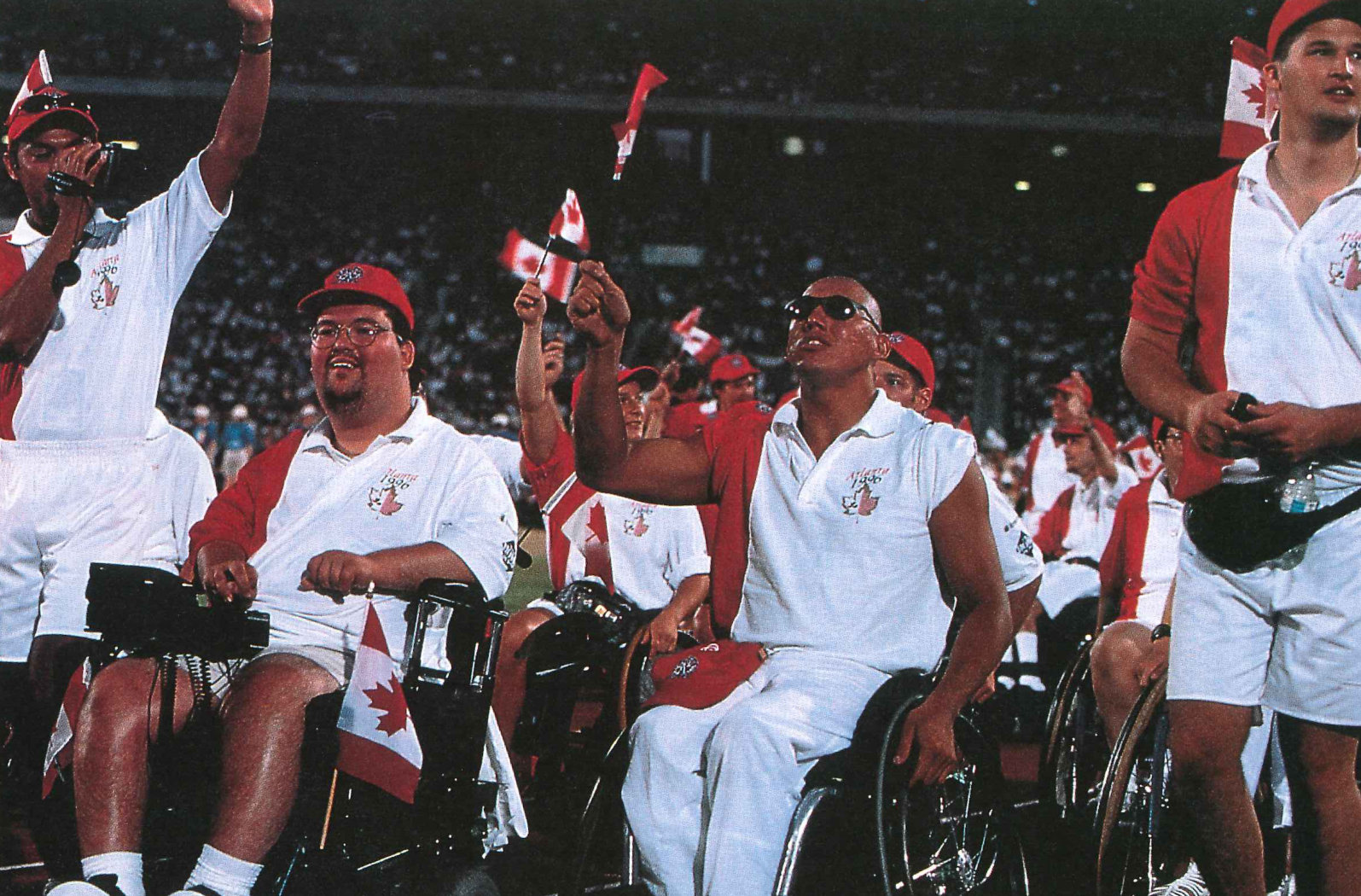
The Games Open. At the invitation of the Atlanta Paralympic Organizing Committee (APOC), 38 members of the Canadian community participated in the Opening Ceremony of the Games. The Consulate General enjoyed helping organize Canadian involvement in this event — and outfitting participants with baseball caps and flags.
They Go On. Consul General Allan Stewart and the writer, as one of the two Team Attachés, attended a host of Paralympic events, including Athletics, Basketball, Goalball, Powerlifting, Rugby and Swimming. In the case of Powerlifting, a ballroom at the Marriott Marquis was transformed into a high-energy venue, complete with boom boxes and APOC volunteers doing the Macarena. Like the Olympics, the Paralympics were an adrenalin-rush and over too soon.
Our memories are almost over.
We close as we began — with the image of that larger-than-life Canadian flag on the floor of the Olympic Stadium. The flag, 60 feet by 120 feet, had been given to the Canadian Olympic Association by children of the Samuel Gilbert Public School in Sydney, Australia. Their hope was that it would become a part of the Canadian Team experience in Atlanta.
So it did. And, in so doing, it became a memory and a hint of the future for us all.
View the original scanned pages →
Originally published in bout de papier, Vol. 13, No. 4 (1996) — Winter 1996 // Hiver 1996, pp. 11–15. Read the rest of this issue →



