
bout de papier, Vol. 13, No. 4 (1996) — Winter 1996 // Hiver 1996, pp. 3–4
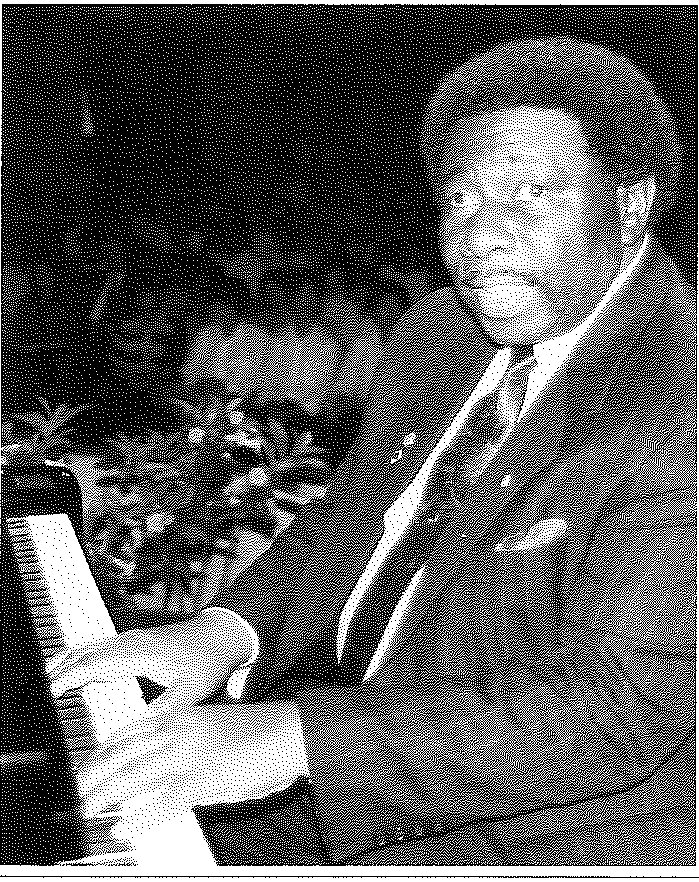
The best night of my posting as the purveyor of Canadian culture to China came in May of 1994 in the distinctly non- Canadian and non-Chinese surroundings of the original Beijing franchise of Maxim’s de Paris. I had arranged for Montreal jazz great Oliver Jones, along with bassist Dave Young and drummer Barry Elmes, to have dinner and talk jazz with Chinese saxophonist Liu Yuan, trumpeter Cui Jian (better known as China’s greatest rock star), pianist Kong Hongwei and a group of their friends. Following the meal, Canadian and Chinese musicians played for each other, and then with each other, on a makeshift stage featuring perhaps the most out-of-tune piano that Oliver Jones has ever played. A small and enthusiastic crowd of Chinese fans was joined later by Canadian ambassador Fred Bild and Canadian officials in Beijing who, like the Oliver Jones trio, were travelling with Governor General Ramon Hnatyshyn. For the Canadian trio, the evening provided the opportunity to influence the leading jazz players of China’s reform era; for Liu, Cui, Kong and their friends, who had learned the music from recordings and scores, playing with the best in the world was an invaluable musical growth experience. For those of us privileged to watch this exercise in Canadian and Chinese fusion, even the brilliant concert given by Oliver Jones (on a much better piano) and the trio before a large audience the following night, could not match the excitement of the jam session at Maxim’s.
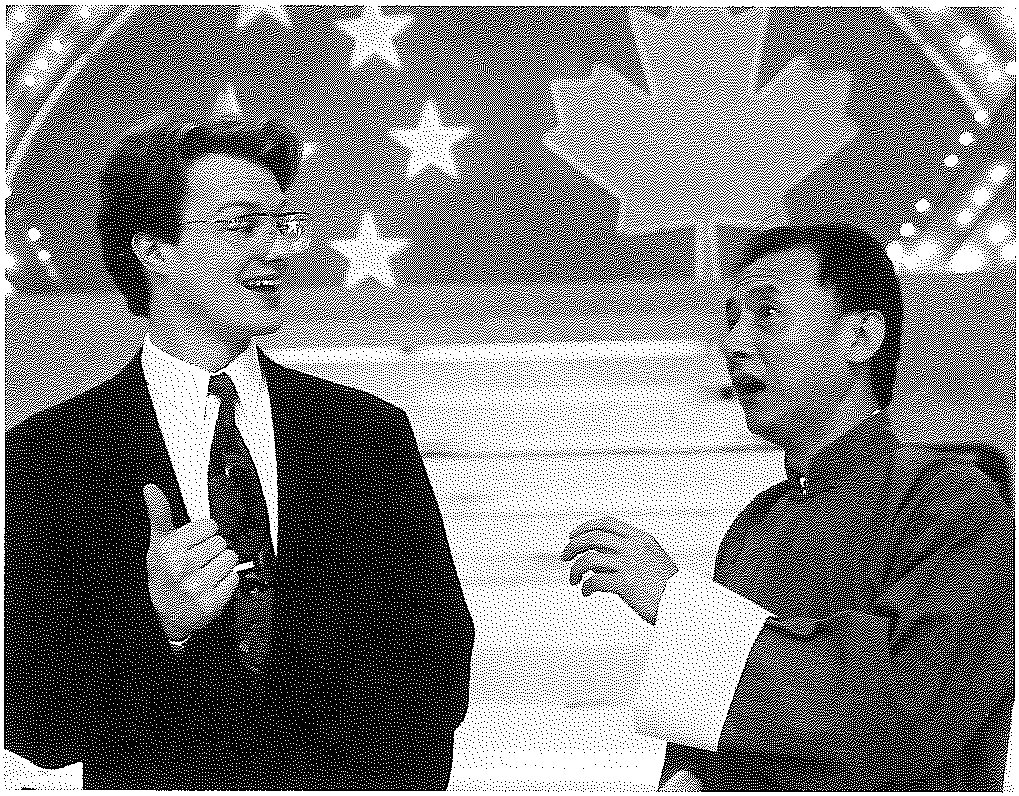
A week later, Chinese and Canadian artists again shared the same stage, as the Governor General and his travelling road-show moved south to the Pearl River Delta, for Canada Week. This time the setting was the recording studio of Guangdong television, where the station’s popular weekly variety show was a joint Chinese-Canadian affair. The Governor General delivered a recorded address to the viewers of China’s richest region, and Chinese singers and dancers traded acts with the Oliver Jones Trio, Alberta country duo the Great Western Orchestra and Toronto Cantopop singer Joyce Lee. Also on stage, sharing master of ceremonies duties with the show’s regular hosts, was China’s most famous Canadian, and best-loved foreigner, Mark Rowswell, better known as Dashan. Mark also contributed to the evening with the art that has made him a national celebrity, the Beijing comic dialogue, performed with a Chinese partner. The performance included Mark’s hilarious parody of Chairman Mao’s essay on that other Canadian hero, Norman Bethune, and a tongue-twister that made many in the studio audience helpless with mirth.
Another visit, another TV show; for Prime Minister Chrétien and Team Canada’s China odyssey in November 1994, China Central TV in Beijing put on a Canadian special edition of its prime-time quiz and general knowledge programme. The show featured a message from Prime Minister, a film on old Montreal and the Skydome, an explanation of the recycling logo, and — perhaps most memorably – a group rendition of “Red River Valley” in Chinese led by Ambassador Bild with Mark, Embassy colleagues and Canadian entrepreneur Henry Wang. This was the first time CCTV had allowed a foreign country to share this programme, and others have followed the Canadian lead. Without Mark’s celebrity, this Canadian breakthrough would never have happened. The irony is that he remains unknown at home, though a National Film Board documentary on him recently filmed in China may go some way to changing this.
Bringing Canadian culture into China is seldom straightforward or cheap. A series of last minute crises had to be overcome before the Toronto Dance Theatre took the stage in Beijing following cancellations of their scheduled performances due to flooding in South China. Hours before a concert by Vancouver pianist Jane Coop in Beijing’s Concert Hall, we were still trying desperately to contact the only tuner allowed to work on the Hall’s pianos in order to tune the one preferred by Ms. Coop. In both cases, the artists performed brilliantly while the organizers collapsed in a cold sweat.
Costs can be high — China’s market economy has advanced to the point where it can cost as much to put on a concert here as in major Western cities, but not to the point where ticket prices can pay a substantial part of the cost of the event. In addition to its capacity as the defender of socialist rectitude, the Chinese Ministry of Culture also has an entrepreneurial bent, charging substantial performance fees to foreign artists brought in by their Embassies. However, it is sometimes possible to negotiate officialdom down, as we did with a “package deal” on fees for recitals given in three cities last summer by young Quebec guitarist Rémi Boucher.
For all the difficulties, the rewards can be enormous: it is relatively easy to persuade Chinese television and press to cover Canadian performers, and this additional exposure should make sponsorship of cultural events an attractive proposition for Canadian businesses looking to increase their profile in China. For me, there has also been the satisfaction of working to make our dynamic and diverse culture better known in China, transcending more common images of wheatfields, wide open spaces, kindly immigration officers and a martyred revolutionary doctor.
View the original scanned pages →
Originally published in bout de papier, Vol. 13, No. 4 (1996) — Winter 1996 // Hiver 1996, pp. 3–4. Read the rest of this issue →



