
bout de papier, Vol. 14, No. 3 (1997) — Fall 1997 // Automne 1997, pp. 21–23
As many readers will know, Gordon Smith, then Deputy Minister of Foreign Affairs, announced early this summer that he would be leaving the Department and moving to Western Canada. Rob McRae of our editorial board caught up with him in this eighth floor office one sunny afternoon in late June.
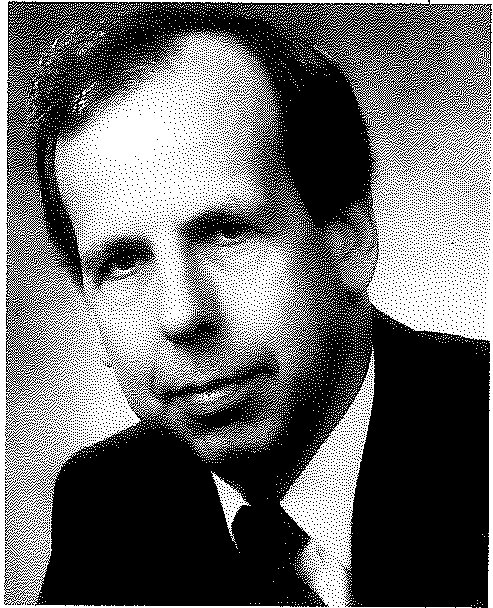
bdp: You are retiring at a youthful age. What are your plans for the future?
G. Smith: I don’t see myself as retiring, although formally I am leaving the Public Service. The reason why I’m changing careers now is that family reasons prevented us from going abroad again and there was no other job that I wanted in Ottawa. Since I wanted a second career, I sought a base in a university from which I could work on policy-relevant issues and at the same time have some flexibility so that I could do some consulting on issues I thought were worthwhile. The focus of what I intend to do is to work on global integration and what it means for Canada and for the world. The challenges to security now, compared to before the end of the cold war, are much broader and of a different character. The responses are likewise. So global security is one thrust of what I will be doing. A second thrust will be the topic of global governance. I have been struck by the fact that this is what G-8 summits are increasingly about. In future, heads of government will still be talking about macro-economic issues and also the big political issues of the day. They’ll also be talking about problems of governance: both the kind of leadership they should be providing on global governance issues and the challenges they have in their own societies. I am struck by the fact that at the Denver Summit one of the major issues was infectious diseases. Leaders are now talking about these diseases in terms of what needs to be done at the WHO, what needs to be done in terms of better cooperation amongst the Eight, the development of networks and so on.
The third area that interests me is Canadian business, which has to operate globally to benefit from the opportunities and respond to the challenges. I will make myself available to Canadian companies that I might be able to help, both in terms of doing political risk assessments as well as trying to facilitate deals that they are trying to make in countries around the world.
The Universities of British Columbia and Victoria want to establish centres to deal with global integration, which they will do in a collaborative way, and that’s where I’ll be working. To be perfectly honest, I would have preferred that the opportunity arise in a year or two, but it didn’t.
bap: You came into the job three years ago with global issues very much in mind but were there other personal goals that you brought to your job and how would you rate your success?
G. Smith: I wanted to deal with the criticism that this department was irrelevant to the central agenda of government; on that score we have done very well. The contribution we made to the 2005 exercise is recognized as being of very high order.
I wanted as well to make some changes on the management side. The greatest asset this department has is its people. They are very good at developing policy. Our problem is sometimes a lack of coherence, in other words differing views which we can’t resolve. We can’t adequately take the kind of position we have to in the departmental framework. And even more importantly, we have enormous difficulties in setting priorities. If you ask me the area in which I’m least satisfied with my performance, without a doubt it is that we have still not found a way to set priorities which affect how we utilize people, people’s time and how we allocate money. We do far too much on the margin.
Part of the problem is that what we do is valued outside. When we stop doing things, there’s somebody often in a very important position who does not want us to stop. Even when we set priorities, people don’t stop what they’re doing because they think what they’re doing is important. This stems partly from the lack of a culture of management in the department. The next generation coming along will be better managers than those of my age group but it’s an area in which we have to continue to do more work. We have money and good people and in the end we are not going to get a lot more; we’ll have to cope by managing better and shedding some of the things we do.
bdp: We have heard a lot about virtual diplomacy and you have devoted a certain amount of your time to this issue. Is it going to change the way we do business or is it a passing fad?
G. Smith: Adapting our foreign ministry to the realities of the information revolution was one of my important priorities. We have made more progress in this area than any other foreign ministry. A very significant part of this department is all about moving information around. We do provide some important services — passports, consular services, helping Canadian exporters — but even this involves moving information around. The technology has changed dramatically. I was worried when I arrived that there was a real gulf between the “techies” and the senior manager. We have made real progress in bridging that.
There still isn’t quite the sense of opportunity that I would like to see on the part of senior management: thinking about new and different ways in which the technology can be used. For example, what is the role of video conferencing? We spend a lot of money and energy on travel in this department. I’m not sure that there aren’t occasions where we could avoid travel. Let me use an example in my own work as a Sherpa. We could very easily have had a number of video conference meetings.
Video conferencing is also a good example because it points to deciding how important security is. We have to ask ourselves where security is really needed. Wherever it is, we’ve got to provide it. But for the rest, sometimes we may set ourselves so high a bar that it becomes impossible to jump and we don’t fully benefit from the technology. These are issues that I really hope will have a number of champions after I go.
bdp: On the “third pillar”, those of us who are in the field dealing with culture feel let down by the government’s commitment in this area over the last couple of years. Where do we go from here?
G. Smith: The government was serious about the third pillar, when foreign policies and priorities were approved. And now Mr. Axworthy has added a virtual third pillar: the information strategy. The two are linked and in my judgement we are at a point where either we put some more resources to make them real or we should alter our rhetoric. We are creating expectations and we are not delivering. I don’t think that we have the capacity to reallocate money from within the department. What we are talking about here will have to involve some limited amounts of new money, in the tens of millions of dollars. I hope that money will be there because I am convinced that soft power is a reality and that we have a comparative advantage. We have an opportunity not only to use but to showcase Canadian technology and Canadian content producers.
We don’t now have adequate resources to be really serious in this area. This is not to be critical of the people who have been involved in it, who have done a great job, but we’ve either got to put our money where our policy statements have been or we should be scaling back a little bit what we are saying.
bdp: The way in which resources have been allocated across government hasn’t really changed much in the last 10 years, and yet the world is changing rapidly. When will our bureaucracy catch up with reality?
G. Smith: I agree with your premise and I don’t honestly know the answer to the question. The most recent election has shown a focus on domestic issues, employment, health and youth. This is certainly where the Canadian people are at, but there is no doubt that the people of Canada also expect the government to be actively involved internationally and to sort out its own priorities. A decision needs to be taken on the global security challenges that I mentioned Are we doing enough to respond to these?
I would hope that there would be opportunities during the next mandate of the government to find ways to see whether the allocation of resources that now exists meets the changed reality.
bdp: To come back to our Department, we have a not insignificant turnover of junior officers who are coming in and leaving again for other careers, including other international careers. What have you to say to junior officers at this time?
G. Smith: The Foreign Service now, as it did when I joined 31 years ago, provides enormous opportunities and offers fascinating career prospects. We’re suffering the attrition you mentioned in part because compensation levels have fallen, whether in comparison to government or outside government. The gap is now sufficiently great to tempt some people to jump ship. I also think there is a degree of frustration about our inability to set priorities.
Another factor is the opportunities that exist or do not exist for promotion within the system. Here I might add that while promotions have obviously been slowed down in the last few years, if you look at the demographics there are real opportunities coming up, and I would urge that younger officers think this through.
A complicating further factor is the issue of the careers of spouses of foreign service officers which is very difficult to resolve. Finally, there is societal change: the youth of today contemplate career changes with a much greater degree of equanimity than was the case with my cohorts.
Having said all this, from a management point of view, there’s a problem which we have to address. We make a big investment in these young officers and it’s very much in our interest not only that they stay on, but that they be happy, enjoy what they are doing and feel that they are being well managed and rewarded.
bdp: Would you recommend a Foreign Service career to a young person today?
G. Smith: Yes, unequivocally.
bdp: Some employees are looking at issues such as FSDs, spousal employment, the coming impact of the universal classification system and so on. They are finding it difficult to plan their careers and, in particular, are wondering about the wisdom of going on posting.
G. Smith: There have been other periods when significant numbers of people have left the Foreign Service. There was one point when one-third of the deputy ministers in this town, I believe, had come from this department. So those existential questions have been asked before. There’s little certainty in life, maybe even less certainty now than there used to be. You can spend too much time calculating your long-term advantage to the point where you end up doing everything for the long-term and nothing for the short-term. If you do that, there’s still no assurance what you’re planning will ever happen.
In my own case, I had 31 great years in the public service, about half in this department and half out, and when there was an opportunity I followed my instincts. I just think there’s too much uncertainty in the world to try to plan in a highly calculated way.
bdp: Over your career in the Foreign Service, including your stint as Deputy, are there some moments that really stand out in your mind?
G. Smith: The first episode I would recall is within the first year of coming into the department. I had to write a memorandum to the Prime Minister, then Mr. Pearson, on the implications for Canada if the US deployed an ABM (anti-ballistic missile) defence system. That was an extraordinary opportunity for a junior officer.
The second occasion I will never forget is preparing a memorandum to cabinet for the NATO ministerial meeting which dealt with France’s departure from the integrated military structure. This also involved the adoption by NATO of the strategy of flexible response. This, for somebody who wasn’t 30 years old, was heady stuff. Thirdly, being at NATO, which was my first posting, and being a member of the nuclear planning group which was working on the elaboration of how NATO, if attacked, would use nuclear weapons, was an extraordinary opportunity. Later, as ambassador to NATO (1985 to 1990), I was present when people were trying to interpret what Gorbachev meant, whether Perestroika and Glasnost were, as certain countries stated, just attempts to divert us, to bring our guard down, or whether they were significant changes. History has spoken on that subject. On a number of occasions, not only did I represent Canada in the Council day-in and day-out but, when ministers were was able to express Canada’s point of view.
I had to deal with some of the consequences of the failure of Meech Lake when I was appointed Secretary to the Cabinet for Federal/Provincial Relations. As Ambassador to the European Union, I was in Brussels throughout an interesting period after the Maastricht meeting. The construction of Europe was (and is) just fascinating, and one could not help making comparisons between the problems we were having in Canada and the progress in Europe at the time.
As Deputy Minister, there are two issues which stand out most in my mind over the last three years. First of all, the great turbot war: we ended up coming out of the whole process quite well but it had the potential of going very wrong. The final episode, and in some ways is the most extraordinary of all, was when the Prime Minister decided we should lead an international political and military coalition to deploy a force into the Great Lakes region of Africa. It really tested to the outer limits the capacity in this department, and the capacity of our military friends, to put together a force.
Those are just a few occasions that come to my mind. But you add all that together, and I come back to my unequivocal answer to you as to whether somebody should today join the Foreign Service. These were opportunities I never dreamt of when I entered. If one is really interested in public policy in the international domain, then this department is the place to be.
bdp: What are the top three priorities which you would recommend to your successor?
G. Smith: The first would be to find a better way to allocate resources, human and financial, in response to enunciated priorities. This means stopping doing some things and not spending money in some areas so more can be spent in others. The second would be to keep alive the process of not just adapting this department to the information revolution, but trying to be on the leading edge. This requires a champion at the top. The third priority would be to ensure that we have a human resources strategy to deal with difficult issues such as spousal employment, compensation for lost opportunities, performance appraisals and the promotion system, changes in the classification system and so on.
bdp: Speaking of appraisals, is it time that we moved to a 360 appraisal process?
G. Smith: I don’t know. I have not pushed that idea in the time I have been here. A few other departments have gone much farther. It might be worth trying in certain areas to see what it would produce. Even though we don’t have a formalized 360 evaluation process, I have tried to be on top of how people who work for me, perceive me and my performance. They let you know. Whether you need to make that into a highly formalized process, I don’t know.
bdp: You met a lot of people in the last 31 years. Have a few stood out?
G. Smith: Unquestionably one is Lord Carrington, whom I first met when he was the Minister of Defence in the United Kingdom. in the early 1970s: truly an extraordinary man, with great breadth of intelligence, judgement and experience. And a warm human being. Another would be Jacques Delors, with his belief in «la construction européenne» and the way in which, with enormous energy, he was able to drive the process of European integration forward. Paul Nitze, whom I met during the period when I was ambassador to NATO, when he would come to consult the allies on nuclear arms control questions, was another man of extraordinary intelligence and experience, open minded, who gave one the feeling that he really wanted to know your views on how to deal with the great issues of war and peace.
bdp: In closing, are there any particularly amusing moments that come to mind from your time in the Department?
G. Smith: Yes. One I treasure was at a NATO Ministerial meeting in Venice. The Italians had arranged to take the Defence Ministers around in beautiful wood varnished boats with snappy Italian naval officers driving them. As they were taking the then US Secretary of Defence to the Airport, they chose to go inside one buoy next to a garbage scow. The Lieutenant decided to take a short cut, steered the boat on the inside of the buoy, hit a rock and sunk the boat within thirty seconds. The American Minister and Ambassador had to transfer to the garbage scow to get to the Airport. The Americans had on board documents that were classified Top Secret which went down with the boat to the bottom of the lagoon. A couple of marines were left treading water overseeing the security of the documents until help arrived. I trust they took off their boots!
View the original scanned pages →
Originally published in bout de papier, Vol. 14, No. 3 (1997) — Fall 1997 // Automne 1997, pp. 21–23. Read the rest of this issue →



