bout de papier, Vol. 14, No. 3 (1997) — Fall 1997 // Automne 1997, pp. 18–19
by Geoffrey Pearson
I have been asked by the editors to reflect on the diplomacy of my father, father, L.B. Pearson, on the occasion of the centenary of his birth and the fortieth anniversary of his being awarded the Nobel Peace Prize. While I have written at greater length on this subject (Seize the Day: Lester B. Pearson and Crisis Diplomacy, Carleton University Press, 1993), the readers of bout, and especially the inhabitants of the Pearson building, may be glad to have a shorter and less “academic” version of the subject. Success in diplomacy, like success in other fields of public policy, may often depend on a combination of three main factors — timing, experience, and personality. If the times offer no challenge, or, on the contrary, overwhelm the efforts of statesmen to control events, the diplomatic record is likely to escape notice. Without experience, as in any profession, one starts at a disadvantage, and if one leaves a poor impression on friends or foes experience may not help much.
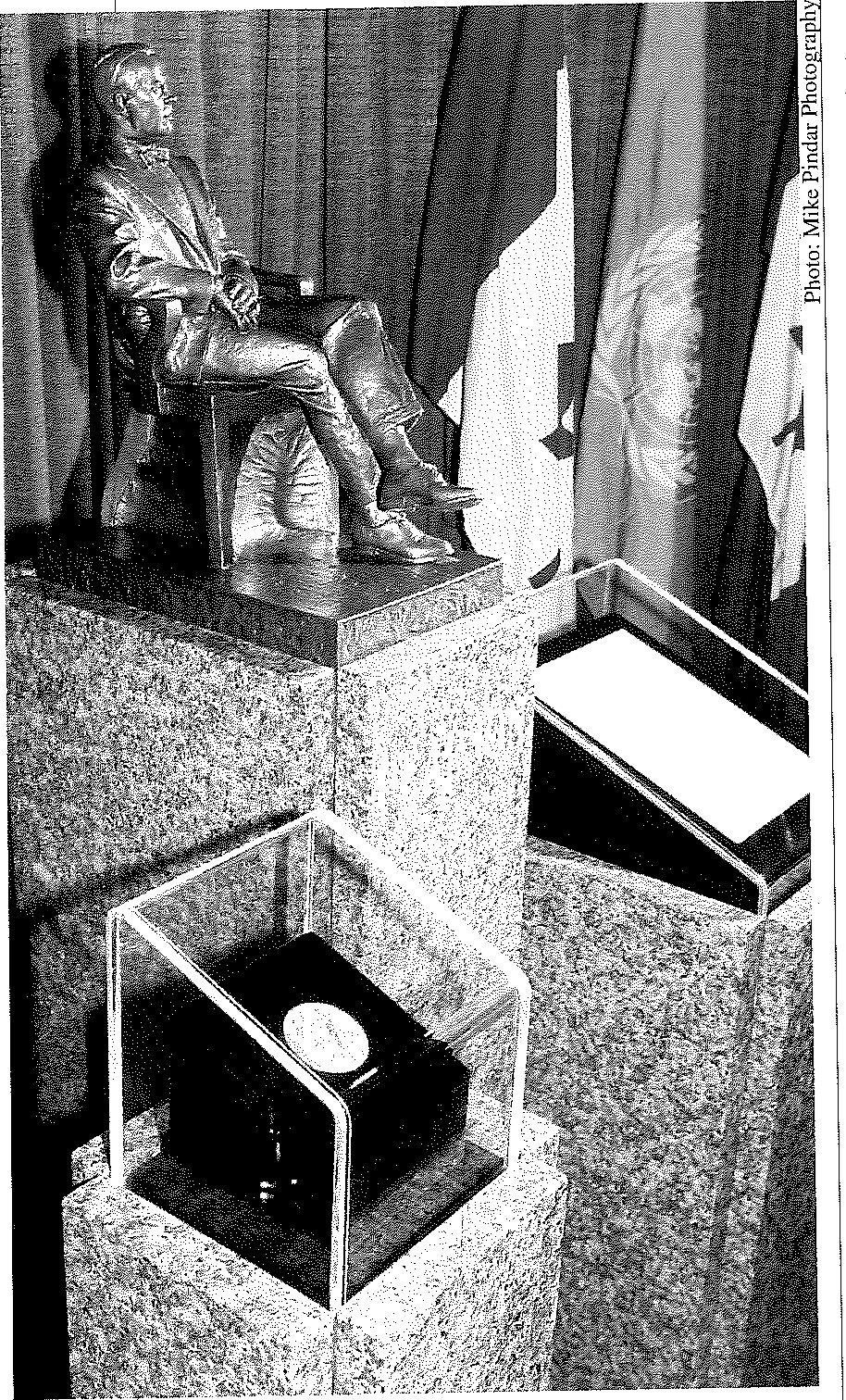
L.B. Pearson enjoyed success on all three counts. He joined the Department of External Affairs, and remained there for 20 years, when the script of Canadian foreign policy was being written. As SSEA for nine years thereafter he was in a position to play the main role, and was therefore well prepared to bring down the curtain in 1956 on a note of triumph. Suez was only the last challenge in a diplomatic career full of opportunities, both for Canada and its government. There truly was a “new world order” to be created in the years after the war, and it was in Washington, where he served from 1942 to 1946, that the creation began. So, while time and chance were fortunate omens for LBP, it remained his challenge to exploit them. This he did, both by taking advantage of Canada’s new weight in world affairs as a result of the war effort, and by cultivating strong and enduring relations with the statesmen of the time. Here, for example, is an extract from a letter to Norman Robertson, U-SSEA, reporting on his first meeting as Ambassador to the US in January 1945 with the Secretary of State:
I said that we recognized that the main aspect of the problem of post-war security and organization was co-operation between the Big Three and that we certainly did not wish to do anything that would hinder that co-operation in any way or complicate any plans designed to bring it about. However, I pointed out that our approach to the Dumbarton Oaks Charter was naturally not quite the same as that of a Great Power. We were most anxious that its provisions should recognize the place of the Middle Powers and make it possible for public opinion in those Powers wholeheartedly to support the United Nations Organization. For that purpose, we thought that possibly some alterations might be made to the Charter which would recognize more fully the position of the Middle Powers without doing anything to make co-operation between Great Powers more difficult. That, I said, was our general approach to the matter. The Secretary seemed just a little worried that we might be interesting ourselves too much in the details of these matters, through he naturally said that he would be interested to learn later more of what we had in mind. His reaction was, to use his own words, “You people in Canada really have nothing to worry about in these things; you are in a sense part of us and you are also part of the British Empire. You are really very fortunate because you have such good and strong friends.” I neglected to reply that our preoccupation with these matters was not as part of the United States or as part of the British Empire, but as Canada. It seems to me that this is a point that will have to be made clear more than once to the Secretary of State, who, while always amiable and friendly, does not, I feel, really wholly understand our independent interest in international affairs.
Pearson’s time in Washington, and before that in London, served him well. After his appointment as SSEA in 1948 he was able to deal with his American, British, and other colleagues on the basis of equality and respect. Most of these men were professional civil servants; Eden and Acheson, for example, and later, Krishna Menon of India (although not the much beloved Ernie Bevin). Gromyko too had been a colleague in Washington. The negotiations that led to the NATO Treaty in 1949, in which LBP took part, forged a new circle of old and new friends with a common purpose — e.g. Lange of Norway, Stikker or the Netherlands, Spaak of Belgium, Schuman of France, and, of course, Acheson. Of the NATO allies only the UK and Canada belonged to a second new galaxy of stars now forming during the “creation” — the Commonwealth. Just three weeks after the signing of the North Atlantic Treaty Pearson was in London to help welcome India into the Commonwealth as a republic, an event which he did much to facilitate and which led to a warm relationship with Nehru that was to last a decade. A year later he was in Colombo, Ceylon, to launch the Colombo Plan of aid to the Asian members.
These ties gave to Canada and to Pearson a pivotal position at the UN, where the Korea crisis was to break in the summer of 1950. Striking a familiar note, he described the decision of the Security Council to resist aggression as “collective action through the UN for peace”. His emphasis later on limiting the conflict to Korea, after the Chinese intervened, led to his membership on the cease-fire committee. It was hardly a surprise, then, that he should be elected as President of General Assembly in 1952, and that he should press strongly, if in vain, for permanent UN forces, made up of contributions from member states, to deal with the next emergency. This was to come at Suez in 1956. No such forces existed, and, in this case, the US was not in a position to take the lead, as Truman had in 1950. All had to be improvised, but it was Pearson’s long-held vision of the UN as an organization for collective security that led him to “seize the day” and, drawing on his friendship with Eden and with Lange of Norway, as well as his close working relationship with Dag Hammarskjold and the respect he enjoyed in Washington, to propose the first UN emergency force.
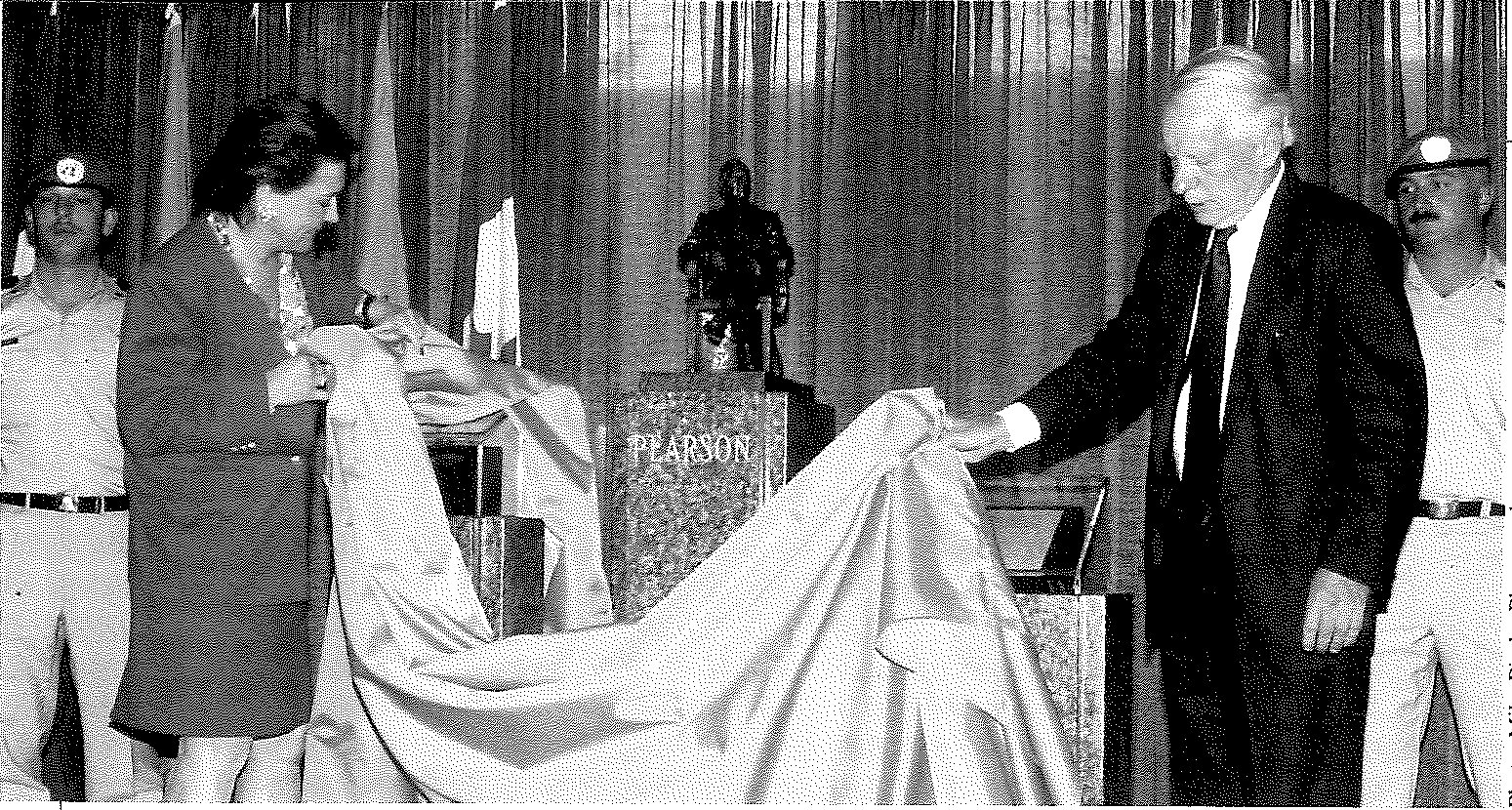
In these various ways — Pearson’s experience and Canada’s newly found independence as a middle power — the conditions were laid down for the policies of internationalism that Canada has followed ever since, despite lapsing from time to time into periods of introverted musing about the meaning of the national interest. Yet the factor of “personality” remains to be considered as part of the equation of successful diplomacy. Students of the subject often overlook the personalities of leaders. Sometimes they are sick or depressed, as Eden came to be, or dour and demanding, like Foster Dulles, or, more often, so enamoured of their own talents that they cease to listen to others — Krishna Menon was a prime example. LBP was usually in good spirits (when I was Ambassador to the USSR in the early eighties my relations with Gromyko benefited greatly from his memories of my father at the UN), and a companion of all those who played tennis or who enjoyed baseball. Above all, his was a resilient personality, rarely depressed by failure or daunted by obstacles, and unimpressed by tradition and formality. At a later stage, as Party leader, he was perhaps too prone to listen and to sympathize rather than to instruct and to command, but as a diplomat the qualities associated with the smile and the handshake served to gather support for the policies he advocated and pursued. They also endeared him to his staff and departmental colleagues, a fact that contributed significantly to his performance.
Finally, it must be said that none of the above factors would have mattered as much if LBP had not had strong convictions about the future shape of international security. Possibly, others of his generation of Canadian leaders, such as Brooke Claxton or Paul Martin, would have steered policy in the same direction, but none had his direct experience of the failure to build peace after 1918, and therefore the emotional attachment of the goal of collective security after 1945. Two of his senior officials — Hume Wong and Escott Reid — shared this vision, although they differed about the means of reaching the goal, but most were sceptical, doubting that the ghost of Mackenzie King could be easily laid to rest, or that realpolitik as a guide to the national interest would lose its force. Indeed, the first lesson of the Cold War was that a new balance of power, not collective security, would best keep the peace. Pearson did not demur. Instead, he interpreted the NATO alliance as a step on the road to the goal of collective security. He said at the signing of the Treaty in April 1949: ’The North Atlantic community is part of the world community, and as we grow stronger to preserve the peace, all free men grow stronger with us. The world today is too small, too interdependent, for even regional isolation.”
The role of the NATO alliance in helping to deter conflict and stabilise the peace in the former Yugoslavia, under UN auspices, is one that LBP would have defended as compatible with the above views. So too would he have applauded the cooperation of the OAS and the UN in Central America. He was well aware, after 1950, that the machinery of collective security described in the UN Charter would not work as originally intended. But he did not see this as a reason to abandon the purposes of the Charter — these would have to be pursued by other means. Now that conflict is as much domestic as international, he would have sought these means in new forms of UN intervention, perhaps on the basis of one of his favourite concepts — a UN police force. In any event, the goal of preventing organised violence and, if necessary, stopping it by international action, remains unchanged. “The game’s the thing” he entitled an early contribution to his college paper, meaning that the rules of play and not the spectacle are what matters. Canada would be both player and (sometimes) referee in the years ahead.
View the original scanned pages →
Originally published in bout de papier, Vol. 14, No. 3 (1997) — Fall 1997 // Automne 1997, pp. 18–19. Read the rest of this issue →