
bout de papier, Vol. 15, No. 1 (1998) — Spring 1998 // Printemps 1998, pp. 18–21
In 1995, at age 41, I returned to university to write about decision-making in the UN Security Council and, I hoped, to earn a doctorate. I had been teaching international relations in North American universities, in parallel with my diplomatic day job, and was keenly aware of missing that indispensable carte d’entrée into serious academic circles in North America, a PhD. Potential host universities were narrowed down, given their strength in my field, to Princeton and Oxford. Princeton is in a position to be considerably more generous to its graduate research students than Oxford, but a variety of sources of funding mitigated financial pressures and, having studied earlier in the US, I was eager try student life in the UK. Family connections and a long-standing friendship with its splendid President, Anthony Smith, led me to Magdalen College as my base at Oxford.
In-college housing was by far the cheapest option for me, as a single student, in the overheated housing market of Oxford. Communal life proved highly congenial at Magdalen. I sought out other students, rather than my contemporaries (mostly dons), partly because our shared academic preoccupations gave us more in common but also because I thought it would be more fun to interact with a younger generation. I did not realize, early on, how few “mature” students are enrolled at Oxford and how much my years would mark me out initially
The structure of college life helped greatly. A frantic and highly enjoyable fresher week of familiarization and socializing immediately prior to the start of courses left me knowing (however glancingly) many of the college graduate students. For those “living in”, college meals in hall or in the bar provided regular opportunities to expand my circle of acquaintances, and soon I was making inroads into the undergraduate community also. More difficult to penetrate than the student community would have been the Senior Common Room (SCR), redoubt of the dons, many of whom seemed insurmountably remote. (Some of the younger tutors engaged more with the student body, but as a rule the SCR was remarkably forbidding.)
Oxford is expanding fast, very fast, and colleges are struggling to keep up. New university residential construction is at a peak, but always seems behind the curve of demand. The demographics of Oxford surprise in several ways: roughly a quarter of the 16,800 students are foreign (more at the graduate, less at the undergraduate, levels), with the largest contingents from the US, Germany and Canada. The EU Erasmus programme, which encourages foreign study within the EU for EU nationals, contributes powerfully to the growth of the foreign student body. Far from the insular institution nostalgic for its past glory I half-feared to find, Oxford proved highly cosmopolitan. The regard for tradition among its British members, a unifying factor at Oxford (albeit one not to every student’s taste, masked the co-existence of many sub-cultures at the university, a reflection of the UK’s vibrant multicultural and increasingly multi-ethnic mix, into which foreigners integrated easily. A few Americans were irritated by what they saw as the complacency of a declining institution, but most appreciated what the Oxbridge system has to offer, not least a window, albeit a singular one, onto the UK.
The Centre of International Studies, within which graduates work on international relations, is absolutely first-rate by any standards. I applied to Oxford principally for the opportunity to study under its Montague Burton Professor, Adam Roberts, probably the foremost international authority on the UN’s peace and security functions. An unexpected bonus proved to be his knowledgeable and helpful colleagues, several of whom devoted considerable time and effort to improving my work. The Oxford research student is very much dependent on the quality of supervision, and horror stories about disinterested tutors circulated, but most of my classmates were happy with theirs. I was very lucky indeed with Roberts, an incisive but sympathetic critic of my drafts.
The whirl of seminars offered by the Centre on a broad range of topics proved highly stimulating. However, the “dreaming spires” of Oxford conceal some very real problems in the university, from the perspective of a North-American student. The Bodleian Library seems more a museum of books rather than a service-oriented institution engaged in the active promotion of knowledge. The hours are deplorable for students: on weekends, the central library buildings are only open on Saturday mornings when most self-respecting students are, or wish to be, still in bed. (College counterparts often have more liberal hours, Magdalen’s hospitable library providing 24-hour access during most of my time there.) Equally troubling are the uneven holdings. The “Bod” prides itself on being a copyright library for the UK, and appears to assume that this automatically attracts to it most books worth reading. Alas, this faintly provincial outlook leaves it bereft of many important works published elsewhere in the English-speaking world. Many students are not aware that the library is willing to acquire work from elsewhere when asked to do so: this service is poorly advertised.
Computerization is even more problematic. While the science laboratories are well-equipped, service to the humanities is in its infancy. Many dons seem to view computers as luxuries or toys, others see them as distinctly déclassé. A number of undergraduate friends still could not type, relying exclusively on longhand. My departmental computer room did not feature a printer for use by students. The embarrassed explanation was that a printer would get so much use it would be bound to break down regularly!
(Certainly, this was the pattern in my College until I gave up and acquired my own equipment.) Also, money would have to be charged and this would be complicated. Sigh…
These two short-comings point to the risks facing Oxford in years ahead. Its establishment does not like to think of the university operating within a global market-place of similar institutions, judging its charms, achievements and innate superiority as self-evident and conclusive. Nevertheless, the facilities for students are often meagre compared to those offered in top American universities, and Oxford will have to focus much harder on building up its tools for learning, possibly at the expense of further work on its much-loved buildings, old and new, and its beguiling institutional life-style.
I enjoyed returning to academic life at a time when students no longer pose as violently anti-intellectual. Their new self-confidence is refreshing. Their openness to a wide range of scholastic pursuits is accompanied at Magdalen, by a flowering of the amateur ethic for which England is so well known abroad: most of my College friends pursued several extra-curricular interests, often violons d’Ingres in the performing arts. Many of my favourite memories of Oxford life will be concerts and plays, sometimes disastrously conceived and executed, sometimes startlingly good, which displayed commendable fearlessness. I missed the political engagement of my generation of students, but not the intolerance and rigid conformism it frequently spawned.
Returning to residential university life after a gap of many years, I noticed many differences with my earlier experience deriving from the varying student lifestyle preferences in the UK and North America and also the attitudinal chasm between my laid-back generation and that of students preparing today for professional challenges in a hyper-competitive environment.
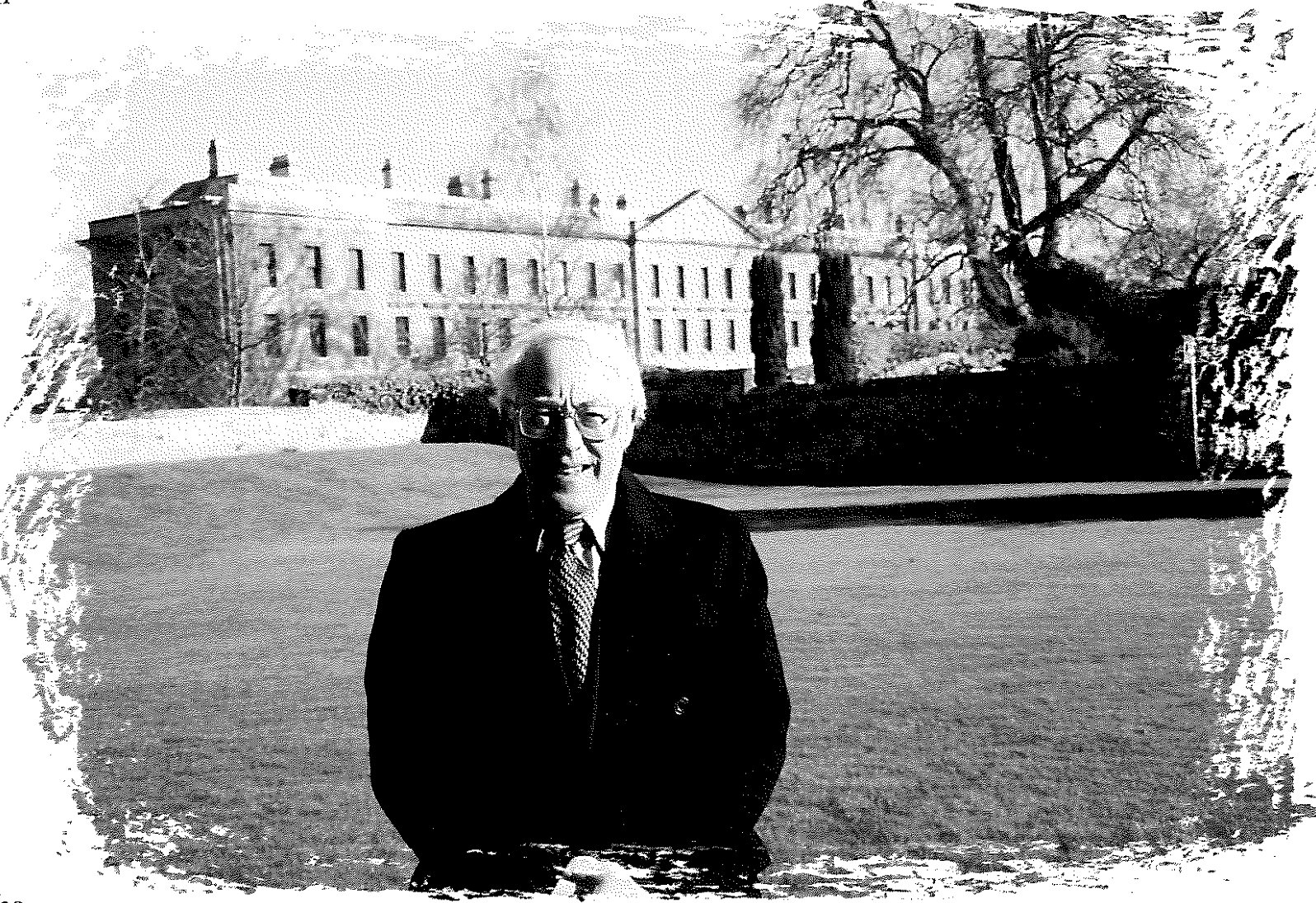
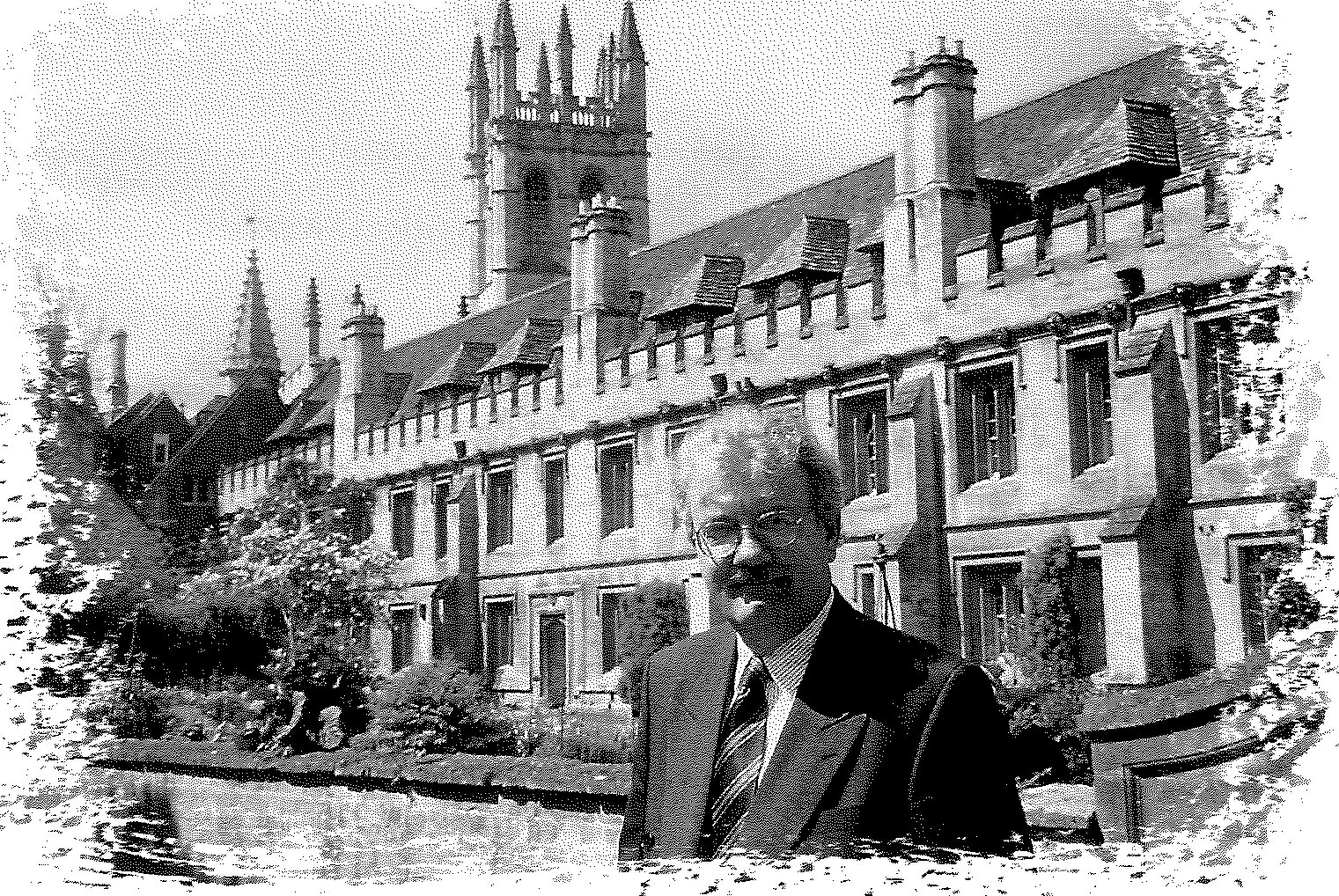
While at Magdalen, among many others, I got to know a group of third-year engineering undergraduates, mostly 21. Andrew Marsh, quintessentially English (pale, blond), shyly engaging and unfailingly polite, I knew to be very popular: we shared a mailbox in the college, flooded at all times with notes for him. Oliver Bower (Oli to his friends), a former football player of imposing build and preoccupied mien, gave away his kinder, gentler side by his frequent, broad and infectious smile. A considerate neighbour, he lived opposite me for a year in the college’s spectacular if controversially retro new Grove Building, where I lodged in sumptuous rooms with breathtaking views of the main college buildings dating from the XVth to the XIVth centuries and famous college deer park. Alok Shriestha, a quiet, reflective, much admired Nepalese had never travelled beyond his region until he came to Oxford. He spoke of the deep culture shock he experienced at first, but also of the many kindnesses, which had allowed him to settle down happily, in spite of the sudden death of one of his new college mates. He had wanted to study Greek, but would not have received financial support for this, so chose engineering as being of more potential use to his country. Claire Murakami, a Japanese-American who grew up in Ireland, the only woman in the group, was captain of the college women’s first eight rowing team. A strikingly vital and attractive force within the college, she praised the Oxbridge system of tutoring in small groups as keeping pressure on students to perform at their best, but noted that it restricted their circle of acquaintances and could lead to excessive competition (although not in her peer group, she hastened to add). Andy Cox, a lively scion of English and Indian ancestry, represented a less typical streak in the student body: rejecting any idea of a desk job, he planned to take off for Belize to work on coral reefs as soon as he graduated and thereafter might try teaching conservation in Brazil.

They all identified strongly with their college, rather than with the university more broadly. Dynastic habits form easily: Andrew’s younger brother recently joined him at Magdalen (also in engineering), Olie’s older brother Nick had read law there and Andy’s father was a college member. They all mentioned Magdalen’s beauty and the friendly atmosphere as a major draw: it had been the first choice, with New and Worcester Colleges also mentioned as high on their lists. (The academically stellar Balliol, University and Merton Colleges were not.) They liked the college’s eclectic mix of people, its strong and varied artistic and sports interests. Magdalen is sometimes viewed elsewhere in Oxford as deeply traditional, with many pointing to its high numbers of private school graduates and, in my experience, its overrated reputation for decadence, associated in part with its favourite alumnus, Oscar Wilde. Andy, the product of a top grammar school, did express impatience with some private-school types, noting that many of them stick with each other and that class distinctions are often stark within the university. (They were mostly invisible to me, being tone-deaf to many of the subtleties of British social intercourse.)
The biggest change in attitudes relative to my generation concerns the job market. Andrew and his classmates worked very hard towards their third-year exams. Although they accept that their grades may make little difference to their lives in the long run (getting into Oxford having been more important than anything they would actually do there), they are eager to prepare for the best entry-level jobs. In the mid-1970s, none of us worried much about employment; it was simply a question of what job we would wind up in, with many options available. Today, students at all levels worry intensely about their professional futures, with cradle-to-grave careers disappearing and globalization fast eroding comparative advantage and once-valued skills. Most Oxford undergraduates I knew moved on to well-paid positions of real responsibility in such institutions as the Bank of England, the BBC and major corporations, but anxiety over jobs, and preoccupation over the rigours of upward professional mobility marked many of them. They are a much harder-working generation than my own, with less time and inclination for escapism.
The seriousness of their approach to professional development was underscored by their summer jobs. Andrew was off to his fourth internship with Shell (including one in Singapore). His commitment to Shell, and Shell’s to him, reflect the importance attached by many students to preparing for their futures and the often very interesting challenges they are offered by summer employers. Oli opted for Procter & Gamble, while Claire returned to Dublin to work in advertising, preparing herself for a career in marketing and brand management. Alok returned home for field work on a project to enhance water use in Nepal. Andy remained in Oxford to teach English to foreigners.
Relations between the sexes within the college struck me, first a student at the tail-end of the sexual revolution, as very different. In the mid-1970s, in Montreal, most students seemed surgically attached to a significant other with whom virtually all aspects of life were shared. At Magdalen, there were very few identifiable couples, perhaps due to the fact that many students come up to Oxford from single-sex schools and, as Andrew pointed out, to some degree carry forward their patterns of social life at school. At the College, where men outnumbered women roughly 2 to 1, guys mostly congregated together and women likewise. While interest in one-night stands was high, given the impressive number of brief liaisons rumoured on the gossip mill, Claire volunteered that the truly hitched got kidded a lot about their settled status. She and others argued that they were at university not to tie themselves down, but rather to open up their horizons and expand their range of experience. Remembering how tiresome it had been in Montreal to have to factor into any proposed plans the bedmate of friends, this all seemed refreshing and essentially wiser. Sexual politics on campus have also matured on another front: gay relationships are more likely to bore than to shock. A number of my classmates were “out”, ’, mostly without fanfare. A recent survey by the university’s gay, bi-sexual and lesbian community found few instances of harassment and reflected a tolerant atmosphere. In my day, the sexual revolution provided liberation for straights only.

Elsewhere, on the college social front, drinking, sometimes heavy among undergraduates, was pretty much on a par with my generation’s. However, drugs were much less of an overt presence than they were twenty years ago. Individuals and small groups were reliably reported to enjoy sampling recreational substances in private, public consumption was distinctly un-cool. One constant in university life is the tyranny of fashion. The cringe-inducing tie-dies, bell-bottoms, platform shoes, over-sized collars and long, often repulsively unkempt, hair of my day have been replaced, particularly for men, by the rarely flattering close-cropped cut and a uniform drawing on the grunge look.
University life overcomes that greatest of contemporary social taboos, discussion of religious convictions (as opposed to religion in the abstract). While attendance at the College’s chapel was moderate, and motivated at least in part by the magnificent exertions of its celebrated choir, students flocked in large numbers to a church elsewhere in town more in tune with their values and relaxed style. One of my engineering friends, it turned out, was deeply religious, and very much guided in his life by religious principles. His friends, mostly atheist or agnostic, were intrigued by the depth of his faith, admired him for living out his convictions, and some of them enjoyed the discussion group on religious themes he got going. I enjoyed being back in an environment where issues of faith could be addressed openly.
Returning to my career and old friends in Canada felt like entering a time warp backwards. On the strength of my two years at Oxford, I am confident the world will be in steadier, more responsible hands as the current university crop comes of age. I just wish the rising generation could enjoy itself as much as we did. Even though I left the university some months ago, my memories of it are vivid and fond. I miss my friends there, and look back on my experience there with sadness born of the realization that it will not come again, although my new friendships will, I hope, develop and flourish in years ahead. I sometimes think of my engineering friends, wondering how their summer projects worked out and how they are finding their final year: I will return to the college in May to graduate and look forward to seeing them there. What a splendid way to have spent two years of my life, with a D.Phil. as a bonus! a
View the original scanned pages →
Originally published in bout de papier, Vol. 15, No. 1 (1998) — Spring 1998 // Printemps 1998, pp. 18–21. Read the rest of this issue →



