
bout de papier, Vol. 15, No. 1 (1998) — Spring 1998 // Printemps 1998, pp. 14–17
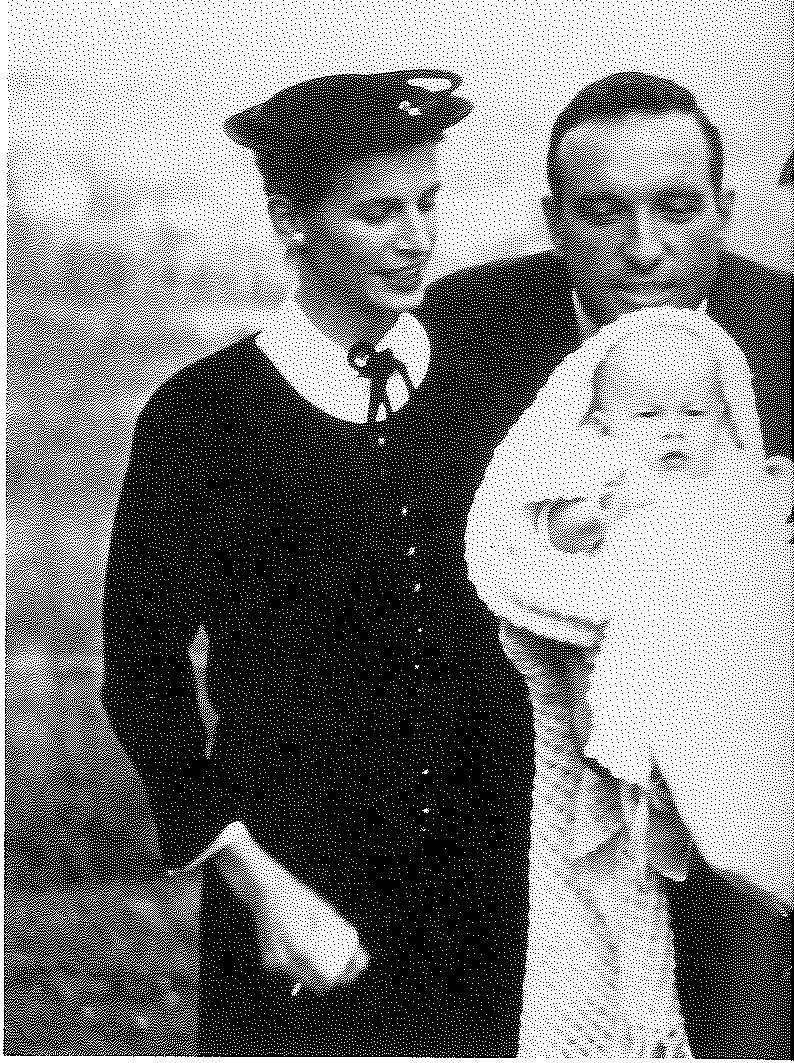
When I reported for duty to the Department in June 1947 I went as directed to a ground floor office, in the same East Block where a month before I had felt intimidated by an oral board, and reported to Terry MacDermot, the Chief of Personnel, the chairman of the board. If he had earlier misgivings about my potential, it was not obvious on this occasion. The warmth of his greeting was as genuine as it was unexpected. After a brief chat he took me up one flight of stairs to another office where I met my first boss, the lateR.G. (Gerry) Riddell, head of the United Nations Division, then the hub of much of the activity in the Department.
Gerry Riddell was an imposing, charismatic man. His fine mind had been honed in teaching at the University of Toronto, but it was his energy, drive, warmth and sensible approach to people that made a remarkable impression. His premature death robbed Ottawa of a splendid talent and the nation lost a great Canadian.
I was to share an office with the late Gordon Cox and Jake Warren outside Riddell’s office where the division’s secretaries were located. Gerry Riddell, who was clearly swamped with work, spent several precious minutes with me to outline my duties. He then suggested Cox and Warren, with a couple of years under their belts, would help me through the first few days.
Later that day I was to meet the Under- Secretary, but under somewhat unusual circumstances. Warren and Cox invited me to join them at lunch. When we finished Jake said, “Now let’s go along to the Mailroom and pick up the bats and balls and gloves.” He then explained that after work, about 6:30 p.m., a softball game was to be played by “Pearson’s Pen Pushers” from the East Block, against “Pierce’s Postmen” from the “New” Post Office Building across the street where other parts of the Department were housed. Jake asked if I knew anything about softball. I told him I had played the game a bit, but hardball, real baseball, was more my game. As a teenager in London, I had played for a Junior team sponsored by the London Winery in the so called “Inter- County League,” in which I played first base and was a left-handed hitter. Jake then said, “You should get along fine with the Under-Secretary, he played semi-pro baseball when he was young.” For the first of many times in years to come I wished my reply had been brief and non-committal.
As we made our way to the local ball park that evening, Jake, who was our team captain (naturally, I was to learn later) told me I would hit fourth, in the clean up spot behind Mr. Pearson, who according to Jake “always got a hit” “. He added a semi-serious follow up, “You better move him around the bases if you expect to go anywhere here!” My first day jitters then really came on. I had neglected to tell Captain Warren that my skill with the Winery team had been my left-handed fielding and glove dexterity and that I was a lousy hitter. Mr. Pearson appeared with his characteristic brisk and athletic gait and said hello to those he knew, and then I was introduced as “the guy who will move you around the bases.”
The first time at bat was a nightmare. Pearson hit a clean single into the outfield. I was shaking as I approached the plate; then some divine inspiration settled me down. I recalled I had learned as a youngster to hug the plate and maneuver the pitcher into a walk to compensate for my poor hitting. It worked! Three times Pearson hit clearly and each time I moved him around with a walk. At least on one score I had not failed too miserably in my first encounter with Mike Pearson. Later baseball would be the subject of brief chats when I served him first while he was a Minister, and then in a closer role during his period as Prime Minister when I had the good luck to serve as his last Secretary of the Cabinet.
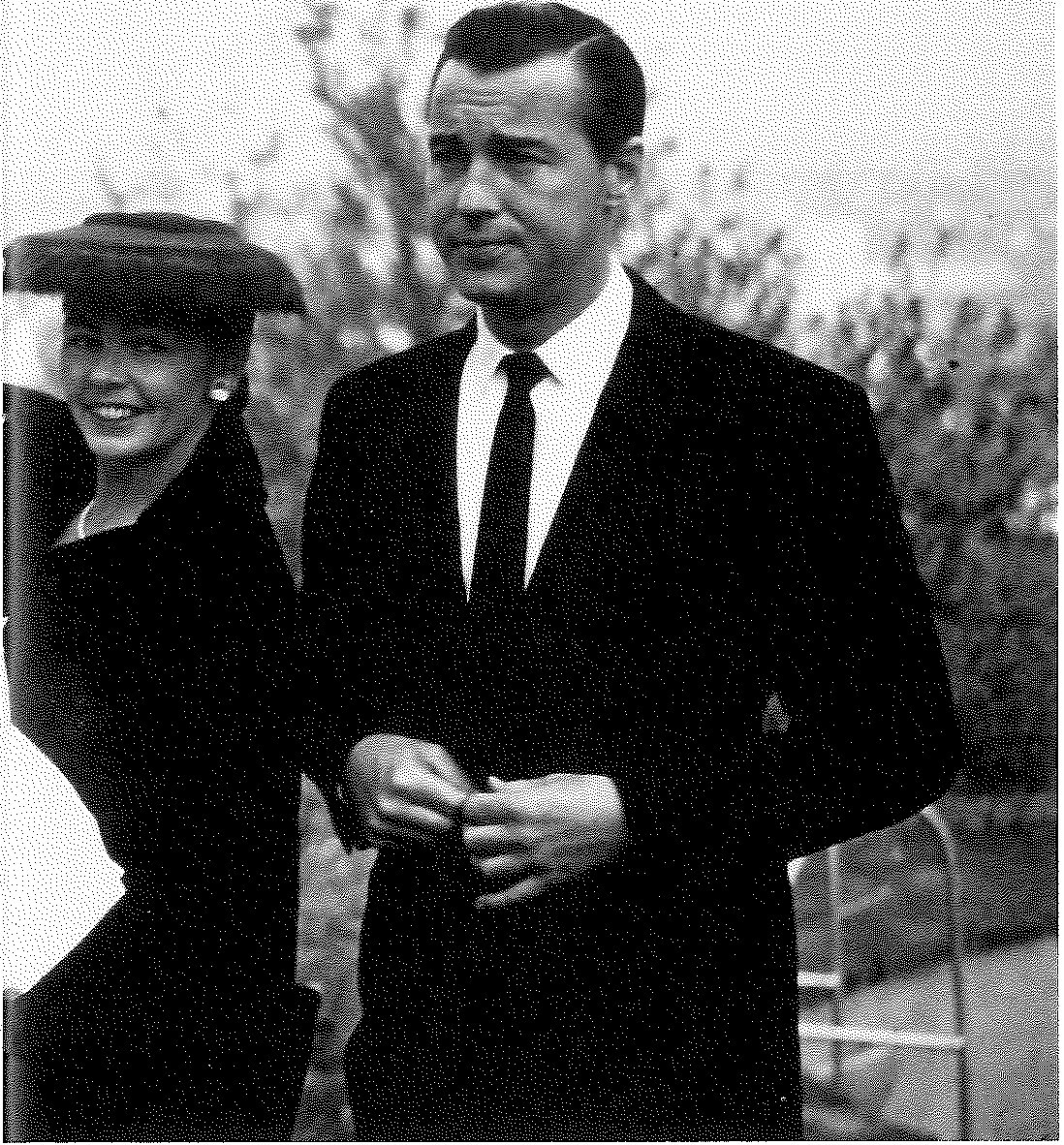
That evening also introduced me to the warmth, wit, and eclectic camaraderie of many of my future colleagues. Catching behind the plate for our team and calling signals in Latin and Greek to the pitcher, was Archie Day, an urbane, entertaining and very literate former professor and soldier. Jake Warren, Gordon Cox, Ken Wardroper, Jim Nutt and other newly arrived young foreign service officers were part of the fun; as was Sydney Pierce, a natural athlete and former Olympic runner, the captain of the “Postmen” and Herb Moran, from my Oral Board, who did just about everything on his team. Jake Warren, early in the game, was to discover that his enthusiasm was not quite matched by his skill or experience, when failing to steal a base, dusty and bruised, he was informed by the wise and amusing Syd Pierce, “Jake when you steal, go into the base feet first not head first.”
After the game’s end many of us, led by Herb Moran, headed off to the old Bytown Inn for a couple of beers. The group included officers, young and old, de and many of the better players who were clerks and messengers. The latter group, also largely veterans, were as friendly and as interesting as one could have hoped to find. Many became friends over the years, as cheerfully and unselfishly they helped young officers go about their jobs.
For most of us the workday began at eight in the morning and ended at seven or eight in the evening. Saturday morning was always a work period, but again most of us worked on that day just as late and long as during the rest of the week. No such thing as “overtime” existed or was ever in the thoughts of Departmental officers. There were other thoughts, however, of what pleasures one might just be missing. t “the apartment” By the time Peter Towe er. Ballen Stoner and arrived in the autumn of 1947, I had found a so-called two bedroom apartment on MacLaren Street. It was, in reality, one downstairs room in an old drafty house, carved up by curtains to meet rent control requirements. There was an almost invisible kitchen with a toilet and shower tucked away in one corner. Entertaining friends of either sex was an embarrassment. The rent was exorbitant. The post-war housing cnsis had allowed owners, in our case a mighty tough landlady whose husband was, in her words, “a very important person in Parliament” (in fact, he was a shorthand note taker in the House of Commons, to exact inordinate rent and servitude from tenants.
Peter and I were both assigned by the autumn of 1947 to the Economic Division, headed by Herb Moran. Peter worked with Bud Drury (a former Brigadier with a distinguished record, both in action and after the war in the special United Nations Relief mission to Poland) on matters related to Canadian involvement in the post-war reconstruction of Europe. I succeeded George Kidd (a Vancouver soldier with a fine combat record who went off to open a mission in Poland) in dealing with post-war international civil aviation. Both our assignments were fascinating and demanding, and we were given our heads by our seniors, particularly Herb Moran who had a great deal to do with our assignment to Economic Division. He rightly felt the Department was undermanned to handle international economic issues. We were green but enjoyed the challenge.
The Economic Division in that autumn of 1947, included in addition to Moran and Drury, Marshall Crowe, Tony Griffin (who left the Department after assignment to the Royal Commission on Prices to become one of Canada’s top businessmen), Norman Berlis, Peter and myself. The only nonveteran was Dorothy Burwash, a talented woman, recruited during the war.
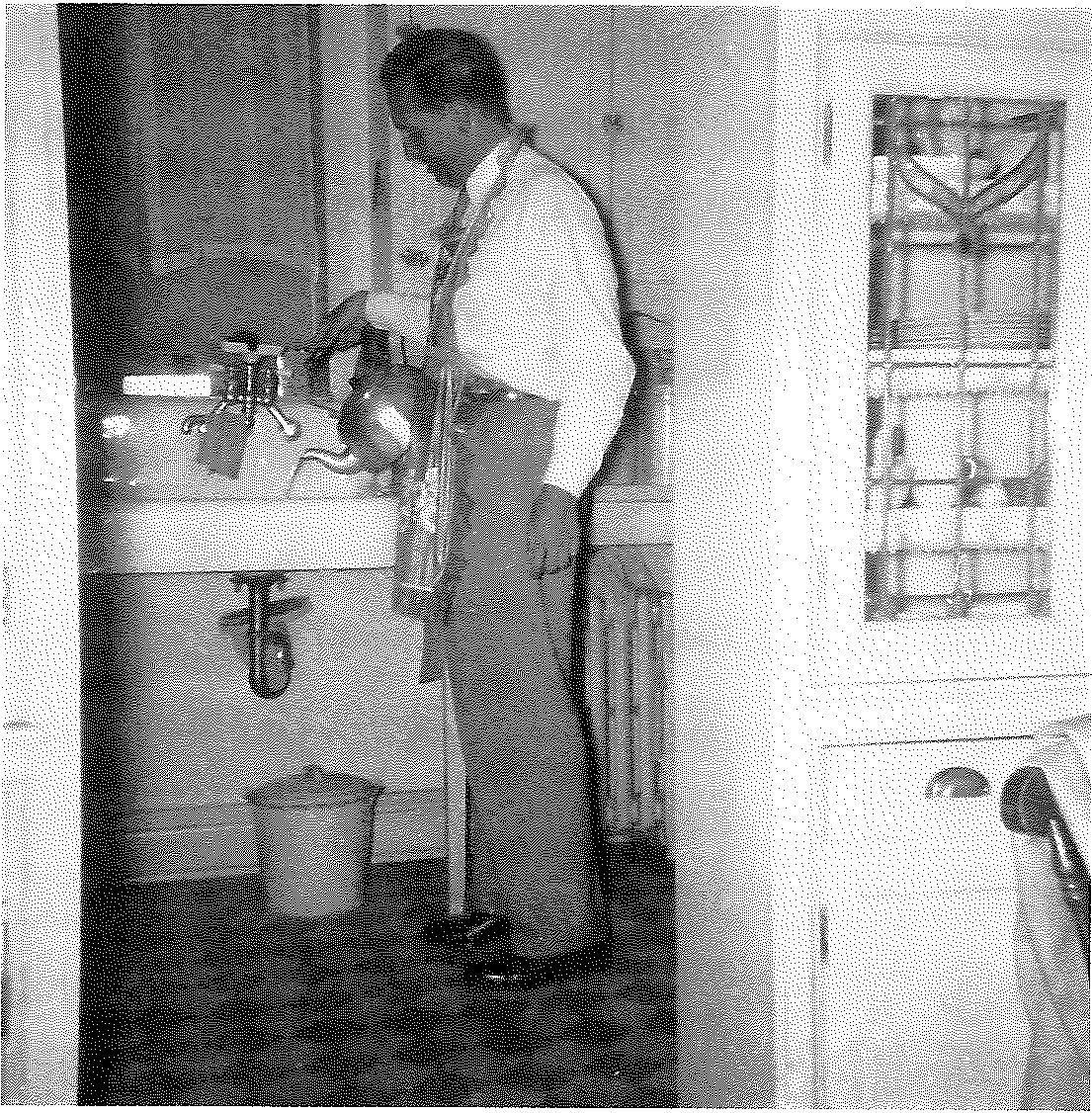
The Economic Division shared a floor in the “New Post Office Building” on the corner of Elgin and Sparks Street with the Consular Division headed by a wonderful character, Leslie Chance, a wounded veteran of World War I with experience in the British Civil Service. Leslie was by habit an early starter, arriving between 7:30 a.m. and 8:00 a.m., about the same time as Peter and I turned up. Our arrival was dictated by the workload as well as Peter’s lifelong habit of rising very early in the morning. In our cramped little shelter on MacLaren when one got up, both did. My right ear was usually up against a wet curtain which separated my bed space from the shower room. Peter’s bed was about a foot and another curtain away from the same facility.
Since Leslie Chance’s officers did not usually turn up until about 8:00 a.m., he frequently dropped in to chat, blessing us with his wit and his wisdom. Peter and I shared a tiny office, overlooking a courtyard where garbage was stored, facing each other across desks laden with untidy papers. This disorderly array once prompted Leslie to comment with a twinkle in his eye, “Gerry, the only person who has a bigger mess on his desk in Ottawa than you is Peter, and the difference is that he puts his size 13 feet in it!”
Life in the Department then was exciting and purposeful. Our work brought us into contact with senior people in Trade and Commerce, Finance, Transport, Reconstruction and Supply and other economic centres of activity, and on occasion the Privy Council Office. We made many personal contacts that were to be invaluable throughout our early careers, but more importantly some became lifelong friends and colleagues. Most began their careers at External, but Finance, Trade and Commerce, and the Bank of Canada were also attracting veterans who were to make their mark and become influential by the 1960s.
In the late 1940s External Affairs was undergoing rabid and much needed surgical restructuring to the happy but disorganized Department that had nonetheless functioned so well in war years.
In our cramped little shelter on MacLaren
In 1947 the Department consisted of nine Divisions reporting to the Under Secretary and his Associate: Diplomatic (really Protocol), Economic, Information, Legal, Consular, two Political Divisions that carved up the globe in terms of responsibilities, the relatively new but busy United Nations Division, and a fledgling Personnel Division. In addition there was a list of other Administrative appendages under a Chief Administrative Officer. Located symbolically close to him sat the Chief Clerk of the Department, Mr. Boyce, in a small office on the second floor to which all incoming communications from abroad were directed. After perusal (a lengthy and rather Victorian process, he directed them to the appropriate Division for action.
His Bob Cratchett role, along with many other anachronisms, changed very rapidly and for the better after 1948, when Herb Moran became assistant Under-Secretary with responsibility for administration under Pearson. Then a year later working in splendid cooperation with the tidy mind and organizational wisdom of Arnold Heeney, Pearson’s successor, the Department became reasonably well administered and structured. This was not easy. Reorganizing a foreign service was likened by Pearson to carrying out an appendectomy on a man carrying a piano upstairs.
I should also pay tribute to that amazing group of women who supported, sometimes even led, External through the war and post-war period. By any standard, let alone today’s, it is hard to imagine that women were not permitted to write the Foreign Service Exams until several years after the end of World War II. Yet throughout the trying times of that conflict the Ottawa Men” were supported by women with great intellects and academic credentials. Only the passage of time brought on Elizabeth MacCallum, Margaret Meagher, Dorothy Burwash and others who had to luck it through the ranks to rise to the top of the Foreign Service as key advisors and ambassadors.
The Department had survived World War Il because the brilliant Ottawa men had been able to leave administration in the able hands of women like Agnes McCloskey, Mary Dench, Marjorie McKenzie, Bessy McGregor and Peg Mellwraith. Carve their names with appreciation along with many others I have missed!
After the war the young veterans were to be given help and understanding by another younger group of women. In Mr. Pearson’s office was the legendary Mary Macdonald, a Red Cross volunteer from World War II, Lois McIntosh (who became my right hand lady later as head of Economic Division), Annette Peron, who might have been the glue in holding together the three volumes of Mike Pearson’s memoirs, two largely written after his death, and Pauline Sabourin who served with distinction and affection a series of Under-Secretaries including Norman Robertson, Marcel Cadieux, Ed Ritchie and Basil Robinson. These are the stuff of Order of Canada awards, but I write in some sadness that this recognition was denied to most of them and many other deserving women, without whom Canada’s public service would never have won accolades for its achievements in the post-war period. They were the real “soldiers” of that period.
Ottawa remained basically as it had been before 1939 — a fairly simple old town, but with a temporary overlay, rather like a genteel old lady who had applied some quick but garish makeup so that she could face the world.
The East Block, housing the Prime Minister with his staff, most of External, and some of Finance was, with the adjacent Parliament Buildings, the hub of the process of governance. A short walk would take one to almost every other Government department in less than 15 minutes.
Farther west, on Wellington Street, was the old Rideau Club and the relatively new American Embassy. On the other side of the street beyond Parliament were the Confederation Building, housing Finance (with Treasury Board as a small wing) as well as some other Department, and the Justice Building, where other civil servants in addition to the lawyers’ enclave were also located. Continuing west one came upon the dignified Supreme Court building before passing into a shanty town of huge wooden temporary buildings housing much of the operational side of the Government – Transport, Trade and Commerce, Reconstruction and Supply, Veterans Affairs, Health Services, etc.
Another complex of “temporary” wooden structures several blocks down Elgin Street housed National Defence. Even more were to be found along Sussex Drive, a few hundred yards north of Rideau Street. the more memorable of these provided low cost housing for single female government employees.
Today the ground where these grand old wooden buildings stood is covered by a park and a grandiose museum and gallery, for which the architect’s fees alone greatly exceed the total cost of the “temporaries” that housed, and in some cases aged in wood, half of Ottawa’s civil servants. If the Parliamentary stones were gothic, and the Langevin Block “baroque” “, the wooden buildings were “barrack”.
Perhaps that period in Ottawa was not “La Belle Epoque” but, nostalgia apart, those were the good days, especially when compared with what people were facing after World War Il in most other countries and capitals.
View the original scanned pages →
Originally published in bout de papier, Vol. 15, No. 1 (1998) — Spring 1998 // Printemps 1998, pp. 14–17. Read the rest of this issue →



