
bout de papier, Vol. 14, No. 4 (1997) — Winter 1997 // Hiver 1997, pp. 18–20
“Chargé departed on leave this morning. I have assumed charge. P.S.: burning barricades across the airport road and demonstrations throughout the day. Help!” And so it all began, six weeks into Kinshasa…. Fortunately rain stopped play — as it often did — and all but a handful of soggy demonstrators went home to contemplate their achievement. This would not depose the government, nor thankfully would it lead to wide-scale arrest. It was December 1992, we could look forward to a tense, but nonetheless quiet Christmas.
“I have a meeting immediately after the EU Ambassadors lunch so I will be back just after four thirty.” Always a daunting affair these lunches with Ambassadors well senior in rank to me. But there was a lot to learn from their experience. Over lunch they patiently brought me up to date on the worsening political situation. It was 23 January 1993. I was looking forward to a murder mystery party that evening.
I was first to leave lunch, already late for my next appointment, and keen to get on. But I was called back to the Embassy, immediately, quicker if possible. Harriet and Hema, my two colleagues equally new in town, (let’s hear it for the all girl team here) were in their offices on the mobile phone and radio, taking notes. “Thank you very much”,, Harriet hung up, looked at me and announced that the five flash points had blown, the military was on the rampage and approaching fast along the main boulevard, members of our British and Commonwealth community had started to call, some offering information, some asking for advice, some screaming “get me out of here”. She was so calm. It started ten of the most exhausting, exciting, stimulating, sometimes fraught and definitely dietary challenged days of my posting. Ever tried to extract one extra cornflake out of a security guy charged with keeping you fed for an indefinite period? The arrival of a curfew busting, (and let’s say it, Canadian) baker friend with hot croissants and fresh bread halfway through the week received a welcome fit for a king … until the ration man got hold of the bread! The riot subsided, as they do, confusion followed, as it does, and I left Kinshasa on an old, banana yellow Dakota (at any moment expecting Humphrey Bogart to appear) to hand back responsibility to the permanent Chargé as we passed through Brazzaville airport. It was good to see her. I went on short leave. Follow that … or so I thought.
Sometime into my posting in Kinshasa, I commented to friends that everything was extreme: extreme good or extreme bad, little in between. I felt as though I had woken up to take my part in a soap opera, never quite knowing what the call would bring, any more what c normal. Even b January 1993 riots. week after arriving I had been desp Brazzaville to hel the evacuation of als from Angola. Il to be a dry run i alternative was fou until I had managr tiate landing rights refuelling of a Tr much fuel does it all thanks I add t from Sabena w heavens, took pity, straight out of Lr knew ’just the m: also offered the only air-condition: the airport.)

In the Spring of I thing settled into of routine. As o smallest Missions i were kept busy, ’ Every business n function, be it poli rity, consular, ear administration, we speaking and e Britain, moving s from one function I national days, arrival dos, leaving dos, dos for official visitors. (I still have the extra kilos to show for it.) Meetings, visas, visa fraud — and tricks I could never dream of (how quickly you learn!), staff, training, budgets, politics, the ever ailing economy … what a job! What a buzz! Never a moment to myself — or so it seemed and yet, providing I could have my much needed breather visits to less stressful climes, somehow it was addictive.
Brazzaville had its moments too. It is amazing, not to say alarming, how easily one can fall asleep to the sound of small arms fire and the occasional rocket, only really registering it when it is too close and warrants a night on the floor behind the bed. Just two miles across the river all hell was breaking loose. Trying to keep abreast of developments was not easy, watching tracer fire across the night sky was unreal. It continued during the summer months.
With things calming down a little in Zaire, up country trips became possible again: up country, down country, cross country. And what a beautiful country Zaire is — everything the word Africa conjures up in the imagination of romantics and latter day Livingstones alike, and more. Green and lush, unspoilt, small village communities with welcoming hospitality, amazing voices emanating from mission stations and small chapels, the miracle of hearing and seeing how twins, born very prematurely at a mission hospital in the middle of nowhere with little more than their mother’s love and the dedication and faith of the missionary doctors to help them, had doubled their birth weight and were going to make it. Overnight stops on coffee plantations, untouched (or so it seemed) by modern living. This was what I wanted, out there was where I wanted to be. It was tiring on the road, but worth every minute. It was all too easy to forget the very real security threat and the hardship of everyday Zaireans.
I started too to do some voluntary work with a local orphanage. My local church in England adopted it for their charity and helped raise funds. Friends and I could always be guaranteed a wonderful and exhausting day out when we visited. Cheeky faces and that well known children’s anthem “what have you brought us”. We even managed to persuade some of the little ones not to be frightened of the doctor because he had special magic potions — vitamin syrup and cough linctus! At the request of the young doctor there, we helped to introduce family health education and AIDS awareness to the older children and some young, single mothers who were barely more than children themselves. Already the risk was high for them.
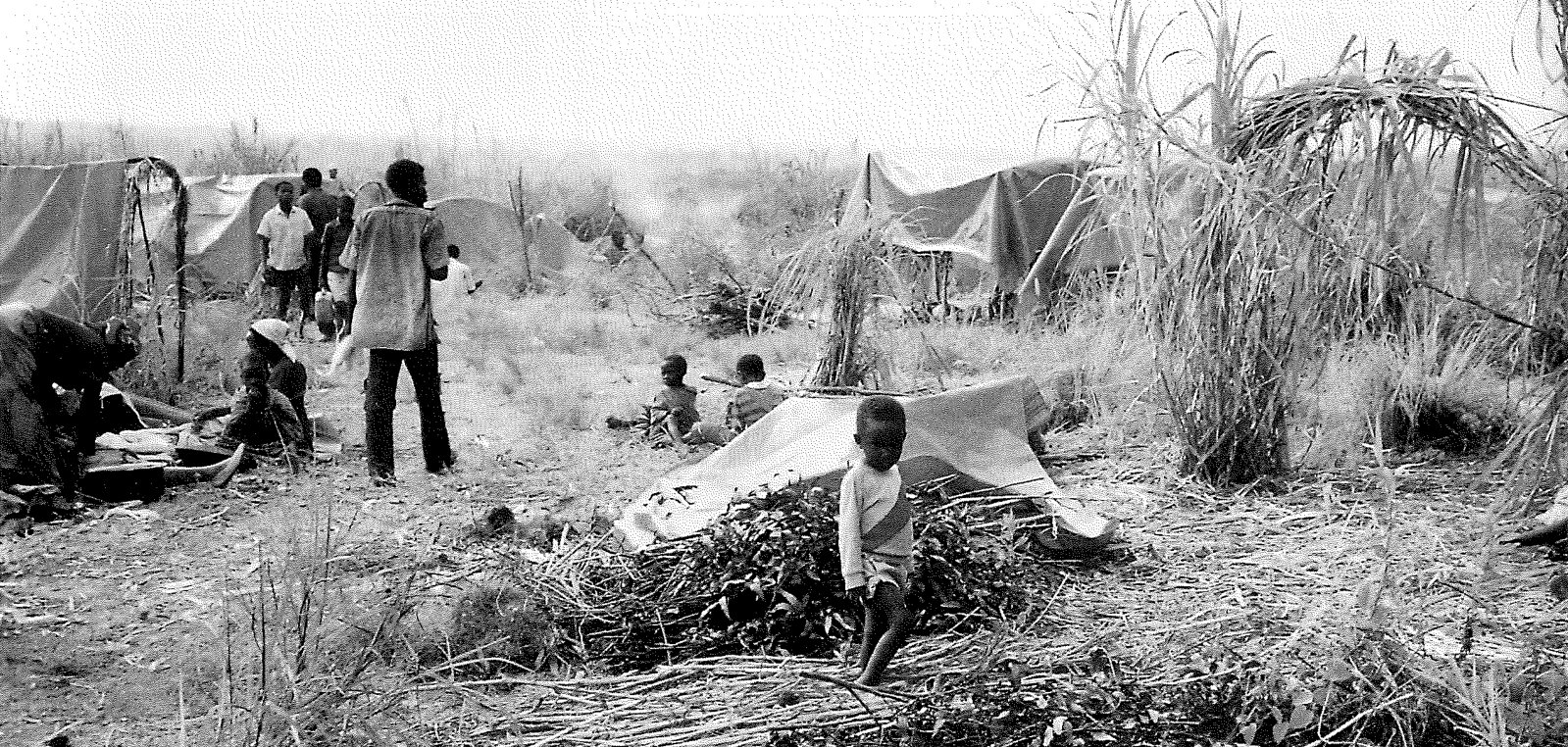
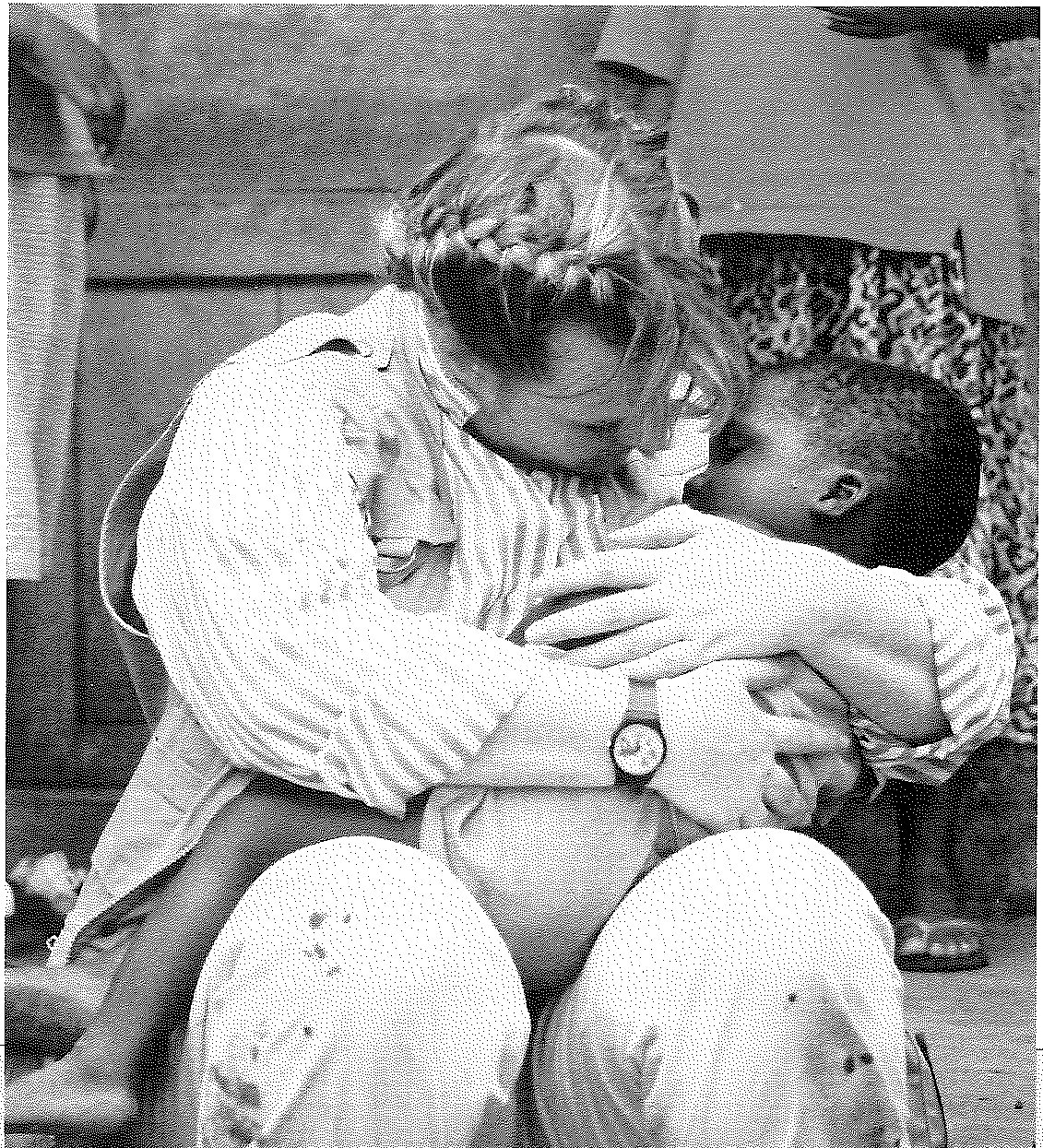
The next Christmas was quiet, New Year 1994 the cause of much celebration with friends. And then the focus shifted rudely. My dearest friend shot in the street somewhere else in Africa and fighting for life. The other side of Africa. The dark side. The things which happen to other people, in other places — things which are not supposed to touch the lives of those you love, or your own life. It was a dark day … which turned into dark months … and I was stuck in Zaire, helpless and ever more aware of the guns: every sound of every bullet seemed to register as I waited for news. It took forever to come. I grew more restless, not sure I even wanted to be there anymore. The friend survived. But he had been in Africa for the last time: he would not watch that magnificent sunset on the river again. By this time it was difficult to imagine what else could happen. It didn’t take long. Soon I was en route to Goma to see two million refugees arriving from Rwanda. What do two million refugees look like? It felt as though the world had come to that small town, all the world, all the possessions the world could carry, and, on the evening Gisenyi fell to opposition forces four kilometres away, it felt that every government soldier, gun and grenade in the world had come to town. I felt a sense of complete helplessness for those around me. And I was scared. Yes, really scared – for the first time since my arrival in Zaire. Shots were being fired everywhere: in the air, over people’s heads, at crowds of people. There was nowhere to run to — every inch of space was taken, several times over. Thick, black smoke hung in the air. “Oh God if one of those bullets has to hit me please make sure the wound does not preclude the use of morphine…” I was sad too. On one visit, in the very short time I was there, a small baby in one of the makeshift orphanages died in my arms because I could not get fluids into him fast enough. He didn’t have to die. For the sake of salt and water he didn’t have to die. The MSF doctor there told me that we had to accept that we couldn’t do everything for everyone, she wished we could. At least he died with some human comfort, some arms around him, and had escaped to a better place…. But he was so tiny. And yet no tears came. They couldn’t could they, that would help no one. Until I was home that is. I still see those images, and that baby’s tiny face.
Time moves fast in Africa. In the last months I again took over the driving seat — but it surely would all be plain sailing so near my departure? I had not counted on Ebola. No one had counted on Ebola, and to the last moment it kept me busy — I left post via South Africa on the same plane as some of’ the scientists from Wits University in Johannesburg and some of the journalists. Questions, questions. Not until I disappeared into the car park on the arm of a friend at Jan Smuts airport was I really free….
And one year on? I miss it. It was tough, I was tough. I was tired, I was ready to change, and yet would I have missed it? No. Not for one moment. A year on I realise it changed me, opened my eyes, made me appreciate what really matters. How quickly the difficult bits, the danger and all the frustrations are removed from memory — and there were plenty of those, as friends still there remind me. But I remind them of the good days. A community so close, that although sometimes claustrophobic, we all looked out for each other. The power of its support was clear. Without it I’d have been sunk. And hopefully somewhere along the way I played my part to help someone else too. It was the sort of place where someone was always there with the right dose of common sense, or kindness or whatever else was the order of the day. Just like the guy with the croissants in the middle of a riot.
One year on, I’m still searching for a real definition of normal.
View the original scanned pages →
Originally published in bout de papier, Vol. 14, No. 4 (1997) — Winter 1997 // Hiver 1997, pp. 18–20. Read the rest of this issue →



