
bout de papier, Vol. 14, No. 4 (1997) — Winter 1997 // Hiver 1997, pp. 14–16
In the fall of 1996, a humanitarian crisis loomed in the Great Lakes region of Central Africa. Fighting in eastern Zaire between rebel troops led by Laurent Kabila and troops of the government of Zaire drove refugees, mostly Hutus from Rwanda, from camps in eastern Zaire and cut off their access to food and medical supplies. The fighting threatened to bring in neighbouring countries and set off a regional war. In October then Secretary-General of the United Nations Boutros Boutros-Ghali appointed Raymond Chrétien, Canada’s Ambassador to the United States, his Special Envoy to the region. Ambassador Chrétien was familiar with the region from his tenure as Ambassador to Zaire with accreditation to Rwanda, Burundi and the Congo Republic from 1978 to 1981.
Between November 5 and December 5, Ambassador Chrétien and his team of five (Georges Rioux, press counsellor at the Washington Embassy, and three UN aides) logged 55,000 kilometres on their Challenger jet, shuttling between Nice, France, where Zairian President Mobutu was recuperating from cancer treatment, and 12 African capitals to confer with the leaders of the neighbouring countries. As the Ambassador relates, they did not always receive the warmest of welcomes. On November 8, upon the Ambassador’s recommendation, the UN Security Council authorized the formation of a multinational force to facilitate the repatriation of the refugees, and several days later Prime Minister Chrétien proposed that Canada lead it. Before the force could be organized, thousands of refugees had returned to Rwanda on their own, the humanitarian crisis was averted and the multinational force was disbanded. Laurent Kabila’s forces were ultimately victorious in overthrowing Mobutu’s government and he is now President of the Democratic Republic of Congo, formerly Zaire. (Rwanda’s Minister of Defence Paul Kagamé admitted to The Washington Post in early July ’97 that he had orchestrated the move of refugees back to Rwanda in order to thwart the establishment of the multinational force.)
Below, in excerpts from his speech to the PAESO Professional Committee Breakfast Seminar on December 17, 1996, Ambassador Chrétien describes his short but very intense mission to Africa, what he calls “one hell of a trip.
On the last day of October I received a call from Lloyd Axworthy, asking if I would be prepared to let my name go to the UN into a kind of hat held by Mr. Boutros-Ghali. I hesitated initially because I was already sufficiently occupied in Washington and did not think it would be fair to tackle such a mission in barely a month. Our Minister convinced me to take this assignment by saying that he thought it was “too perfect to pass up” since I knew the region and some of the leaders. In the end I allowed my name to go to the UN expecting never to hear about it again. The next morning I got a call from the Secretary General telling me that I was the lucky candidate.
Essentially he wanted me to do two things: First, to create the conditions on the ground for a ceasefire that would hold for more than a few weeks so that the refugees from eastern Zaire could go back voluntarily to their countries of origin, mostly Rwanda but also Burundi. Secondly,
14 bout de papier Vol.
I was to determine if some kind of political dialogue could be launched to tackle the longer-term issues facing the Great Lakes region
To be candid, when I left je n’avais pas la moindre ideé de la galère dans laquelle je m’embarquais. I did not have a clue that the UN Security Council would pass a resolution on the 15th of November establishing a multinational neutral force to help with the return of the refugees; or that Canada might be prepared to play a role in overcoming the paralysis that seemed then to block developments in New York, or that refugees, from Tanzania as well as from eastern Zaire, would start walking home within a month
Soon after I met with President Mobutu in Nice, I realized that perhaps something could be done — for the very simple reason that, for a period of about two weeks, the eyes of the world were focussed on Central Africa. I knew that it is usually at the beginning of a crisis, when the pressure begins, that governments are forced to act. And that is exactly what happened.
In my first round of consultations between Kigali, Rwanda, and Kinshasa, Zaire, I tried to tell the leaders of both countries that we meant business, that I did not intend to run around African capitals for the purpose of writing a report that nobody would read. It took about a week before they began to take us seriously. My meeting with President Mobutu helped a lot in this regard. He had not been seen publicly for the previous three months, and there were all sorts of rumours in Zaire about the state of his health. The pictures taken during my first meeting with Mr. Mobutu had an immediate calming effect in Zaire. Whatever we may think of Mobutu, and he is a controversial man to say the least, even his fondest adversaries give him credit for establishing the unity of his country and the integrity of Zaire.
He took the high road from the start, indicating that he would not prevent the return of the refugees. Actually he wanted all the retugees out of his country, the sooner the better.
From the beginning, my main problem was not with the Zairians. I still knew most of the officials there, including Prime Minister Kengo, from the period when I represented Canada in the late 1970s. Rwanda was the problem. Major changes had occurred since I had presented my credentials in 1978 to President Habyarimana, a French-speaking Hutu. Now, I faced a different kind of leadership, English-speaking and almost entirely Tutsi. First of all, in Rwanda especially but also in Burundi and in Zaire, the UN is not popular — to a large extent, it is blamed for the massacres in Rwanda. I quickly realized that I had to put away my UN hat and say, “I am representing the UN but don’t forget, I was here 20 years ago and I’m also very much a Canadian.” There was reluctance even to talk with me, and a great deal of skepticism in dealing with yet another UN representative as there was a proliferation of them in Africa. But after a couple of sessions, I think both President Beseeming and Vice President Kagamé of Rwanda realized I meant business, that when I told them a resolution would be adopted by the Security Council it had a good chance of happening.
Originally they had welcomed the resolution and the arrival of the multinational force and were saying all the right things until they realized that it was going to happen. And then a major about-face occurred in a matter of days. When they realized that they could not stop the force, they immediately acted to weaken dramatically the logic behind it.
When the Rwandan leadership realized that a multinational force could come into eastern Zaire, a possibility they did not consider to be in their interests, they immediately activated the rebels, whom they controlled to a great extent. They encouraged them; helped them organize; provoked a battle with the ex-FAR (the former Rwandan army), which they won easily, allowing the ex-FAR to go deeper into Zaire and thereby freeing the refugees to come back to Rwanda, which they encouraged. This all happened quickly — the refugees started walking back to Rwanda some four or five hours prior to the approval of the resolution.
This was a rare and interesting case for the UN — just the threat of the deployment of a multinational force had the desired effect.
The return of hundreds of thousands of refugees took care of the first part of my mandate. I also met with the President of Tanzania as I knew there were 700,000 refugees on his territory, about 520,000 from Rwanda, 100,000 from Burundi and another 100,000 from Zaire. He told me that he could make those refugees walk the same day but would wait until he had the green light from the leadership in Kigali, to make sure that the departure happened in an organized, systematic and safe way. Et c’est ce qui est arrivé, ces réfugiés ont commencés à rentrer vers le Rwanda. À la fin de décembre, plus d’un million de réfugiés sur un million deux cents milles ont réintégré leur pays. This was good news and bad news for Rwanda, good news because this is what they wanted from the beginning, bad news because this was a massive inflow of people into a tiny country already under a great deal of stress. They will need the help of the international community to reestablish these refugees in their villages of origin, to feed them, to organize the next crops, to socially reintegrate them into a country they left two years ago. They are facing enormous problems. On the other hand, the return of those refugees should be the beginning of an effort to tackle their longer-term issues, one of which of course, is reconciliation between the Hutus and the Tutsis.
For the second part of my mandate, I explored a number of avenues. I tried to organize a direct meeting between the Rwandans and the Zairians under the auspices of President Museveni of Uganda on the margins of the FAO summit in Rome, which ultimately didn’t work out. I talked and met with President Mandela to see if he would be prepared to take a role. He is a highly respected figure in Africa, and I think that in the future, we will see South Africa and President Mandela playing a larger role in the affairs of their continent. That is a positive development.
One of the messages I received along the way is that African leaders want to deal with their own affairs. They have the Organization of African Unity run by Secretary General Salim-Salim. None of the leaders felt an international conference was possible any time in the near future.
The third recommendation I made to Mr. Boutros-Ghali was to use the momentum created by our mission by appointing a permanent Special Envoy, a facilitator, backed up by strong administrative support. The UN is very good when it comes to diplomatic and political skills but much weaker when it comes to support
– getting 10 meetings organized and getting you from point A to point B. Without the support of our embassies in Africa, I simply would not have been able to complete this mission. What lessons can we learn from this mission? I think UN officials in New York have realized that, faced with shrinking resources, it is not a hodidata santanat art countries that have the means to do the job and can support the initiative. This mission is clearly a good example. This is an avenue that they might explore a bit further in the future, one that would provide extraordinary benefits to an institution which is suffering considerable financial problems.
One lesson I learned is that the UN carries a lot of baggage. On the other hand, it is also an extraordinary entrée to the world. I had not realized before I went to Africa that wearing a neutral hat makes you more acceptable than representing country X, Y or Z.
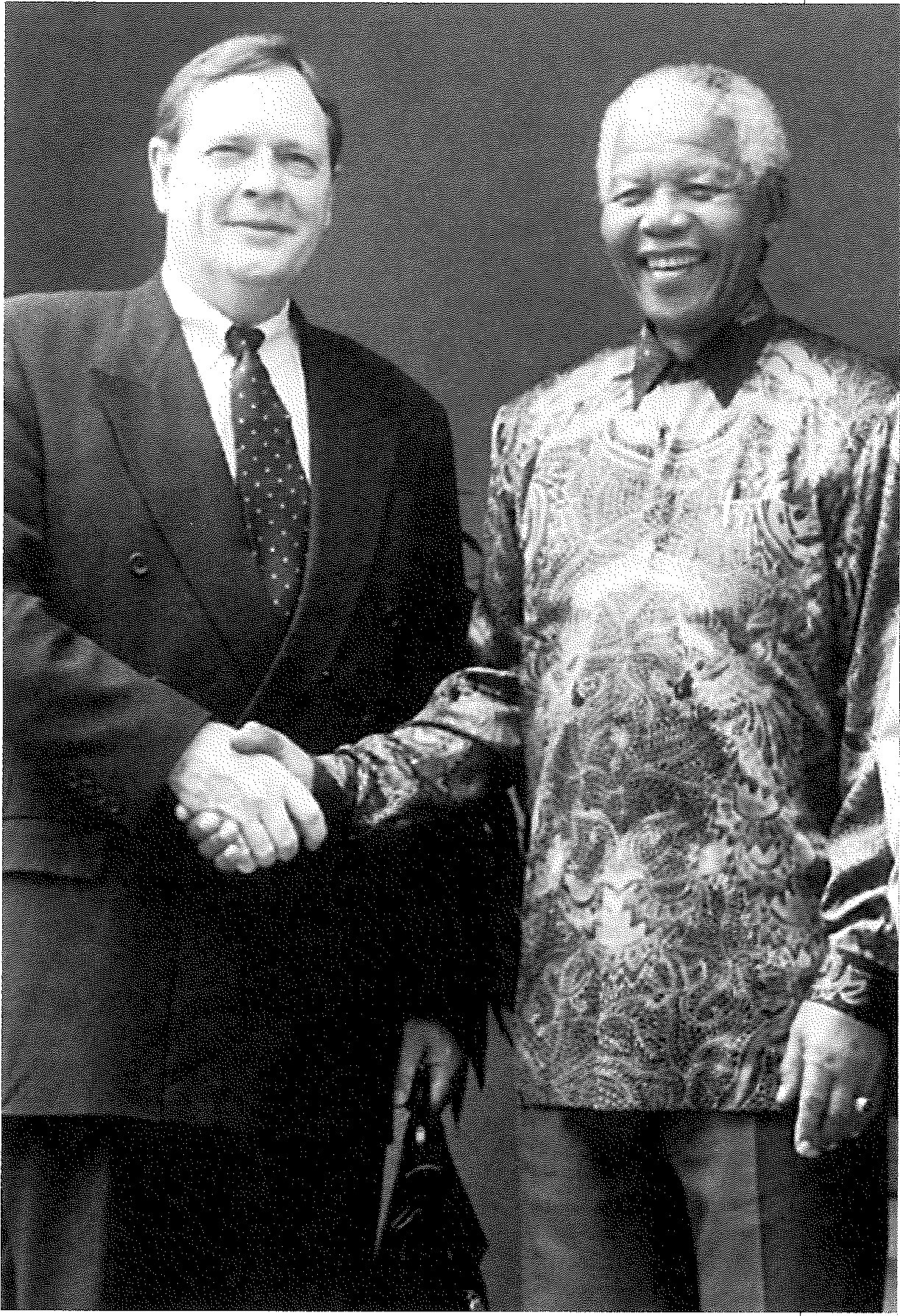
A lesson for Canada specifically is that when there is a right fit, we should not hesitate to take a leadership role. I think in this case the fit was quite good. Canada is a G-7 country, respected throughout Africa. We have a history of activism on the world stage and we have very good people in = various spheres of activities.
Canada’s action in breaking the stalemate was not foreseen or planned. It came about very simply. One day, in Kinshasa, I received a phone call from our Prime Minister, who said, “Qu’est-ce qui se passe en Afrique? J’étais supposé aller jouer au golf aujourd’hui mais il pleut a Ottawa. Je suis en train de voir ces images a la television et j’aimerais avoir ton sentiment. Qu’est ce que tu en penses?”
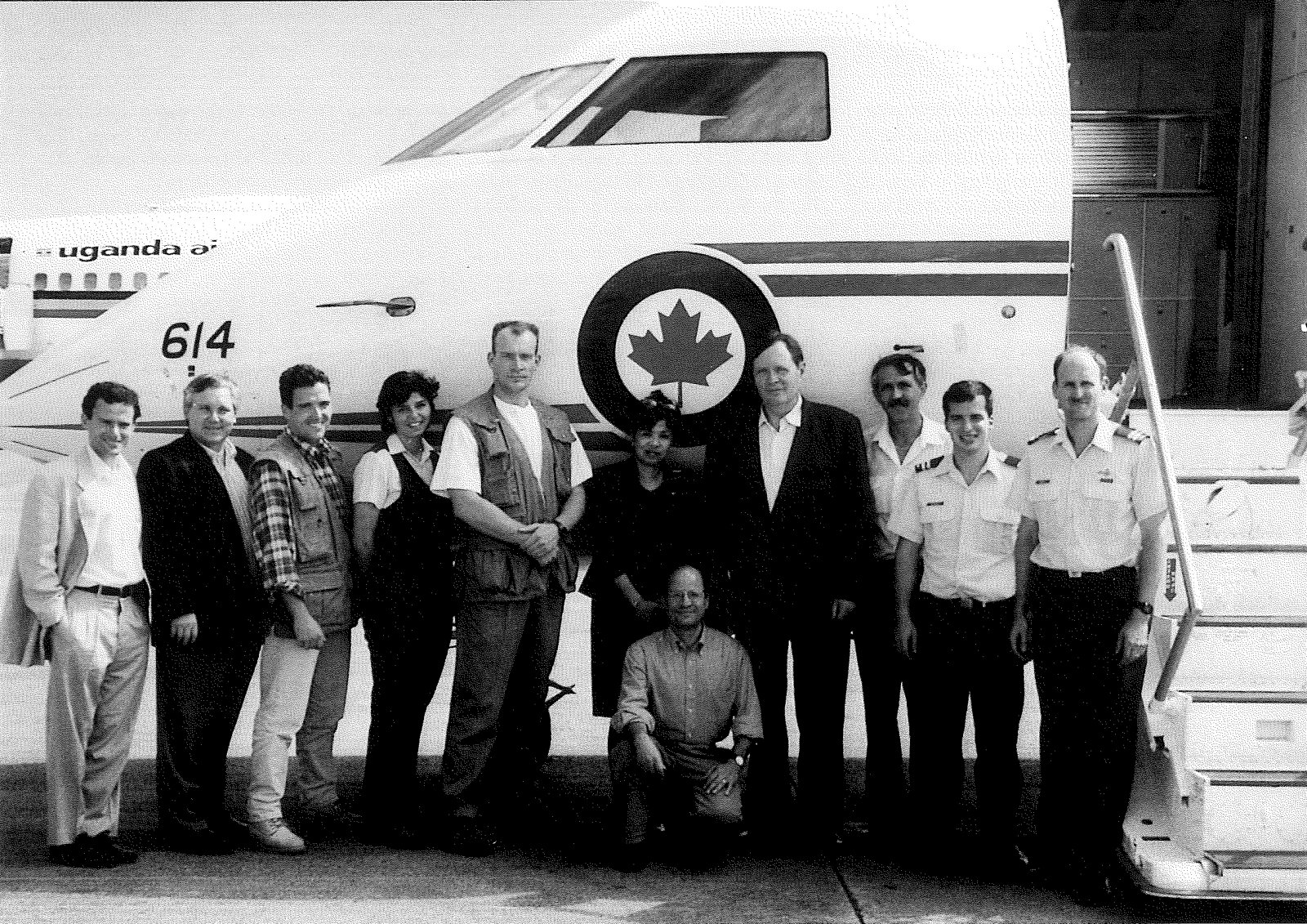
Then he asked me, “Do you think that Canada could play a role?” I said, “That is another story. I am not prepared to jump to that conclusion right now but let me think about it and we can talk in 24 hours.” Then Georges and I, with a few others, prepared a list of the advantages, inconveniences and dangers — pros and cons. The following day, through a bad satellite line in Entebbe, I connected with him and said: “These are the advantages. We have had huge assistance programs in Zaire, Rwanda, and Burundi. We’re known and respected there. We are bilingual. Canada is at the heart of the Francophonie, the Commonwealth.” It looked to me like it was natural for us. In the end, Cabinet decided it was a good fit, and it was recognized as such throughout Africa, and the world. We were perceived to have broken the impasse at the UN. It was risky, but we were lucky – the refugees came back. Many countries were surprised that Canada was prepared to act, and I think this will prove to have been a positive experience for Canada. Even in Washington, the Americans were pleased to see us unblocking the situation in New York.
For Georges and me, it was a hell of a trip — very intense, fast-moving, difficult, even painful. We were not received very warmly for the first week or so. In fact, it took about a week before I was offered my first glass of water. It was difficult to engage the various leaders, especially those of the three key countries, on issues of life and death. But it was profoundly satisfying.
Question and Answer:
Q: Should the rebels have a role in governing Zaire and did they form part of your mandate?
AMB: Those rebels are the Banyamulenge plus other groups that have joined them. Their leader, Laurent Kabila, is not a Banyamulenge, but he is from the same part of Zaire. This is both an internal issue for Zaire and a problem between Zaire and Rwanda. It is an internal matter for Zaire in the sense that the 30,000 or so Banyamulenge — nobody knows for sure how many there are — are Zaireans, although the Mobutu government has taken away their citizenship.
As part of my briefing, I asked to meet the top expert in the world on the Banyamulenge and he happened to be working for the CIA. He came to my office but he didn’t have any answers to my questions.
They are also now part of the tension between Zaire and Rwanda, because they are Tutsis — Protestant, not Catholic. They are being helped, financed, used by the leadership in Rwanda for their own purposes. Action vis-à-vis the rebels has to be taken on two levels. Mobutu has to deal with them from Kinshasa, but the Zaireans also have to convince the Rwandans not to use them as surrogates. This was one of the toughest issues I had to deal with in Rwanda. I would praise the leadership there and say, “You are good friends with the rebels.” And they would look at me with blank faces and reply, “We have nothing to do with them.” That is, until I told them, “I don’t believe you and nobody in the world believes you. Let’s discuss from that perspective.” It was a very touchy issue.
[Ed. note: space limitations prevented publishing all Os and As.J
View the original scanned pages →
Originally published in bout de papier, Vol. 14, No. 4 (1997) — Winter 1997 // Hiver 1997, pp. 14–16. Read the rest of this issue →



