
bout de papier, Vol. 14, No. 4 (1997) — Winter 1997 // Hiver 1997, pp. 6–8
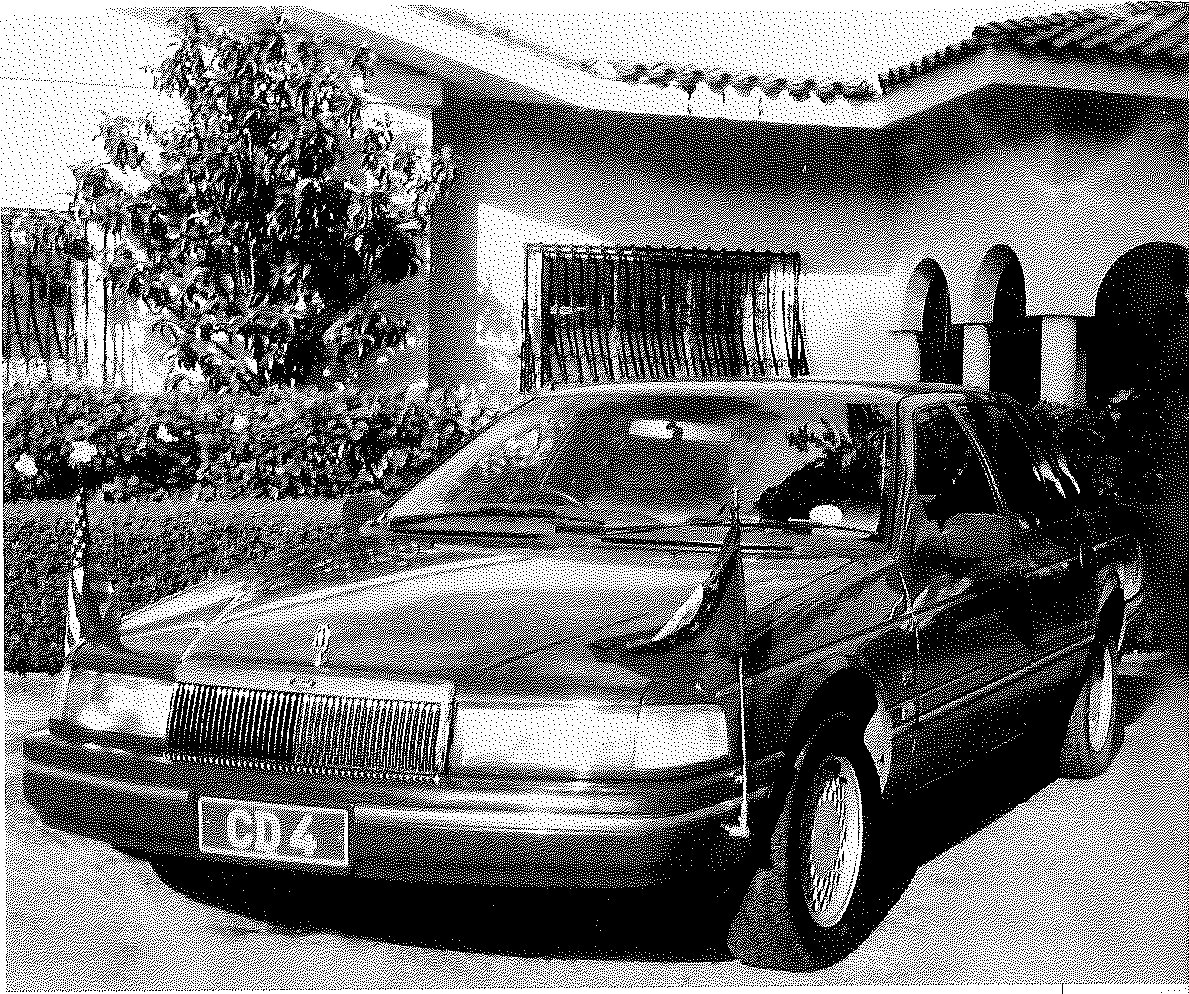
I suppose I have been an unrepentant “car buff” for just about as long as I can remember and John Hadwen’s article on The Head of Mission’s Most Valued Friend immediately prompted some treasured memories, not of Ambassadorial drivers, but rather of Ambassadorial motor cars.
One will never forget Charles Ritchie’s diaries, which are a must for anyone who has ever served in the Department, in which he confesses not only his attachment to Elizabeth Bowen but also his passion for films and how, every now and then, he would slip away in secret in the afternoon from his office in Canada House in London to take in a favourite film. Well, I must confess that in a lifetime of visits abroad, postings overseas and attending international conferences, I, on occasion, found an opportunity to absent myself from a not altogether important meeting, to take in the Paris Auto Exhibition or perhaps Earlscourt in London or the New York Car Show while engaged in work at the United Nations. One such auto-show I remember particularly well featured the unveiling of the Citroen DS Dix-Neuf at the exhibition hall, off the Champs-Elysées. The French, of course, have little doubt that they invented the automobile and they saw the launching of the DS 19 not only as an important step forward in automotive technology but a major cultural event as well. And, who among us, will ever forget, forever after, the image of a French Ambassador being chauffeured to a reception at six-thirty in the evening in his black Citroen with the Tricolour proudly displayed for everyone to admire!
In spite of John Hadwen’s observations in the penultimate paragraph of his article, it was not all that unusual in Montreal, in a more elegant era, to see a gentleman being chauffeured off to his office at nine in the morning or for a lady to be accompanied by her driver carrying parcels to her car on Sherbrooke Street after shopping at Holt Renfrew. I have distant memories, perhaps my first memories of the motorcar, of my father’s “McLaughlin Buick”, which was manoeuvred through the streets of Montreal by his driver, who had the romantic but unlikely name of Romeo who kept the family car in absolutely immaculate condition at all times. From childhood, and possibly from chats with our chauffeur Romeo, I learned to love all cars and couldn’t wait to get behind a steering wheel.
As a matter of fact, 1 CHA started stealing cars rather earlier than most. I remember a particular car of my father’s, a An official automobil “Chrysler Imperial”, and when I was about thirteen or fourteen years old, unknown to my father, I would slip behind the wheel while he was at dinner and coast down the hills of Westmount and usually bring the car to a halt in front of the house where my twelve-year-old cousin, Bobby, lived, and he must have been impressed no end. What our neighbours on Forden and Forden Crescent thought of this tiny lad behind the wheel of this enormous vehicle, we will never know!
This story then is about another “Chrysler Imperial”., which entered my life some twenty-five years later while I was Head of Mission in Ghana and concurrently accredited as Ambassador to Lomé in logo and to Cotonou in what is now called Benin. I first visited Ghana in the early sixties, went there often and became attached to the rather unique automobile which transported the Canadian Head of Mission about his daily tasks in that humid, but nonetheless fun-loving, West African capital known as Accra.
Curiously enough, the HOM vehicle was a Sheerline Austin limousine, a most elegant motorcar. I can remember speculating as to how on earth such a vehicle got there in the first place! I discovered later that the Canadian government had bought two such cars for an earlier Royal Visit to Canada and, at the conclusion of the visit, one was assigned to Prime Minister St. Laurent’s office and the other to our recently opened post in Ghana. In spite of frequent breakdowns, and I can personally remember one such breakdown, on the road to the Akosombo Power Station, I greatly envied our mission for owning such a magnificent automobile and I am sure I thought then that, if ever I should rise to the exalted height of High Commissioner, I hoped I would myself have such an automobile to take me about my official duties.
Not that many years later, I found myself in just that post, as Head of Mission in Ghana. Unfortunately, it was not that elegant a car that greeted me on arrival at Accra Airport but rather a more workmanlike vehicle from Oshawa, Ontario. Nonetheless, the Protocol Division of the Ghanian Ministry of Foreign Affairs, which did everything in great style, made up for all of that in a few days time when they sent a magnificent but rather ancient Rolls Royce, together with at least, two, if not four, motorcycle out-riders as an escort, to take me to the Lodge, to present credentials to the Head of State. One never forgets the details of one’s first presentation of credentials, and strongest in my memory was the incredible speed of that aged Rolls Royce as we raced up the hills along the coast to the Residence, sirens blaring, determined to be on time for a very colourful ceremony which included an inspection of a Guard of Honour and champagne and cucumber sandwiches with the President. I remember vividly doing my level best not to spill anything on my new light-weight morning coat, which of all things, was provided for in those days, from a “special allowance for tropical clothing”.
Not long after my arrival, the Canadian Government did assign to Accra a new Mercedes Benz, one of the first Mercedes provided to a Canadian diplomatic post abroad. It was indeed a fine car, but like all cars, it had to be sent off to the garage, from time to time, for servicing. While it came back looking good as new, quite often we found out later, that on return some of the moving parts were not necessarily the same as when it left, as a carburetor or distributor might well be replaced during servicing by one somewhat older and not necessarily from a Mercedes. So it too suffered from occasional breakdowns and one such breakdown had all the potential for a diplomatic disaster, particularly for the new and very young Head of Mission.
The occasion was an impending official state visit by the Honourable Lucien Lamoureux, a charming gentleman, who was at that time the Speaker of the House of Commons in Ottawa and later, our Ambassador to Brussels. In Benin, or rather in Dahomey as it was then called, I can assure you an official state visit was an official state visit! And with three Presidents, one principal President and two co- Presidents, protocol was a challenge in Dahomey to say the least. What’s more, I had learned by the grapevine that the government in Cotonou was determined to make this Canadian visit, a visit to end all visits. What complicated it even further was that somehow Mr. Lamoureux’s title led to some confusion in the minds of the officials of the Dahomian Foreign Ministry and they preferred to view him, not as “President de la Chambre des Communes” but rather as, Monsieur le President, President de la Nation! It was, of course, my first duty to liberate them from that notion before Mr. Lamoureux’s arrival, although I am quite certain he would have taken it on board with the utmost aplomb!
With most of the arrangements well in place, with the exception of the latter, I set off on a Friday afternoon along the West African coast with my skillful driver Emmanuel, a dashing chap from the Volta Region, an Ewe, who knew every lady in Togo. Fortunately for him, but rather unfortunately for me, we only got as far as Lomé, the capital of Togo when one of those replaced engine-parts gave up the ghost. We were faced with a potentially chaotic situation, with all the garages closed for the weekend, no such thing as a car-rental agency and a major state visit scheduled to commence Sunday evening in Dahomey, the neighbouring country — some one hundred miles away — and the Canadian Ambassador wouldn’t even be there! This had all the ingredients of a dreadful nightmare.
In the circumstances, and after some very careful thought, I opted for an early supper at one of Lomé’s bistros which were the equal of anything in St. Germain des Prés. Fortified with a Croque Monsieur or something respectably French and a glass of Beaujolais Nouveau, I decided the sensible thing to do would be to consult with my American colleague, Dwight Dickenson, the United States Ambassador to Togo. If anything, he would, at least, sympathize with my predicament! It was precisely seven o’clock on Friday evening and I surmised that, in all probability, he and his wife, Eleanor would be sitting down to a “sundowner” at just about that time.
I quickly found my way to the American Residence. We had barely sat down, when the Ambassador proposed a solution to my problem. Dwight, a New Englander, a career Foreign Service Officer, a former US Naval Officer, and a skillful diplomat who had spent a lifetime facing the challenges of the third world, volunteered that he was about to retire from the US Foreign Service in three months time and that he had a fleet of cars available to him in support of various aid projects. Why didn’t I simply take his car to Cotonou and, if Washington found out and didn’t like it, what could they do about it anyway! Now there was a friend.
We did have to face a few logistical problems, none that insurmountable. Obviously we had to replace the two flags, the Stars and Stripes and the Ambassadorial flag, with one Canadian Maple Leaf. Problem “number two” was that imposing American eagle on the two front doors of the official car. Eli, his delightful wife and Chatelaine of the Embassy in every sense, also a New Englander and an artist to boot, immediately came up with the suggestion that a round piece of jet black fabric from one of her batiks could easily be cut out and placed over the eagle.
With a second sun-downer to send us on our way, I set out with Emmanuel for the Dahomian frontier in that immense “Chrysler Imperial”, belonging to the Government of the United States of America, with the Maple Leaf joyously fluttering from the fender, ready to receive one and all, including the “President de la Chambre des Communes”. Nobody was ever the wiser, and to this day, I have never told a soul! Now that is the story of the other “Chrysler Imperial” in my life.
As for the “McLaughlin Buick”, I have often thought that, after all, General Motors bought the Buick from the McLaughlin Motor Company in Oakville. Would it not be a great Canadian idea for the Federal Government, in collaboration with General Motors of Canada, to revive the McLaughlin, call it the “McLaughlin Buick” as it once was, install a small silver Maple Leaf on the cap on the hood, redesign the roof slightly, and make it into a uniquely Canadian car, an official car, and provide it to all our posts overseas? Now that is something for “car buffs” in government and in the Department to reflect upon!
View the original scanned pages →
Originally published in bout de papier, Vol. 14, No. 4 (1997) — Winter 1997 // Hiver 1997, pp. 6–8. Read the rest of this issue →



