
bout de papier, Vol. 15, No. 2 (1998) — Summer 1998 // Été 1998, pp. 30–32
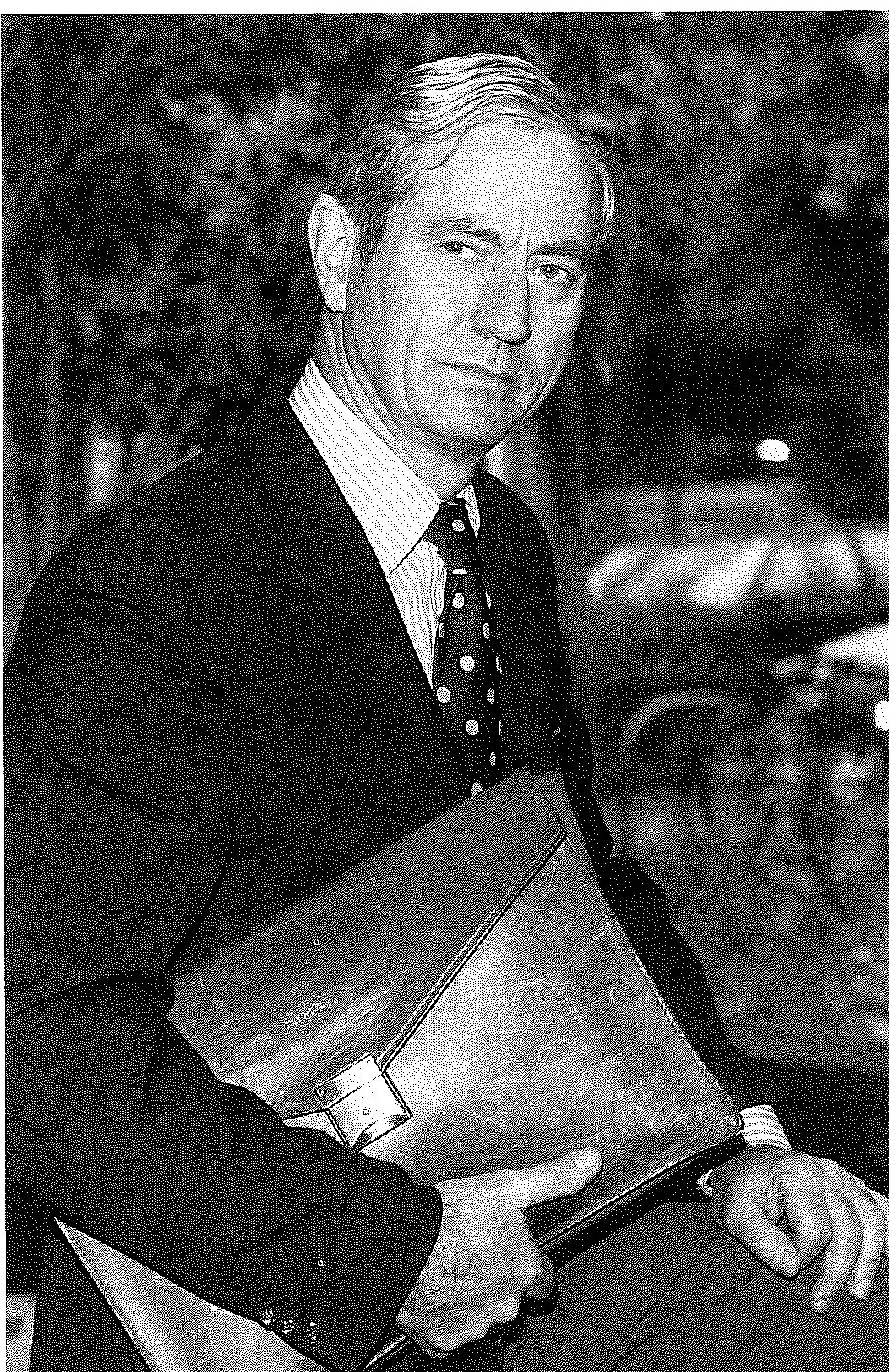
John Halstead was one of the ‘Greats’ of our Foreign Service. The service of Thanksgiving for his life was held on a bright, sunny day in mid-February. It was a celebration of one who followed until death his credo of giving the most of himself in the service of his family, his friends, his faith, his students and his country.
The choice of hymns and readings gave an indication of how John had come to look back on his life. His son Christopher read the passage from Ecclesiastes, “A time to every purpose under the Heaven, a time to be born and a time to die…A time to love, and a time to hate; a time of war, and a time of peace…I have seen the travail, which God hath given to the sons of men to be exercised in it”. The choir was of good voice and with over 350 in attendance the rendering of prayer and song was impressive. bout de papier Vol.
John had carefully selected the hymns. ’Praise my soul the God of heaven’ is powerful and robust. ’Eternal Father, strong to save’ has the memorable lines “for those in peril on the sea”, reflecting his naval service. ’Joyful, joyful we adore you’ is set to the music of Beethoven’s 9th Symphony ’Ode to Joy’, a paean to his love of German culture.
One of that generation which came of age during the thirties, he went to war as a naval intelligence officer who debriefed captured German sailors on the disposition of their submarine fleet. John then joined the Foreign Service and served with distinction under the leadership of the likes of Pearson, Ritchie, and Smith in the golden years of the Foreign Service. He was one of those whom Debra Hulley and I enlisted to serve on the senior editorial board when we transformed bout de papier into the magazine of diplomacy and foreign service.
An Atlanticist — John believed that while Asia mattered and the United States was primary, we could never make the mistake of turning our backs on Europe. He was convinced that Germany mattered the most in Europe and that the key to containing the Soviets was to ensure that the Germans were kept converts to democracy and to the West.
Jake Warren, his lifelong friend who joined the Foreign Service short months before Halstead in 1946, gave an impressive eulogy. Rideau Park United Church was full. It was a splendid turnout of the old hands, a tribute to the genuine regard in which Halstead was held. Two former secretaries of State for External Affairs, Mitchell Sharp and Alan MacEachen, were there, along with the German ambassador and John’s many, many friends.
His guiding principles were contained in his own version of the 23rd Psalm which was included in the bulletin of Service:
The Lord is my creator and my companion
I put my hand in His.
He leads me where He will.
His presence is my constant comfort.
He knows my every need.
He is the source of my body’s
vital energy.
He inspires my mind.
He feeds my soul.
I have no fear, for with Him I will
be equal to
every ordeal, every challenge, even
unto death and beyond.
Without Him I am a shell –
I am nothing.
With Him I can strive to be what
He would
Have me be, and make the most of what
I have to serve Him.
As I left the chapel, I was reminded of the words from Ecclesiasticus and their application to John and his former brothers-in-arms during war and peace:
All these were honoured in their generations, and were the glory of their times.”
D. Colin Robertson
bout Editorial Board
Reproduced below are excerpts from Jake Warren’s Remembrance followed by a special contribution from Ferry de Kerchove.
A Service of Remembrance, February 14, 1998
Today we mourn the passing of John Halstead. We also, together, and each in our own way, celebrate and rejoice in a life from which so much was quietly given to others and, in peace and war, to his country.
Images of times together come flooding back. I welcomed him to the East Block when he reported for duty to the Department of External Affairs in 1946. (Senior I was, by at least two or three months!) We were both ex-naval officers but, at the time I, a simple sailor, was quite unaware that he was a modern language specialist from UBC who had spent the three previous years in Naval Intelligence gathering information from German U-boat prisoners, and otherwise, to further the war at sea; much less that he had debriefed the German Naval High Command immediately after the capitulation on the location of their submarine fleet and under-water mine fields. Years later, when Ambassador to Germany, John’s contacts were re-established with Germans who had fought in World War II. For his work with them and for international understanding, he was awarded, in 1984, the first Peace Prize given by the Association of German Veterans — a rare honour indeed!
John and I became the closest of friends when we served together at Canada House in London after he had earned a BSc at the London School of Economics… John and I shared a flat in Hyde Park Gate, a short dead-end street off Kensington Gardens. Our quarters were small but served the purpose…One of our visitors was a beautiful and talented American – Fulbright Scholar whom John had met in Geneva and who had come to London to work on her M.A. thesis. Her name was Jean Gemmil. Most of you will recognise her as John’s lovely wife of over 44 years.
After increasingly senior appointments to Tokyo, at the UN mission in New York and as Minister at the Embassy in Paris, John returned in 1966 to head the European division in Ottawa. Subsequently he was named Assistant Under Secretary for European and International Security Affairs. He was also for a number of months Acting Under Secretary, then appointed Deputy Under Secretary, until becoming Ambassador to Germany in 1975. For two years prior to his retirement in 1982, he was Canada’s NATO Ambassador.
One can safely say that over the period 1966-82 there were no major political or defence policy issues touching Canadian interest in Europe and mutual security which did not come under his vigorous analysis nor benefit from his sound and objective judgement.
By general agreement, John’s tenure as Ambassador to the Federal Republic of Germany was very special, indeed. Germany’s role in Europe was becoming more and more central in political as well as economic affairs. The Ambassador’s fluency in German, his understanding of Germany and empathy with that country’s cultural heritage evoked a warm response and welcome in German senior official, Ministerial, artistic and intellectual circles.
These contacts were invaluable as he sought to promote and protect Canadian interests in the Federal Republic and beyond. John’s involvement in the development of Canadian/German relations continued long after his retirement. In recognition of this long service he was awarded an honorary degree by the University of Augusburg in 1994 – the first non-German, I understand, to be so honoured.
John will likewise be remembered for his contribution in later years as a scholarly teacher of international relations and diplomacy, with emphasis on the Canadian experience… Visiting Professor at Georgetown University, Washington; the Paul Martin Professor of International Affairs and Law at Windsor University; Adjunct Research Professor, Norman Patterson School of International Affairs and the School of Public Administration, Carleton University; and Skelton-Clark Fellow, Queen’s University.
In 1994 John was appointed Senior Adviser to the Special Joint Committee of Parliament reviewing Canadian Foreign Policy, chaired by the Hon. Allan MacEachen. He was Co-author of the Committee’s important report “Canada’s Foreign Policy: Principles and Priorities for the future”.
A passionate and proud Canadian, John, in 1964, recommended to Prime Minister Pearson a well received flag design which consisted of three red maple leaves on a white ground bordered by two blue bands. In 1966, he proposed the “snow-flake” design for the insignia of the Order of Canada. In 1996 he was an active participant in the Confederation 2000 Conference which, to strengthen national unity, established an action agenda for necessary change and national renewal. He, a Westerner, argued for greater understanding of Quebec’s particular position and urged the development of national unity solutions which would also accommodate legitimate aspirations of other provinces within a strengthened Federation. He pleaded for wise and strong leadership and the articulation of an imaginative vision for Canada: one which could inspire Canadians from coast to coast, help heal our wounds and bind the people and regions more closely together in common endeavour.
We will remember him most, however, as a truly fine human being. One thinks of his strength of character, his goodness and kindness, his high principles and integrity, his sensitivity and judgement, his compassion and courage, not least when faced with tragic illness in his family. A serious man eschewing superficiality and measured in his speech, he was at the same time warm and loving and full of charm. Selfless and concerned for all around him, he was in every sense a gentleman.
Named to the Order of Canada in 1996 he exemplified in his dedication to public service, the motto of the Order – “Desiderantes Meliorem Patrium” — They desire a better country.
John was an impeccable draftsman. In a world of body language, triteness and hype, his clean and economical use of English shone as a beacon above a sea of fog. John used words to build understanding, not to confuse or obfuscate. He leaves an as yet unpublished anthem to our country “The Spirit of 67”, of which he was also the composer. Amongst his papers he left a penned note saying:
“What is important is not what happens to a person in this life, but how he deals with it.”
Over the years, the Halsteads and the Warrens have shared each others’ joys and comforted each other in times of trouble. The cup of memory is full of recollections of good times spent together… The Warrens cherish especially the memory of their visits to the Halsteads’ hidden refuge — Trident Island at the headwaters of the Rideau Lakes…John’s absence will be particularly felt at the Island. It is as if one of its splendid oaks were suddenly stricken down, leaving painful emptiness against the sky — a void which also cries out from our hearts.
Here’s to you valiant John,
Few of your calibre pass our way,
Go well, as your indomitable spirit takes
the tiller for the unknown shore.
Un grand homme vient de disparaître: John Halstead
John Halstead vient de s’éteindre et avec lui disparaît l’un des derniers grands de notre diplomatie de l’après-guerre. C’est un pan d’histoire qui s’estompe, et pour moi, c’est un mentor et un ami qui part. Beaucoup d’entre nous retraceront ses contributions innombrables. Je voudrais simplement relater ici quelques souvenirs qu’en son nom, je lègue aux siens, à ses amis et surtout à Jean, son admirable épouse et artiste.
J’ai rencontré John pour la première fois alors que j’étais encore étudiant au doctorat à l’Université Laval. Il était venu dans le cadre d’une conférence de l’Institut canadien des affaires internationales pour nous parler du Canada et de l’Europe, lui qui fut au coeur du débat sur la Troisième Option — sa propre démarche, me confia-t-il bien des années plus tard, n’avait jamais été vraiment comprise et les désillusions qui suivirent ne l’étonnèrent pas, précisa-t-il, parce qu’à un concept généreux mais mal défini, on se refusa d’y mettre véritablement les moyens nécessaires. À la conférence de Laval, avec la prétention du néophyte mais imbu du titre d’étudiant au doctorat et convaincu, européen de bout de papier Vol. naissance, que j’avai quelque chose à apporter à la discussion, j’intervins assez souvent dans le débat au point que John finit par prêter attention à cet énergumène et, par courtoisie, le traiter en égal le temps d’une discussion. Je lui confiai alors que je me joindrais prochainement au ministère. Moins d’un an plus tard, je devenais l’un des 77 nouveaux ASE-1(D) du 4 septembre 1973 (à l’époque on mettait davantage l’accent sur la quantité que sur la qualité) et, en 1974, je participais, cette fois-ci comme le dernier des sous-fifres, à la conférence que présidait John au ministère sur l’accord contractuel Canada-Europe.
C’est à ce moment que j’ai réalisé dans quel monde hiérarchisé j’étais tombé. Qu’il nous paraissait distant, l’altier John Halstead — inaccessible, sévère, austère — et pourtant, combien cette image était fausse et combien il demeurait toujours d’une profonde courtoisie et vous répondait avec une égale profondeur et “thoughtfulness” pour autant que vous touchiez l’essentiel.
Deux anecdotes que je lui racontai bien des années plus tard illustrent la précision et la rigueur d’esprit de John. Son rythme d’élocution lent mais déterminé était devenu légendaire. Je me souviens d’une rencontre que j’avais couverte entre John Halstead et l’ambassadeur de Suisse qui, ayant commencé en français et se méprenant sur la lenteur de la réponse, suggéra à John de continuer en anglais et se rendit compte que le rythme de la réponse en anglais était rigoureusement le même qu’en français puisque John parlait les deux langues avec le même souci de perfection … et la même lenteur. Une autre fois, prenant les notes d’une rencontre qu’il avait avec son grand ami l’ambassadeur d’Allemagne, soit que la chaleur m’incommoda, soit que le rythme de la conversation m’endormit, je m’assoupis pendant quelques instants sans que ni l’un ni l’autre ne le remarqua. Je rédigeai ensuite mon rapport et le transmis à “PDH” l’acronyme de John à l’époque. Exactement ce que je prévoyais avec crainte arriva: il me convoqua et me fit remarquer que dans ce rapport d’une conversation qui avait duré au moins une heure, il manquait une référence à une nuance, une inflexion qui, je me rendis compte, correspondait exacte-où John était ambassadeur. Quand j’acceptai, on me dit qu’il faudrait évidemment attendre la confirmation de John Halstead qui serait précédée d’une entrevue qu’il me ferait passer. Beaucoup avaient craint cette étape fatidique. Pourtant, en moins de dix minutes l’affaire fut réglée. John me dit ce qu’il attendait de moi et je lui promis de livrer la marchandise. À l’OTAN, les choses
32 bout de papier Vol. allèrent fort bien et certains collègues se demandaient en riant combien de temps durerait “la lune de miel”. Elle dura en fait pendant toute la durée de mon séjour à l’OTAN avec lui parce que, par-delà certains moments très tendus, je continuais à vouer à cet homme une très grande admiration. Mon épouse, Louise, partagea elle aussi ce sentiment même si, au début, ce fut avec beaucoup de réticence qu’elle se prêta à un “cérémonial” qu’imposait John à tous ses nouveaux agents: un déjeuner obligatoire à quatre à la résidence le premier mois d’arrivée: John, Jean et le couple nouvellement arrivé. Certains de nos collègues nous avaient décrit ce passage obligé comme une véritable épreuve. Bien au contraire, ce fut le début d’une profonde amitié. Par un heureux hasard, Louise avait apporté en cadeau une bougie centenaire à Jean sans savoir que cette dernière avait une prédilection pour les bougies. Par la suite, John devait confier à Louise une tâche des plus comiques: la co-préparation avec le chef du Hilton du menu du dîner que devait offrir Mark McGuigan à ses collègues de l’OTAN quelques mois plus tard à Bruxelles en étant que président d’honneur de l’OTAN cette année-là. Pendant deux mois, presque tous les soirs, Louise nous imposa à la maison une version ou l’autre de sa mousse à l’érable.
Louise eut l’occasion d’apprécier la rigueur de John en même temps que son amitié. Un an après notre arrivée, le poste d’agent d’administration à l’OTAN s’avéra disponible et ma femme, qui appartenait au Conseil du Trésor, postula le poste. John Halstead l’encouragea dans cette voie et Ottawa décida alors que l’ambassadeur présiderait un comité de sélection. Ottawa avait envoyé une quinzaine de questions avec instruction d’en poser quelques-unes au choix. Louise entra dans le bureau de l’ambassadeur, s’attendant à être accueillie avec la chaleur habituelle de son hôte et découvrit qu’on la faisait froidement asseoir d’un côté, les trois interrogateurs de l’autre et qu’avec une austérité implacable, John Halstead se mit à lui poser non pas quelques questions mais les quinze au complet. Elle sortit de la pièce deux heures et demie plus tard, épuisée sans qu’aucun commentaire favorable ou défavorable n’ait été mis pas l’ambassadeur. Le soir même, nous assistions à un vernissage des sculptures de Jean que nous avions aidé à organiser à Bruxelles et, en nous voyant arriver, Jean nous a sauté dans les bras en disant “je ne sais pas si j’ai le droit de vous le dire, mais John est revenu enchanté du bureau aujourd’hui en disant que Louise avait dépassé toutes ses espérances”
De nombreuses années plus tard, John et moi nous remémorions certains passages de son séjour à l’OTAN. Je lui rappelai son extraordinaire patience de même que la constance de ses réflexions lorsqu’il dut subir pas moins de 14 reprises d’une entrevue télévisée que lui faisait passer Peter Newman — l’éclairage n’était pas bon, l’angle de prise pouvait être meilleur, le décor ne convenait pas, etc. — et qu’il parvint chaque fois à reprendre le fil de sa pensée, suivre la même démarche, soulignant les mêmes thèmes avec un égal équilibre et reflétant les mêmes priorités. J’évoquai son admirable discours de départ à ses collègues en 1982 qui provoqua une salve d’applaudissements nourris. Avec humour, il me dit que je souffrais d’un excès de générosité et qu’il savait bien que sa réputation d’homme difficile ne lui avait pas nécessairement fait que des amis. Il me demanda alors de lui relater certains de mes propres “moments difficiles”.. Je n’ai pas su résister et je lui rappelai ce déjeuner qu’il avait offert à l’occasion du passage à l’OTAN de Donald MacDonald notre ancien ministre des Finances, accompagné d’une dizaine de parlementaires canadiens. Il me fit venir dans son bureau après le déjeuner et me dit que dans mon plan de table, j’aurais dû déplacer de dix centimètres la place de l’hôte qu’il était, afin d’éviter toute confusion quant à qui était l’hôte officiel du déjeuner entre lui et le Secrétaire Général Joseph Luns … Il m’en fallait plus pour briser la lune de miel…
Grâce à notre Consul général à Munich, Tim Williams, j’ai eu le bonheur de participer en novembre 1996 à un colloque en Allemagne avec John Halstead et de l’accompagner dans quelques “think-tanks” où sa profonde sagacité se révélait en tout instant. Mais encore plus important, nous eûmes des moments privilégiés quand, dans quelques estaminets de Munich et des environs, nous avons pu évoquer non seulement le passé où il avait été mon inspiration mais aussi l’avenir où il me révélait plus que n’importe quel autre, une passion intelligente et réfléchie pour le Canada. Si seulement les Québécois qui songent à la grande séparation pouvaient entendre ce que cet homme disait et ressentir la souffrance qui était la sienne face au déchirement du pays, l’unité du pays serait reconstruite, plus solide et plus ferme qu’aux beaux jours de juillet 1867.
Enfin, John, je te remercie de notre dernière rencontre qui remonte à ce déjeuner en novembre dernier où les stigmates de la maladie te creusaient déjà mais où ton amitié profonde et ton affectueuse gentillesse s’efforçaient de dissimuler ta souffrance physique et morale. Tu es parti; nous restons très seuls mais fiers de t’avoir connu et aimé.
View the original scanned pages / Voir les pages numérisées →
Originally published in / Publié à l’origine dans bout de papier, Vol. 15, No. 2 (1998) — Summer 1998 // Été 1998, pp. 30–32. Read the rest of this issue / Lire le reste de ce numéro →



