
bout de papier, Vol. 16, No. 3 (1999) — Fall 1999 // Automne 1999, pp. 11–15
by Jim Bonthron
The Chinese are always looking for guess what? – foreigners, in various TV and film productions. Over the years a number of Canadian Embassy staff members and their families have been swept up by the Chinese film industry. My lucky moment came one fine day when I was visiting a TV studio with my wife, Gilliane Lapointe, who is Counsellor for Public Affairs at the Embassy in Beijing. I found I was being stalked by a lady with a clip-board; she turned out to be the casting director for another TV project and thought I looked like a German engineer in his fifties. The next thing you know I was signed up for an eight-part Chinese TV series, which is going to bring me fame and fortune as a matinee idol (well … maybe in Inner Mongolia) and have the teeny-boppers screaming for my autograph.
And so I found myself with a team of some 60 people on site at Xiao Lang Di (XLD), a gorge on the Yellow River near Luoyang, about 700 kilometres southwest of Beijing, where the biggest dam to date in China is being built. Because of all the fuss and controversy over the Three Gorges, not that many people are aware of XLD, which is not nearly as potentially damaging to the environment, nor causing the dislocation of so many people (200 thousand vs 3 million plus). The series is a project of Henan TV to celebrate the 50th anniversary of the founding of the People’s Republic on October 1st, 1949; it is to be shown on national television in October, in prime time for eight days running.
The director, Li(Lee) Li Hong, whom I immediately nicknamed “Spike”, “, is a former actor and the top director in Henan Province. Six of China’s top TV actors and actresses are in the cast, so this is serious stuff. There are three other foreigners in the group: Anjana Gadgil, a student from London University, Joerg Brodersen, a young German lawyer, both studying Chinese, and Atze Schmidt, a German journalist working for the Foreign Language Press in Beijing. How, one might well ask, did we four amateurs end up on this team? We were all hired on the basis of appearance and an interview.
As it happens, I have had some background in the theatre. There was, for example, my thrilling stage debut at the age of 12 as a fairy in “Iolanthe” and my dazeven some minor roles with the English Comedy Club in Brussels and the Ottawa Little Theatre. Years later in Baghdad, my gripping portrayal of “Tas”, a Tasmanian thug in the classic Australian mining drama “The Last of the Knucklemen”, almost brought down the house — literally – in the beer-fuelled donnybrook which climaxed the play amidst flying fists and furniture. Our antipodean soulmates have always been great thespians. (That Baghdad play-reading group, incidentally, was founded by Agatha Christie when she was out in Iraq on a dig with her archeologist husband in 1922. It never missed a biweekly meeting until it was finally shut down by Desert Storm.) In any case, stage experience, although helpful, turned out to be not that much of a qualification, the camera being a very different beast from a live audience. One big plus about this film, though, was that instead of just dubbing the foreigners into Chinese, which is what they usually do, they were using our real voices and subtitling
First, the dam. This multi-purpose project is so big it had to be partly financed by the World Bank, which meant opening it up to international bidding, the first time this has happened in post-1949 China. Consortia led by the Italian company Impregilo, the German company Zueblin and the French company Dumez were awarded respectively Lot I (dam construction), Lot II (tunnels and spillway), and Lot III (the hydro-electric power generating station). The dam, which is going to stand 154 metres (505 feet) high, will provide, in addition to power generation, flood control, sediment reduction, ice protection and irrigation. Preliminary work was started in 1991, the contracts for the three Lots were signed in 1994, and construction got underway that same year. Completion is scheduled for 2001.
There was Canadian involvement in this project from the beginning, particularly in the design work. A group is still on site, a joint venture called Canadian International Project Managers, made up of people from Acres International, Monenco and SNC-Lavalin. Two Canadians, Zoltan Solymar and John Anderson, have won “Foreign Expert Awards” for their contributions to the project’s development.
Second, the play. The playwright spent a year on site, the director with him for six months, building a drama around the tunnel construction, problems the Germans encountered, claim and counterclaim, labour problems, culture gap, danger and near disaster, complex relationships including some messy love affairs (sorry folks, no torrid love scenes — this is China), and of course in the end, success through heroism and cooperation. Monty Python would call it a “Ripping Tale”.
Not surprisingly, it is all based on fact, some would say too closely. I play the part of a German engineer, Peter Bauer, who comes out to solve problems. These problems are very much like the ones the Lot II people ran into in real life, which saw both the German Supervising Engineer and his Number Two pulled off the project and a Canadian consultant called in to advise the Chinese employer on how to deal with a massive German claim for damages. My role is inspired partly by the new German Supervising Engineer, Dr. Krause, universally liked and respected, and by the Canadian consultant, John Anderson, mentioned above.
The site is a beautiful valley surrounded by terraced hills. When we arrived in late March, the winter wheat was a foot high and the leaves were starting to bud. Only about half the shooting took place underground, so there was some opportunity to enjoy the sunshine and fresh air. During my down-time I hiked in the hills and took the little puppy in the “Supermarket” for walks. The supermarket looked like a convenience store, and was surrounded by: Small Bar, Happy Bar, Flower Bar, Fashion Bar, Star Bar, Fiesta Club, Hard Rock, the Red Forest [sic]
Zling appearance the following year as a Floradora Girl. These transvestite beginnings were to be corrected later in various high school drama club productions and Club and, last but not least, the Lucky Whole Saling Shop. Took me a while to work “wholesale” out of that one, especially with the “N” backwards. The puppy’s name was “Lang Lang” as in Xiao Lang Di.
In addition to acting and rehearsing, Anjana and I spent a fair bit of time with the interpreter, Zhang Yuan (English name Joy), re-writing the terrible “Chinglish” in the script into something recognizable. (The Germans, being foreigners, naturally speak English, the Chinese speak Chinese, and of course we all understand one another. This is a Chinese convention which seems to be accepted by audiences.) We spoke English, that is, until Spike found out that Anjana, who played my engineer daughter Marlene, had High School German and I had my college German, beefed up with two weeks in Heidelberg 14 years ago. We got our heads together, the four of us foreigners, and translated all the scenes in Episode One, much of which took place in Germany, into German. We performed it too, and our German colleagues didn’t crack up watching the rushes, so we felt pretty proud of ourselves.
Inevitably there were problems. We had a crisis one day when we were about to shoot a scene of the negotiations about compensation for the tunnel collapse and had hoped to get some of the Canadians to play cameo roles as part of the German negotiating team. Of course in real life the Canadians were working for the Employer, in effect the Chinese government. Said Employer was holding real, and difficult, negotiations with the Zueblin people on that very subject, and many of the Chinese staff were unhappy and nervous. They forbade the Canadians to have anything to do with us, and then went a step further and said we had to change the film, avoid any reference to a German company, Xiao Lang Di or even the Yellow River. That was a bombshell, with at least a third of the film already in the can. It was finally straightened out at the Vice-Minister level of the central government; the VM was fortunately on the site with a big delegation, and we were able to get back on track in a hurry. We had another crisis when we were about to shoot a scene presided over by Atze Schmidt, who played the Chairman of the German company. Seven-thirty at night and they had everything ready to go when it developed that they hadn’t lined up the people who were supposed to play some of the other directors. I was dispatched with Joy to go up to the club in the Italian compound, where I just happened to know the Canadian consultants had gone to have pizza, and persuade them to come and get in the movie when they had finished. They had by then been cleared by the Chinese authorities to participate, but no one had thought to tell them they were actually going to be needed. They happily showed up to get their 15 minutes of fame. Among them was a visiting Canadian journalist, Roger Clavet, who had some acting experience and volunteered to join in. I persuaded the producer that, because “Lei Mai” (Ledermaier), the German company in the film, was supposed to be operating all over the world, it would be logical for them to have a director from Quebec, where people knew all about building big dams. And so it was that we worked some French into a Chinese film about a German company; Roger was terrific.
In mid-April we foreigners, perhaps in part to dispel our feelings of increasing self-importance and impending stardom, were given a five-day furlough. Anjana went to write her mid-term exams at Beijing Normal University, Joerg went off apartment hunting with his fiancee in Xian and I went to get laryngitis from the Beijing pollution. Atze, who was only able to get five working days off from his Chinese employers and consequently had the smallest part, was having his scenes compressed into two short stints.
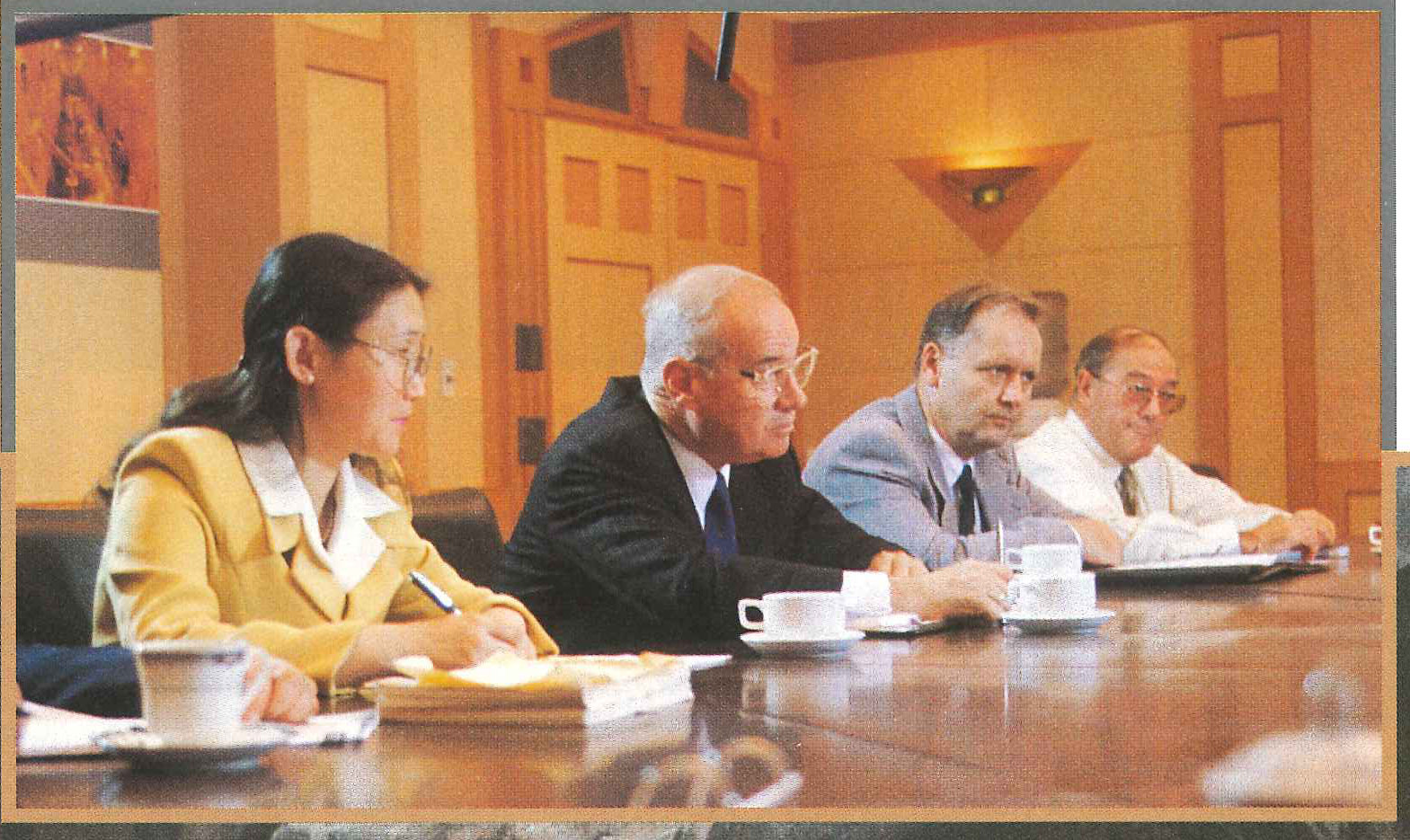
I came back to a full weekend’s shooting, the only time we could get the board room. These were the heavy-duty negotiations which had been postponed because of Chinese sensitivity about their being too close to reality. Joy said my sore throat was great because it sounded as if I had been shouting at my Chinese adversaries.
We got through the negotiations in great shape, with another set of Canadians backing me up on the German side of the table. Later, one of them took me aside and asked me to fill him in a bit on the plot of the TV series, because some of the stuff he had been hearing sounded awfully familiar. His reaction was interesting: “I hope the Chinese don’t pull the plug on your story.” Always a possibility, I suppose, but this was a 50th anniversary project and the story-line had already been approved at the highest level.
One morning early, in welcome relief from the tunnel, we all boarded a little cruise boat and went up the river to a remote village to film some scenes in a cave dwelling. (This is where a former engineer and fellow student of Engineer Peter Bauer has retreated after being caught up in the Cultural Revolution; his in-depth knowledge of the local geology is key to solving our tunnelling problems. As I said, we have everything in this story.) During the course of the day, when I was not in the eye of the camera, I wandered around the area and struck up a sign language conversation with a local peasant. Using only an axe, he was building a wooden frame for a threshing stone. He would later spread out his cut wheat on the hard ground and pull the cylindrical stone around on it, using his threewheel tractor/pick-up truck. This is a 14 bout de papier Vol. common piece of gear in rural China: front half motor-cycle with a two-stroke engine, rear half a six-by-four foot truck bed. He said his grandfather’s grandfather had farmed this land and it was good; he would bring in two tonnes of wheat. At the same time, he said he was ready to accept the fact he would have to move when the land was flooded. (By this time I had been joined by the assistant cameraman, who had a few words of English.)
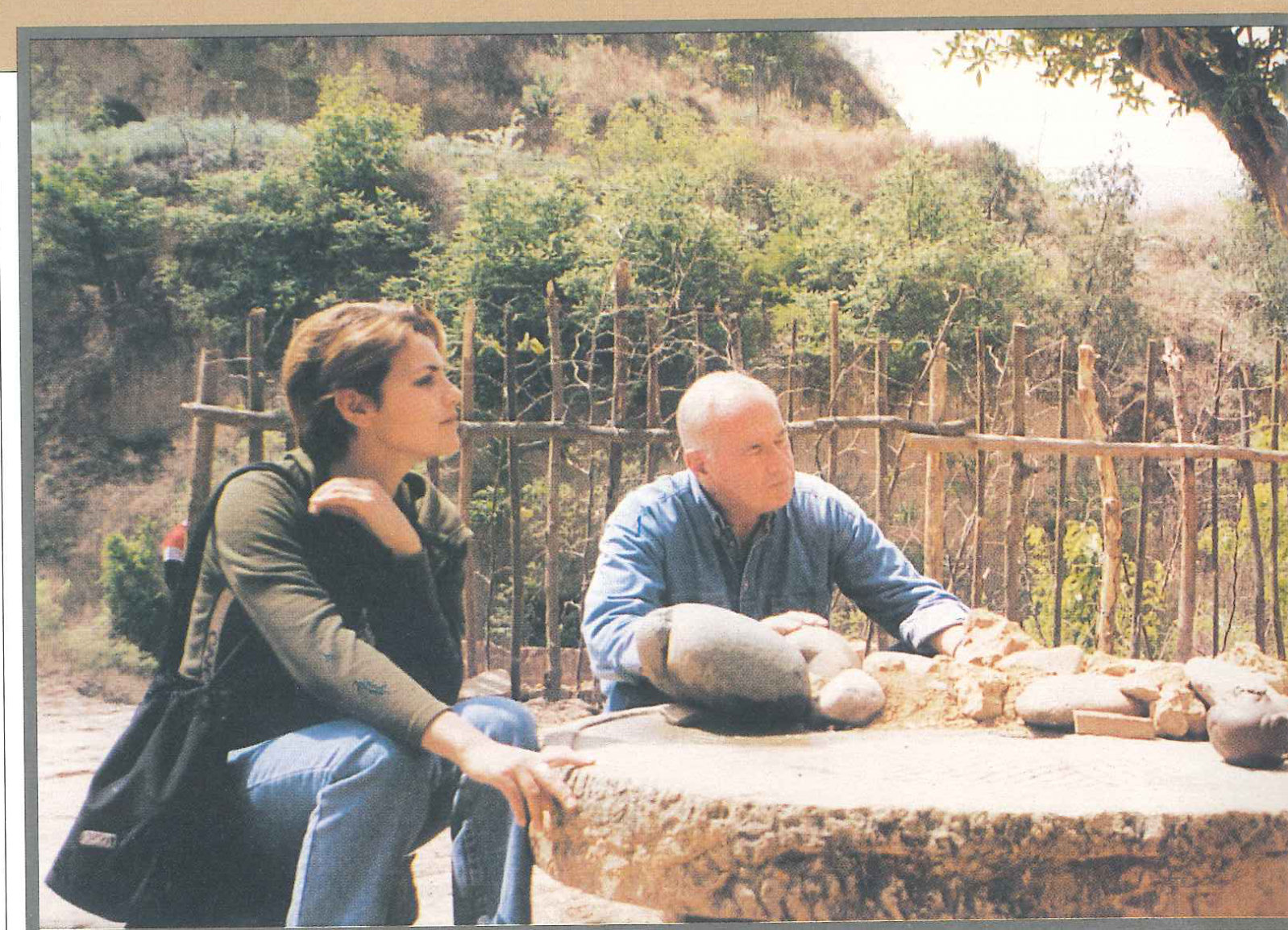
It was a warm, sunny day, and the scene of the green mountains falling into the river was beautiful. It is sobering to think that some Chinese farmer was looking at these terraced hills five thousand years ago, when most of our ancestors were running around wearing bits of fur and hadn’t yet worked out that one could make stuff grow on purpose. On the other hand, a lot of people here still live in caves. With whitewashed walls and electricity, they are a lot nicer than many of the cramped and dirty apartments I have seen in Beijing and furthermore are warm in winter and cool in summer.
While I was gone in Beijing, they got a lot of shooting done in the tunnel, but the best was still to come: the disasters. The props and construction guys were terrific. Starting with a smooth-walled tunnel, they had stuck rough-hewn styrofoam to the walls to make it look as if it were still under construction. They had led hidden plastic piping up to the roof for the flooding scenes, got hold of a demolitions expert for the fatal explosions scene, and rigged up a collapsing platform loaded with styrofoam rocks for the tunnel collapse. They had also dragged a huge drilling machine in there, which, apart from adding realism, was the power source for the jackhammers and hand-drills. When they blew the thing up, and the heroic Chinese foreman, Qin Dachuan, died saving the life of his doltish German counterpart, there wasn’t a dry eye in the house. Actually, this was because the place was full of dust and cordite and we all had to go outside for half an hour until it cleared and we could resume shooting. When they edit this thing and add the music and doctor the sound effects, it’s going to be a humdinger.
The hard-hats here, when they are not made out of wicker, look pretty much like the old US Army helmet liners. We were watching the rushes one night, when on the screen there appeared a close-up of me looking grimly at the rock-fall. Suddenly the Director, Spike, started bouncing up and down in his seat, shouting “Bah Toon” “Bah Toon”, and everyone in the room was loudly agreeing with him. It turned out what he meant was that I looked like George C. Scott in “Patton”. When I told them that this was only natural because my sister was married to General Patton’s grandson, they went completely round-eyed.
We had almost as much fun doing the flooding scene as we had blowing up Qin later on. Water was pouring out of the ceiling and the director was choreographing total confusion: Qin was doing his foreman bit and yelling at everyone, his workers were yelling back, the Assistant Director was slapping people on the shoulder when they were supposed to run across in front of the camera, other people carrying hand drills would come tearing out from behind the giant drilling machine, the lights showing all this up in just the right way. Just as acting without lines is hardest — (“We are now going to film Peter Bauer’s expression when Marlene tells him she has found the old hermit; you are surprised, nostalgic, curious, relieved and enthusiastic. Don’t move, because this is a close-up: just show it all in your eyes.” Yeah, right.) — chaos is very difficult to organize. I reckoned this was a good time to teach Joy the expression “Chinese fire drill”, which cracked her up. Joy’s English is excellent; she had particularly liked her last teacher at university, a lady from Prince Edward Island. She is going to work for an import-export company and hopes to travel abroad. She should do very well.
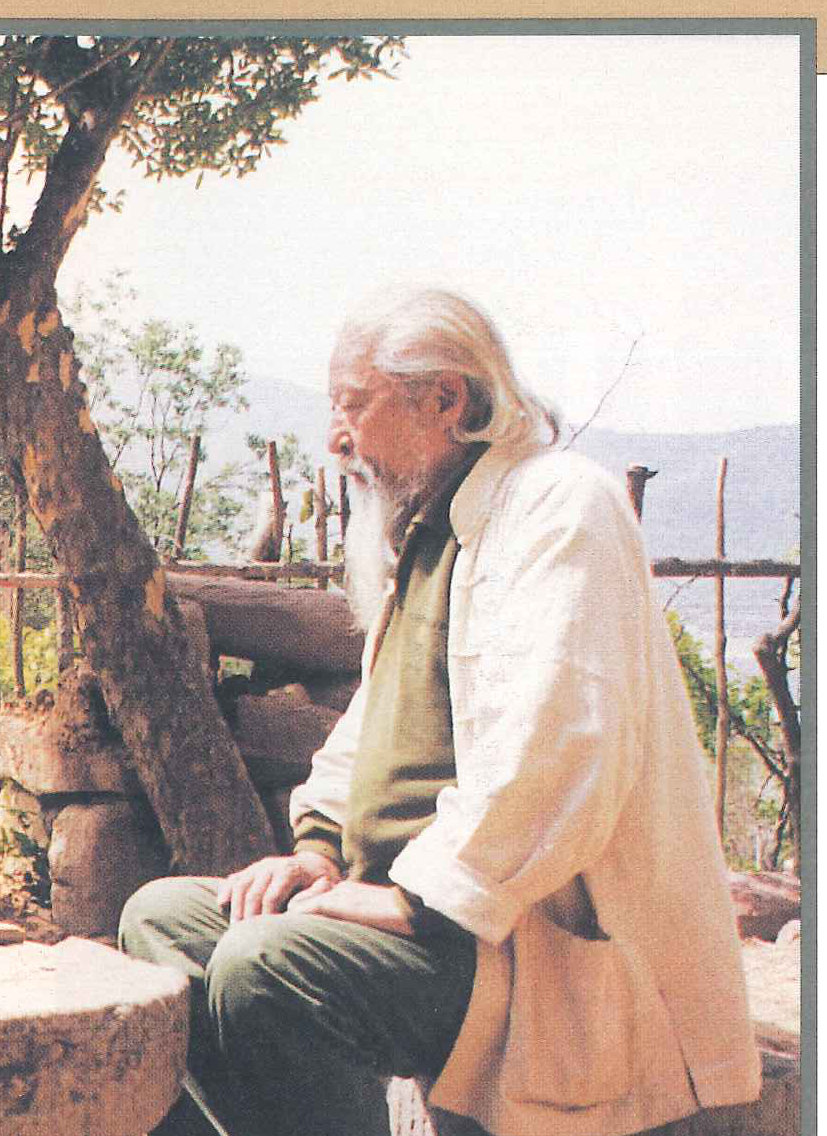
Suddenly we were almost finished, and well ahead of schedule. We went out to Luoyang airport, where Mr. Zhang the Producer had managed to organize us onto an arriving aircraft. We rehearsed, moved mikes around, the plane landed, we went up the ramp and into the cabin, waited for fifteen or so passengers to get off and then Peter Bauer and his daughter Marlene came down the ramp together. The arriving passengers were so stunned to find themselves in a movie they forgot to stare at the camera, so it all worked.
Zhengzhou, the capital of Henan province, was the venue for the rest of the Frankfurt scenes. Zhengzhou is overcast a lot of the time and is apt to be polluted, so it can pass very nicely for northern Europe. Joy and I had been sent ahead — on ten minutes notice — with two of the props people, to organize shooting at a local hotel and the borrowing of a number of things from the hotel’s owner. These included a large clock in excruciatingly bad taste, half-naked nymphs on a pedestal holding the gaudy, ornate clock which was itself a swinging pendulum. I told Atze, who had returned from Beijing for the shoot, that no Managing Director in Germany would be caught dead with such a thing in his office, to which he replied “even in Germany” But, the ghastly thing dramatically marked the passage of time and off it went to the World Trade Centre. Filming in “his” office 37 floors up at the WTC and looking out over leafy Zhengzhou, we almost could imagine ourselves in Frankfurt. Pointing out the window at some workmen on a scaffold next door, I said, “Look, Chinese Gastarbeiter”
Then it was out to Zhengzhou airport for the last two scenes we shot, this time actually on the aircraft. One of the scenes was without lines and involved Anjana (Marlene) flying back to Germany after the initial tunnel collapse. Spike decided to get as many as possible of the non-acting staff members into the shooting, to make it look as if there were really people on the empty plane. Anjana’s boyfriend Tom had shown up to see the end of the filming and found himself in the movie as a miscellaneous passenger sitting next to her. Nice touch.
Being with this group of people was fabulous. They were friendly, professional — with the occasional lapse which could be written off to artistic temperament – and very welcoming to us amateur, barbarian foreigners. There was great team spirit. When I first read the Chinglish script, I thought, “Oh brother, where are we going with this one?”, but of course the Chinese script was something else altogether and the story turned out to be a real grabber. Everyone really believed in it, and we had a lot of fun.
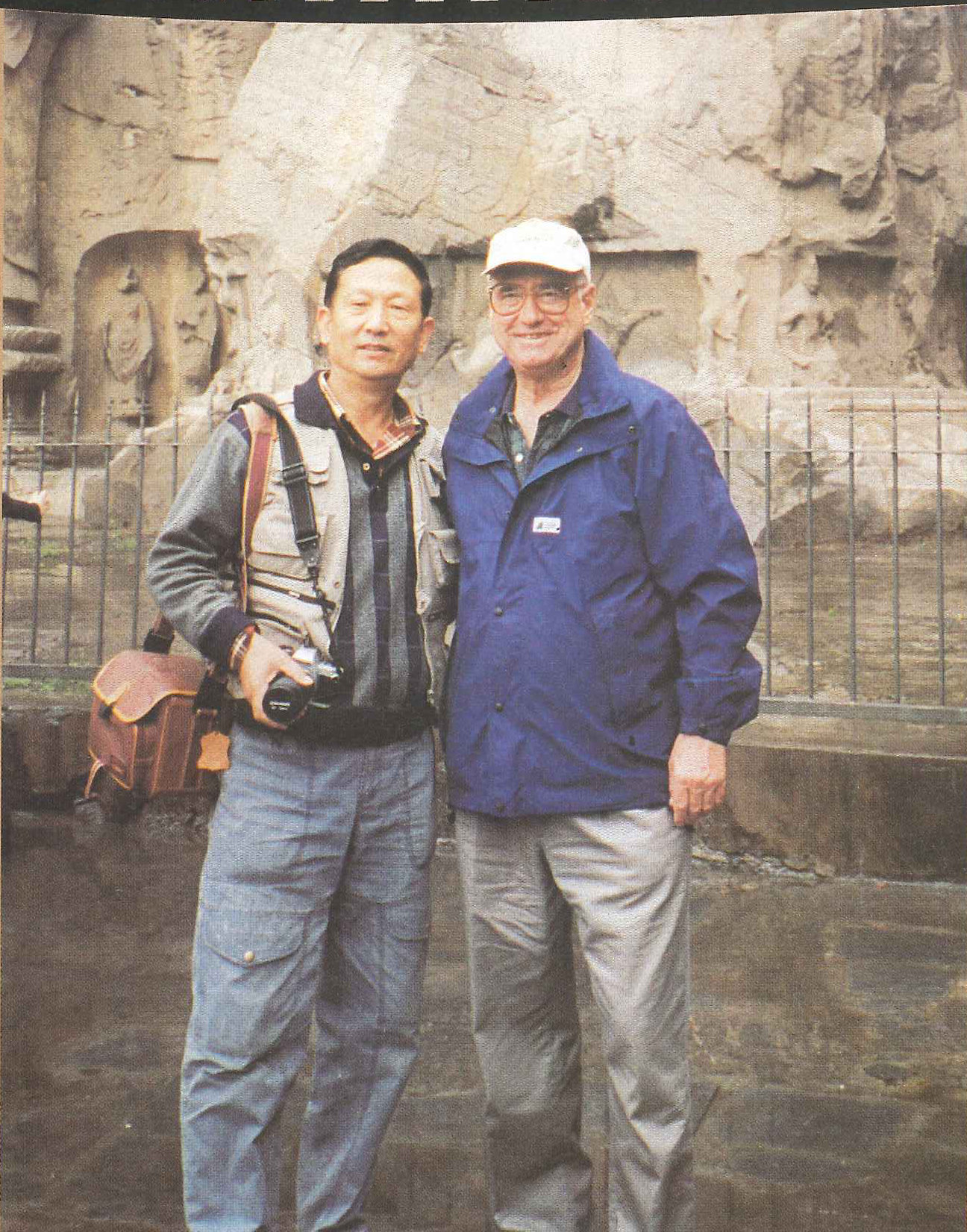
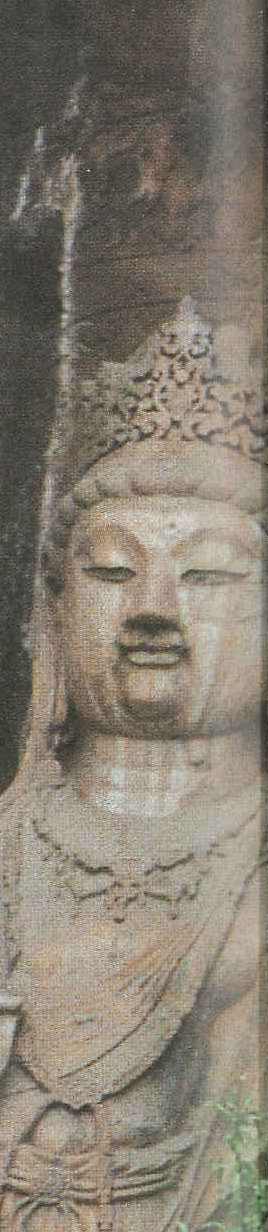
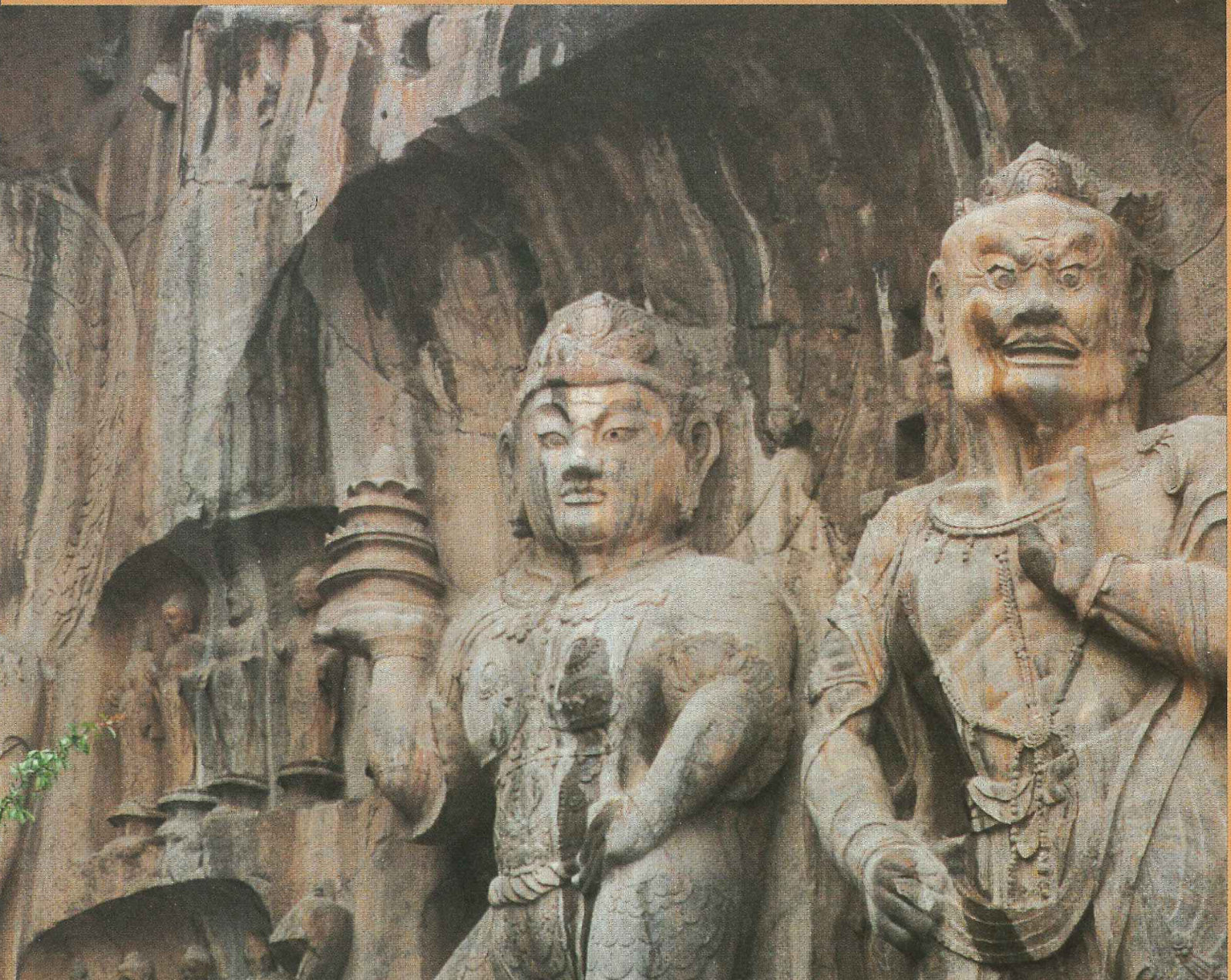
I also had a welcome chance to learn something of Chinese history and culture. From Luoyang I was able to see the famous Buddhist statues at the Long Men caves. On a day excursion from Zhengzhou I visited the Shao Lin monastery where the monks invented martial arts, the Zhong Hue temple, one of the earliest Taoist temples in China, and the Song Yang Academy, one of the four ancient academies of learning. In the garden there they have a cypress tree 4000 years old, and said that “even in the time of Jesus Christ, this had been officially classified as an old tree”
Luoyang was the capital of China for nine Dynasties in ancient times, and the Yellow River valley in Henan is regarded as the cradle of Chinese civilization. was here that Fu Xi, half God, half Man, and mythical founder of the Han Chinese nation, saw the Dragon Horse in the Yellow River and took the star-shaped patterns on the beast’s body to design the “Ba Gua”. The Ba Gua is the Yin-Yang surrounded by eight sets of three-line groups; the design on the Korean flag is taken from it. Anyway, a modern version of the Long Ma Fu Tu temple is being built, and the legend and the temple have been worked into the script. (Long means dragon, Ma horse, Ba eight and Gua design: the Eight Designs from the Dragon Horse).
On May 8, the evening we had our farewell banquet, there was a dramatic indication of how much of a family our team had become. Just before dinner, the news of the attack on the Chinese Embassy in Belgrade came out. Everyone knew that Anjana and I were from two countries which were taking a leading part in the bombing campaign in Serbia; we had even discussed it. The Chinese were obviously shocked and upset (as were we foreigners), but there was not a flicker of adverse reaction to us or our countries. We had become their friends and colleagues, and that was all that counted.
Making this movie was one of the most fun things I’ve ever done. What really amazed me was that, even though I speak very little Chinese, I managed to make a whole bunch of friends, although with Joy around the language barrier was largely eliminated. I have since been told I am now on the network and likely to get drafted when they need foreign actors for other ventures. Maybe next time I’ll get to be a “capitalist roader, imperialist running dog” oppressing the poor Chinese (Gilliane’s great fear). With any luck I’ll get to see some other interesting place outside Beijing. Leaving Xiao Lang Di was tough. The last morning I went up into the hills at 5:30 and watched the sun come up over the Yellow River Valley. The wheat had grown three feet high and was turning gold; everything else was green, the breeze was warm and I thought how much I going to miss taking little Lang Lang for his walks.
Beiling. August 21. 1999.
View the original scanned pages →
Originally published in bout de papier, Vol. 16, No. 3 (1999) — Fall 1999 // Automne 1999, pp. 11–15. Read the rest of this issue →



