
bout de papier, Vol. 16, No. 1 (1999) — Spring 1999 // Printemps 1999, pp. 11–14
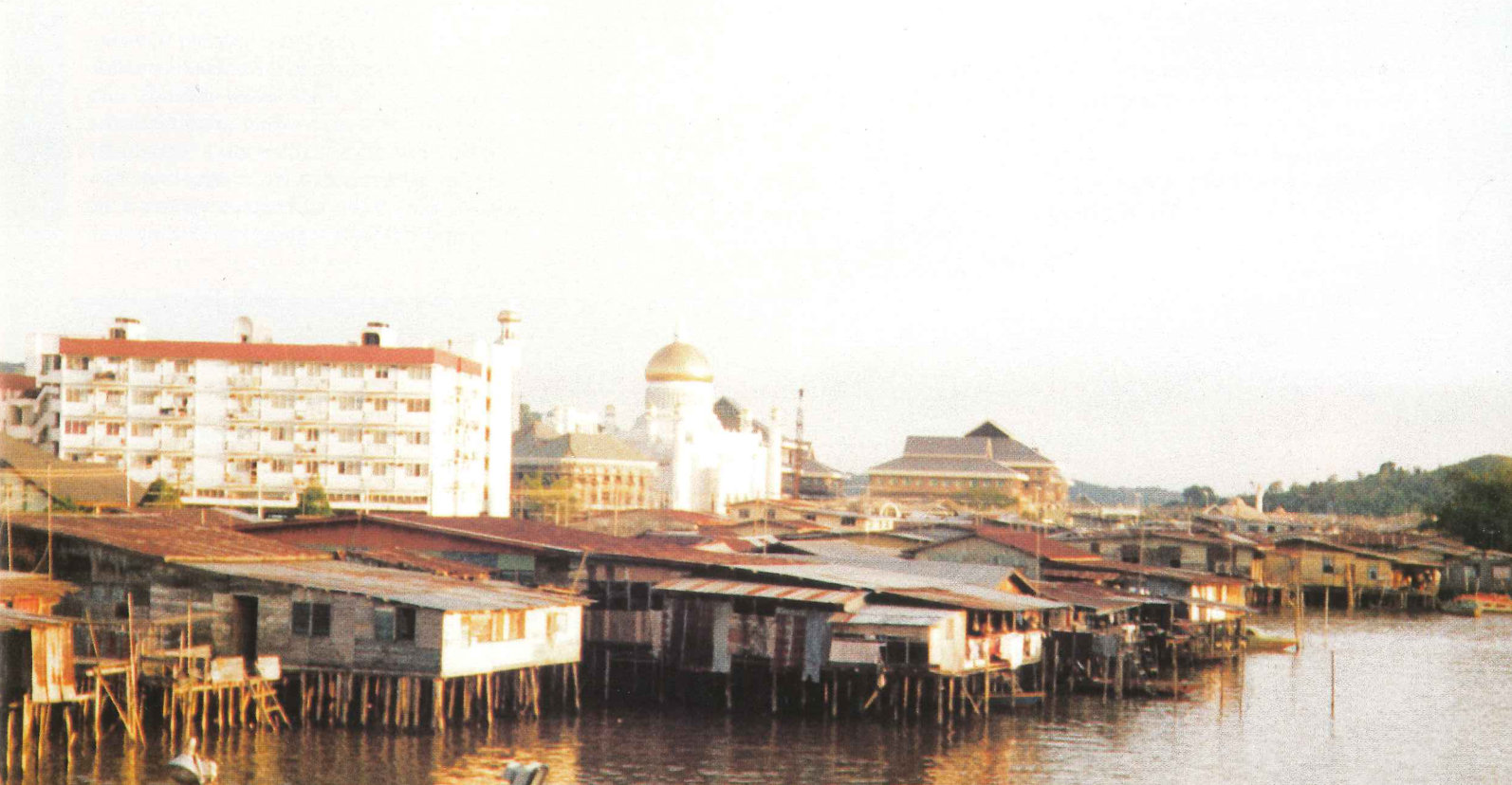
Brunei, one of the world’s tiniest countries, is known for two extremes in architectural phenomena — its “water village” of stilt houses and the Sultan’s palace of over 1700 rooms. With many examples in between to demonstrate that, like biological species, housing too evolves in Darwinian progression.
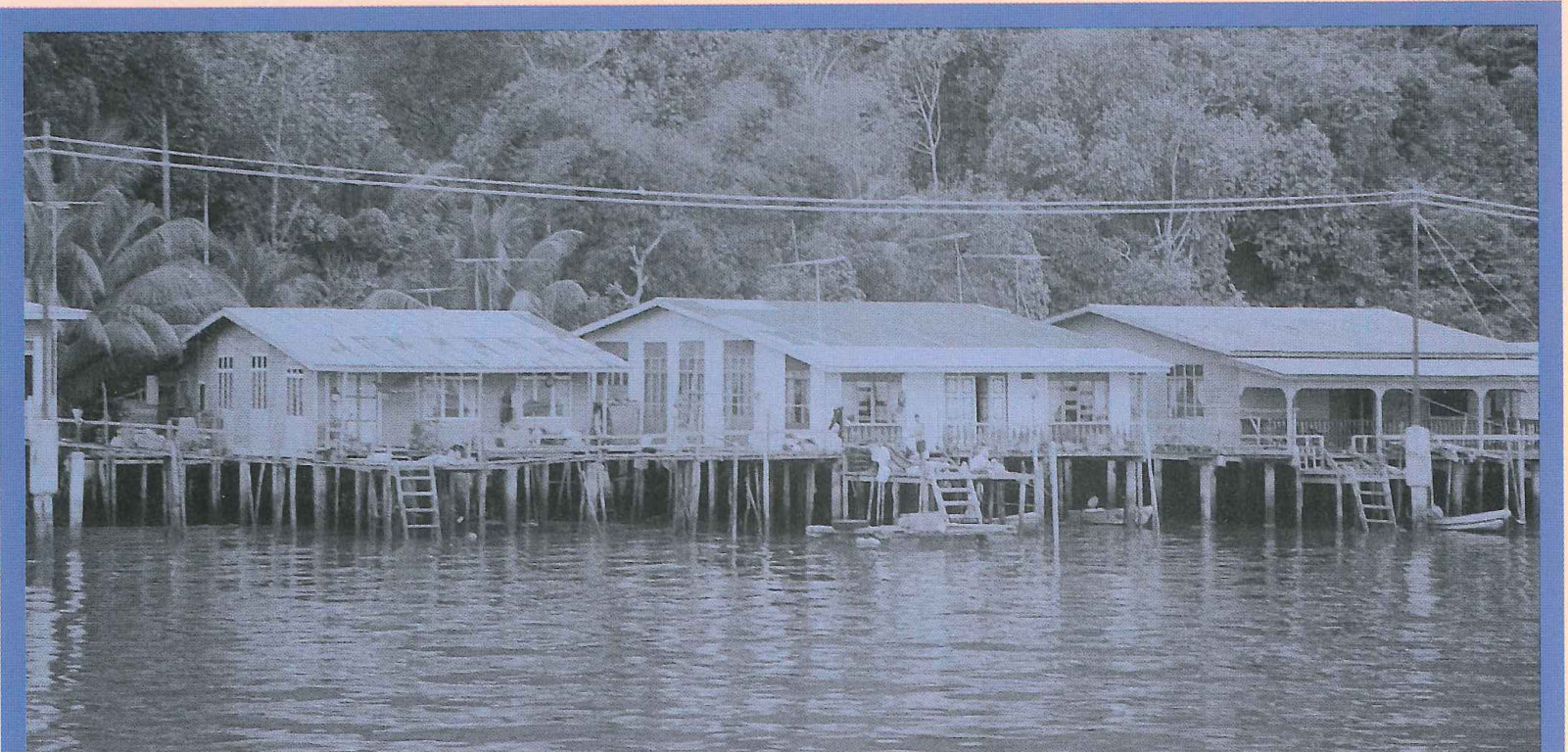
The water village is the old town, built entirely on stilts over the Brunei River. It is ancient, and typical of the north coast of Borneo from Sarawak to Sabah.
The official name of the country is “Brunei Darussalam”, or “Brunei, Abode of Peace”. The name “Brunei” is a cognitive of Borneo, the immense equatorial island that is shared by three countries — Malaysia, Indonesia and Brunei (with parts of it sometimes claimed by the Philippines). In its history, the Sultanate of Brunei has ruled over most of the northwest coast of this island, under the same ruling family (the Bolkiahs) for over four hundred years. They increasingly came on hard times in the 19th century and ceded territory, piece by piece over a century, to the Brooke family, the “white rajahs” of Sarawak, until eventually after the Second World War most of North Borneo (Sabah and Sarawak) were British colonies that were eventually folded into the Federation of Malaysia.
The Sultans of Brunei held out against this federation because the tiny territory that remained to them was rich in gas and oil.
The Bruneian hegemony in Borneo was founded on sea and river power – and the brass cannons mounted on their praus which enabled them to subdue the fiercer, more primitive tribes, including the famous Iban headhunters, who lived up the long rivers that flooded down from the mountains of Borneo. They were able to control piracy, or rather they dominated piracy along the coast, and controlled trade — much of it then as now run mostly by Chinese traders.
Borneo is not agriculturally rich. The mountains are great limestone peaks, covered with fairly impenetrable forests cut by rushing rivers that flow to the sea creating huge coastal deltas of steamy mangrove swamps and muddy rivers, wonderful for crocodiles and shrimp, not so hot for human habitation. Houses built on stilts over the water proved an excellent solution for settlement by a boat people. These Malay people did not have to subdue an inhospitable coastal zone by clearing forests for land that was mostly sand or rocky hillside. Wood for construction was plentiful. Building over the water was easier and more convenient. It was cooler in a tropical climate to have breezes blowing under as well as around the home. Sanitation was easy — all waste went directly into the river and was washed away with the twice-daily tides. Stilt houses were safer from indigenous pests like snakes and crocodiles. Families could fish for dinner if the men at sea did not return early. Trading with sea-going travelling salesmen who brought rice, oil and textiles was easy — they rowed right up to your door. And stilt houses were impervious to the variations in water levels caused by tides and high waters rushing down from the hills in monsoon season.
So that was the Brunei Town (now called Bandar Seri Begawan) before the second World War. The main part of the city was a “water village” of quite sophisticated development. A population of perhaps 30,000-50,000 people lived over the water on the Brunei River, seven miles inland from the sea where the river crooked into a wider bay and branched into smaller tributaries. Stilted suburbs attached themselves to several different shores. Houses were connected by a vast system of elevated walkways. The communities contained schools, mosques, market halls, police and fire stations — and marinas. They were served by a busy fleet of water taxis, zippy motor-propelled longboats.
But the land beckoned increasingly. Brunei had become a British Protectorate in 1906, and the British were not in the habit of going native. They preferred to live on land, and increasingly the modern city was moving landward.
In reading histories of modern Brunei, I was struck by the observation that as late as 1946 the Sultan of Brunei, who ruled in name only while his sultanate was governed in fact by the British Resident, had to beg the Resident for enough money to buy his own car. This seems horribly mean of the British inasmuch as the Sultan was merely asking for access to the funds of his own state (modest oil revenues had been building up since the 1920s). On reflection, of course, a car was hardly a necessity before the war. Travel was by water, there were hardly any roads, certainly none connecting the main towns. A colleague in the Department tells the story of travelling from Brunei Town to Miri in Sarawak in the 1970s by bus along the beach for much of the way.
But clearly the march landward had begun in earnest. Like great beasts emerging from the sea, Brunei’s houses were moving on to the land, and like all hydrophilic, marine-bred, amphibious creatures, they had to adapt when they left their marine environment.
As species evolve, they can of course evolve in many different directions, and frequently they do so simultaneously. So did Brunei’s houses as the state edged toward modernization. The branches of evolution of species are known as phyla or “streams”. In contemporary Brunei, there are several phyla in evidence. The least radical phylum, it might be said, was the development of new, improved water villages. Where old sections of the town may have burned down (a danger as present to Brunei’s water village as it was to old wood-built St. John, N.B.), or when expansion was required, the government has built new, water-borne Levittowns up the river — suburbs over the water, in neat rows, on concrete pillars, with indoor plumbing, but otherwise with all the advantages and disadvantages of the traditional water village.
The more vigorous evolution has been landward. Along the roads closer to the river, it is common to see houses in the wood-frame style similar to that of the water village, but entirely on land — and still on stilts. Even on land, apparently, it is agreeable to have breezes from beneath, and night crawlers are still a reality. Besides which, one can always park the car under the house. But the occupants have to learn new methods of hygiene and waste removal.
Colonial-style housing introduced new building materials, principally concrete and whitewash, and this led to other variations. The standard British colonial style used by officials, soldiers and foreign business families looked a lot like the high-roofed Malay bungalows on concrete blocks. They also began to build solid white-painted walls, elegantly framed and roofed, but more often than not the lower levels might be half filled in and resembled concrete stilts with walls. Good for storage space, and the living quarters above were still well out of the reach of rising waters — always a seasonal threat.
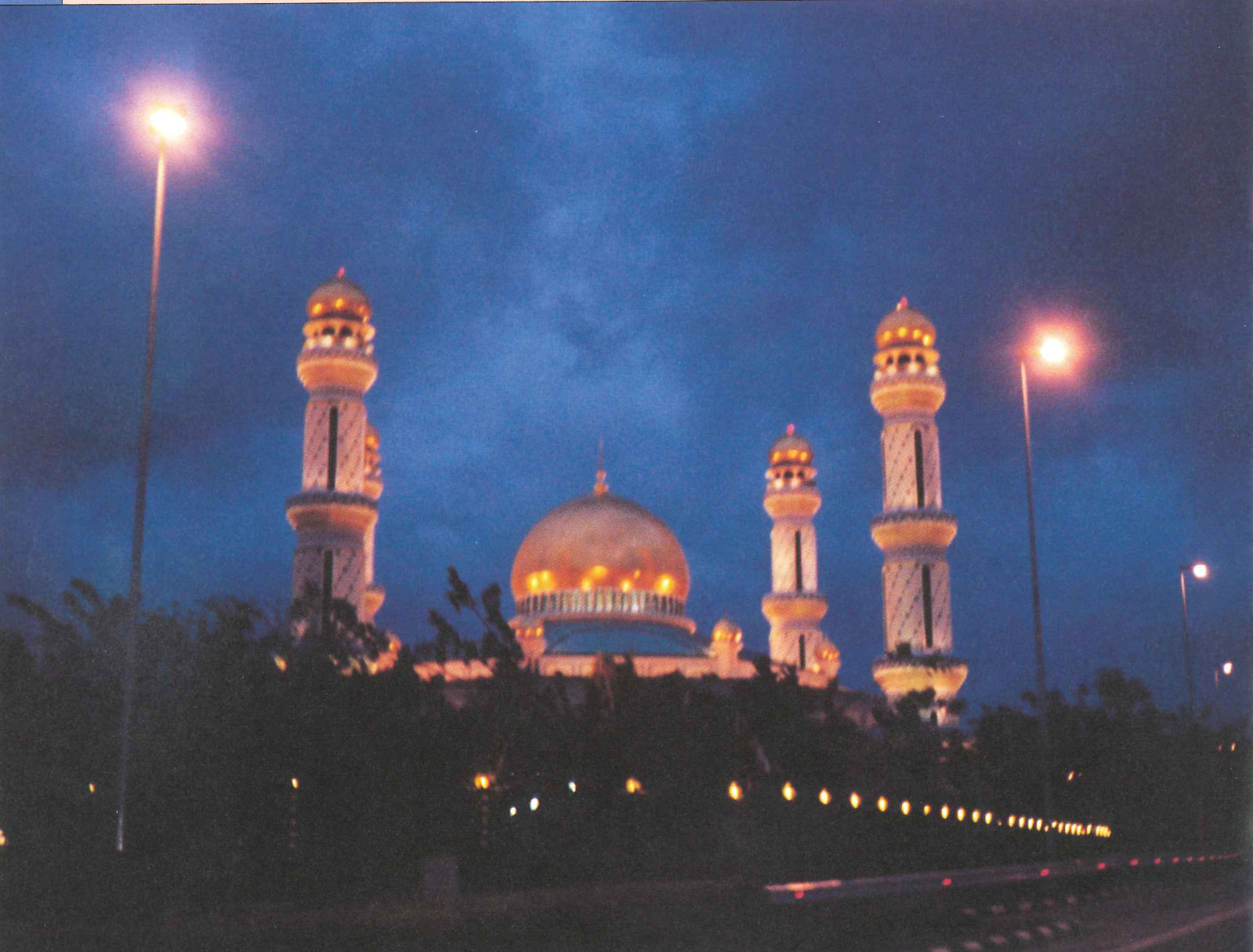
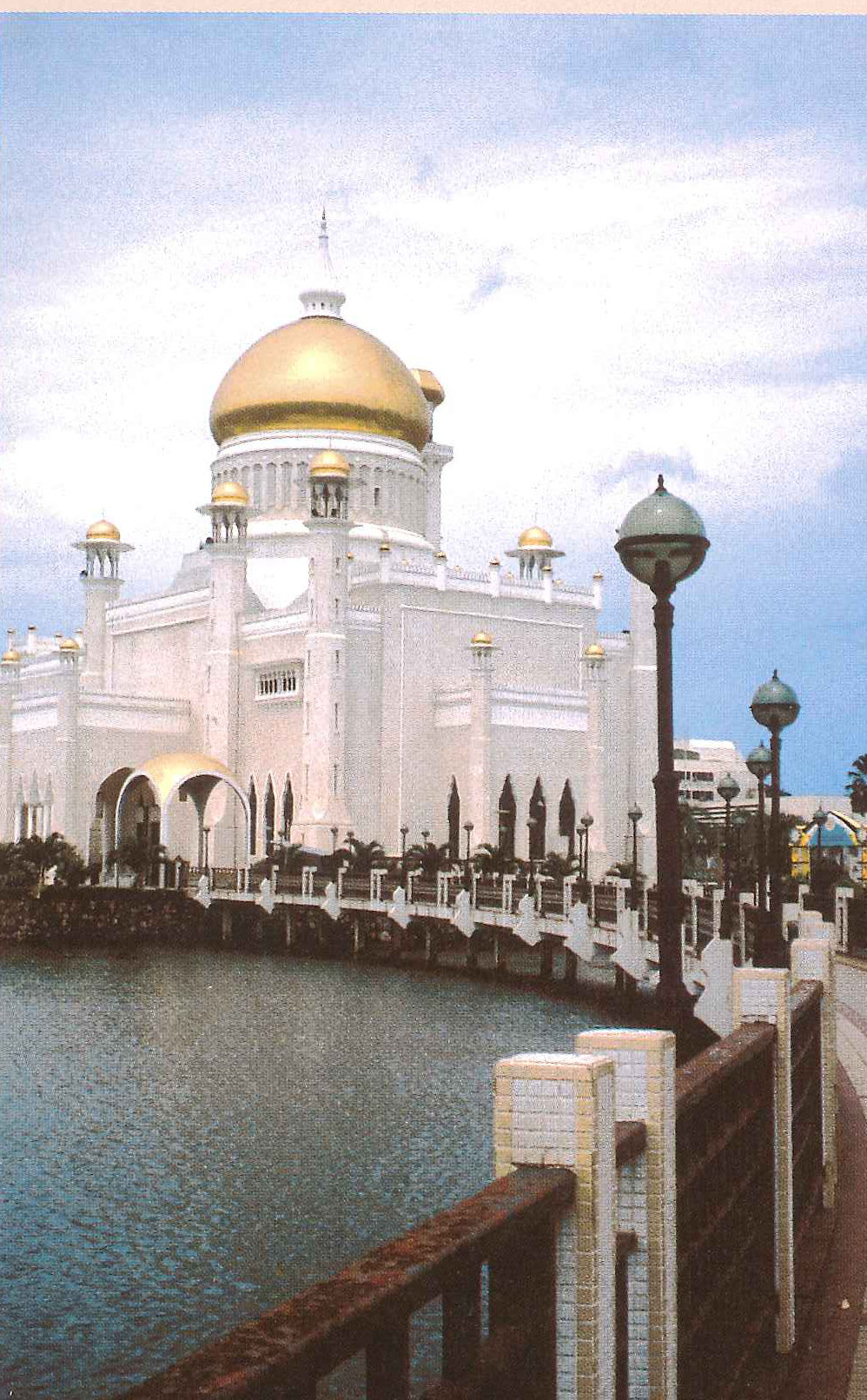
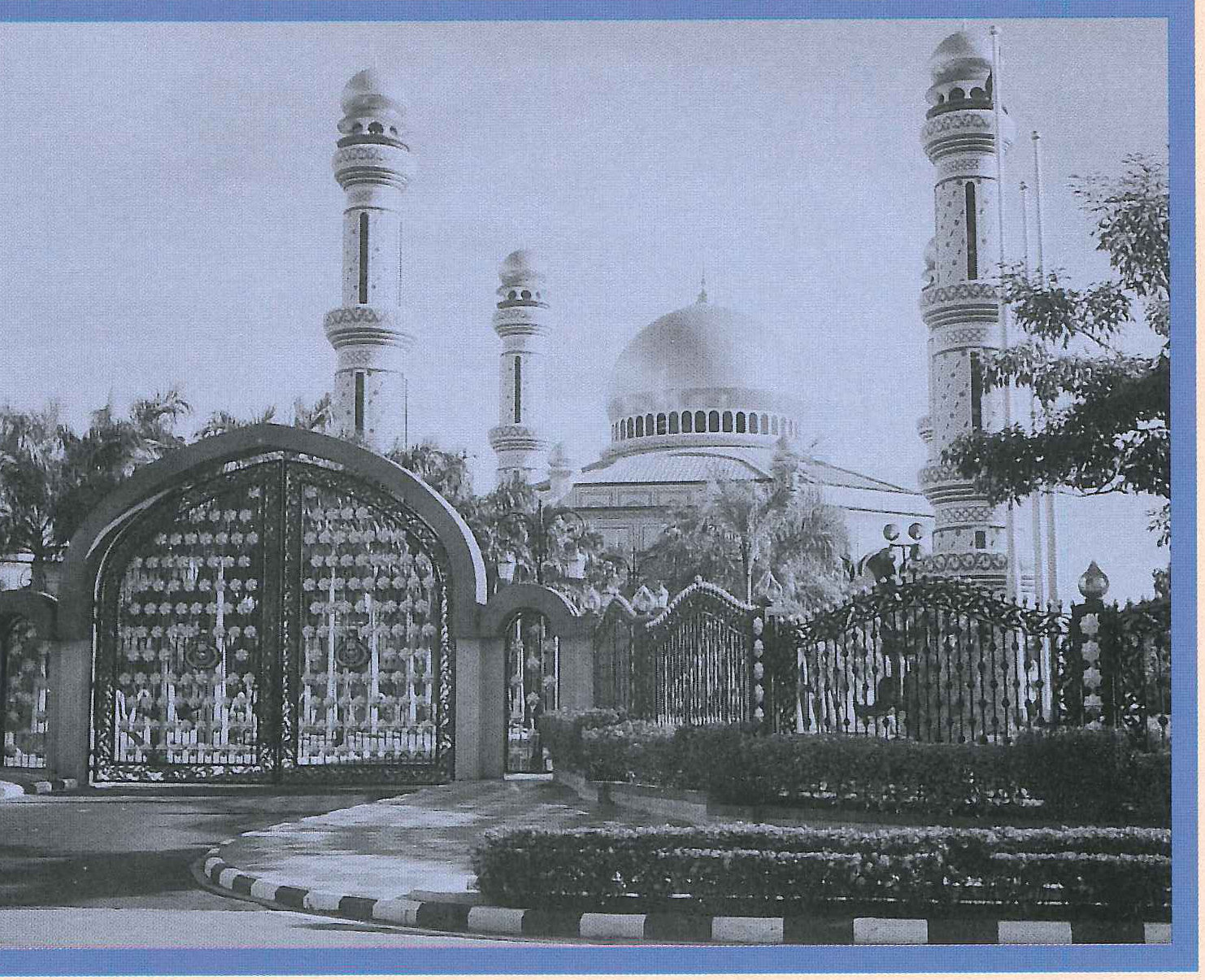
The so-called OPEC oil crisis of 1972 proved a huge boon to a tiny country whose principal revenues were realized from exports of oil and gas. Brunei turned fabulously wealthy, per capita. Because of the structure of ownership and the tradition of a Malay sultanate, some heads were richer than others. The Old Sultan (Sultan Sir Omar Ali Saiffudin, father of the current Sultan) lived much of his life in a modest royal bungalow at the edge of the water village, but with increasing wealth, he started to build larger and more conspicuous royal lodges partly as symbols to demonstrate the ability of Brunei to resume independence and partly to lead his people into new prosperity. One of the most beautiful landmarks in current Brunei is the gleaming white Sultan Omar Ali Saiffudin Mosque built on land reclaimed from a section of the water village. Its graceful gilt dome and minaret are virtually symbolic of Brunei.
The big jewel and symbol of modern, rich, self-reliant Brunei was to be the royal palace, planned as a lavish national statement to be ready for the resumption of Brunei’s independence in 1984. It is not built on stilts.
As to the ostentation of the palace, called the Istana Nurul Imam, the young Sultan, Hassanal Bolkiah, was quoted in an interview, “the new palace is a big one. But it was meant to be around for future generations as a landmark. … When a person is rich, he doesn’t buy a mini car, he buys a Rolls Royce.”
The palace is estimated to have cost between $350 and $600 million. It features acres of white marble and gilt, the best ornate furnishings, a throne room that can accommodate more than 2,000 people seated, and an indoor parking lot for 300 cars (many of them the Rolls Royces which are imported for the exclusive use of the royal family). The two large domes of the Istana are coated in 22-karat gold leaf.
The Istana is certainly an impressive fixture, but it is also the centre of a working sultanate. The offices of the Prime Minister (the position is held by the Sultan himself are located there. Many stately royal functions take place there, and perhaps the most lavish in recent years were the many events over a period of two weeks celebrating the marriage of His Majesty’s eldest daughter in 1996. During Ramadan, the male population of the country is welcomed to join in evening prayers at the mosque within the Istana (and the men and boys are given a cash envelope on departure). During the feast of Idul Fitri, the Sultan will personally receive a seemingly endless stream of visitors over three days. Everyone is welcome.
The Istana sits astride the Brunei River within view of the water village. Housing in Brunei has moved up from the mud banks and evolved in spectacular fashion, but it has not moved far from its seaside home.
View the original scanned pages →
Originally published in bout de papier, Vol. 16, No. 1 (1999) — Spring 1999 // Printemps 1999, pp. 11–14. Read the rest of this issue →



