
bout de papier, Vol. 16, No. 4 (1999-2000) — Winter 1999-2000 // Hiver 1999-2000, pp. 28–29
Recently when in Brussels for a farewell dinner for Sir Leon Brittan, I spent a few minutes at the Terveren Museum, King Leopold Il’s salute to himself I for having created the notorious Congo Free State. Amidst the exhibits was a 1890 table game of Congo exploration, complete with counters, looking a little like Monopoly. One of the counters was not surprisingly of H.M. Stanley (of Livingston fame) who did much to open the Congo to European exploitation; a second counter – unidentified — was of Captain William Stairs of Halifax, Nov: Scotia.
Stairs was an early Canadian in the Congo (1887-1892), but he was certainly not the first. Canadian missionaries of le: Peres blancs and of several Protestant sects had preceded Stairs to the Congo and, for that matter, throughout much of black Africa. Many graduates of the Royal Military College at Kingston, Ontario, had accepted commissions in the British army — frequently in the Royal Engineers — and soon thereafter found themselves in either India or Africa. Those in Africa included Major Huntley Mackay of St. Vincent de Paul, Quebec, a RMC graduate who earned the Distinguished Service Order for his border surveys in Bechuanaland (now Botswana) and for his later suppression of slavery in Sierre Leone. His engineering skills were utilized in the survey of the first railway to Lake Victoria, across what is now Uganda, where he died from recurrent malaria in 1891. The following year, another RMC graduate, Henry Robinson of St. John, New Brunswick, was killed in the tribal wars of Sierra Leone, having also earned a DSO. Colonel Sir Percy Girouard of Montreal, another RMC graduate, constructed the railway that allowed Kitchener to fight the battle of Omdurman in the Sudan and later built several of the light railways at the front in the South African War. Girouard later became Governor of Northern Nigeria (1907-1909) and Governor of Kenya (1909-1912). Yet another RMC graduate, Colonel Kenneth Campbell of Quebec, had already serviced as Acting Consul General in the Oil Rivers Protectorate of Nigeria (1891-1893).
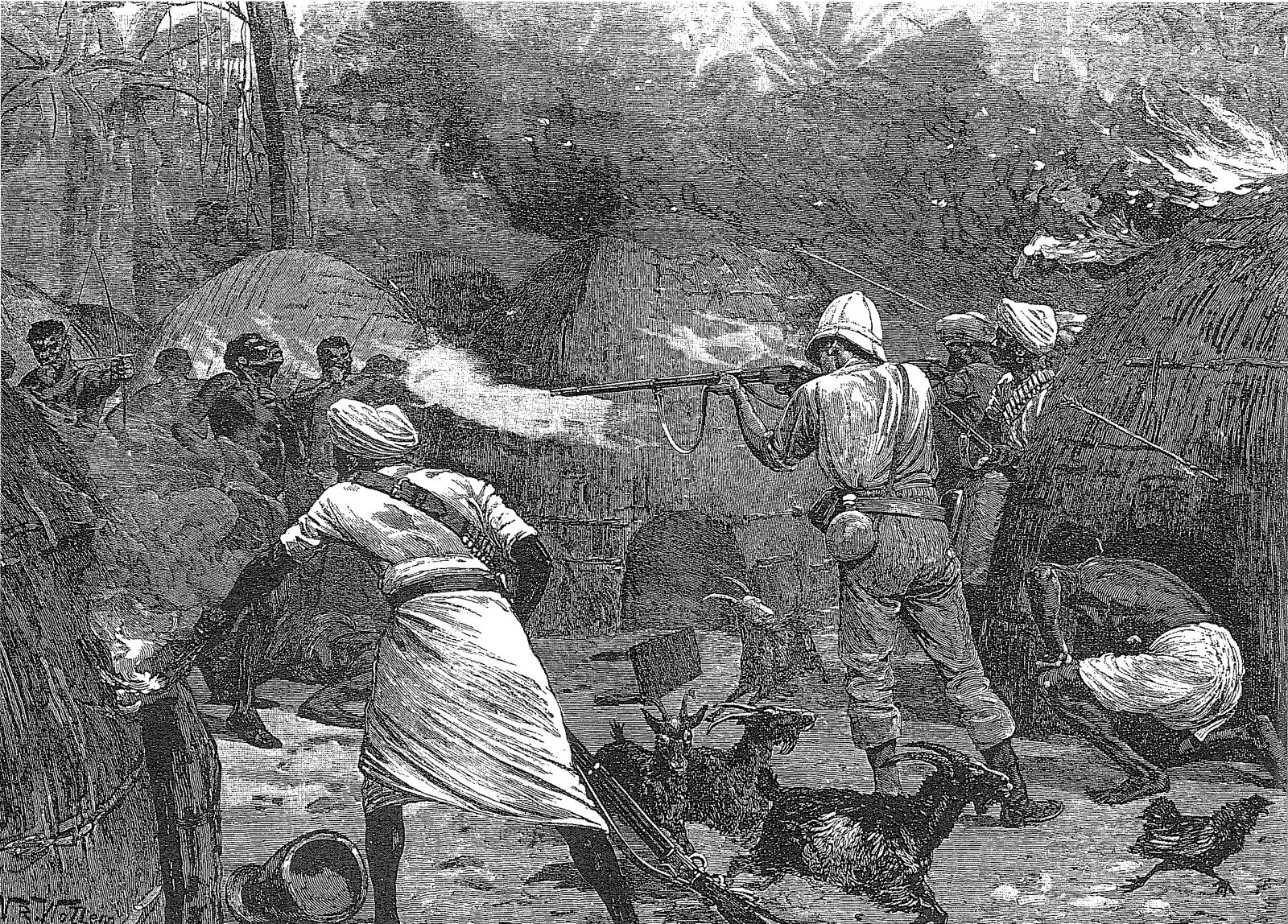
Now back to Captain Stairs. A 1881 graduate of RMC who, like so many others, had accepted a commission in the Royal Engineers, William Stairs soon tired of peacetime soldiering in Britain. From among hundreds of applicants, Stanley accepted Stairs as a volunteer in the flamboyant explorer’s third and final African expedition, this time to “rescue” the last of General Gordon’s governors in the equatorial Sudan, Emin Pasha (actually a German, born Eduard Karl Oskar Theodor Schnitzer), who in fact did not want to leave the Congo. The three-year trek across central Africa with Stanley’s caravan, following its ascent of the Congo, left Stairs brutalized. What Joseph Conrad was to describe in Heart of Darkness as happening to those Europeans who ventured into Africa had happened to Stairs: eventually he too was cutting off the hands or executing recalcitrant and rebellious porters in the brutal traditions of the Congo — and of King Leopold II.
The Congo Free State was (until 1908) Leopold’s personal fiefdom; it was not a colony of Belgium. On the King’s behalf, Stairs returned to the Congo soon after the completion of the Emin Pasha relief expedition. His commission was to secure the remote region of Katanga for the Congo Free State. From Zanzibar, where both Arab slavers and Free State expeditions made their way into the eastern Congo, Stairs led a large expedition that eventually seized Katanga, but only at the price of killing the local chief and several of his bloody henchmen who had ruled Katanga with a reign of terror. Stairs himself died of recurrent malaria before he regained the coast at the mouth of the Zambesi (where a stone cross, erected later by a sister, still marks his neglected grave).
Adam Hochshild, in his King Leopold’s Ghost, winner of this year’s Gelber prize, recounts dramatically the mounting horror of Leopold’s notorious regime in the Congo. My own recent book, African Exploits; The Diaries of William Stairs 1887-1892 (published last year by McGill-Queen’s Press) describes a Canadian dimension to the unhappy scramble for Africa and explains why Stairs was pictured on a counter in a table game in the Terveren Museum in Brussels.
View the original scanned pages →
Originally published in bout de papier, Vol. 16, No. 4 (1999-2000) — Winter 1999-2000 // Hiver 1999-2000, pp. 28–29. Read the rest of this issue →



