bout de papier, Vol. 17, No. 1 (2000) — Spring 2000 // Printemps 2000, pp. 17–21
by David Mulroney All photos courtesy of the Canadian Trade Office in Taipei.
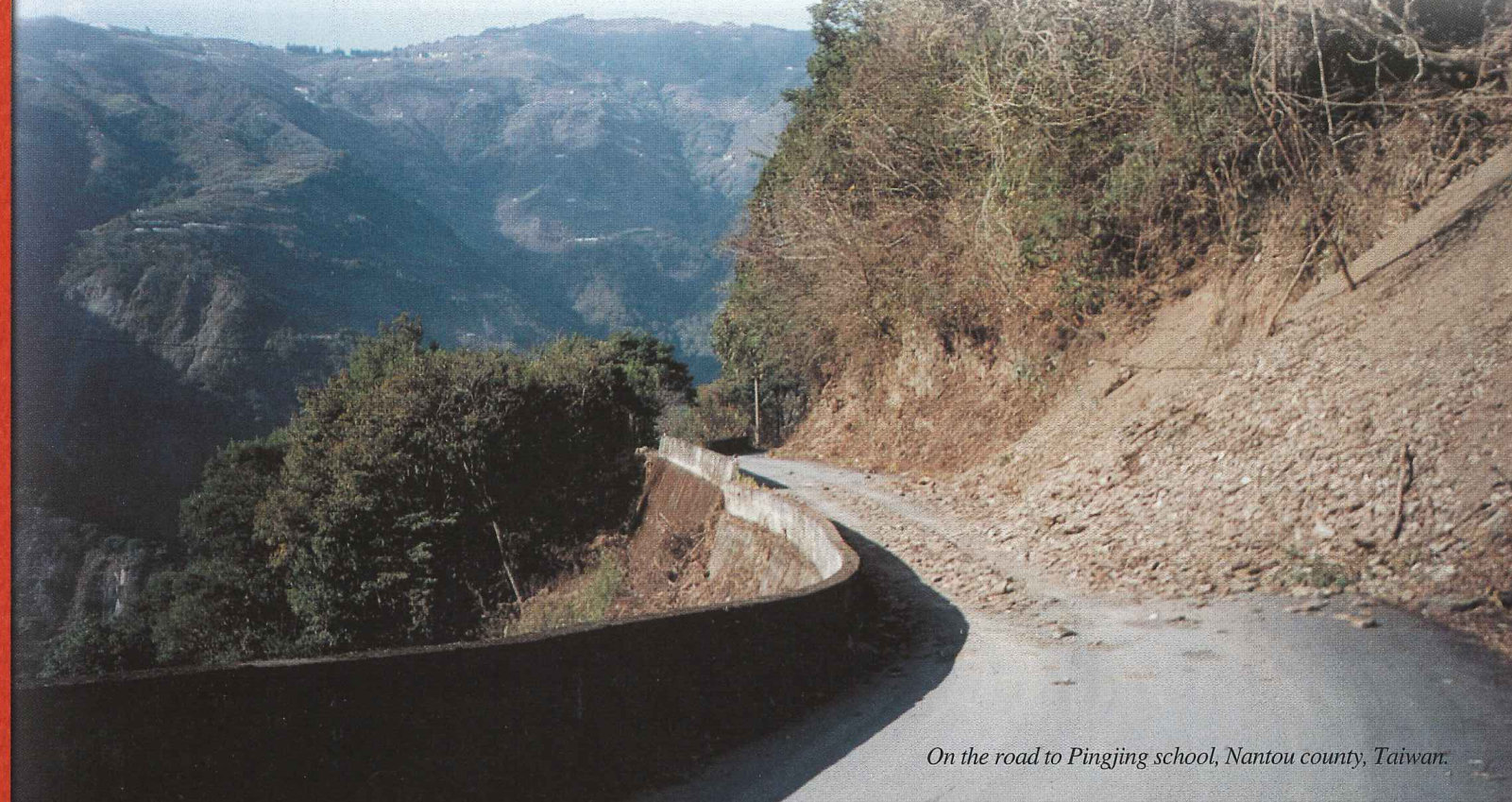
In the week before Christmas, three months to the day of the devastating ’9/21’ earthquake, I stood with colleague Mark McDowell and my son Aidan in the classroom of an aboriginal school high in the hills of Nantou county in the mountainous central part of Taiwan. We had waited some time to make the trip. Landslide damage was evident as we climbed, and only recently had it been dry enough to trust the roads in the high country. But it was dry this day, and sunny. The hills, where not scarred by landslides, were mainly given over to tea cultivation, and the roadside was bright with poinsettia, called “red Christmas flower” in Chinese.
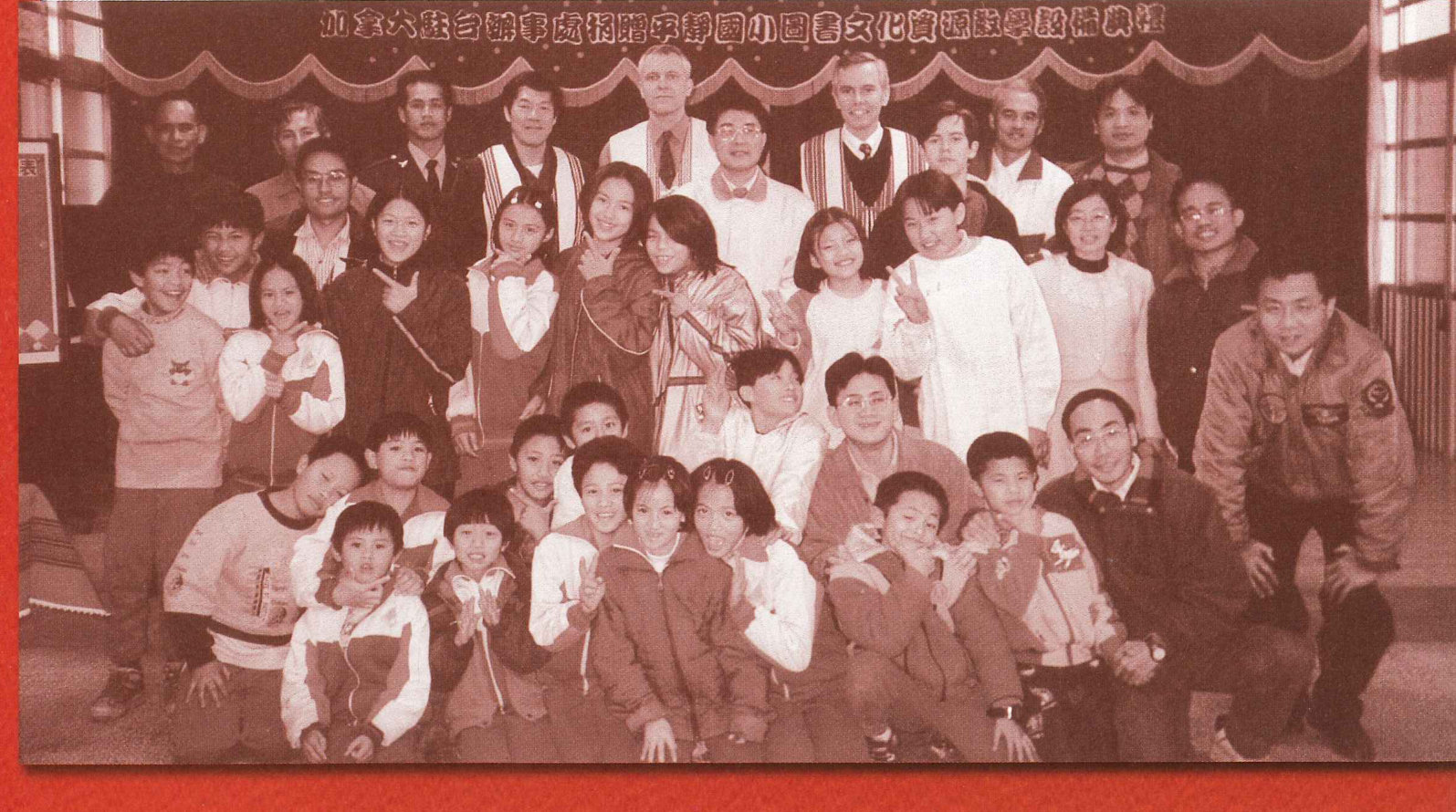
Our business was the presentation of a cheque for $50,000, Canada’s contribution to the restoration of the school’s library. Although the main portion of the school had escaped serious earthquake damage, the library existed only as a faint outline on a cracked concrete pad. Standing in that sunny school room, drinking tea and exchanging greetings with teachers and their high-energy students, it was hard to imagine what this place, and the rest of central Taiwan, must have been like just three months earlier.
Given the size of Taiwan — slightly larger than Vancouver Island – almost everyone felt the 9/21 quake to some degree. In all, a chunk of earth 100 kilometres long, 40 kilometres wide and 25 kilometres deep was repositioned. In Taipei, the arrival of the quake just before 2.00 a.m. on September 21 (hence ’9/21’) woke even the deepest sleeper. As buildings rocked and swayed, power failed, plunging the city’s neon-lit skyline into true darkness. A downtown apartment hotel collapsed, and many other structures were damaged. The building that houses the Canadian Trade Office (CTOT) also suffered obvious surface cracking. Inside, bookcases were down, heavy furniture had repositioned itself and the stairwells were thick with dust, plaster and fallen masonry.
But the real devastation had occurred in central Taiwan, a little over 100 kilometres away. The 9/21 quake was distinctive in a number of ways. First, it was big, registering 7.6 on the Richter scale. It was also relatively shallow, erupting just a half kilometre below the earth’s surface, a phenomenon that was evident in the violence at the epicentre. Mountains moved, lakes were drained, and entire towns were transformed into jumbles of tilted buildings, creating a disorienting, almost dizzying landscape that mocked the natural order of things. In all, some 2,400 people lost their lives, 11,000 were injured, and another 100,000 were left homeless.
For those of us arriving at the CTOT that September morning, there were many pressing challenges, but the first was to provide assistance to any injured or destitute Canadians. Here we had the distinct advantage of working from a recently updated emergency plan, complete with a fresh listing of resident Canadians and a contingent of newly appointed wardens. But the disadvantages were far more extensive, starting with the virtual collapse of all electronic systems, except for two phone lines in the office. Added to that was the fact that central Taiwan is home to a significant number of young Canadians working as language teachers. As it happens, many of them were recent arrivals or short-term visitors, and had therefore not registered with us. This became evident as we worked through the list of people to contact, and found that worried relatives in Canada were adding so many names that our list was, hour by hour, getting longer, not shorter.
We quickly set to work patching together a communications system, relying on phones at staff quarters and in a room in a nearby hotel. Newly-arrived Trade Commissioner Josh Hodgson, nominal occupant of the room, obligingly showed up for work carrying his personal effects in a backpack. He wouldn’t see much of his room, or of Taipei, in the days ahead. Josh formed part of the emergency consular team that we sent down to Taichung, the major city closest to the quake’s epicentre. This was to prove absolutely critical to our success in finding and assisting Canadians.
Our Taichung team, headed by Senior Trade Commissioner Scott Fraser, worked out of a temporary office that they set up in their hotel. We got their contact numbers into print and radio bulletins, and the team was immediately in business. By day, team members travelled to the quake-ravaged towns of Nantou and Taichung counties. By night, working in concert with British and Australian colleagues, they visited the tent cities that had sprung up throughout Taichung, and searched other places where young Canadians could be expected to congregate. Many language teachers, now homeless and at least temporarily out of work, had begun to collect in Taichung, hoping to re-connect with friends and colleagues.
In three days, Scott, Josh and colleagues had located more than 400 Canadians, provided consular assistance to those in need, put people in touch with worried families back home and reported extensively on local recovery efforts. The addition to the team of Betty Mak, a consular officer from Hong Kong, and David Bennett, a CTOT staff member who is himself a former language teacher, provided us with additional expertise in terms of emergency consular operations, and a particular insight into the needs of our local Canadian population.
It isn’t often that managers have to ask staff to endure real hardship, even danger, but the Taichung team dealt with this on a daily basis. Aftershocks, dramatic in Taipei, were far more severe in central Taiwan, and landslides and collapsed roadbeds were a daily menace on trips to outlying towns for our Taichung team.
Back in Taipei, work continued on a number of fronts. The consular group was headed by Roger Chen, who, just a few weeks after his own arrival in Taipei, found himself leading his new team through the kind of crisis we normally only see in training exercises. Fortunately, he and Tim Bowman, who works in the Visa Section, had already led CTOT staff through a variety of emergency scenarios, allowing us to think through “what ifs” like being confronted in the middle of the night by an earthquake. Thus, we had already updated our emergency phone lists and reminded ourselves of the need to keep on hand bottled water, transistor radios, flashlights and plenty of batteries. And a good thing, too: Taipei’s ubiquitous 7-Eleven stores had been cleaned out of much of the above within 24 hours.
For his part, Mark McDowell, who works in our General Relations section, helped to establish priorities for Canadian assistance. Others, like Trade Commissioners Martin Charron and Ping Kitnikone, helped to reprofile the visits and events of our busy fall program. Virtually everything was cancelled in the immediate aftermath of the quake, and most non-essential events were postponed for about a month.
Often, during the course of the day, staff would note a regular, almost rhythmic cadence emerging in the incessant creaking and popping that had begun to emanate from the walls of our office. This was the sign that a major aftershock was in process, something that would build in intensity, making our building rock and sway, and us with it. Fortunately, this didn’t do any major damage to the structure, and local engineers assured us that the building would need only cosmetic repairs.
More problematic was the onset of strict power rationing. This was an effort to keep Taiwan’s huge electronics industry functioning in the face of quake-related damage to power distribution (and down time for the semiconductor industry was actually remarkably short), but it left us in the dark for at least half of each day for roughly two weeks following the quake. We scrambled to reschedule operations, paying particular attention to the need to maintain our visa services (we issued more than 150,000 in 1999). This led to split shifts for some, and saw Mark McDowell, definitely not a morning person, briefly nominated as CTOT’s “Night Manager.” After several instances of people being trapped in darkened stairwells or, worse, elevators, nobody on after-hours duty ventured far without cell phone and flashlight.
I am very proud of the fact that more than 30 members of the CTOT team received merit awards for their work in the weeks following 9/21.
We also worked very closely with a range of colleagues in Ottawa in shaping a Canadian response to the crisis, with a view to achieving a number of objectives: first, to provide assistance that would be meaningful long after world attention had turned elsewhere; second, to work with the most capable of the non-governmental organizations active in the relief effort; and third, to try to find partners of particular relevance for Canada and Canadians.
It was in fact clear to us that the quake had been felt in a very real sense by Canadians. CIDA Minister Maria Minna and Secretary of State Asia-Pacific Raymond Chan announced that Canada would be contributing $500,000 for earthquake relief. Meanwhile, in cities like Vancouver and Toronto, charitable organizations and community groups were launching fund-raising activities of their own. Noting this, we felt that it would be very useful to find opportunities for synergy, using the funds available to us to leverage and enhance other activities.
We therefore suggested creating something like a Canada Fund to disburse the funds through the CTOT. This is essentially what happened, although a major portion of the funding was sent directly from CIDA to support the activities of the local Red Cross in Taiwan. The remaining $200,000 was sent to the CTOT, and we distributed it among four local recipients, with the equivalent of $50,000 going to each.
The final determination of recipients was made easier thanks to a special fact-finding visit that Raymond Chan made less than two weeks after the quake. He travelled to Taiwan at the head of a group of doctors and nurses from Richmond, B.C., whose trip he had helped to organize. This was truly a hands-on project. On arrival, Mr. Chan formed part of the bucket brigade that shifted boxes of medical equipment from the carousel to waiting baggage trucks. He then drove straight from the airport to the quake zone, where he met with leaders of the relief effort, visited stricken communities, and thanked local Canadian volunteers who had assisted out Taichung team. This special gesture of support was deeply appreciated. The doctors and nurses from Richmond were immediately effective, tramping in to remote locations, and providing counselling for young victims, a keenly-felt need.
Two of the groups we chose to work with are Buddhist charities that have won wide acclaim for their swift and efficient benevolence. Both are also active internationally, and, significantly, both have many members in Canada. Fo Guang Shan, or Buddha’s Light, used part of their funds to support the visiting medical team from Richmond. Tzu Chi is using funds from Canada to help support their program to supply housing to the homeless — whose plight is one of the major legacies of the earthquake.
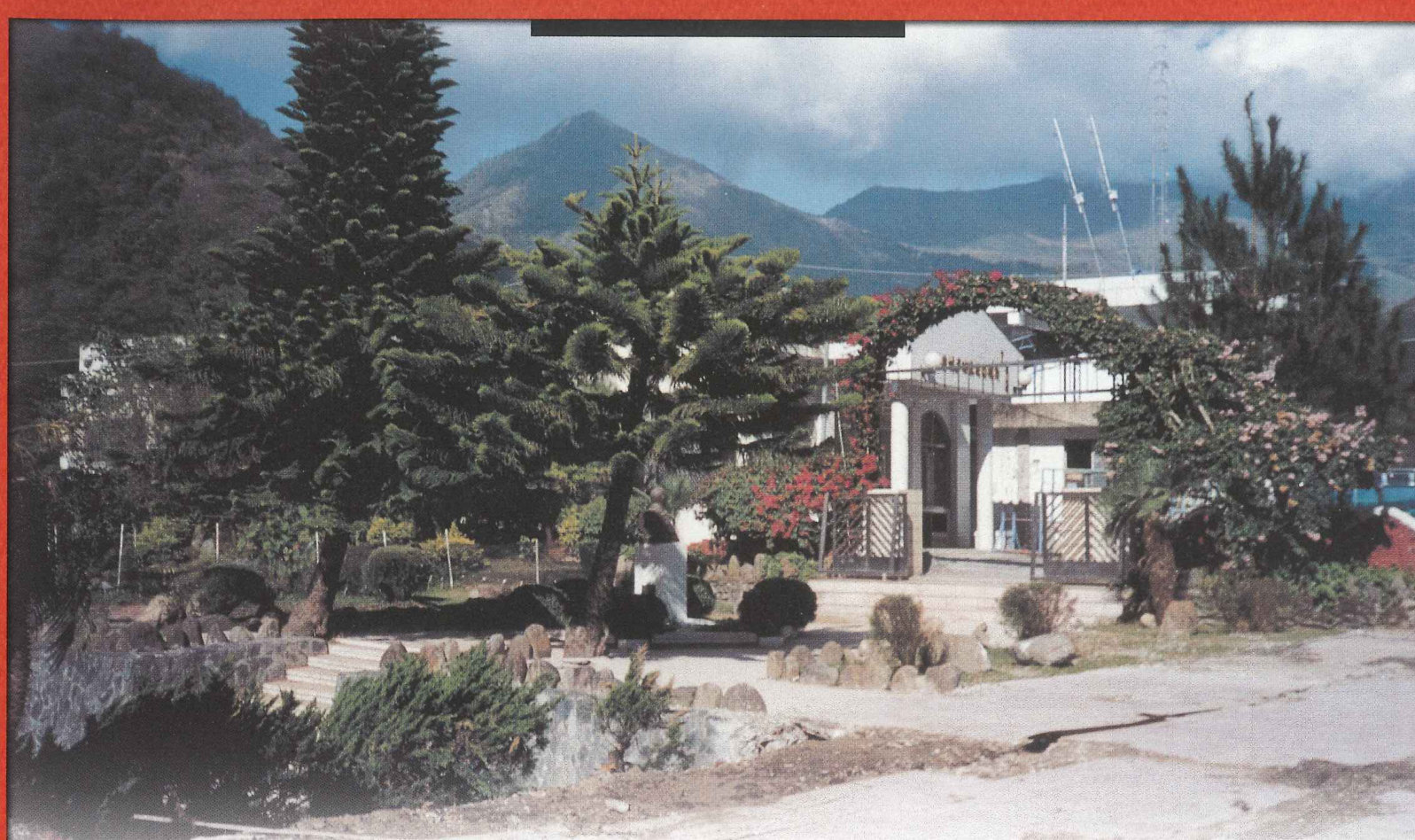
We also wanted to assist Taiwan’s aboriginal people, many of whom live in the high mountain areas of central Taiwan. Over the past year, promoting cooperation between aboriginal groups in Taiwan and Canada has been a priority for our office, so this part of the relief effort reunited us with some good friends. Among the most important is the Presbyterian Church of Taiwan, which has been helping local aboriginal peoples since the late 19th century, when pioneering teacher and medical missionary George Leslie Mackay of Oxford County, Ontario, began his ministry here. (Mackay, who enjoys a local reputation for unstinting humanitarianism that is akin to the legacy of Norman Bethune on the mainland, is an inspiration for us. We have borrowed the title of Mackay’s account of those days, From Far Formosa, for our own electronic newsletter.) The Presbyterians are using their funds to provide relief to aboriginal communities in Renai township. Much of this will be delivered from a church community centre just up the road from the school library we are planning to rebuild, a project that represents the fourth and final destination for. the locally-delivered Canadian funds.
We also made sure that we stayed in close touch with wider Canadian relief efforts. The National Research Council dispatched to Taiwan a team of engineers and construction experts. In fact, over the past 20 years, NRC engineers have travelled to major earthquake sites worldwide to study how structures perform under extreme stress, contributing to an organic body of work that helps to improve building codes in places like Canada, the USA, Japan and, now, Taiwan. I should note that the NRC trip was made much easier thanks to the cooperation of Robert Perrault, General Manager Asia & Pacific for Air Canada, who consistently lived up to his standard response: “whatever you need, just let me know.
Meanwhile, community groups across Canada raised something like $6 million, and the money keeps coming in. Individuals did some exceptional things, too. Matthew Lien is a Yukon-based musician whose environmental themes are tremendously popular in Taiwan. A previous CD sold more than 130,000 copies. In the wake of the 9/21 quake, Lien launched a Rebuilding Formosa tour whose proceeds were directed to relief and recovery. Matthew’s first concert, an open-air fund raiser in Taipei, drew 30,000 fans. Other individuals, like Dr. Andrew Szanajda, a Canadian resident in Taichung, simply showed up at our emergency office in that city and started working.
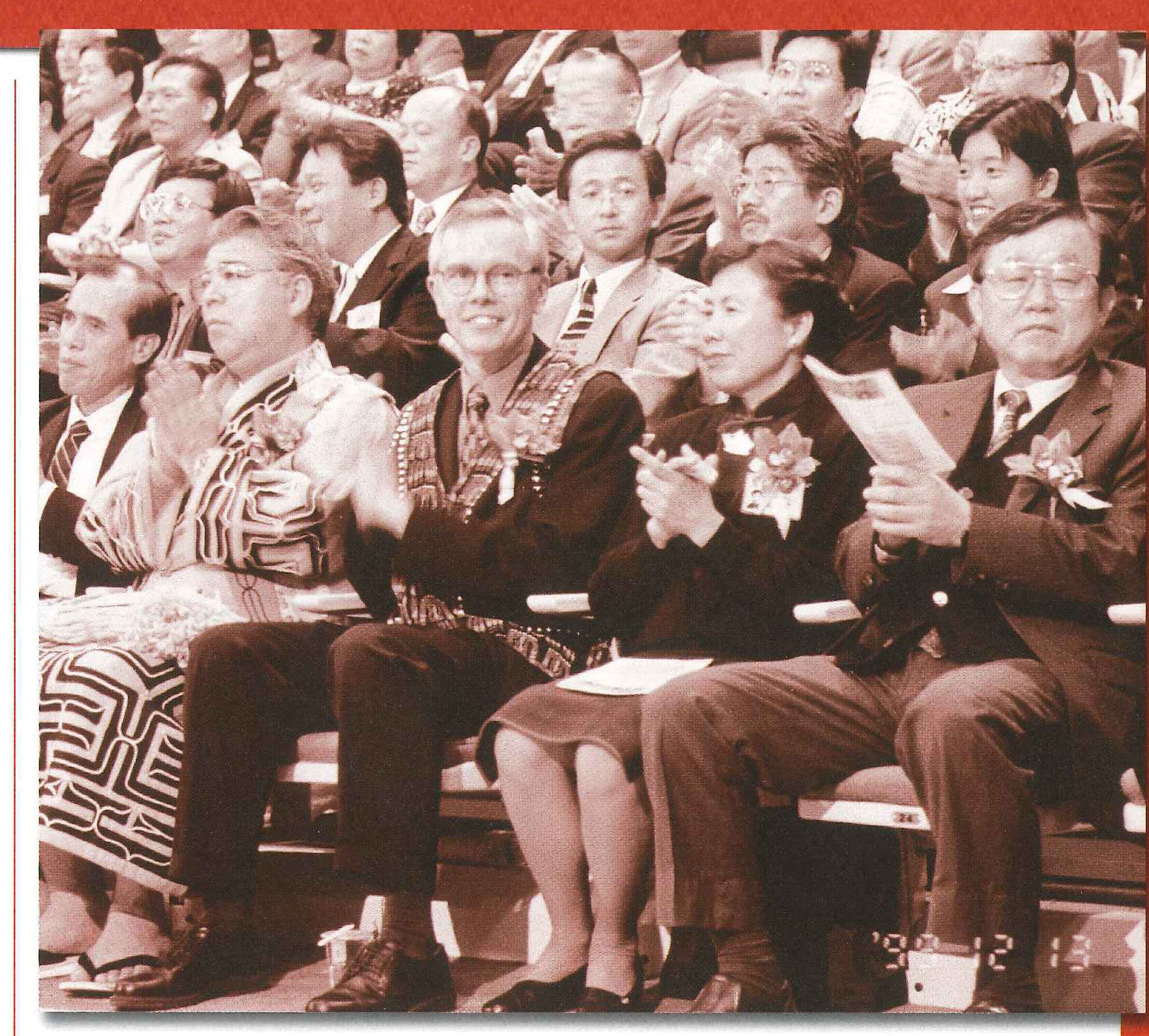
People in Taiwan have been quick to recognize this spontaneous reaction from Canada and Canadians. Groups like the NRC team and the doctors and nurses from Richmond were welcomed on the street, in airports, everywhere, like celebrities. Matthew Lien’s concerts were widely covered in the press. Each of the local partners that we worked with organized public events during which Canada and Canadians were singled out for special mention. The highlight was a televised “Thanksgiving’ concert organized by Taiwan’s Aboriginal Affairs Commission and featuring some of Taiwan’s top pop music stars (many of them from the aboriginal community). During the show, I was presented, on behalf of the CTOT, with a ceremonial bowl made by an aboriginal artisan, a work of art that now has a place of honour in our office.
Quite apart from the immediate good that has been done, our involvement in the recovery process has led to a better understanding of just who Canadians are. We have been able to challenge some assumptions and encourage people to think of Canada and Canadians in new ways. People are more likely now, for example, to think of Fo Guang Shan and Tzu Chi as Canadian organizations, too. They are more aware of the fact that Canada has its own aboriginal peoples, that they have also faced and overcome many challenges — and that we therefore have much to share. Groups like the NRC, who are already active in Taiwan, reinforce the notion of Canada as a source of technology. And our links to the Presbyterian Church underline the message that none of this is new. Canadians have been making a contribution here since the days of Mackay.
Nor have we lost sight of the fact that earthquake recovery efforts will continue for a long time. A relief worker from Tzu Chi summed it up for us just days after the quake: “The rescue work is over, but the caring work continues.” This has been very true for Canadians. Earthquake specialists from Taiwan have already visited Canada to share information on building technologies. Our program for cooperation in aboriginal affairs this year includes a focus on entrepreneurship and assistance to small business, something that recognizes the economic hardship faced by many shattered communities. We continue to stay in touch with friends in Tzu Chi and Fo Guang Shan, tracking, among other things, their continuing efforts to re-house quake victims. Matthew Lien has been back to raise awareness for Earth Day, and we are talking with him about doing a free concert in Nantou County this September. We have, of course, made several trips back to that school room high in the hills, dropping off books that we have been collecting for the library, visiting old friends, and helping to nurture a new awareness of Canada in Far Formosa.
View the original scanned pages →
Originally published in bout de papier, Vol. 17, No. 1 (2000) — Spring 2000 // Printemps 2000, pp. 17–21. Read the rest of this issue →