
bout de papier, Vol. 17, No. 4 (2000-2001) — Winter 2000/2001 // Hiver 2000/2001, pp. 30–31
by Peter Roberts
The following extract is reproduced with the permission of The Golden Dog Press, Ottawa. Raising Eyebrows: An Undiplomatic Memoir by Peter Roberts is presented as a series of remembered highlights from Mr. Roberts’ remarkable career. Posted to some of the most historically significant, interesting and turbulent locations of the last half of the 20th century, Peter Roberts “operated” in China and Viet Nam, was with Canada’s mission to NATO in Brussels, and enjoyed the distinction of ambassadorial rank in Moscow and Bucharest.
A Party for Trudeau
In February 1984 Prime Minister Trudeau came to Moscow for the funeral of Yury
Andropov, General Secretary of the Communist Party of the USSR. I was the Canadian ambassador. Unlike the funeral which followed it (that of Chernyenko, the last GenSec before Gorbachev, that one attended by our new PM, Mulroney), this was no ordinary funeral. Andropov had a twisted history. He was Soviet ambassador in Hungary at the time of the Soviet suppression of the Hungarian revolution in 1956, with many deaths, including those of the two heroic Hungarian revolutionary leaders, Nagy and Maleter. He was widely held to blame for it. What nonsense! As though ambassadors had that kind of power. The whole thing was organized by the KGB and executed (the right word) by the glorious Red Army.
Andropov returned from his duties in Hungary and after doing several other jobs, was made chairman of the KGB. I had some direct information about him while he was at that post. He showed a Russian colleague of mine the hand of friendship, something for which previous heads of the KGB, the NKVD, the OGPU and the CHEKA had not been remarkable. Then, following the death of Leonid Brezhnev, the Central Committee “elected” him General Secretary of the party. (At that time there were no such thing as real elections in the Soviet Union, not even in the Central Committee. Everything was rigged in advance by the power-holders.) Thus Andropov came to the pinnacle of Soviet power.
The first foreigner to meet him in that office was Chancellor Kohl of the Federal Republic of Germany. Kohl was impressed. This, he said, is a civilized man, one you can talk to. Much the same kind of remark that Mrs. Thatcher made about Gorbachev when she first met him in London. A new generation of Soviet leader.
And indeed, it is now widely accepted that Gorbachev was a friend and protégé of Andropov, although Andropov was a good 20 years older.
Then, before he had time really to pick up the reins of power, Andropov disappeared. He still signed documents, still had articles in the press (written for him, of course). His name was still everywhere. He had clearly not been overthrown or shot. So he was obviously ill, very ill. Too ill to appear on TV or speak on radio. We in Moscow speculated that he had kidney disease, was “hooked up” to dialysis. In the winter of 1984 we heard on Moscow radio the “solemn music” which means that the maximum leader has either died or is about to. Then the announcement of his death.
Pierre Trudeau, then Prime Minister, came for the funeral. It was a gesture of politesse to the Russians as a whole, and in particular to his old friend, Aleksandr Yakovlev, 11 years Soviet ambassador in Canada, a liberal by Soviet standards, and a close friend of Trudeau who, to the intense annoyance of the Department of External Affairs (as it then was), received Yakovlev privately, just the two of them at dinner. External Affairs did not know what had gone on between them. That did not bother Trudeau one bit.
I went with Trudeau to the funeral in Red Square. It was grand, with the stands packed. Not necessarily this time with factory workers trucked in. People had a feeling, already, that the times were changing, and that Andropov’s death was a loss. We had speeches from the Lenin Mausoleum, the Chopin funeral march played as only Russian military bands can play it, and then the end. Trudeau left in a hurry with his staff. I lingered. I wanted to see it through. Presently everyone was gone. Only Peter sitting in the stands, and one solitary soul walking desolately in circles in the centre of Red Square. I looked closely and recognized Georgy Arkadevich Arbatov, Director of the Institute of USA and Canada Affairs of the Academy of Sciences. I went fairly often to his office. We always had a little vodka and a little whitefish from Iceland (all courtesy of the Central Committee privilege store) and then talked about the state of the world. Arbatov knew a lot about missiles, then a hot subject, and instructed me. Although he lived in Starokonyushenny Pereulok, directly across that narrow lane from our embassy, and came dozens of times to our house, I never set foot in his. I could go to his office for vodka and whitefish, but visits to private apartments were strictly forbidden.
There we were in Red Square. Just the two of us. Everyone else had vanished from this vast space. It was late afternoon, yet I saw the tears rolling down Arbatov’s cheeks. He was embarrassed at his display of emotion. “This is a terrible loss for Russia,” he said, and turned away. I made my way home on foot, a 10-minute walk. I had the feeling that there was about to be a sea-change, although the aged and ailing Chernyenko was not the one to bring it about. It had to await the arrival of Gorbachev, a year later, after Chernyenko’s death. Gorbachev stood the world on its head.
That night the unbelievable happened. I had by this time altogether spent three years in Moscow, and had been only twice to a private home, both times during my first posting: once in the cramped space of one of our embassy drivers, once in the dacha of the aunt of a geography student who had spent time in Canada. The driver, the student and the aunt were all nervous, and were glad to see the last of us. We had more or less forced ourselves on them.
But the night of the Andropov funeral I had a phone call from Yakovlev, formerly ambassador in Canada and now risen to the grand heights of Director of the Institute of Politics and World Economy, where new economic ideas were being hammered out. “Ambassador,” he said, ’I want you and the Prime Minister to come to my apartment tomorrow night for a private family dinner. No wives.” Trudeau by this time had no wife, but I had one, who sighed in resignation but was not surprised. “Don’t come in your embassy car,” continued Yakovlev, “T’1l send i car for you at six.”
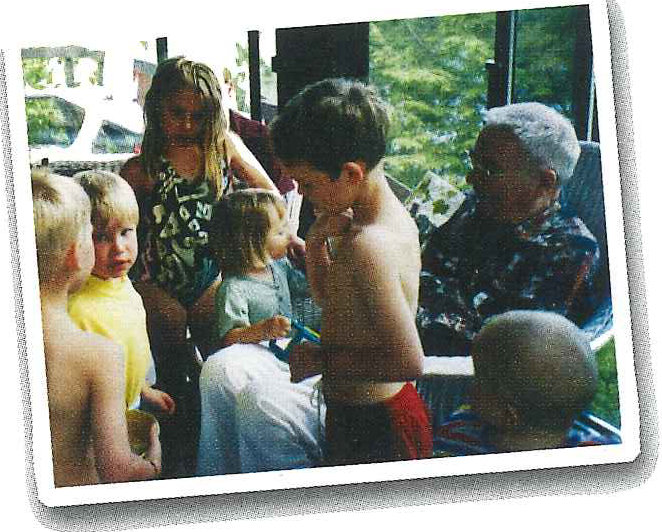
At six the next evening, we were on our way in what I took to be a KGB car. There could be no doubt that the KGB had approved this adventure. I tracked where we were as far as the Tchaikovsky Hall. Then we plunged into a labyrinth of little streets north-west of the Hall. Soon we stopped (but I could never find the place again). Yakovlev was at the door to greet us, took us up to a fifth- or sixth-floor apartment. It was large by any standard, vast by Soviet standards. There was a great gathering of people, all Yakovlev’s family, from babushka (granny) down to the most newly arrived grandchild. Enthusiastic greetings for Trudeau, and even for me. The table was laden with every imaginable Russian food, and much non-Russian. There was vodka, wine and beer.
I have mentioned before that Trudeau never drank the strong stuff, like vodka. But Yakovlev poured a large one for him, one for me, one for himself. He proposed a toast. I can’t remember now to what, but probably not to those tired warriors mir i druzhba (peace and friendship) but more likely to something harking back to their relationship in Ottawa. Trudeau seized his glass and downed it to the bottom, like a man. “Do dna,” they say in Russian, “to the bottom.” Then, to my utter astonishment, he had a second. After that, he walked up to the dining room window, which looked out on a blank concrete wall. “What a beautiful view, “ he said, dreamily. We all turned to the magnificent feast on the table, and made pigs of ourselves. Trudeau has always been a hearty eater, and stood on no ceremony. Although he was not a practised drinker, he showed no sign of being affected by his two large vodkas, talked animatedly with granny, several aunts and uncles, all the children and grandchildren. He loved every minute of it. At midnight or so we got back in our KGB car, and made our way home.
So far as I know, this was the first time a member of the Central Committee, director of a major institute, had invited a foreign head of government and a foreign ambassador to a family dinner. It was the beginning of the end of Soviet Russia.
View the original scanned pages →
Originally published in bout de papier, Vol. 17, No. 4 (2000-2001) — Winter 2000/2001 // Hiver 2000/2001, pp. 30–31. Read the rest of this issue →



