
bout de papier, Vol. 17, No. 4 (2000-2001) — Winter 2000/2001 // Hiver 2000/2001, pp. 13–15
In April of 1999, Canadian Consul John Morrow spent a week walking, flying boating, and driving the border between Texas and Mexico with agents of the US Border Patrol. By night, by day, and even by infrared light, he witnessed first hand the efforts made to control undocumented aliens crossing the border. All statistics quoted in this article were supplied by the Border Patrol in April 1999.
The border between Texas and Mexico stretches for some 1,200 miles and in most places the land is desolate and dry, void of human habitation, visited only by those trying to cross the border unnoticed and the United States Border Patrol. Along the banks of the Rio Grande River, both the hunters and the hunted play a waiting game, guessing and second guessing where the illicit cargos, ranging from drugs to illegal aliens, will cross once the sun goes down.
Contrary to many people’s expectations, the Rio Grande does not form much of a physical barrier. While its waters do claim some lives each year, particularly in the spring when it runs fast and deep, in many places it can be crossed quickly and safely, often simply by wading. The river is, in fact, the least of the worries of those seeking illicit entry into the United States from Mexico.
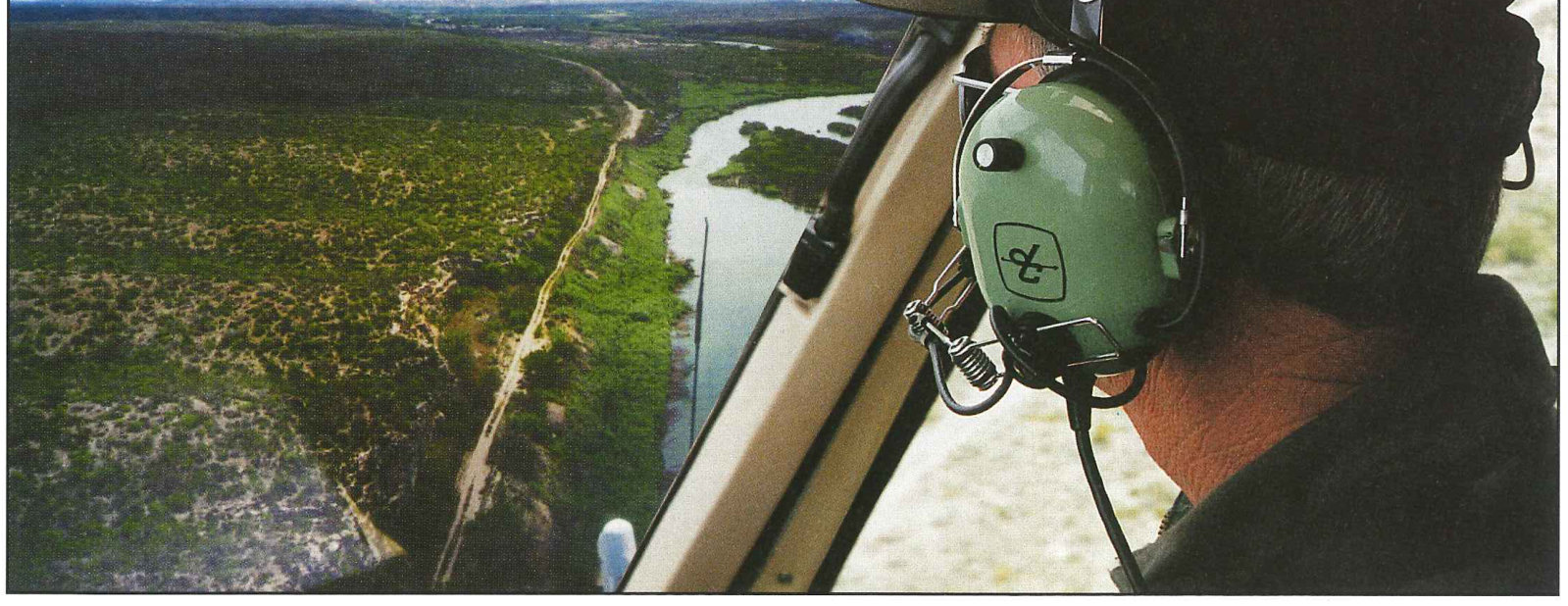
In many spots the water flows slowly, and the banks are close together and easily accessible. Enterprising smugglers from the Mexican side have cut back the brush in many places and improved the river bank to provide easy access to the water for boats, rafts, horses, and people with inner tubes. From a Border Patrol helicopter, it is easy to see both the narrowness of the river in some places, as well as the relatively undeveloped country around much of the river. By early summer there will be places on the Rio Grande where illegal migrants could simply walk across.
Many of those seeking to cross the border illegally cannot swim, so flotation devices like inner tubes are invaluable to assist in the crossing. Whenever the Border Patrol comes across an inner tube on the northern bank, it is almost certain that a crossing has recently occurred. In order to prevent repeated use of these inner tubes, each one that is found is cut up. The river bank is littered with slashed inner tubes, deflated rafts and the like. In addition to these low tech flotation aids, some smugglers use horses or homemade boats to facilitate the crossing. In the McAllen Sector, along a short stretch of river, the remains of as many as a half-dozen small homemade boats litter the northern bank, destroyed by the Border Patrol during regular sweeps of the river.
Once across the river, the terrain varies from green scrub brush to rocky desert. One thing that never seems to vary, however, is the sheer unfriendliness of the landscape. Every plant seems to sprout long, jagged thorns; loose rocks and craggy cliffs make travelling the desolate trails dangerous even in daylight. Heat, lack of water, omnipresent bugs, and the occasional rattlesnake make the trip perilous; dozens of illegals die every year from heatstroke, drowning, and other such misadventures.
The sheer number of aliens crossing the border continues to grow and the Border Patrol has grown as well. In the Del Rio sector, one of five Border Patrol sectors in Texas, 131,058 aliens were apprehended in 1998 (more than 350/day), an increase of 16 percent over the previous year. Of these, only 1,342 were classified as Other Than Mexicans (OTMs), but this represented an 80 percent increase over 1997. El Salvador, Guatemala, and Honduras were the primary points of origin of these OTMs.
The Laredo sector, the largest Border Patrol sector in Texas, recorded 103,433 apprehensions in 1998, down from 141,887 in 1997. This decrease was largely explained by a movement away from Laredo, caused by the intense enforcement activity underway in that sector as part of Operation Rio Grande.
The intensity of the enforcement activity taking place around San Diego, El Paso, and now Laredo has forced the smugglers to take their illegal migrants into the Del Rio sector and into Arizona. The high enforcement operations have proven very effective, but also very manpower intensive. The Border Patrol relies heavily on high-tech equipment, including helicopters and “scope” trucks using infrared cameras, but in the end someone has to be there on the ground to take the aliens into custody.
The amount of traffic is easily seen from the air. Given that there are no livestock herds and there is no reason for people to be in this remote area, well-worn trails are clearly being made by large groups of illegal aliens and drug smugglers. During the day the helicopter patrols look for such trails and direct ground units to those which look fresh.
The impact of illegal immigration in the southwest, particularly Texas, is tremendous. In 1996, the Immigration and Naturalization Service estimated that 5 million illegal aliens were living in the US, of whom 700,000 were living in Texas, a state with a population of approximately 20 million. Many industries, including the construction, farming, and hospitality industries, depend heavily on illegal workers in order to stay in business. While many people complain about the costs of illegal immigration, few seem willing to put in place employer sanctions to punish those who provide the illegals with jobs.
In addition to illegal aliens, the Border Patrol is finding itself increasingly called upon to combat the flow of drugs into Texas. Seizures of drugs are up, with a dramatic increase in the amount of cocaine being seized. In Del Rio, more than US$41 million worth of drugs were seized during 1998, a 12 increase over 1997. This included 41,000 pounds of marijuana and almost 900 pounds of cocaine. The Laredo sector recorded some US$248 million worth of drug seizures in 1998, up from $239 million the year before. Over 112,000 pounds of marijuana and 4,800 pounds of cocaine were seized
Border Patrol agents usually patrol alone, through desolate and remote country. While the majority of the illegal aliens encountered do not resist arrest, the same cannot be said for the increasing numbers of drug smugglers being encountered. In the Del Rio sector in 1998, there were 12 assaults and armed encounters involving 17 violators and 26 agents. Surprisingly, given the increased amount of smuggling, this represented a 48 percent drop in attacks on agents.
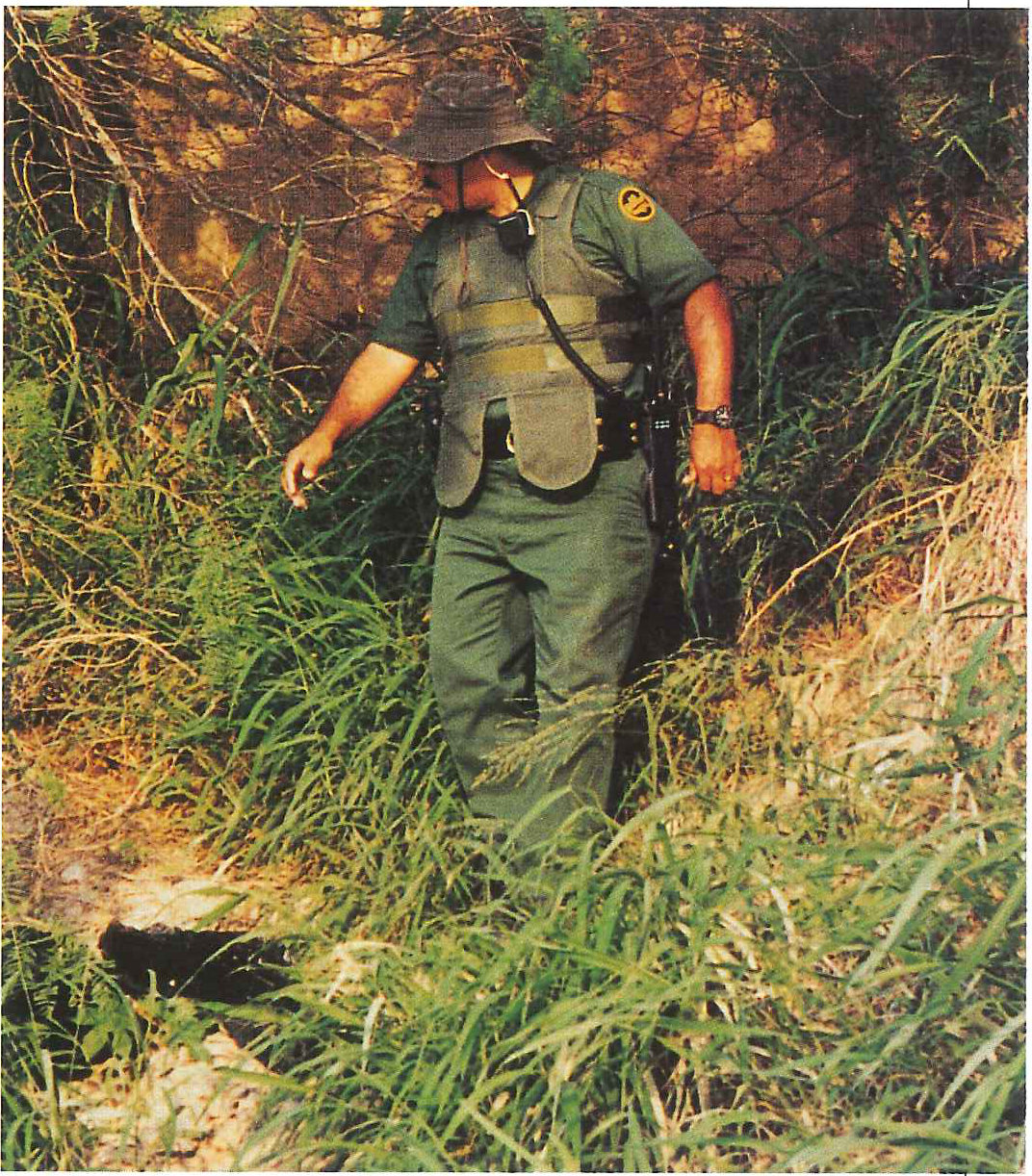
Aliens who are caught, usually several hundred a night in each station area, are processed and have their photos and fingerprints digitally recorded in a Border Patrol computer database. Those who are Mexican nationals are generally detained until there are enough to make a busload; then they are taken to a border Point of Entry and released to walk back across the bridge to Mexico. Nationals of countries other than Mexico face a more elaborate process, since their return to their countries of origin is not so simply arranged.
As the US government seeks new ways to stem the flow of illegal migrants from Mexico and Latin America, the resources of the Border Patrol are stretched thin along the border. The official line remains that the goal is to end the influx of illegals, but as long as desperate, poor people can look across a thin ribbon of river and know that there are jobs waiting for them there, it is unlikely that they will stop trying their luck.
View the original scanned pages →
Originally published in bout de papier, Vol. 17, No. 4 (2000-2001) — Winter 2000/2001 // Hiver 2000/2001, pp. 13–15. Read the rest of this issue →



