
Ups and Downs
My career in the Department of Foreign Affairs and International Trade (DFAIT) has been unusual. I joined in 1975 at age 21, having achieved grades so pitiful during my undergraduate years that no scholarships were in reach for further studies (even in those golden days of educational largesse). My first stint away from “External” was a year of Arabic language training in the decorative setting of the American University in Cairo. It proved a happy time, with the Department underwriting extensive travel to allow exposure to various Arabic accents. This instilled in me a sense of confidence that I would never be cut off anywhere Arabic was spoken.
After a subsequent posting in Cairo, with responsibility for the aid program in Sudan and the consular program in Libya thrown in, and then a year on the human rights desk, a stimulating assignment that taught me to be careful about the selection of congenial supervisors, I took my second academic break, enrolling in the mid-career Masters in Public Administration Program at the Kennedy School of Government (KSG) of Harvard University. Its offerings were not everything the KG hype had made them out to be – the KSG operation turned out in the main to be a vast PR exercise – but there was plenty on offer beyond the KSG within Harvard and at other Boston area universities. One of my best experiences was a negotiations class at Northeastern University in which all other students were ambitious, mostly very impressive local cops. Fatefully, an awakening of hitherto slumbering scholarly instincts seemed to occur as I produced several (for me) in-depth term papers.
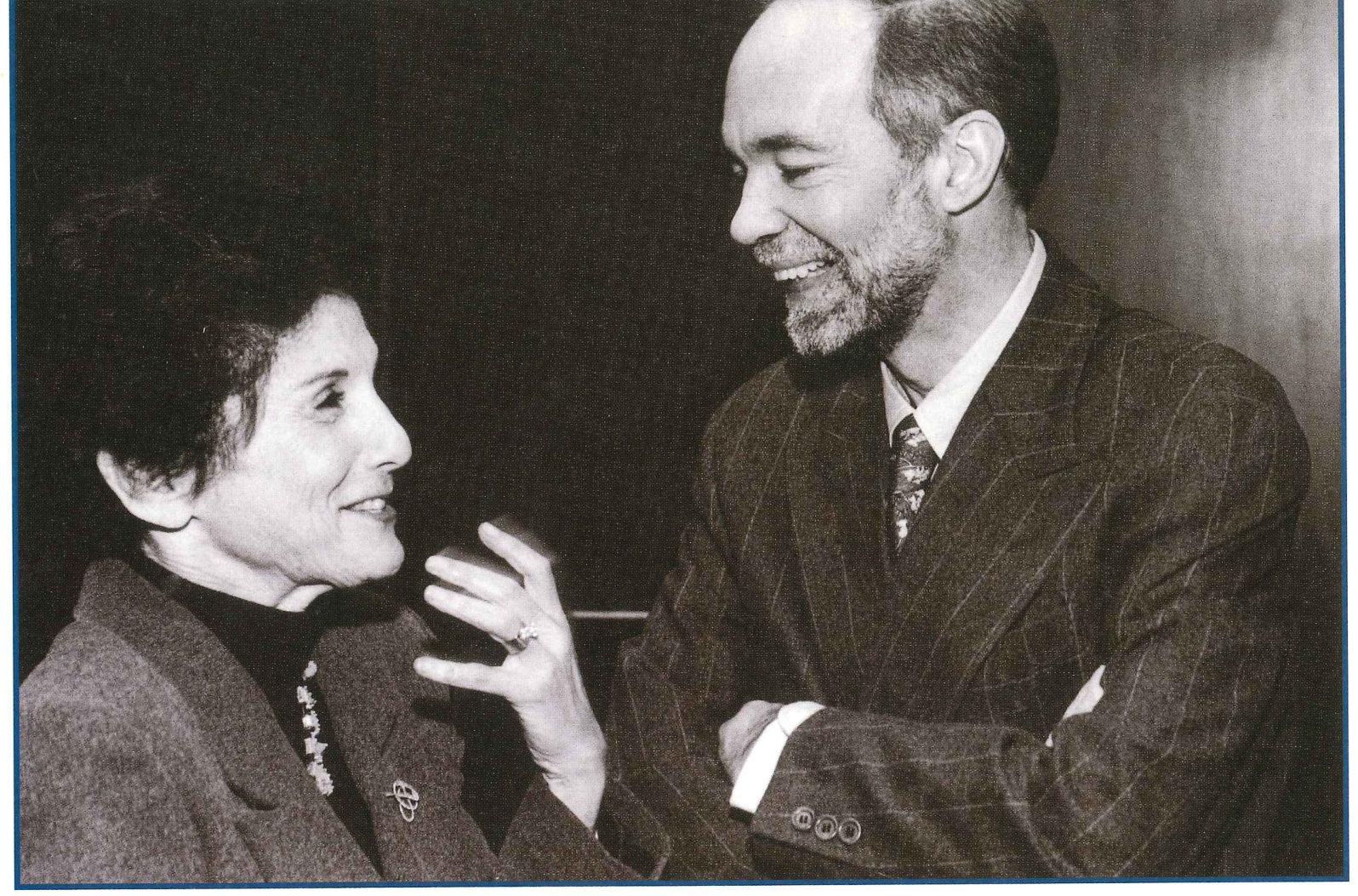
During the ensuing years, I worked closely with Sylvia Ostry, then Canada’s chief international economic and multilateral trade negotiator.
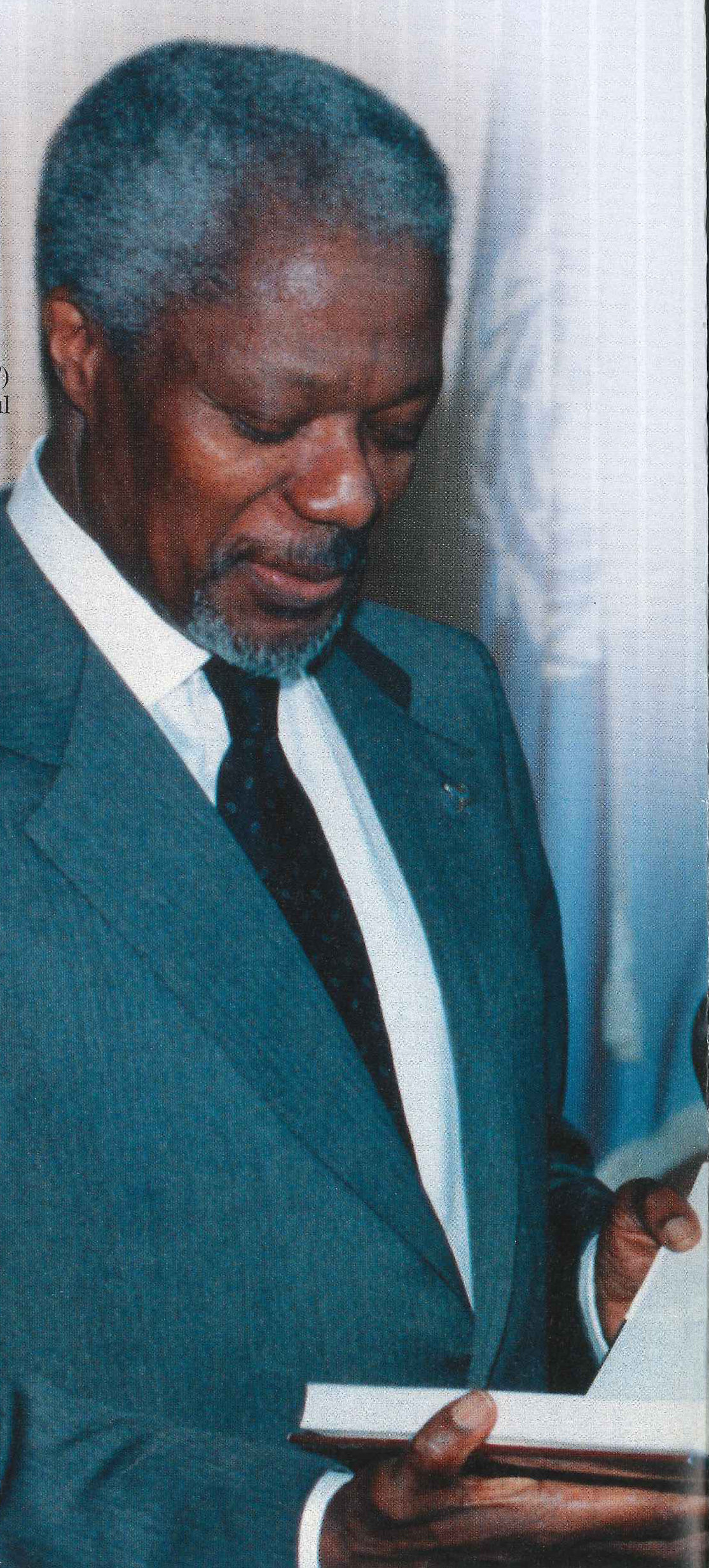
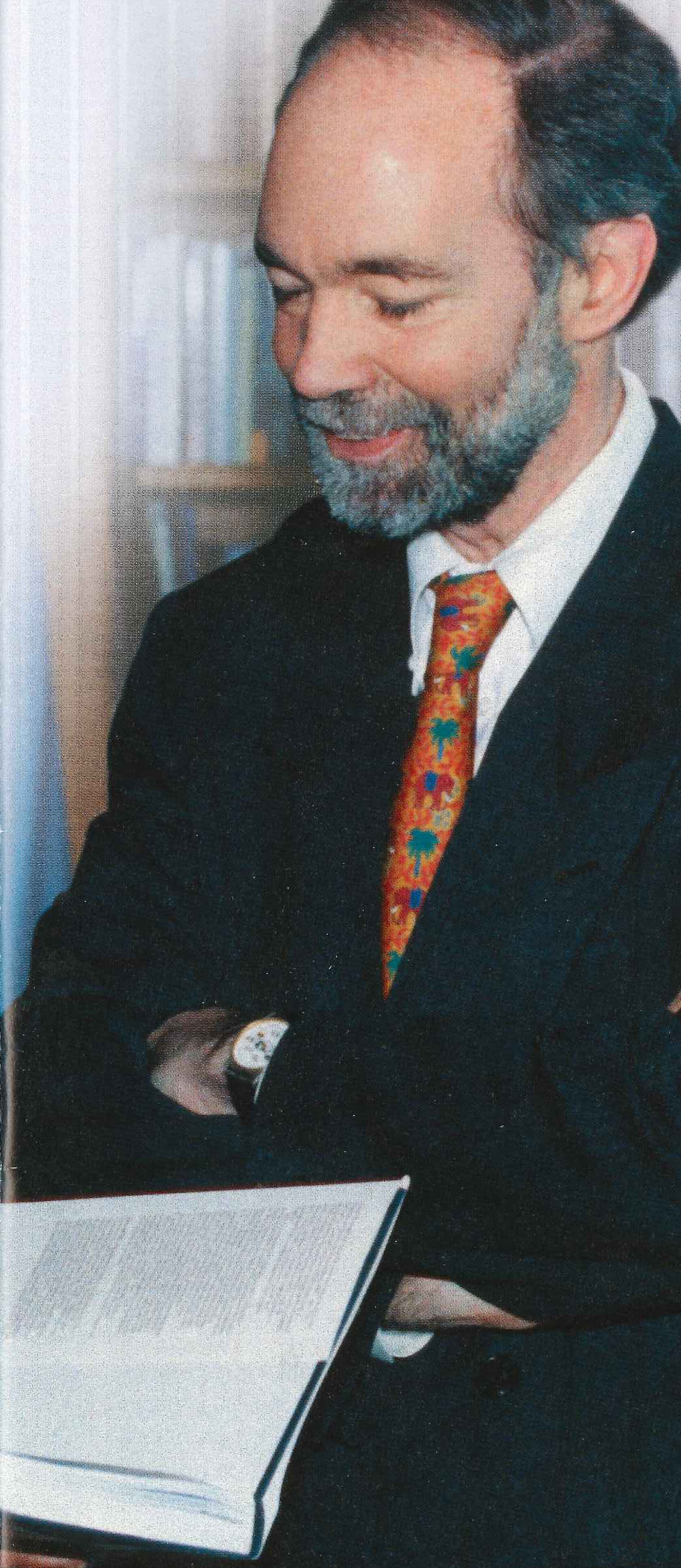
Sylvia, a tremendous intellect, if a demanding one, generously introduced me over
time to her international network of colleagues and admirers, opening my eyes to worlds well beyond those of classic diplomacy. I absorbed with admiration her capacity to sell many of her ideas in Ottawa by arranging for the Prime Minister and others to read all about them in the
Financial Times and Wall Street Journal, both devoted
to her incisive analysis and advocacy. As with all
great supervisors, some of her “can do” temperament and self-confidence rubbed off on me. In the trenches, I was anchored for eight years on and off within the Economic Policy Bureau, then experiencing a golden age under the likes of Derek Burney, John Paynter, George Haynal and David Wright. In 1988, at my request, I was appointed a foreign service visitor to the University of Toronto, on the understanding that I would spend much of my time in the economic studies program at the Brookings Institution in Washington, something Derek, by then the PM’s Chief of Staff, had made possible.
Two important things occurred that year. First, having at the last minute stepped into the teaching shoes at the University of Toronto of the recently deceased and greatly mourned John Holmes, I discovered a penchant for teaching that has not left me since and that I have been able to indulge even during foreign assignments. Second, I undertook my first serious effort at academic research at Brookings, on economic integration in South-East Asia. It yielded my first published work, of distinctly dubious quality. Never mind. Working within Brookings, among accomplished actors on the Washington stage, developed in me a healthy respect for top-flight policy research and the impact it can have, particularly when spun expertly through the media.
My first experience of the complex interdependencies of media and research communities was also tantalizing.
An assignment to the UN in the final days of Canada’s 1989-90 term on the Security Council proved fateful. It allowed me to observe Yves Fortier, our tremendously popular and effective Permanent Representative, at work. Fortier, who was a master of the big picture and possessed acute political antennae — as well as a direct line to his good friend, the Prime Minister — drew heavily on the remarkable skills of his deputy, Philippe Kirsch, a master of detail and tactics (as well as broader strategy, later demonstrated in chairing negotiations on the International Criminal Court). This brief experience shaped my subsequent academic interests.
After a stint in Ottawa working on the 1994—95 foreign policy review, a dismal exercise about which I wrote candidly in a recent issue of the scholarly International Journal, I spent two years at Oxford “reading and writing”, as my MacArthur Foundation grant grandly described it. The product was a doctoral thesis on decision-making in the Security Council focused on Haiti’s crisis of democracy, 1990-97, later published as a book. My academic supervisor, a titan on the laws of war and much else, Sir Adam Roberts, proved both rigorous and vastly sympathetic. Working on a doctorate so late in life proved a signal luxury, one that honed my research skills and also provided sobering perspective on the fog of negotiations in the Security Council, which often leads to bad decisions.
An Unexpected Development
Returning to Ottawa in 1997, I had expected to remain at Fort Pearson for some years. However, the Chair of the International Peace Academy (IPA), a small but high-powered research institution in New York independent of, but closely linked to, the UN asked me to consider the IPA’s presidency, recently vacated by Olara Otunnu, a charismatic Ugandan politician, scholar and diplomat who had moved on to work with Kofi Annan on humanitarian issues. I was intrigued, and after some months of reflection and consultation, Don Campbell, then Deputy Minister, agreed to grant me leave for an extended term at IPA. Because I had so recently returned to government, this can hardly have been an easy decision for him, so I am doubly grateful for it. DFAIT colleagues were mostly perplexed but supportive. They would not have adopted this course themselves, but they were prepared to give the adventure the benefit of the doubt.
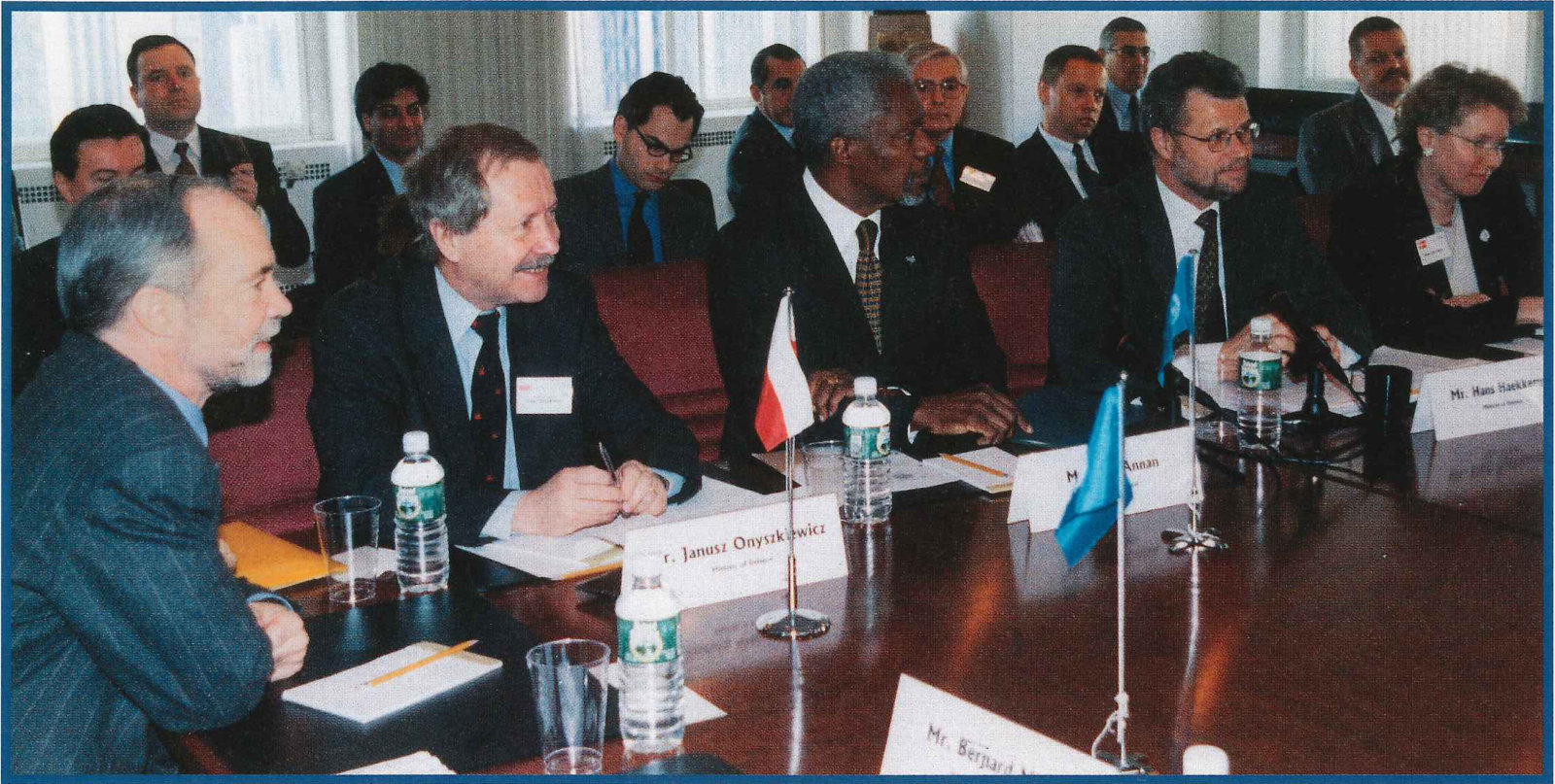
One factor that helped shape my decision had to do with personalities already in place at the UN. I had known well Kofi Annan and his chef de Cabinet, Iqbal Riza, when I chaired the negotiations of the UN Peacekeeping Committee and when they were running the UN’s new peacekeeping department, 1992-94. We had remained in touch ever since. Louise Fréchet Representative in New York, 1992- UN’s first Deputy Secretary-General could, they would be helpful to me (as they have been, over and over again). Other friends in the diplomatic and academic worlds also offered words of encouragement. Being well connected within the UN has indeed helped hugely.
Life in the Non-Profit World
IPA today has a staff of 32 (the majority women), drawn from 22 nationalities, including eight outstanding Africans. Because of the quality of our scholarly work, we receive many applications for vacancies, and can pick and choose among the cream of the crop. I have never worked with a more talented or dedicated team. It produces exceptional value for money, one reason why our funders like us.
How different is life in the NGO and research worlds from working in DFAIT? Plenty.
First, we raise all of our own money. Specifically, I raise it. My predecessors prized IPA’s independence from the UN and worked hard to maintain it. I have sought to do likewise, in part by diversifying our sources of income, adding to our list of foundation and government funders. In the latter category, we have focused particularly on large European countries (UK, Germany, France) that hitherto had not supported IPA financially but now do, the UK more generously so than any other government. Our budget now oscillates between US $4 and 5 million. We work hard to keep our fixed costs low, so that we can clear as much cash as possible for interesting academic and operational projects and partnerships we want to lead. I have allowed our own modest endowment to grow without drawing on its interest income, contrary to general practice in the US, as one never knows when a rainy day may occur.
To my surprise, I enjoy fund-raising. Success validates our work. Indeed, I have concluded that good work attracts money rather than the other way around. Friends who run universities, other think tanks and foundations confirm this perception.
Second, I report to a Board. It is chaired by Rita Hauser. An accomplished corporate lawyer, she and her husband (a communications magnate) established some time ago a very well-endowed foundation benefiting higher education (huge grants to the Harvard and NYU law schools), the arts (Lincoln Center and its component organizations, such as the New York Philharmonic) and research and policy development on international security (Rand Corporation, International Institute of Strategic Studies and ourselves). A committed Republican, and serious funder of the party, but one of the few progressives still remaining in it, she works closely with Brent Scowcroft, widely considered the voice of George Bush the First in today’s Washington. She sits on the President’s Foreign Intelligence Board. She has provided me with tremendous support and with immediate, undivided attention whenever I have needed it. She carries with her not only her considerable personal authority, but also the influence derived from running a significant Foundation.
One benefit of working with an excellent board (of which Paul Heinbecker is a dynamic member) has been evolving a view on how non-profit boards — on a few of which I now sit — can work best. Key is avoiding the temptation to micro-manage. Much harder, but vital, is to help shape the strategic direction of the institution. I have developed enormous respect for the US non-profit world (9% of the total economy — more than Canada’s total GDP) and how it is managed overall. Coming from Canada, where many non-profit activities do not seem widely prized, I find it striking in what high regard private sector and government leaders hold those leading signifiour own house imprint and with leading university presses. Many of us teach, in my own case at the New York University School of Law and at Sciences Po in Paris, where my students keep me on my toes. We also aim to work in depth on multi-year policy-development projects. One of them, started in 1998 as a joint project of DFAIT and the UK’s Foreign and Commonwealth Office under Michael Small’s energetic lead out of Ottawa, addressed economic factors in contemporary civil wars. The project subsequently devolved to IPA, from whence a strong partnership was forged with the World Bank’s development economics research group under Paul Collier, whose work was producing fascinating and controversial findings on this topic. We have built in significant corporate as well as academic and NGO participation. It has influenced policy perceptions broadly, including in the Security Council and the UN secretariat.
Similar projects have been developed to address security (and civil society’s participation therein) in Africa, conflict prevention, terrorism, transitional international administrations, sanctions, and the tangled relationship between the UN and European security organizations. On the latter, it was touching to see my splendid Indian, Iranian and Singaporean colleagues during a recent conference in Paris crowding around George Robertson of NATO, whom they had gotten to know in the course of our association with his institution, the European Union, and the Organization for Security and Cooperation in Europe. I wonder how often George is lionized by a group of young Asians.
Fourth, my colleagues are different in outlook from many in DFAIT, although the two groups share a commitment to high professional standards. Other than a small management team and an excellent military adviser on loan from the Finnish government, it is a very young group drawn from some of the world’s foremost universities at doctoral and (more rarely) masters level. The mix of nationalities and backgrounds is extraordinarily stimulating. We practice variable architecture within our projects, working in flexible teams to achieve immediate and long-term objectives. We partner extensively with other academic and research institutions, a steep learning curve for all concerned much of the time. When they leave us, generally after 2-5 years, my colleagues move up quite distinctly in their chosen academic or policy fields. Such are the rewards of outstanding work on the international employment market.
Fifth, as I learned at Brookings, research institutions (as opposed to academic ones preoccupied with theory) live and die to a certain degree on the strength of their media profile. IPA is fortunate to have a large press corps available nearby at the UN. However, most correspondents on the UN beat take a fairly limited view of their “Us, So achieving coverage reauires flair and work. For ver ti recial ; Ours three weeks or so in the Globe and Mail and in the International Herald Tribune, often writing with a partner. Beyond the buzz of seeing one’s name in lights, media exposure yields real pay-offs at funding-raising time.
Sixth, while IPA’s influence is hard to pin down, what our funders like best about us is our ability to create human interaction on a range of research dilemmas and policy challenges. Generating frank discussion is doubly valuable given that few of us have time to read all we should. Even the busiest individuals need a break for lunch and if a free sandwich (sometimes something better) and some stimulating talk is on offer, they will often come. Conferences, as one learns in DFAIT, also require foolproof logistics, comfort and an interesting agenda. We organize a lot of them, in New York and elsewhere, mostly with great success. I have forced myself to develop an impresario persona, which I can now access on automatic pilot, much as any diplomat would need to at times.
What are some of the rewards of my time here? One is being able to participate, when invited, in UN Under-Secretary-General level task forces without any actual responsibilities at the UN. Working at the UN is tough: it’s hierarchical (much more than DFAIT), quite inflexible administratively, poor at personnel management, and no good at all at setting priorities in relation to resource allocation. It demands micro-accountability without being able to delegate much responsibility. Louise Fréchette is trying to convince member states to inject modern management principles into the workings of the organization. This is a long-haul undertaking. Meanwhile, a heroic minority among the staff keep the institution afloat through sheer force of personality and intellect.
Another bonus is our close relationship with most Security Council delegations, including the P-5. The Council works exceptionally hard, often in improvisational mode. It is not particularly introspective or self-critical. Nevertheless, there is agreement that widely recognized mistakes should not be repeated and that new approaches need to be explored. Because they trust us, Council delegations occasionally turn to IPA to help them think through nagging problems or to convene informal, discreet discussions of Council members away from the UN on sensitive topics. As a result, and not for the first time, I found myself chairing an informal but brutally frank retreat of Council ambassadors in early December on problems ranging from the Congo and Ivory Coast to sub-par UN field appointees. The Council’s excessively process-oriented approach to terrorism also came up. In these relaxed settings with no formal standing, new ideas are welcomed and occasionally result in change.
Our independence from the UN means that I do not fit into any particular hierarchy. This makes dealing in a rather egalitarian way with ministers, diplomats and other members of the UN community at all levels a relaxed experience. We can readily tell politicians things that officials might be reluctant to articulate and officials generally encourage us to do so. I am struck when visiting Washington every now and then that its hierarchy is (at least in its own mind, and often in reality) based more on perceived personal merit than on job descriptions, rank and administrative grades. I have occasionally been included in closed-door discussions there with surprisingly senior people simply in the hope that I might have something substantive to contribute. Being a Canadian is a key asset: no other nationality opens doors quite the same way with Americans, the superiority (in both senses of the word) of many Europeans, including the Brits, often rubbing Washington types the wrong way.
What of the future? In this line of work, one occasionally gets job offers, usually at quite the wrong time, generally from the academic world. Deans and senior professors can make princely salaries in the US, exciting both ego and greed. I have been tempted every now and then, but as the time for my return to the public service in Ottawa approaches, I find I am looking forward to it. It remains to be seen whether the public service, its protestations of interest in managers of diverse backgrounds notwithstanding, will feel sufficiently comfortable with an unconventional career profile to trust me with serious responsibilities when I return in 2004. There are grounds for greater optimism on this score than would have been the case 20 years ago, although, from the outside looking in, the Canadian public service continues to seem hide-bound and hermetic. After a number of years back in government possibly including an assignment abroad, I would like to retire early to engage in some years of full-time teaching, which several colleagues have found possible.
Some Reflections on DFAIT
How does DFAIT look from here? First and foremost, it remains (in spite of its chronically despondent morale) a well-trained and sophisticated corps, with a high concentration of brain power and entrepreneurial drive relative to most foreign services. That said, exceptional talent stands out exceptionally, as David Angell’s much admired performance in the Security Council, 1999-2000, alongside Bob Fowler and Paul Heinbecker, demonstrates. Because Canada does not matter particularly in a UN where the Permanent Five dominate, it needs to work hard to accomplish anything. Here, ideas are critical, as well as the energy to pursue them and overcome the resistance to the new that characterizes the UN even more than most large bureaucracies. On this front, Canada does very well, as Paul demonstrated with Canada’s compromise proposal on Iraq in February. Diplomats at the UN enjoy tremendous autonomy and a high degree of delegation of authority from headquarters, so it is a very good testing ground for initiative and resourcefulness, but not every colleagues seizes the opportunity.
How does DFAIT look from here? First and foremost, it remains … a well-trained
and sophisticated corps, with a high entrepreneurial drive relative to most
DFAIT officers individually are highly regarded by those Canadian media types who encounter them abroad, but our Department as a whole continues to enjoy a poor media image. We need to ponder this, rather than whining. Likewise, many Canadian academics admire the work of DFAIT units with which they interact, including the academic relations and historical units, while thinking poorly of us overall. Clearly, we are failing in our efforts to interact well with the academic world. We pay a very high price for this as our poor relations with the Canadian academic community are refracted through the media back to our more powerful government sister- Departments and to political elites. The Foreign Service Visitor program that I so greatly benefited from fifteen years ago needs a hard look. Can we leave it as mainly a personnel management tool allowing DFAIT to place some of its more senior officers in a holding pattern, often leading straight to retirement, or should we use it as an opportunity for those at the peaks of their careers to impress the academic community?
DFAIT’s most positive contributions are nearly always seen by outsiders to derive from the field, where we provide consular, trade and other services to Canadians and where we can demonstrate our policy expertise and our fleetness of foot. And yet, in recent years, we have been concentrating resources at headquarters, largely to save money. Penny-wise, pound foolish? The United Nations meritorious lateral transfers and to reinvent ourselves as a confident cadre willing and able to compete both within DFAIT and elsewhere in our society. The strongest DFAIT bureau in which I served in recent years, Global Issues, was then staffed mainly by “outsiders” from government, the academic world and NGOs. This suggests advantages to opening up other DFAIT policy bureaus radically and, meanwhile to developing ourselves professionally through career diversification elsewhere in the government and beyond.
Development Programme has, over the past two years, decisively reversed a similar trend, forcing (often reluctant) staff back into the field and cutting back massively on headquarters. This is undoubtedly a good decision, although it would be an expensive one for us.
As a funder of research and NGO activity, DFAIT is quick off the mark and flexible, which goes some way towards making up for its very limited “walking around” money. In particular, the Global Issues Bureau’s Human Security Fund has been managed with agility and skill. Overall, we do best when we leverage our resources with larger contributions from CIDA and IDRC. (DND, sadly, is simply not a factor in international research and policy work, unlike the Pentagon and leading European Defence Ministries.) This makes turf fights with these Ottawa actors highly counterproductive for DFAIT, although differences of view are inevitable.
Pearson Building types often inadvertently present an unfortunate public face of DFAIT. A culture of entitlement (as if the Foreign Service exam were a highly reliable measure of talent) and of victimization (however objectively true it is that remuneration and other more professional rewards for FSOs have declined in real terms over the years relative to other professional groups) is highly unattractive to outsiders. Now that some of our professional grievances are being addressed, it would seem wise to welcome DFAIT professionals should systematically consider assignments in the NGO and research worlds. Our young colleague Ben Rowswell, much admired at PCO for his current work there on Canada-US relations, at his own initiative will take up a Pritzker International Fellowship this summer in Washington’s highly regarded Center for Strategic and International Studies, during which time he will doubtless learn more about what makes Washington tick than he could in any alternative assignment over a similar period of time. Other postings of a non-traditional sort will also become increasingly important for DFAIT and rewarding personally. One example: Patrick Wittmann, a young member of the leadership team of the UN’s successful mission in Mozambique in the mid-1990s, who expertly anchored in Ottawa Canada’s Security Council term, 1999-2000, has been nominated to take up the job of Canadian political advisor to the commanders of NORAD in Colorado Springs.
My experience here has been exhilarating. I am confident it will make me a more acute, results-oriented and entrepreneurial public servant on my return to Ottawa. I look forward to it.
View the original scanned pages →
Originally published in bout de papier, Vol. 19, No. 4 (2003) — Winter/Spring 2002/2003 // Hiver/Printemps 2002/2003, pp. 10–15. Read the rest of this issue →



