
bout de papier, Vol. 20, No. 1 (2003) — Spring/Summer 2003 // Printemps/Été 2003, pp. 38–39
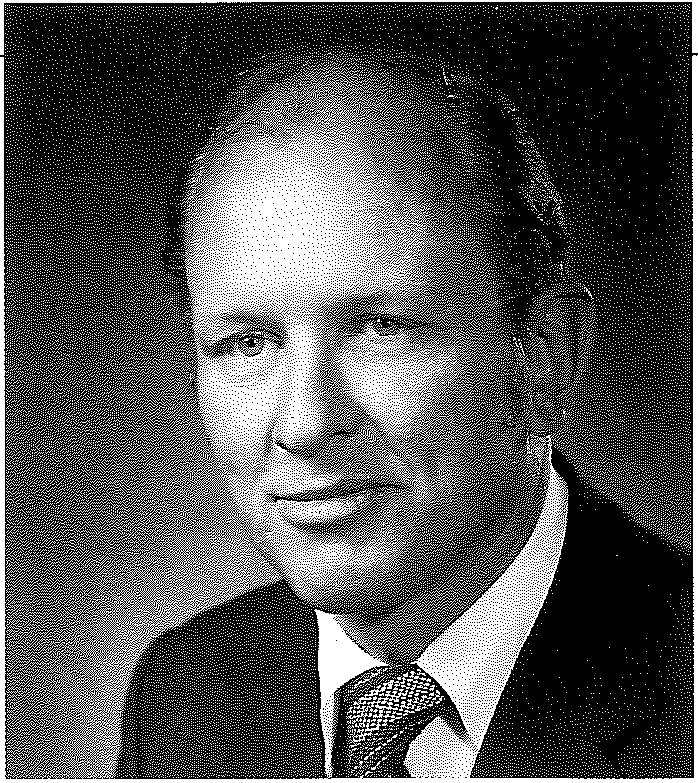
Recollections delivered at a service to commemorate Gerry Shannon on May 3, 2003, by former Minister of Finance, Marc Lalonde. Mr. Lalonde is currently Partner, Stikeman Elliott, Montréal.
I am deeply touched by Anne’s request to me [Anne Park Shannon] to say a few words at this service in commemoration of our friend Gerry Shannon.
I believe that I first came across Gerry when he was at the Canadian Embassy in Washington — during the time when the poor man was called upon to explain and vigorously defend before more than sceptical American audiences the National Energy Program, for which, as Minister of Energy, I was responsible. Little did we know at the time that our paths would continue to cross. Lo and behold, no sooner had he left Washington as Minister (Economic Affairs) then, in 1982, he joined me at the Department of Finance as my Assistant Deputy Minister, International. His contribution to the Department was so remarkable that, within a few months, he was promoted to Senior Assistant Deputy Minister responsible for overseeing taxation policy, economic policy and international affairs. I quickly came to know and appreciate Gerry; we worked together on many files. After I left politics, Gerry, like so many others with whom I had the privilege to work in Ottawa, went on to bigger and better things, which many of you will know very well: Deputy Minister of International Trade in the Department of Foreign Affairs and International Trade from 1986-90, at the time of the negotiation of Free Trade Agreement with the United States — that is, for almost five years, a record in that function in Ottawa that has not yet been surpassed.
Then, on to Geneva, as the ambassador to almost everything that moved in that city — thank God that city does not move very fast. But there he was, Ambassador to the United Nations Organization in Geneva and Chief Negotiator for the Uruguay Round of Trade Negotiations, which led to the creation of the World Trade Organization and major liberalization of International Trade; in addition to being Chief Negotiator, he also had the title of Ambassador to the GATT and later became Canada’s first ambassador to the WTO. And, to occupy his leisure time, he was also Ambassador to the UN Committee on Disarmament, where he was instrumental in the completion of the Chemical Weapons Treaty and the launch of a process on fissile materials. There was no way all these functions could fit on a single business card and one can imagine Gerry digging in his various pockets trying to find the right business card for his interlocutor, depending on the hour of the day and the particular place Gerry happened to be storming through. Geneva was never a sleepy town for Gerry. Nonetheless, Gerry could take it all in stride with admirable concentration and sharpness, and always with his well-known strong personality. Yet he could also find the time to be a charming and stimulating host. I remember fondly a very pleasant dinner one evening in his residence with Anne and a couple of my Swiss friends. Gerry always knew the value of good food and good wine but many of you will no doubt remember that he also loved the cut and thrust of a vigorous intellectual debate. I remember leaving his home quite late that night, having enjoyed every minute of the evening. I am sure I am only one of thousands of others who, over the years, shared a similar experience with Gerry.
After some 32 years of loyal service in the Government of Canada, Gerry decided., in 1995, not to retire, but rather to experience life in the private sector and to try to work at a somewhat reduced pace. He started Shannon & Associates, International Trade Consultants and he never stopped, even after he moved to Victoria last summer. You will not be surprised if I tell you that, even in that period, I could not resist calling upon the services of Gerry. This was in connection with a CIDA project in Vietnam and Gerry was of immense help in familiarizing the Vietnamese official about all the pitfalls of trying to negotiate a trade agreement with the United States — which they did successfully-and what you have to go through before you could be admitted into the WTO
– which they hope to achieve. I would not be telling the truth if I were to say that Gerry and I were close friends; we were just too busy, living our respective lives to the full, he in all the functions and places I just mentioned and I in politics and then the legal profession. But I can truly say that I had the greatest admiration and respect for Gerry and that we had all the marks of being very good friends. We had together what we call in French “beaucoup d’atomes crochus”. I recognize such friendship in a quality of relationship which neither time nor distance will destroy. I could go for months and sometimes years without meeting Gerry; then we would come across each other and it was as if we were merely continuing a conversation — or as often happened with Gerry, an argument – that had been interrupted long ago.
There were many things I loved about Gerry.
First, his frankness and his forcefulness. You did not have to go through a lot of intellectual fog to find out what Gerry thought on any subject; I certainly never was left wondering what he could have meant when I received one of his memos or asked him to participate in a discussion in my office. There it was: clear and precise. You could like it or not but were never left in doubt. As to its forcefulness, it is legendary. But it was only in the last few days that I discovered that these qualities were not a late acquisition in Gerry’s life. I was told for instance that Gerry’s father, also called Gerry, was one of the early NHL hockey players, who played for Montréal and Boston among others — and I can tell you that in those days these two teams were not for sissies. I was even more surprised when I learned that our Gerry himself was offered a trial by the Boston Bruins. Fortunately for us, after a brief stint as a journalist for the Sudbury Star, Gerry ended up opting instead for the rough and tumble of life in the senior public service. I still vividly remember him arguing in my office, with what I will graciously call vigour, with other officials and, sometimes, myself. However, once the debate was over and the decision was taken, Gerry would not hesitate in allowing me to be wrong and he would go out to fight as a solid member of the team in support of the conclusion that had been reached.
Another of his great qualities was his impatience with sloppy work and sloppy thinking and with bureaucratic foot-dragging. I suspect his earlier training at the Carleton School of Journalism had something to do with it. I recollect a meeting one morning in my office with Mickey Cohen, my Deputy Minister at the time, after I had spent part of the night reviewing and correcting an enormous Cabinet document that my Department wanted me to sign on an urgent basis. Let us say that I was not in a good mood; after having pointed out to Mickey that the miserable document was covered by a green slip which about half a dozen officials all the way up to the Deputy Minister had initialled as “read and approved”, I asked him whether anybody ever bothered to look at those documents once they were drafted by a junior official. Mickey smiled in his inimitable way and told me: “Minister, why should we read them? We know you will.” Well, let me tell you that no such document ever came out of Gerry’s side of the shop and I should add that I never got a similar document from anywhere else in the Department after that incident. Many junior officials have burnt the midnight oil under Gerry, but he contributed to training a large number of rigorous and vigorous thinkers inside the public service and we should be grateful for his role in that respect. If he could be demanding, I am also told that he was also capable of great sympathy and sensitivity and he helped many a young person along in their careers.
But Gerry was surely no stern and dull taskmaster. All those who had the privilege to be in contact with him recognized his infectious enthusiasm and his unfailing sense of humour. Gerry loved the issues, he loved the players and he relished what I will call “the game” — it was a perpetual source of fun for him even if the underlying objectives were serious.
The French language is very inadequate, in my view, in its description of the people who labour in the public sector. We talk of “la fonction publique” and “les fonctionnaires”; in my mind, those terms have always projected a static and bureaucratic image. I prefer the English words “public service” and “public servants”, which have a much more dynamic and positive connotation — that is, to search for and to serve the common good. Canada has been extremely privileged to be able to count on generations of people like Gerry Shannon who were passionate about their country and serving the interests not only of its citizens but also those of the rest of the world. And on this day, sad as it is, let us express our gratitude for the shining model that Gerry has been and let us hope that Canada will be able to continue to count on new generations of public servants, like Gerry, for whom technocracy will never be a substitute for passion and ideals.
Let me conclude by expressing, on behalf of all of us, our sincere condolences to his wife, Anne, his two sons, Michael and Steven, and the other members of his family. You have lost a husband, a father, a close relative; we have lost a good friend. We share your grief.
View the original scanned pages →
Originally published in bout de papier, Vol. 20, No. 1 (2003) — Spring/Summer 2003 // Printemps/Été 2003, pp. 38–39. Read the rest of this issue →



